The labyrinth feels real with a guide. Knossos is one of Crete’s big names, and this skip-the-line shared tour helps you get inside faster so you can spend more of your limited time actually walking the palace grounds.
Two things I like a lot: you get a licensed guide who explains what you’re seeing (not just where things are), and the best moments are tied to the big story points like the House of Frescoes, sanctuaries, and the palace’s water systems.
One consideration: the tour runs on strict entry time slots, and late arrivals can lose their reserved entry and miss the tour.
In This Review
- Key highlights worth planning around
- Knossos Palace in 90 minutes: what you’ll experience
- Meeting point, time slots, and how the skip-the-line part works
- Inside the Palace of Knossos: the sights your guide will pin to the story
- The throne area and the “Minos” connection
- Sanctuaries and royal domestic quarters
- The House of Frescoes moment
- Treasures, pantries, and organization
- Water-management systems (the practical miracle)
- A note on signage
- Small group pacing, headsets, and hearing the guide clearly
- Summer strategy: 5:00 PM at Knossos is a smart move
- Value check: what you’re paying for and who it’s best for
- Pairing Knossos with Heraklion: make the day click
- Should you book this Knossos skip-the-line tour?
- FAQ
- How long is the Knossos Palace tour?
- Is the admission ticket to Knossos included?
- Is the tour guided, and what language is it in?
- Will I be able to hear the guide during the tour?
- Where do I check in, and what if I arrive late?
- Is the skip-the-line ticket service part of this experience?
- What’s the best time to visit Knossos in summer?
Key highlights worth planning around
- Fast-track entry saves time at the ticket area so you start your walkthrough sooner
- Licensed English guide tells the site’s story in a way that makes the ruins make sense
- House of Frescoes focus plus myths explained alongside archaeology
- Headsets included when groups are larger (7–15), so you can hear clearly
- Max 22 travelers keeps the pace more manageable than big-bus tours
- Summer tip for comfort: 5:00 PM in June–August is when it’s often calmer and cooler
Knossos Palace in 90 minutes: what you’ll experience
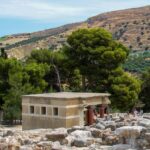
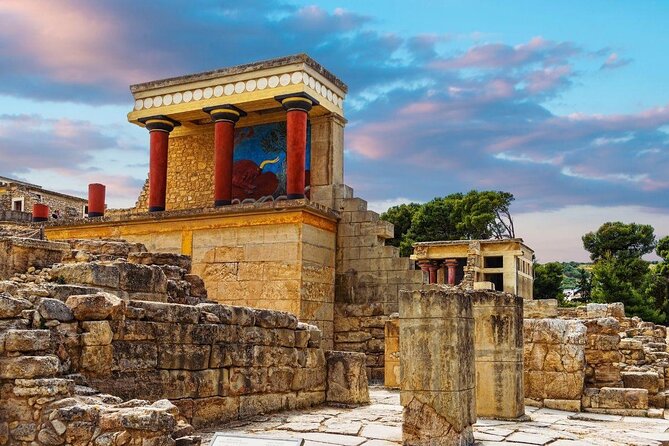
Knossos is famous for a reason. It’s not one neat building you can take in from a single viewpoint. It’s a complex spread out with interlocking rooms—over 1,500, in fact—so you can easily end up drifting from feature to feature with no sense of how it all fit together.
That’s where this tour helps. I like that you’re not left with only basic signage. Instead, you get a guided route that points out the major palace areas and connects them to the Minoan world that created it.
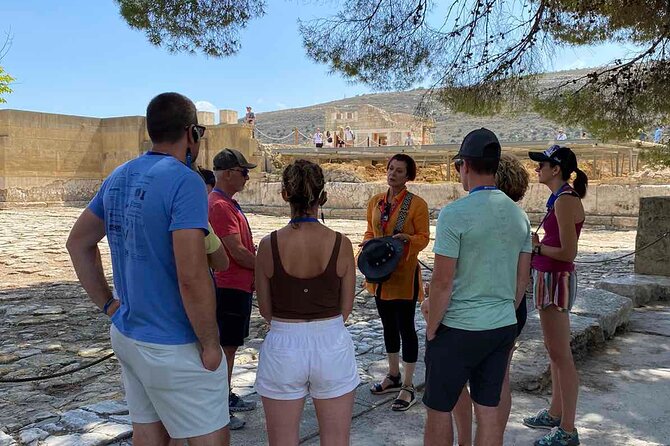
Expect a guided walk through the main sights, with enough context to make the myth of the labyrinth feel less like a random story and more like something anchored in places and functions. You also get headset support if your group is on the larger side, which matters at an outdoor site where voices don’t travel far.
You can also read our reviews of more tours and experiences in Crete

Meeting point, time slots, and how the skip-the-line part works
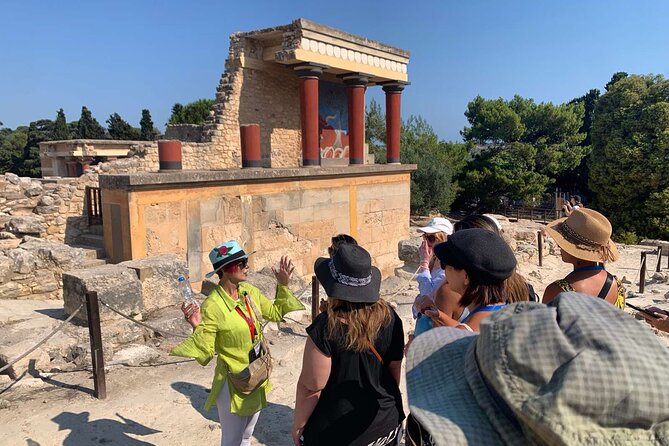
This is one of those tours where timing isn’t just a suggestion—it’s the whole deal. Check-in begins 20 minutes before your scheduled start time, and the group runs on strict entry slots. If you arrive after your time, your reserved entry can expire and you may be treated as a no-show.
Here’s the practical takeaway: don’t just aim to be on time. Aim to be early enough that you’re not sprinting from public transport, parking, or a nearby drop-off. If you’re driving, plan extra time for parking—especially for busier morning slots.
You’ll meet an operator by the ticket booth at Knossos, holding a sign with the tour company logo. Your guide will redeem your entry ticket for you, so you’re not juggling separate paper tickets at the entrance.
Also, be aware of where you’re staying. Knossos Palace is about 5 km (20 minutes) from Heraklion port/airport, so it’s convenient if you’re based in Heraklion. It’s much less convenient from Chania (Souda port or CHQ airport) because that’s around 140 km away.
Inside the Palace of Knossos: the sights your guide will pin to the story
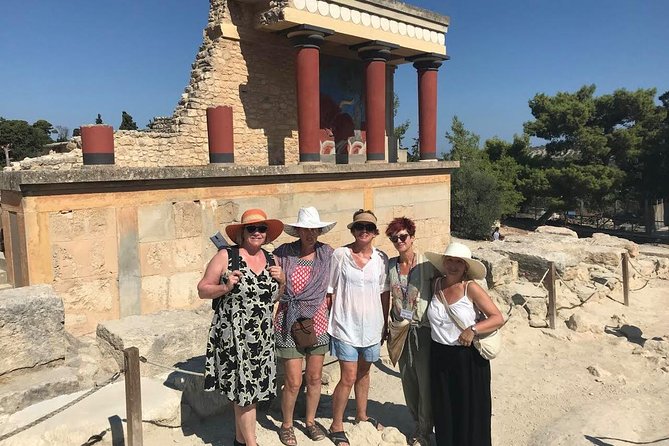
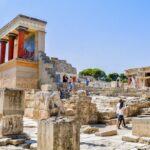
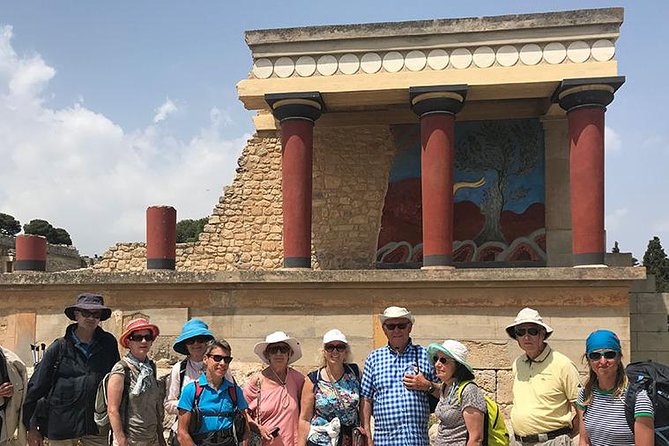
The heart of the experience is the 90-minute guided visit inside Knossos Palace. This is where the tour earns its keep: Knossos can look like scattered ruins, but with the right explanations, you start to notice patterns—corridors, room clusters, changing uses of space, and the way different areas relate to each other.
The throne area and the “Minos” connection
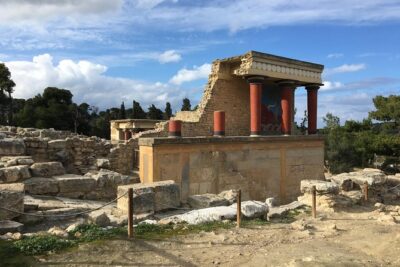
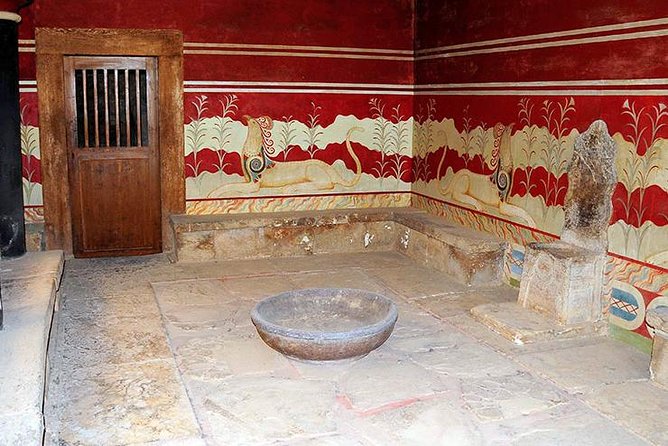
As you move through the palace complex, your guide points out highlights tied to legend and later interpretation—like the original throne of “Minos.” Even if you think of it as myth at first, the guide’s job is to explain what people were doing in that kind of space and why it mattered.
Sanctuaries and royal domestic quarters
You’ll also cover sanctuaries and areas tied to the royal family’s domestic life. I like this approach because it prevents Knossos from turning into a single-theme walk. It’s not only temples or only storage. You get a more rounded sense of how the palace functioned as a center for people, ritual, and administration.
You can also read our reviews of more tours and experiences in Crete
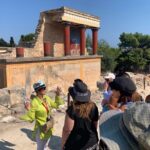
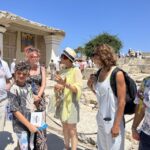
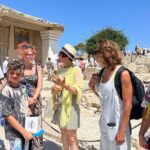

The House of Frescoes moment
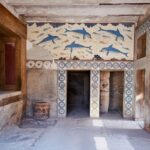
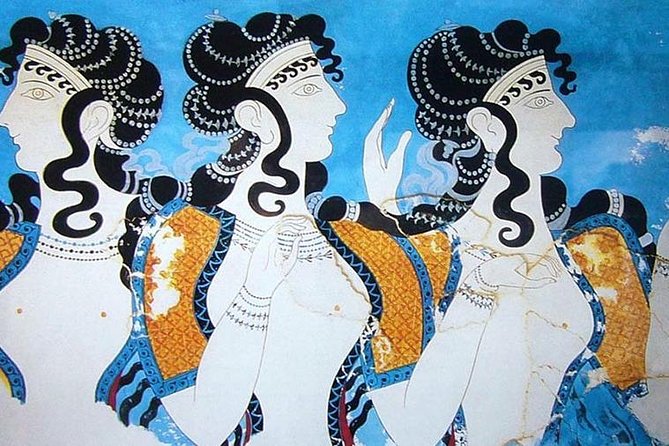
One of the most-valuable parts of the tour is the attention given to the House of Frescoes. These are the kinds of details that are hard to appreciate on your own because you might recognize it as important without understanding why it’s important—or what the images and rooms were likely used for.
Treasures, pantries, and organization
Knossos isn’t just about dramatic rooms. You’ll learn how the palace managed goods and resources, including storerooms and what’s often described as areas like treasuries and “pantries.” When your guide connects these to the big idea of a palace economy, the site stops feeling random.
Water-management systems (the practical miracle)
This is one of those “wait, seriously?” details that makes Knossos feel modern. The palace had impressive water-management systems, and when that’s explained in context, you see Knossos as engineering as well as mythology.
A note on signage
Knossos does have signage, but it’s limited. The tour is built around that reality. If you want to see more than dead stones—if you want to understand what you’re looking at—going with a guide is the difference between a walk and a story you remember.
Small group pacing, headsets, and hearing the guide clearly
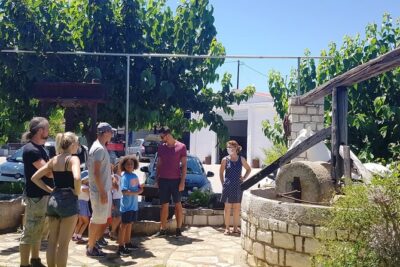
This is a shared group tour, but it’s not a huge one. The maximum group size is 22 travelers, which helps with movement and attention span. There’s another smart detail: if your group is over 6 participants, you get headsets (for groups typically around 7–15).
That headset detail matters more than you’d think. Knossos is outdoor, and sound fades fast. Headsets mean you’re not doing the mental math of turning your body to catch half a sentence. You can stay focused on where you’re standing and what the guide is pointing out.
Pacing also shows up in the way the tour feels. Multiple guides are described as using their knowledge to keep the group engaged—tying myths to facts, answering questions, and adapting to real-world conditions like heat and wind. One guide in particular was noted for keeping people in the shade when the day got hot, which is exactly the kind of practical care that makes a shorter tour feel worth it.
Summer strategy: 5:00 PM at Knossos is a smart move
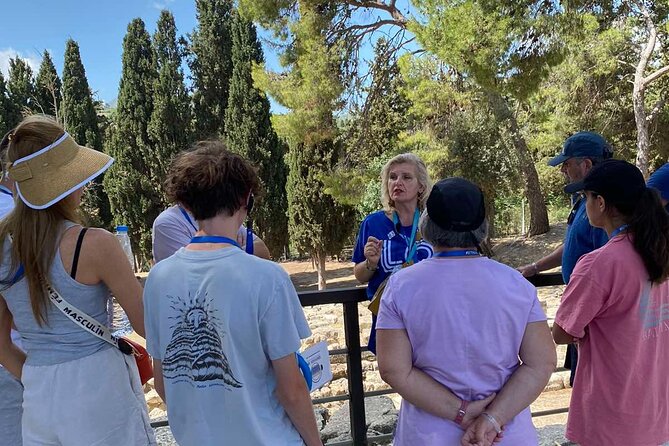
If you’re visiting in June, July, or August, plan around comfort. The tour info specifically recommends visiting at 17:00 (5:00 PM) because crowds and heat are typically lower.
This is where the “more time inside” part really matters. If you show up earlier and it’s blazing, you may end up walking fast, taking fewer mental notes, and feeling tired before the best explanations happen. A later start can help you slow down without forcing it.
If you hate the idea of crowds, this is also one of those times when the ruins feel more like a place and less like a stop on a checklist.
Value check: what you’re paying for and who it’s best for

At $107.68 per person, you’re paying for more than just access. Here’s what’s included:
- Skip-the-ticket-line service
- Entry ticket to Knossos Palace (general admission fee 20 EUR)
- A licensed guide for about 90 minutes
- Headsets when the group is larger
- GST
So you’re not just buying a ticket—you’re buying saved time and guided interpretation. That’s where the value is strongest for people who don’t want to spend their limited time trying to decode what they’re seeing.
If you’re the type who enjoys history and myths but wants them grounded in what archaeologists know and what they don’t, this tour is a good fit. The guide approach here is frequently described as story-based but tied to evidence—some guides even share how theories have shifted over time.
Where I’d be cautious: if you’re the kind of traveler who likes to wander for a long time without structure, a 90-minute guided visit may feel short. Some people even wished the tour had been longer. In that case, you can still do it and plan extra time afterward on your own, but you’ll want to accept that the guided route is the main course.
Pairing Knossos with Heraklion: make the day click
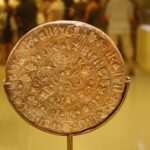
Knossos works best when it doesn’t sit alone. One of the most practical add-ons is the Archaeological Museum in Heraklion—because museum objects help you understand what you saw outside.
A common experience is that the guide connects the palace sights to items you’ll recognize later. Then you get a smoother museum visit, not a random collection of artifacts. Even if you’re not a museum person, this pairing can turn Knossos from a “cool place” into a clearer picture of the Minoan world.
If your schedule is tight, think of it like this: Knossos gives you the spatial story (rooms, layout, movement). The museum gives you the object story (what people made and used). Put together, you get a fuller sense of the civilization.
Should you book this Knossos skip-the-line tour?
Book it if you want Knossos to make sense fast. This is a strong choice for first-timers, history-and-myth fans, and anyone who knows that at major sites, time evaporates at entrances and explanations are what turn ruins into understanding.
Skip it (or consider a different format) if you need total flexibility with arrival times or if you’re looking to spend most of your day wandering slowly without a set route. The strict entry slot means you can’t treat your day like a casual stroll.
If you’re staying in Heraklion, the location makes this easy. And if you travel in summer, the 5:00 PM timing tip is worth taking seriously.
In short: you’re paying for time saved and meaning explained. That’s the kind of value that usually shows up in your memory later—when the labyrinth stops being just a famous name and starts feeling like a real place.
FAQ
How long is the Knossos Palace tour?
The tour lasts about 1 hour 30 minutes.
Is the admission ticket to Knossos included?
Yes. General admission to Knossos Palace is included in the price (20 EUR).
Is the tour guided, and what language is it in?
Yes. It includes a licensed guide and the tour is offered in English.
Will I be able to hear the guide during the tour?
You’ll get headsets if the group size is over 6 participants (typically 7–15 people), which helps you hear clearly.
Where do I check in, and what if I arrive late?
Check-in begins 20 minutes before the tour start time. An operator waits by the ticket booth at Knossos holding a sign with the meeting point logo. Entry is tied to strict time slots, and late arrivals may not be admitted.
Is the skip-the-line ticket service part of this experience?
Yes. The service is included to help you avoid the queue at the ticket counter.
What’s the best time to visit Knossos in summer?
During June–July–August, the recommended time is 17:00 (5:00 PM) to avoid the worst crowds and heat.