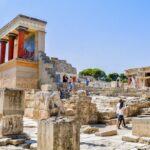
Knossos is more maze than ruins. This private, licensed guided tour turns the Labyrinth of Knossos into a clear story, with skip-the-line entry so you spend less time waiting and more time looking closely at the palace’s most famous spaces. I especially like how the guide brings together the big myths of the Minotaur and King Minos with what archaeologists know about Bronze Age Crete, and you’ll feel that narrative click as you walk room to room with Akrivi Chatzigeorgiou.
You’ll also love seeing the throne associated with King Minos and the dolphin-themed space connected with Queen Pasiphae, not as random highlights but as parts of the palace’s everyday and ceremonial life. A possible drawback: the tour is not suitable for wheelchair users and isn’t a good fit for mobility impairments or pregnancy, and you’ll be on your feet for the full 1.5 hours.
In This Review
- Key things that make this Knossos tour worth it
- Why Skip-the-Line Matters at Knossos (and Who This Tour Fits)
- The Bronze Age Story You’ll Hear Before You Even Start Walking
- Entering Knossos: Meeting at the Ticket Booth and Getting In Fast
- Palace of Knossos Tour (1.5 Hours): What You’ll Actually See
- 1) The Labyrinth Idea: Myth as a Wayfinding Tool
- 2) Minos’s Throne: More Than a Photo Stop
- 3) The Dolphin Apartment of Pasiphae: Color, Symbol, and Setting
- 4) Sanctuaries and Royal Living Areas: Where Ceremony Met Daily Life
- 5) Storage, Workshops, and Advanced Systems: The Practical Side of Power
- Pacing, Crowd Management, and Heat: Why a Private Guide Feels Easier
- Getting There from Heraklion: Transfer Options and the Real Logistics
- What’s Included (and What You Need to Plan Yourself)
- Languages: You Can Choose Your Comfort Zone
- Comfortable-Walk Reality Check (So You Don’t Get Surprised)
- Value Check: Is $206 Worth It?
- Should You Book This Private Knossos Tour?
- FAQ
- What’s included in the Knossos Private Guided Tour?
- How long is the guided tour at the Palace of Knossos?
- Where do I meet the guide before the tour starts?
- Are transfers from Heraklion included?
- What languages are the guides available in?
- Is this tour suitable for everyone?
Key things that make this Knossos tour worth it
- Skip-the-line entry at Knossos: less waiting, faster start
- Licensed private guide who explains both myth and archaeology
- Minos’s throne plus the dolphin apartment associated with Pasiphae
- Tight 1.5-hour pacing designed to keep you moving through heat and busy areas
- Live Q&A in your language (English, French, Russian, Greek)
- Entrance tickets included so you don’t have to juggle anything on arrival
Why Skip-the-Line Matters at Knossos (and Who This Tour Fits)
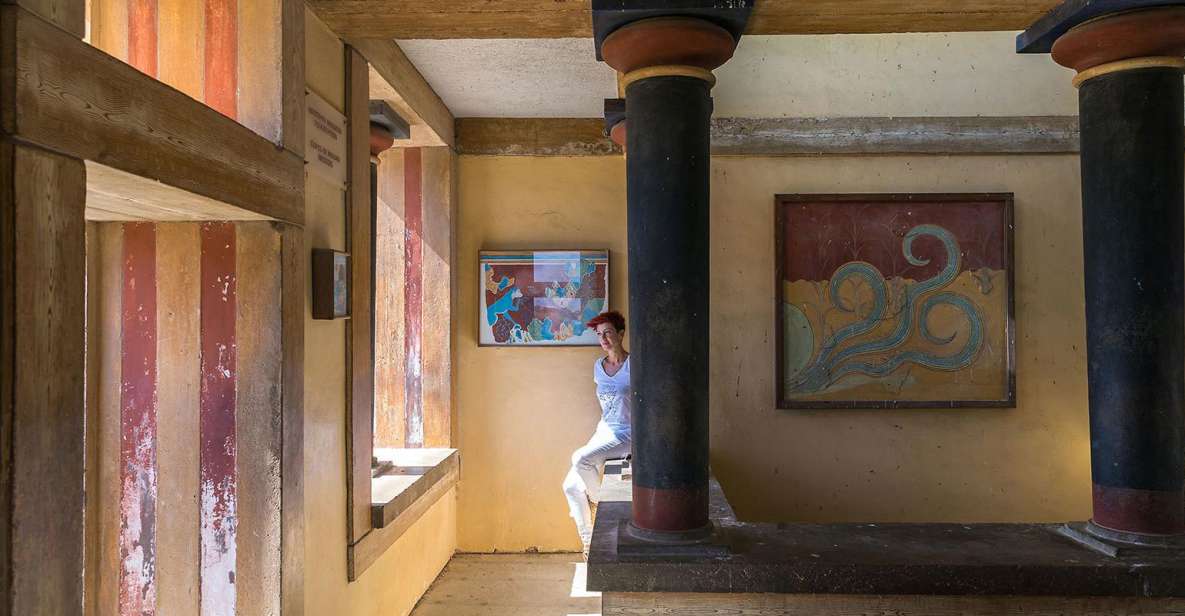
Knossos can feel like an eye test: bright sun, a lot of stone, and people everywhere. If you arrive during the busiest hours, the ticket line is the part of the day you’d rather not think about. That’s why the skip-the-line entry is the real foundation of this experience. You trade “standing around” for “seeing the rooms and frescoes while your brain is fresh.”
This is also a smart option if you don’t want a half-day project. At 1.5 hours, you get a focused walk through the palace highlights without turning your entire visit into a marathon. It fits well if you’re basing yourself in Heraklion and want something memorable that doesn’t eat your whole day.
I’d point it out especially for:
- Families and teens who do better with a story told out loud
- Travelers who want the myth side (Minotaur, King Minos) but also care about the real chronology (earthquake, rebuilding, palace power)
- People who prefer a private group so they can ask questions and set a comfortable pace
The tour is not suitable for everyone. If you have mobility limitations, use a wheelchair, or are pregnant, plan a different format.
You can also read our reviews of more guided tours in Crete
The Bronze Age Story You’ll Hear Before You Even Start Walking
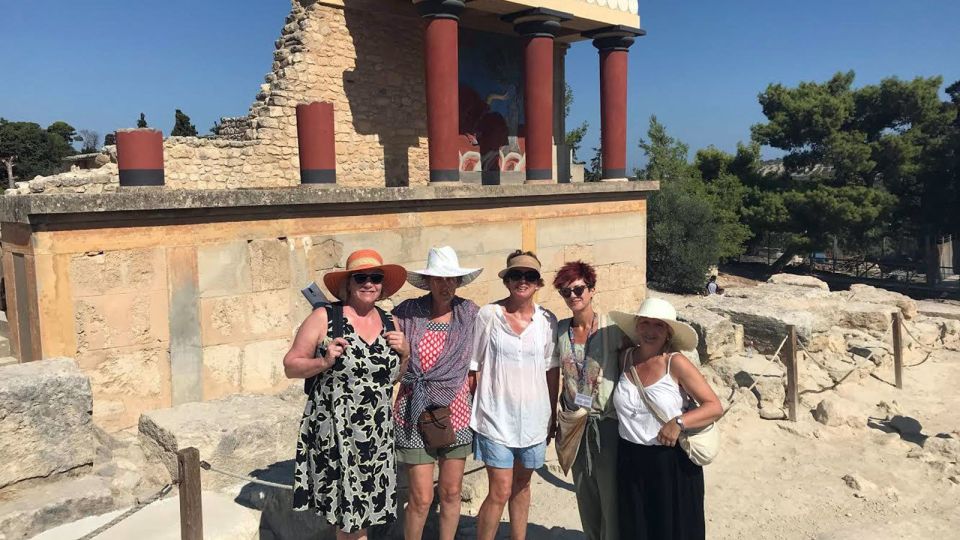
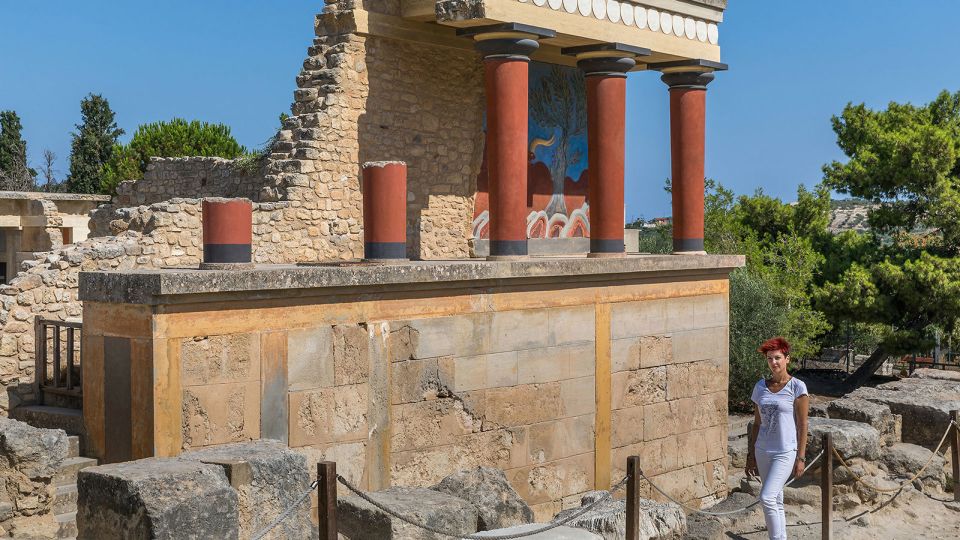
Even before you’re deep into the ruins, this tour sets expectations with context. Knossos isn’t a single room you “visit.” It’s a sprawling complex of more than 1,500 interlocking rooms, built as a palace system for a Bronze Age ruler. The guide helps you see it as an organized place—storage, workshops, ceremonial areas, daily living—not just scattered foundations.
Here’s the timeline that matters for how the place feels:
- The first palace at Knossos went up soon after 2000 BC
- Around 1700 BC, a catastrophic earthquake destroyed the palace
- A new palace was built immediately, then dominated Bronze Age Crete for more than 300 years
When a guide puts that arc into words, the ruins stop looking random. You start noticing layers and imagining how people lived before and after the earthquake—why certain sections look the way they do and what “power center” really meant in that era.
Entering Knossos: Meeting at the Ticket Booth and Getting In Fast
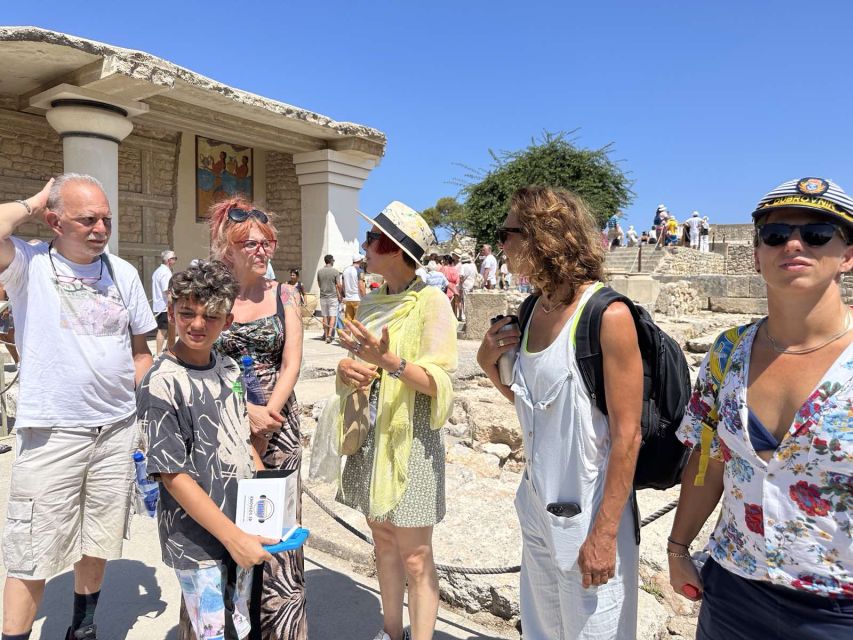
Your experience starts right at the gate area. The check-in operator meets you by the ticket booth at Knossos with a sign showing the meeting point logo, and check-in begins 20 minutes before your tour start time.
Two practical benefits here:
- You don’t have to figure out logistics on your own while the site is busy.
- You start your guided walk with momentum, not after a long delay.
Also, the tour notes that you should bring passport or ID, plus comfortable shoes, water, sunscreen, a sun hat, and sunglasses. Knossos is open to the sky in many areas, so protection isn’t optional.
And one more arrival reality: there can be a crowd during summer. The tour is designed to work within that—your guide will keep you moving.
Palace of Knossos Tour (1.5 Hours): What You’ll Actually See
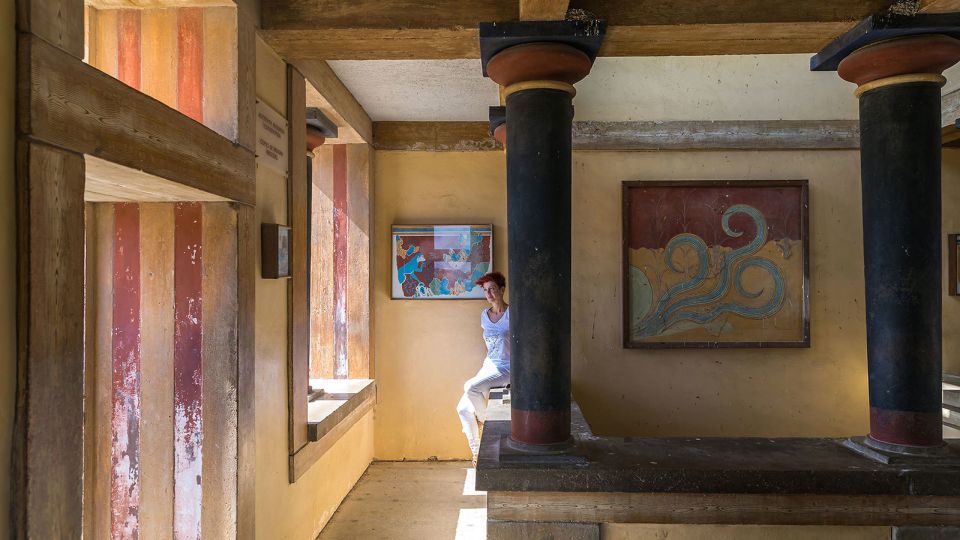
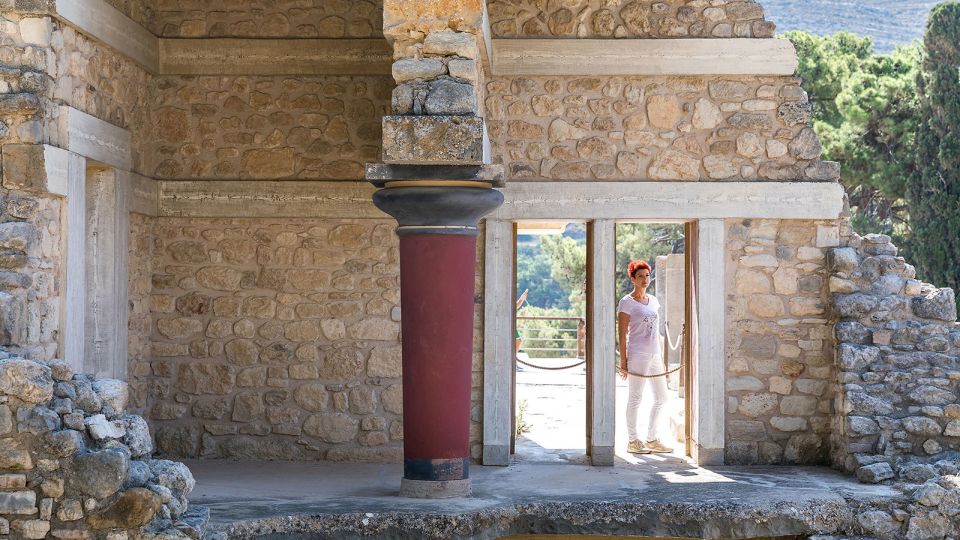
The guided portion is centered on the Palace of Knossos. You’ll spend your time walking the key areas tied to the myths and the most recognizable features of the palace.
1) The Labyrinth Idea: Myth as a Wayfinding Tool
The name Labyrinth gets tossed around a lot, but you’ll get something more useful from it here. Instead of treating the Minotaur story as pure legend, the guide uses myth as a kind of map—where the story points, and where the architecture and religious spaces suggest why people attached dramatic meanings to these rooms.
This is one of the most praised aspects of the tour style. The guide approach connects mythology with real structure in a way that’s easy to follow, and it helps you remember what you saw once you step out again.
You can also read our reviews of more private tours in Crete




2) Minos’s Throne: More Than a Photo Stop
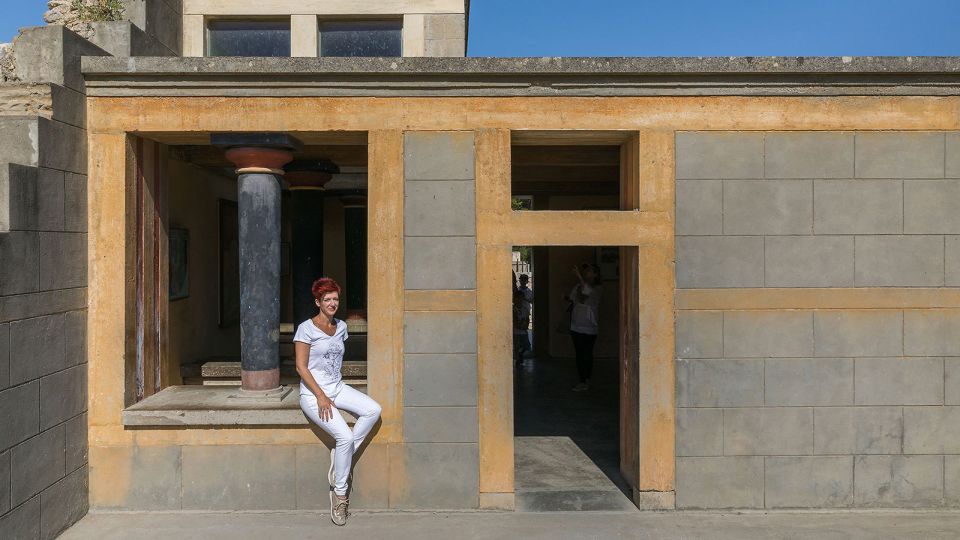
One of the highlight claims is the throne associated with King Minos, described as the oldest throne in Europe. On a guided walk, this becomes more than an object you point at.
Here’s why it matters: a throne isn’t just “royal seating.” In a palace like Knossos, it represents authority in a built environment. Your guide explains why this location signals power and how it fits within the larger palace system—ceremonial spaces versus daily life.
If you care about interpretation, you’ll appreciate a guide who can connect the story to what the site actually suggests.
3) The Dolphin Apartment of Pasiphae: Color, Symbol, and Setting
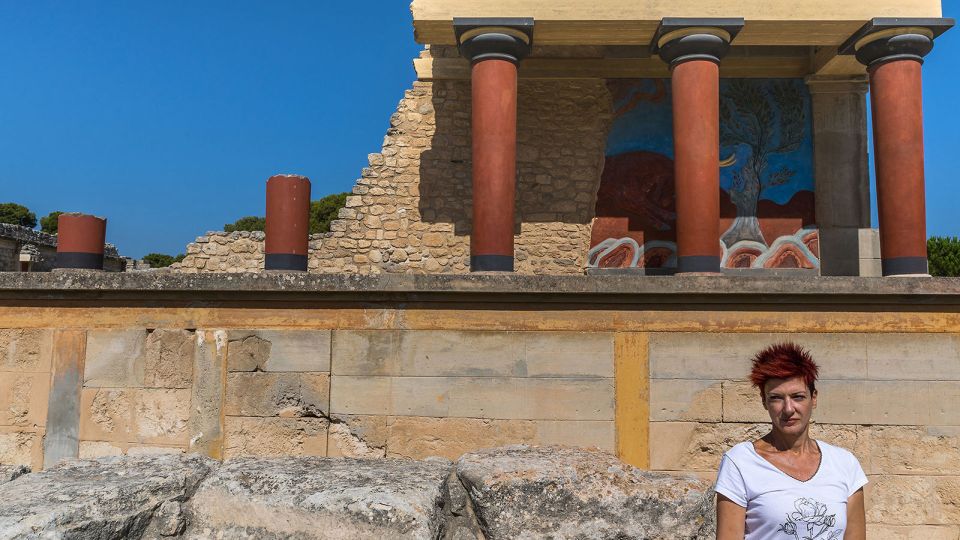
Next, you’ll look for the famous dolphin apartment connected with Queen Pasiphae. Even if you’ve seen photos online, being there in person changes the feel. Frescoes and painted motifs don’t read the same way when you’re standing a few steps away, in the right light.
This stop also helps you understand why the palace is famous for its wall art. The description highlights elegant wall paintings and notes that they inspired later art movements like Art Nouveau. That modern connection can be surprisingly satisfying once you’ve seen the original setting.
4) Sanctuaries and Royal Living Areas: Where Ceremony Met Daily Life
Knossos includes spaces that feel sacred and spaces that feel domestic. The tour focuses on the mystifying sanctuaries plus the luxurious domestic quarters of the royal family, the areas that would have held daily routines alongside ceremonies.
The value of a guide here is simple: without explanation, you might wonder which spaces mattered and why. With explanation, you start to categorize what you’re seeing:
- ceremonial function versus everyday utility
- visible symbols versus hidden infrastructure
- “king’s presence” moments versus behind-the-scenes palace operations
5) Storage, Workshops, and Advanced Systems: The Practical Side of Power
Knossos wasn’t just a stage for kings. It needed infrastructure to work. The tour description calls out advanced draining systems and large clay storage areas, plus workshops and specialized production spaces.
This is a great segment for the type of traveler who likes to picture how things worked. Palaces were massive economic engines. When your guide points out the drainage and storage logic, you’ll understand why the palace lasted and why it mattered to the region.
Pacing, Crowd Management, and Heat: Why a Private Guide Feels Easier
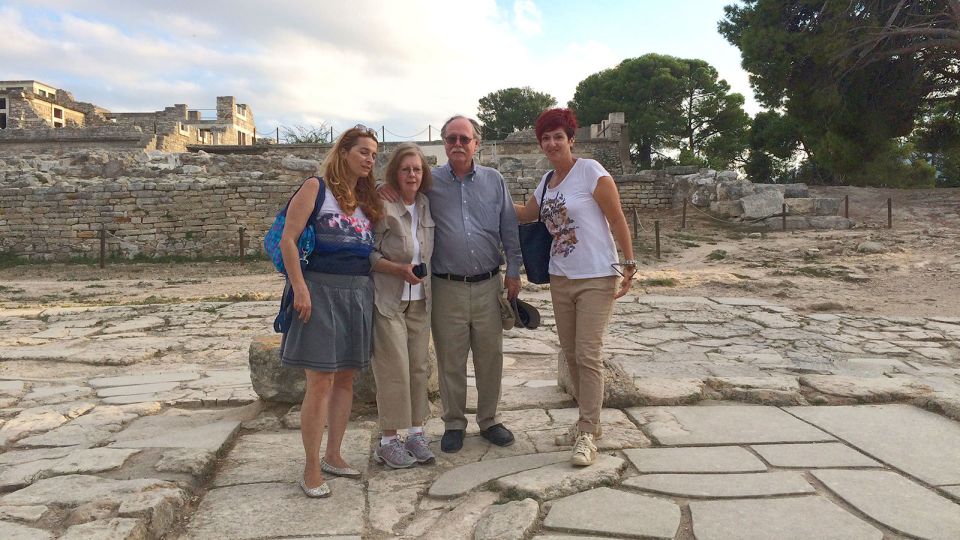
One theme that shows up strongly in the experience style is pacing. A private guide can do things a self-guided visit can’t: you can change direction quickly, pause where it makes sense, and move through busier spots before you lose time—or shade.
A specific tip that comes up is choosing a 9am start if your schedule allows. The logic is easy: it tends to be less hot and less crowded, so your tour feels smoother, and the stones and frescoes are more comfortable to look at for a full 1.5 hours.
Even if you don’t choose 9am, keep the same mindset: plan for summer conditions, and trust that a good guide will help you avoid the worst heat and densest pockets.
Getting There from Heraklion: Transfer Options and the Real Logistics
The tour doesn’t include hotel pickup and drop-off. You have a few options:
- Use local bus from Heraklion to the archaeological site
- Take a taxi/car
- Or select optional transfer services that offer round-trip transport from Heraklion city only
The transfer note is important. If you’re staying outside Heraklion city limits, you might need an additional fee, depending on where you’re starting from.
Practical advice: because Knossos can be busy, give yourself cushion time to reach the meeting area and check in at the ticket booth.
What’s Included (and What You Need to Plan Yourself)
Included:
- A private tour with a licensed tour guide
- Entrance tickets
Not included:
- Food and drinks
- Hotel pickup/drop-off (unless you choose the optional transfer)
That may sound basic, but it’s exactly how you should evaluate value. This tour charges for the things that actually change your experience: a private, licensed guide who can explain what you’re looking at, plus the saved time from skipping the ticket line. If you’re the type who hates waiting and likes context, the price makes more sense.
Languages: You Can Choose Your Comfort Zone
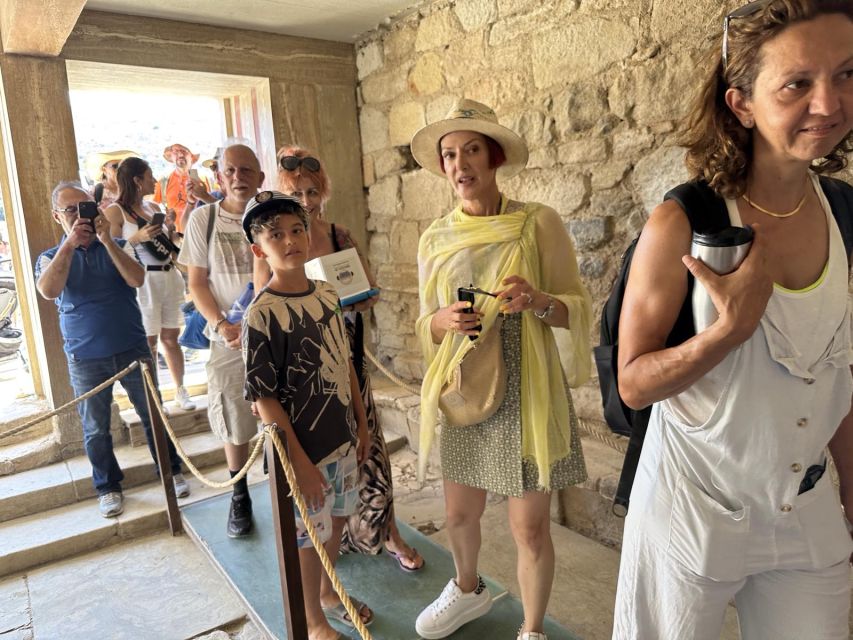
The live guide is available in English, French, Russian, and Greek. If you’re traveling with mixed language skills, this helps a lot. Being able to ask questions in a language you truly understand can turn a visit from passive watching into real learning.
Comfortable-Walk Reality Check (So You Don’t Get Surprised)
The site conditions matter. This activity is marked as not suitable for pregnant women, people with mobility impairments, and wheelchair users. You should also avoid bringing luggage or large bags.
Bring a small day pack if needed, but keep it light. Wear shoes you trust on uneven ground. You’ll enjoy the experience more when you’re not thinking about your feet every few minutes.
Value Check: Is $206 Worth It?
At $206 per person for a 1.5-hour private guided experience that includes entrance tickets and skip-the-line entry, you’re paying for three things:
- Time saved at a site that can be crowded
- A guide who explains myth and archaeology in a way that helps you connect the dots
- Private pacing so you can move through the palace without fighting the worst conditions
If you’re traveling solo or as a couple, it can still feel pricey compared with bus + self-guided tickets. But if you’d rather buy convenience and clarity than spend your day trying to interpret ruins on your own, this is the kind of tour that earns its cost.
Should You Book This Private Knossos Tour?
Book it if you want:
- skip-the-line entry
- a private, licensed guide who connects the Minotaur myths to what Knossos actually was
- a time-efficient visit (1.5 hours) that hits the most famous spaces like Minos’s throne and the dolphin apartment
Skip or switch to another option if:
- you need wheelchair access or you expect mobility challenges
- you plan to spend a long, slow day exploring every corner independently
- you’re traveling with a lot of extra baggage (large bags aren’t allowed)
If your goal is to leave Knossos with stories you understand—not just images you recognize—this is a strong fit.
FAQ
What’s included in the Knossos Private Guided Tour?
The tour includes a private tour with a licensed tour guide and the entrance tickets.
How long is the guided tour at the Palace of Knossos?
The guided portion is 1.5 hours.
Where do I meet the guide before the tour starts?
Check-in happens at Knossos by the ticket booth. An operator will be waiting holding a sign with the meeting point logo, and check-in begins 20 minutes before your start time.
Are transfers from Heraklion included?
Hotel pickup and drop-off are not included, but optional round-trip transfers are available from Heraklion city only.
What languages are the guides available in?
Live guiding is available in English, French, Russian, and Greek.
Is this tour suitable for everyone?
No. It is not suitable for pregnant women, people with mobility impairments, or wheelchair users.