Rethymno reads best on foot. This self-guided VoiceMap audio tour lets you move through the Old Town at your pace, linking Ancient Greece references to later eras while you follow a route near major landmarks. The big practical win: you get offline audio and maps so the story keeps going even when signal is weak.
I like the concept of lifetime access—you’re not buying a single-use ticket, you’re building a reusable walking guide for any future Rethymno trip. I also like that the route is built around real places you can see and aim for, with stops that include the Venetian Fortezza area and key spots such as the harbor and fountain.
One thing to consider: the narration quality depends on the audio voice. One review noted the guide voice had a very thick Dutch accent that made parts harder to understand, so having the on-screen text handy can be a must.
In This Review
- Key points worth knowing before you start
- How the Rethymno audio walk actually guides you
- Price and value: what $11.99 buys you in real time
- Logistics that make or break your walk
- Starting at NafpigioArkadiou: your ground truth moment
- Egyptian Lighthouse to Venetian Harbour: getting your bearings
- Brief stop outside a church: quick context, no ticket stress
- Neratze Mosque and Rimondi Fountain: names you’ll remember
- Fortezza of Rethymnon: optional 30-minute viewpoint payoff
- Offline maps and geodata: how to keep your day smooth
- Audio voice quality: what to do if you struggle with accents
- Who this Rethymno audio tour suits best (and who should skip it)
- Should you book the VoiceMap audio tour of Rethymno?
- FAQ
- FAQ
- How much does the Rethymno audio tour cost?
- How long is the tour?
- Is the tour available in English?
- Does it include lifetime access?
- What app do I need for this tour?
- Can I use the tour offline?
- Where does the tour start?
- Where does the tour end?
- Do I need tickets for the Fortezza?
- Is the activity refundable?
Key points worth knowing before you start
- Lifetime access means you can replay the walk anytime without buying again
- Offline audio, maps, and geodata help you navigate smoothly without relying on cell service
- A route through major Old Town sights keeps your walking purposeful, not wandering
- Optional Fortezza visit adds a 30-minute ticketed detour if you want the views
- Short exterior stops let you learn more without getting stuck in long lines
How the Rethymno audio walk actually guides you

This is not a sit-and-listen tour. It’s a self-guided audio experience delivered through the VoiceMap app, so you control the pace. You start at NafpigioArkadiou 254, Rethymno 741 31, Greece, and the activity ends back at that same meeting point, which is handy when you want a clear starting-and-ending anchor.
The route is designed around an order of sights, with multiple “pass by” segments and a few brief pauses. You’ll hear context as you move, which is often the best way to understand a layered city like Rethymno: you see one landmark, then you get the explanation, then you keep walking while the next clue is in front of you.
You’ll also get offline access to audio, maps, and geodata. Translation: you can download once, then walk without stressing about service and data. That matters in Crete towns where your signal can be fine one block and spotty the next.
Finally, this is offered in English, and it’s a private activity for your group. Even though you’re using an app, that private setup usually means you’re not competing with a crowd for “the right moment” at each spot.
You can also read our reviews of more tours and experiences in Crete



Price and value: what $11.99 buys you in real time

At $11.99 per person, this is priced like a budget-friendly walking companion. It lasts about 2 hours 40 minutes to 3 hours 5 minutes, so you’re looking at roughly a half-day chunk where you’re moving through the center, learning as you go, and staying flexible.
The true value isn’t just the short duration. It’s the lifetime access. If you come back to Rethymno later—maybe to revisit museums, try a different beach, or just see the town in a new season—you can reuse the same route instead of paying again.
What’s not included also affects value. You don’t get museum admissions or any entrance fees along the way, and you’ll need your own smartphone and headphones. So think of this as paying for the narration and navigation, not for transport or tickets.
If you like self-paced travel, this price makes sense. If you strongly prefer a live guide, you might find yourself wanting a bit more back-and-forth. The upside is that you can pause and reset whenever you need.
Logistics that make or break your walk
The tour is available all day within the listed date range, with Monday through Sunday running 12:00 AM to 11:59 PM. That wide window is useful because it lets you choose a time that fits your walking comfort and heat level.
This is also near public transportation, so you’re not forced into a taxi just to reach the start. If you’re staying near the center, you can often make it an easy morning or late-afternoon plan.
Two practical notes matter a lot:
1) Bring a charged phone.
2) Bring headphones.
The experience doesn’t include a smartphone or headphones, and there’s no built-in mention of loaner devices. If your phone battery is shaky, you’ll feel it fast, especially when you’re using maps and audio at the same time.
Also plan for food and water on your own. This isn’t set up as an all-in-one day plan, so you’ll want a snack stop that fits your energy.
Starting at NafpigioArkadiou: your ground truth moment

Before you hear the first story, take 30 seconds to lock in your bearings. The start point at NafpigioArkadiou 254 gives you a clear beginning, and because the tour returns there, you’re building an easy loop in your mind.
I find self-guided tours work best when you set one rule for yourself: don’t rush the first few minutes. Start the audio, take note of where the app wants you to go, and then match your pace to the walking rhythm of the route.
If you’re the type who likes photos, this is the time to decide. You’ll pass multiple landmarks, but some stops are described as brief or exterior-only, so you’ll get the best results if you treat the walk like a “slow stroll with explanations,” not a race.
Egyptian Lighthouse to Venetian Harbour: getting your bearings
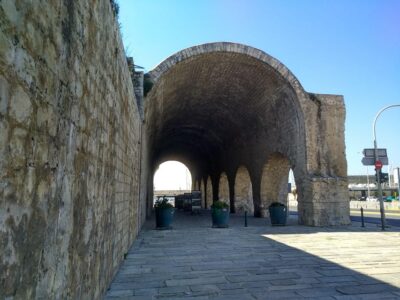
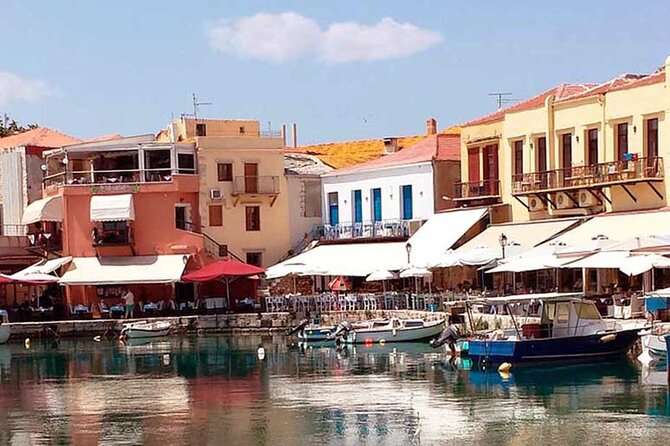
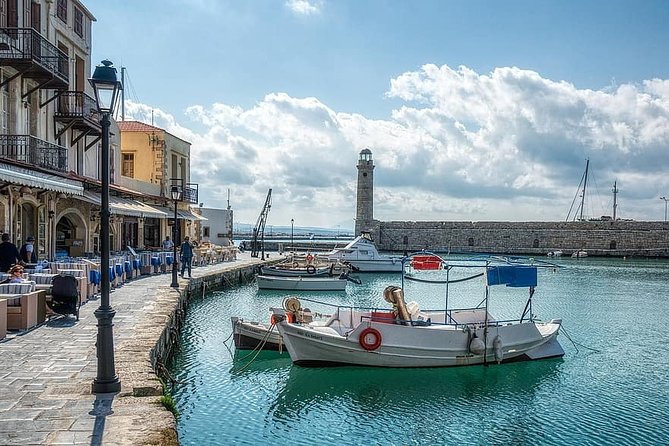
Early on, the tour passes by the Egyptian Lighthouse and then continues toward the Venetian Harbour. Even without a ticket, these waterfront points work well as orientation markers. You’re in the right part of town, and you can connect what you hear to what you see.
This part of the route is a good warm-up. It’s where you learn how the city’s shape is influencing everything else: the harbor area helps explain why forts, religious buildings, and civic landmarks cluster where they do.
It also helps your eye. Once you’ve identified the harbor context, the later stops feel less random. Instead of hopping between unrelated sights, you start noticing how different periods of rule and culture left practical changes—street patterns, landmark choices, and the kinds of buildings you find.
You can also read our reviews of more tours and experiences in Crete




Brief stop outside a church: quick context, no ticket stress
The tour stops briefly outside a church. That matters because it gives you a “pause point” without requiring entrance. If you don’t want to pay or commit time inside, exterior stops like this can still teach you a lot.
Use this moment to practice a smart self-guided habit: don’t just look at the building. Listen closely to the naming and timeline details the audio provides, then glance back at the facade and surroundings. When the explanation and the visible details match up, the city becomes easier to read for the rest of the walk.
Because this is a short stop, don’t plan a long photo session here. Get the photo you want, then move on before you fall behind your own pacing.
Neratze Mosque and Rimondi Fountain: names you’ll remember
Next up is the Neratze Mosque, followed by a brief stop at the Rimondi Fountain. These are the kinds of landmarks that help you understand why Rethymno feels like more than one city at different times.
The Neratze Mosque stop is valuable because it’s not an isolated “one-off.” You’re hearing context as you pass a major religious landmark, so the audio can connect it to the broader story of Crete’s changing eras. Even if you don’t go inside, the exterior moment gives you a mental anchor for the city’s identity.
Then comes the Rimondi Fountain. Fountain stops are great on audio tours because they naturally slow you down. You can take in the craftsmanship and the setting, then you get history tied to a real object you can point at.
One more thing: the audio tour content is described as including little-known facts about Rethymno’s name and about Crete history. In practice, this is where that kind of detail tends to land hardest—when you’re standing next to a recognizable civic landmark. You remember names because the place is right in front of you.
Fortezza of Rethymnon: optional 30-minute viewpoint payoff

Your biggest potential detour is the Fortezza of Rethymnon. The tour offers an optional visit that’s listed as about 30 minutes, and admission tickets are not included.
If you’re on the fence, use this simple decision rule:
- If you like city views, fortifications, and panorama-style “see the geometry” moments, add it.
- If you prefer only exterior viewing and want to keep moving, skip it and stay with the main walk.
Because the ticket isn’t included, you’ll want a bit of budget flexibility. Even if you don’t buy a ticket for the fortress, the audio route still gives you the surrounding story, so you won’t feel like you missed the entire experience.
The Fortezza area is also where your earlier harbor orientation pays off. Forts and harbors are linked in almost every Mediterranean city. When you arrive with that context already in your head, you can connect what you’re seeing to what you heard earlier.
Offline maps and geodata: how to keep your day smooth
A lot of audio tours fail for a simple reason: you download once, then reality hits, and your map vanishes. This one includes offline access to audio, maps, and geodata, which is exactly what you want for a walking route.
Here’s how I’d use it:
- Download the tour before you start your walk, ideally on Wi-Fi.
- Keep your brightness moderate so battery lasts.
- When you’re near a landmark, cross-check where you are on the map so you don’t drift off-route.
Also, rely on the app’s guidance rather than trying to freestyle. Self-guided tours work best when you respect the route order, especially when the audio explains why each stop matters.
If you’re sensitive to audio clarity, offline use helps in another way: you can pause and reread on-screen text without needing to wait for buffering.
Audio voice quality: what to do if you struggle with accents
One of the most useful pieces of real feedback from a review is that the narration voice had a thick Dutch accent, and it became difficult to understand at times. The same review notes that consulting the text accompanying the audio helped clarify points.
So if you’re worried about hearing details clearly, don’t treat this as a blind bet. Have a plan:
- Keep the app’s text view available if your device offers it.
- When a sentence feels fuzzy, switch to the text for that section, then return to audio.
This is also a reminder that audio tours are personal. Even when the content is strong, pronunciation and pacing can change the experience. If you’re the type who likes to catch every detail, you’ll want to be ready to use the text layer.
Who this Rethymno audio tour suits best (and who should skip it)
This is a good fit if you:
- Want a budget-priced way to get context while walking.
- Prefer self-paced travel over group timing.
- Like the idea of returning later with lifetime access.
- Are comfortable using a smartphone for navigation and audio.
It’s not the best choice if you:
- Don’t want to rely on a device for audio and maps.
- Have trouble understanding audio narration from certain accents.
- Prefer a live guide who can answer questions on the spot.
Also, because it’s a walking route with optional additions, it suits visitors who are okay with about three hours of moving through the center.
Should you book the VoiceMap audio tour of Rethymno?
I’d book it if you want an efficient, low-cost way to connect Rethymno’s waterfront, mosques, fountains, and the Fortezza area into one walkable story. The offline support and lifetime access make it practical for real travel, not just a one-day novelty.
I’d hesitate if you strongly need crystal-clear narration in your preferred style, since at least one person found the accent hard to understand and had to lean on text for clarity. If you’re comfortable doing that, you’ll likely still get a lot out of the route.
Bottom line: for $11.99, this is a solid “walk with explanations” option in Rethymno, especially if you like being independent and revisiting the same streets later.
FAQ
FAQ
How much does the Rethymno audio tour cost?
It costs $11.99 per person.
How long is the tour?
Plan for about 2 hours 40 minutes to 3 hours 5 minutes.
Is the tour available in English?
Yes, it’s offered in English.
Does it include lifetime access?
Yes. You get lifetime access to the Rethymno audio tour after you book.
What app do I need for this tour?
You use the VoiceMap app on Android and iOS.
Can I use the tour offline?
Yes. Audio, maps, and geodata are available offline.
Where does the tour start?
It starts at NafpigioArkadiou 254, Rethymno 741 31, Greece.
Where does the tour end?
It ends back at the same meeting point.
Do I need tickets for the Fortezza?
The Fortezza of Rethymnon stop is optional, and admission tickets are not included.
Is the activity refundable?
No. The experience is non-refundable and cannot be changed for any reason.
If you want, tell me when you’re going and whether you plan to add the Fortezza ticket, and I’ll help you pick the best time window for the walk.