Three hours, and Crete feels bigger.
This E-bike ride from Ammoudara takes you off the usual map and into working villages on the slopes around Heraklion, with real stops for churches, caves, and old house streets, not just quick photo pulls.
I like how small-group and guided this feels, and you get practical support as the route turns more uphill. The highlight for me is the mix: early cycling past the University of Crete/FORTH area, then quiet hill villages, then back to sea time. If you’re the type who wants a calmer way to see Crete, this hits the mark.
One consideration: it’s rated for moderate physical fitness, so you’ll still pedal through some climbs and switch gears as the guide recommends, even on an e-bike.
In This Review
- Key things to know before you ride
- Entering Crete’s hill country from Ammoudara Beach
- First leg: FORTH, the University area, and quiet roads out of town
- Stop 1, Stavrakia (240m): rest, village life, and Mount Juktas hints
- Stop 2 and 3, Agios Myron: church, tomb, cave holy water, and big views
- Church and tomb of Saint Myron
- The cave with famous holy water
- The school clock tower and the two-hill view
- Between villages: downhill, uphill, and a quiet route through olive groves and vineyards
- Stop 4, Pentamodi (320m): old houses, narrow roads, and a slower pace
- What to watch for here
- Stop 5, Petrokefalo (330m): the short uphill bounce
- Stop 6, Voutes (240m): close to the city, with taverns and a practical village feel
- The return to Ammoudara Beach: swim time and Greek meze
- Price and value: what $96.33 buys you in real time
- Pacing and fitness: who should choose this ride
- How I’d plan your day around this tour
- Should you book this Crete unknown-side E-Bike tour?
- FAQ
- Where does the tour start and where does it end?
- How long is the e-bike tour?
- How many people are in the group?
- What level of fitness do I need?
- Is the tour offered in English?
- What stops are included during the ride?
- Are admission tickets required at the stops?
- What happens if the weather is bad?
- What is the cancellation window for a full refund?
Key things to know before you ride
- Up to 6 people means you’re not swallowed by a crowd, and your guide can help with gear choices.
- Agios Myron’s holy-water cave is a standout stop, plus you get time at the church and tomb of Saint Myron.
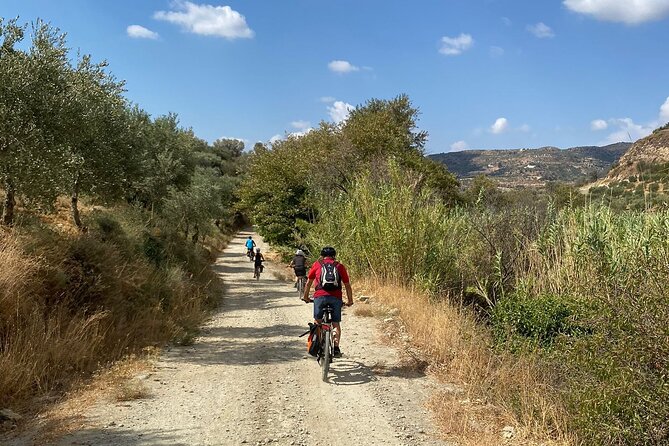
- Village-to-village cycling through olive groves and vineyards beats doing this by car, where you only see the road edges.
- Altitude changes (Stavrakia around 240m, Agios Myron around 440m, then back down) explain the rhythm of climbs and downhills.
- A beach finish at Ammoudara gives you a simple reward: swim and recharge before eating Greek meze.
Entering Crete’s hill country from Ammoudara Beach
The tour starts at Ammoudara beach, just west of Heraklion, and that matters. You get your “Crete fix” fast: sea air at the beginning, then a slow handoff from tourist bus routes to smaller country roads. The route heads south first, then turns west, so you’re not stuck making one long, repetitive line.
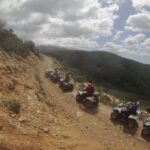
What makes this feel special is how the ride is structured around villages at different altitudes. You’ll feel that on the bike: easy rollouts early, then the kind of hills that get interesting. The e-bike support helps, but it doesn’t turn the ride into a lazy glide. You still stay engaged, and you’ll have a real sense of place by the time you reach Agios Myron.
And you’re not just riding through scenery. You stop long enough to actually take in what’s there—churches, tombs, streets, and a cave with holy water—so the time doesn’t vanish into “moving photos.”
You can also read our reviews of more cycling tours in Crete

First leg: FORTH, the University area, and quiet roads out of town
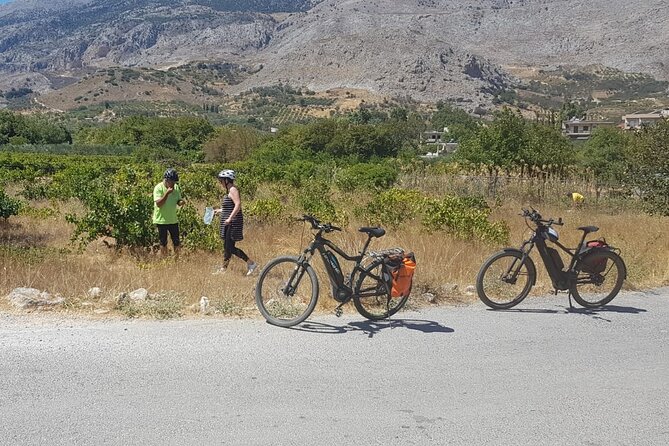
Right after you begin, the plan is straightforward. After about 5 km, you reach the University of Crete and the Foundation for Research and Technology – Hellas (FORTH). Then you change direction and cycle west.
This opening stretch is more than a warm-up. It sets the tone: you’re leaving the main city pull and transitioning onto routes with little traffic. That makes the early minutes relaxing, especially if you’re still getting used to the bike’s assist and your own rhythm.
After roughly 12 km (about 40 minutes), you arrive in Stavrakia at around 240m altitude. That timing is nice because it means you don’t waste your best energy on a long ride before the first break. The tour builds in rest like it understands how real legs work.
Stop 1, Stavrakia (240m): rest, village life, and Mount Juktas hints
Stavrakia is your first stop, and it’s an easy one to appreciate. You get time to settle after the ride and take in the village mood—simple streets, local pace, and that “everyone knows where they’re going” feeling.
There’s also a practical bonus: you can admire Mount Juktas in the east from here. You don’t need a guidebook-worthy moment to enjoy that. It’s just the kind of view that helps you understand you’re cycling into hills, not just driving around them.
This is also where you can drink water and rest before the next climb toward Agios Myron. I like that the tour doesn’t rush the first village stop. You’ll be glad for the pause when the altitude starts to rise again later.
Stop 2 and 3, Agios Myron: church, tomb, cave holy water, and big views
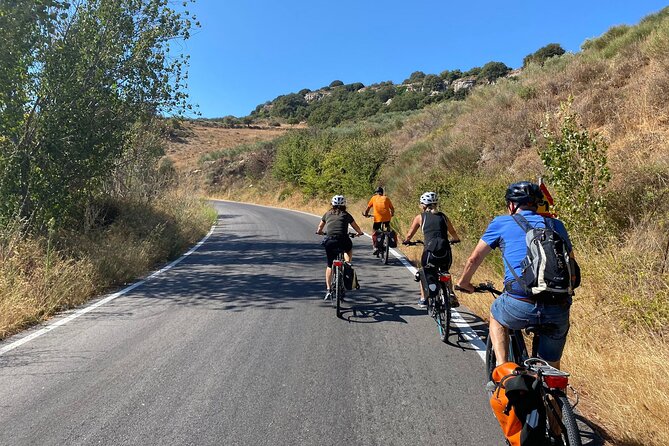
Agios Myron is the tour’s spiritual and scenic anchor. You cycle about 17 km here, roughly 1 hour and 10 minutes, reaching around 440m at the foot of Mount Psiloritis. The climb is the point—so don’t try to “race” it. Treat it like a gradual shift into a different Crete.
Church and tomb of Saint Myron
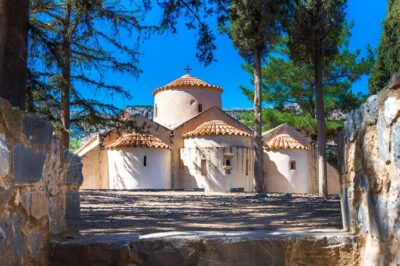
At Agios Myron, you’ll have time to visit the church and the tomb of Saint Myron, known as one of the first bishops of Crete and linked to the 4th century AD. Even if you’re not deep into early church history, this stop gives you context for why the village matters to locals, not just to cyclists.
You can also read our reviews of more tours and experiences in Crete
The cave with famous holy water
Near the temple, there’s a cave where you can find Saint Myron’s miraculous holy water. This is the sort of stop that makes a guided ride feel worth it. On your own, you might pass by or miss the significance entirely. Here, you get a clear reason to care, and time to see it without feeling rushed.
The school clock tower and the two-hill view
After that first chunk of time in Agios Myron, you’ll also get a look at the school clock tower. It’s visible from almost everywhere around the area. The story is part of the charm: it was originally built as a church tower, but didn’t suit it, so it was moved to the school.
You’ll also notice the village’s layout. Agios Myron is built on top of two hills, and the view from here is honestly hard to beat for a bike tour. It’s not a “famous postcard” viewpoint. It’s better: it feels lived-in, with the land shaping how people built and moved.
Between villages: downhill, uphill, and a quiet route through olive groves and vineyards
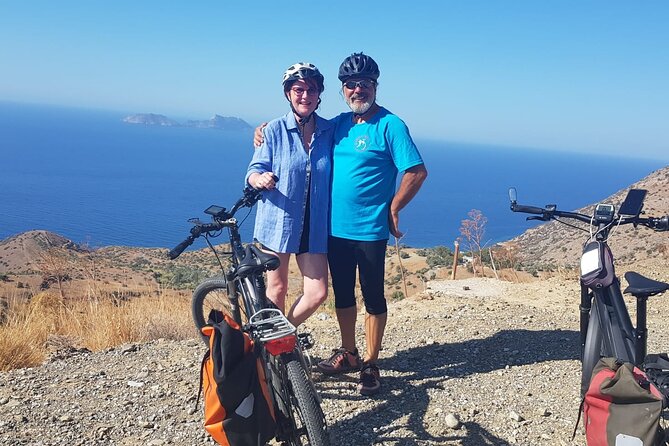
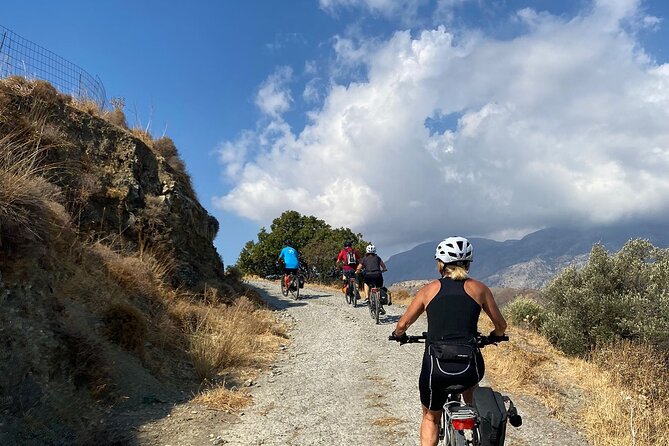
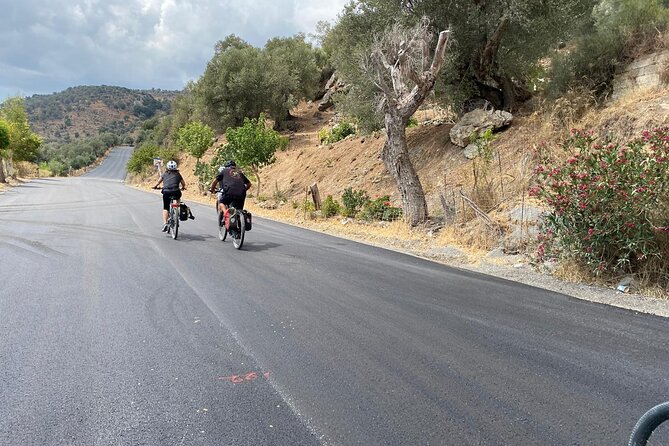
The ride leaving Agios Myron is one of the most satisfying parts. You head downhill first, then later uphill, and you pass through olive groves and vineyards. That mix is a big reason e-bikes work here. You can take in the changes—shade to sun, grove edges to open stretches—without arriving drained.
This is where your guide earns their keep. From the start, you’ll get shifting reminders, especially as the route turns more challenging. I love that kind of small coaching because it turns “I hope I can handle this hill” into “I know what gear to use and why.”
Stop 4, Pentamodi (320m): old houses, narrow roads, and a slower pace
After about 3 km and around 15 minutes, you arrive in Pentamodi at roughly 320m altitude. Pentamodi is a village built for walking and small turns, not wide roads. You ride through it so you can see older traditional houses and those narrow street patterns that keep the village feeling human-scale.
This is a nice counterbalance after the bigger Agios Myron moment. Pentamodi doesn’t need a dramatic story to be interesting. It’s the everyday architecture and street shape that make it feel real.
What to watch for here
If you like details, keep an eye on the house fronts and the way lanes bend around the terrain. Hills always change architecture, and you’ll see it working here.
Stop 5, Petrokefalo (330m): the short uphill bounce
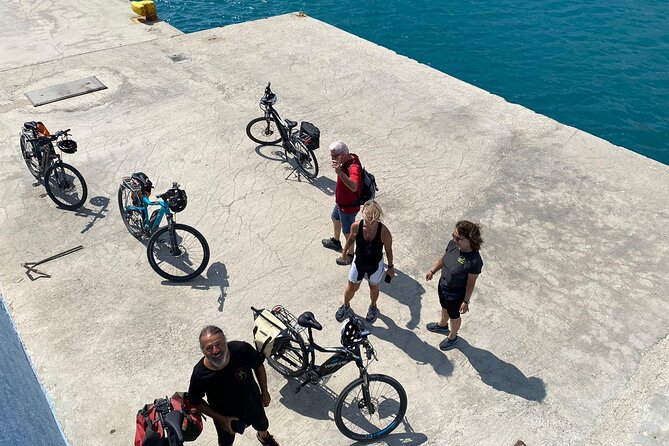
From Pentamodi, it’s only about 2 km (around 8 minutes) uphill to Petrokefalo at about 330m. This stop is shorter—around 15 minutes—but it still matters because it keeps the ride from becoming one long chain.
Petrokefalo helps you feel the rhythm of the day: you climb, you reset, you look around, then you keep going. It also keeps your energy steady. The route doesn’t keep stacking hills back-to-back without recovery time.
Stop 6, Voutes (240m): close to the city, with taverns and a practical village feel
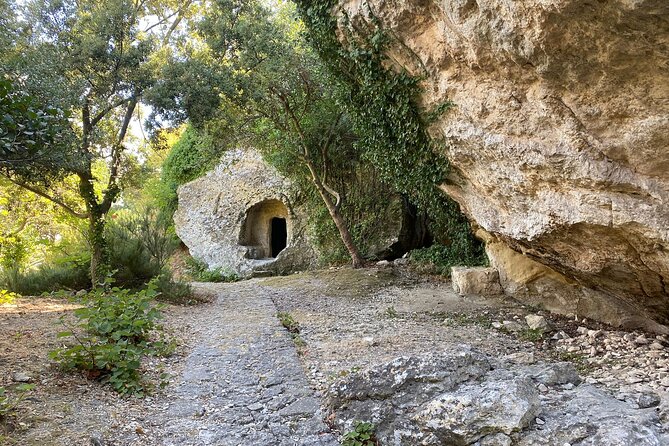
Next up is Voutes, last village stop, about 240m altitude. This one is close to the city, so many people live here and commute to work. That makes Voutes feel different from the more “destination-like” hill stops earlier.
You’ll have about 10 minutes here, and yes, there are nice taverns. Even with limited time, this stop adds a useful perspective: Crete isn’t only churches and scenery. It’s also where people live, work, and eat on a normal day.
If you’re the kind of traveler who likes to understand how locals structure daily life, Voutes gives you that angle without turning the tour into a lecture.
The return to Ammoudara Beach: swim time and Greek meze
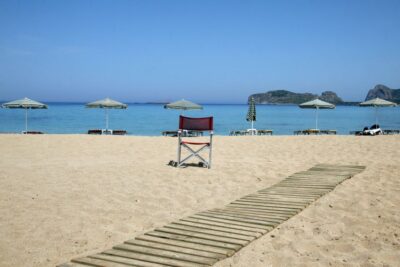
After leaving Voutes, you ride about 25 minutes back to the starting point at Ammoudara beach. Then you get around 50 minutes to cool off, swim, and refresh yourself.
This ending is a big part of the tour’s value. It turns the day into a loop with a clear payoff: you spent the morning and early afternoon climbing and village-hopping, then you finish where the water and shade make sense.
And before you head out to eat, the day points you toward Greek meze. The tour schedule gives you the reset time you need to enjoy food instead of grabbing it while your legs are still buzzing.
Price and value: what $96.33 buys you in real time
At $96.33 per person for about 3 hours, this ride is priced like a true activity, not just a casual sightseeing walk. You’re paying for an e-bike experience, a guide who can help with ride mechanics, and enough guided stops to actually see something at each location.
A few value points stand out:
- Max 6 travelers keeps the experience personal. That matters when you’re handling hills and want quick help with gear shifting.
- Admission ticket free at the stops is a nice bonus, since you’re visiting places like churches and historical sites without extra entry fees stacking up.
- The route includes multiple villages and a cave stop, plus the beach cooldown. That’s a full arc, not a single landmark and back.
Is it a bargain? It’s not the cheapest thing you can book. But it’s also not priced like a luxury day. For a short time window, it gives you movement, guidance, and cultural stops in a way that feels efficient.
Pacing and fitness: who should choose this ride
The tour is for people with moderate physical fitness. That doesn’t mean you need to be a mountain climber, but it does mean you’ll be on hills and you’ll ride long enough to feel the effort in your legs.
The e-bike helps. Still, your best success comes from a mindset that accepts gradual climbing. When the route turns more challenging, gear shifting tips make a real difference. The guide you ride with, Aris, is known for prepping riders and talking through gear choices as you approach tougher parts.
Who will likely enjoy this most:
- You want active sightseeing, not a bus tour.
- You like small villages and slower streets over big monuments.
- You enjoy a route where the day ends with a physical release (swimming) instead of just a return ride.
Who should think twice:
- You want zero hills or a fully flat ride.
- You’re easily stressed by basic bike technique like shifting and staying steady on climbs.
How I’d plan your day around this tour
Because the finish is at Ammoudara beach, I’d treat this as a morning or early-afternoon activity. You’ll get the best of both worlds: inland village time first, beach time at the end.
Also, plan hydration seriously. The day includes multiple stops and altitude changes, and you’ll want water even if the e-bike does the heavy lifting. Start focused, then let the breaks reset you.
Finally, keep weather in mind. The experience requires good weather, and if it’s canceled for poor conditions, you’ll be offered another date or a full refund.
Should you book this Crete unknown-side E-Bike tour?
If your goal is to see Crete beyond the main sights, this is a smart choice. The combination of village stops, the holy-water cave at Saint Myron, and the payoff back at Ammoudara beach makes the day feel complete. And with a group size capped at six, the guide’s attention stays practical instead of diluted.
Book it if you:
- Want a guided e-bike ride that mixes culture and countryside.
- Like the idea of cycling past University of Crete/FORTH early, then slowing down in villages.
- Enjoy views that come from actual altitude, not just from a single lookout.
Skip it if you want totally effortless biking or you’re traveling on a tight weather-dependent schedule with no flexibility.
If you’re on the fence, choose the ride. Crete rewards movement, and this route gives you a real sense of the island’s quieter side without dragging the day into something too long.
FAQ
Where does the tour start and where does it end?
It starts at Spirou Moustakli, Xeropotamos 713 03, Greece, and it ends back at the same meeting point.
How long is the e-bike tour?
The duration is about 3 hours.
How many people are in the group?
The tour has a maximum of 6 travelers.
What level of fitness do I need?
The tour is for travelers with a moderate physical fitness level.
Is the tour offered in English?
Yes, it is offered in English.
What stops are included during the ride?
The tour includes stops in Stavrakia, Agios Myron (including the church/tomb of Saint Myron and a cave with holy water), Pentamodi, Petrokefalo, Voutes, and time back at Ammoudara Beach.
Are admission tickets required at the stops?
The admission tickets for the listed stops are free.
What happens if the weather is bad?
The experience requires good weather. If it’s canceled due to poor weather, you’ll be offered a different date or a full refund.
What is the cancellation window for a full refund?
You can cancel up to 24 hours in advance of the experience for a full refund.