Knossos is only half the story. This small-group tour strings together olive oil culture and Zeus Cave with mountain villages and a finish at Knossos Palace, all in about 7–8 hours. You’ll see how Cretan life runs on olives, water, and stories older than calendars.
I especially like the way the tour teaches how olive oil is made (modern and older methods) and keeps it fun with tastings and coffee. I also really like the guide approach—names you might get include Mike or Stavros, and they tend to run the day like a friendly lesson, full of place-based history and quick trivia.
One big consideration: Zeus Cave has seasonal closures, and when it is open you’ll deal with a moderate uphill walk plus a descent of about 180 steps with handrails. If you prefer flat, easy days, you may find that part demanding.
In This Review
- Key things you’ll care about most
- Why This Crete Day Mixes Myth, Water, and Olive Oil
- Omalia Olive Press: Tree to Bottle, With Modern and Old Methods
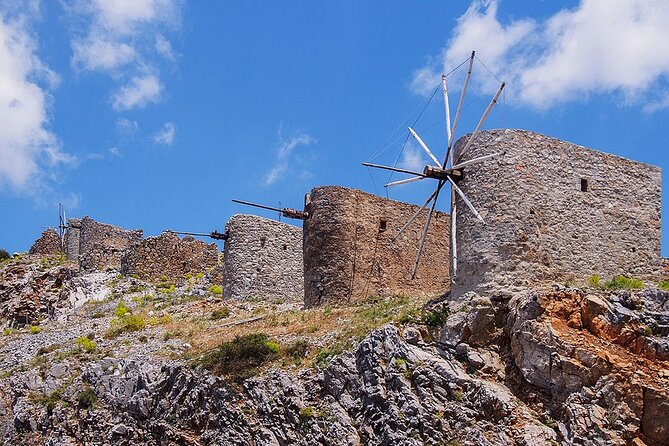
- Lasithi Plateau Windmills: How People Used Wind to Run a Farm
- Krasi Village and the Platanus Tree: Stone Streets, Old Aqueducts
- Aposelemi Dam Viewpoint, a Monastery Pass, and Mochos
- Psychro Cave of Zeus (Diktaean Cave): Steps, Chandelier-Stalactites, and Cool Air
- Knossos Palace: Pay the Entry, Skip the Crowds Where You Can
- Lunch at Restaurant Tzanakis Michael: Local Food, Not Included
- Transport and Group Size: Why Shared Feels Like Semi-Private
- Price and Value: What’s Included, What Costs Extra, and Why It Adds Up
- Who Should Book This Tour, and Who Might Want a Different Plan
- Should You Book This Tour?
- FAQ
- How long is the tour?
- Is pickup included?
- Are entrance fees for Knossos included?
- Is the Cave of Zeus entrance included?
- What is included in the tasting?
- Is lunch included?
- Is Zeus Cave open all year?
- How difficult is the walk to Zeus Cave?
- What languages are available?
- How big is the group?
Key things you’ll care about most
- Omalia Olive Press tasting: olive oil plus raki tasting with bread, and a look at both old and modern production.
- Lasithi Plateau windmills: the classic windmills tied to pumping underground water for crops and grain.
- Krasi village stop: stone-paved lanes, traditional Cretan architecture, and a standout Platanus tree plus an old aqueduct.
- Psychro (Cave of Zeus) visit when open: multiple illuminated chambers, stalactites/stalagmites, and the dramatic Mantle of Zeus formation.
- Knossos timing: you can explore on your own, and an official guide is available for an extra charge.
- Small group logistics: up to 10 people, with pickups/drop-offs in the Heraklion area and extra attention for cruise schedules.
Why This Crete Day Mixes Myth, Water, and Olive Oil
If you only do Knossos, you’ll miss how Crete actually thinks. This tour builds a day out of three big threads: what the island grows, how it managed water, and how it turned legend into places you can stand in.
The pace is steady but not frantic. You’re out the door, transferred from stop to stop, and given a few short windows to wander—villages, photo stops, and two major anchors: Psychro Cave (Zeus) and Knossos Palace.
And the format matters for value. You’re not paying just for entrance tickets. You’re also paying for a local guide who explains what you’re seeing and gives you context you can carry into your own time after the tour.
You can also read our reviews of more tours and experiences in Crete.
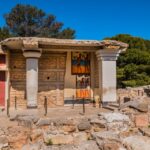
Omalia Olive Press: Tree to Bottle, With Modern and Old Methods
The day begins at Omalia Olive Press, an olive oil factory stop designed for real understanding, not just a photo opportunity.
You’ll learn how olive trees and olives connect to Crete’s identity, then watch olive oil making that covers both the modern process and older ways. It’s a good start because olives and oil are the island’s practical backbone—food, trade, and daily culture all loop through them.
Then comes the part that turns information into memory: tasting. You’ll get olive oil sampling plus raki tasting with bread, which makes the stop feel like a workshop you can actually remember later. Even if you’re not a food person, you’ll likely leave with a clearer sense of why Cretans talk about this so much.
What to do: wear shoes you can stand in. If you’re sensitive to cold, note that food-and-drink stops can still be surprisingly cool indoors.
Lasithi Plateau Windmills: How People Used Wind to Run a Farm
Next you’ll head to the Windmills of Lasithi Plateau, one of those places that makes you rethink what “infrastructure” means.
These are the old windmills that used wind power to pump water from underground—water that made crops possible on a plateau that needs help staying productive. The same windmills were used for milling grain to help create flour. It’s basically the island’s old-school system: energy in, food out.
This stop is calm and visual. Expect a bit of open air, big sky, and great viewpoints from the plateau region. It’s also a nice reset after the olive press, since the olive stop is more “indoors + tasting” while the windmills are “outdoors + looking.”
Tip: bring sunglasses. Even when the weather is mild, this part can feel bright.
Krasi Village and the Platanus Tree: Stone Streets, Old Aqueducts
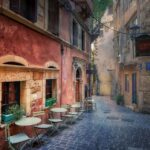
Your visit to Krasi (village of Krasi) is one of the most “walkable” parts of the day. You’ll wander the stone-paved narrow streets and see Cretan traditional house styles up close—an easy way to understand what villages feel like when they’re not just a backdrop.
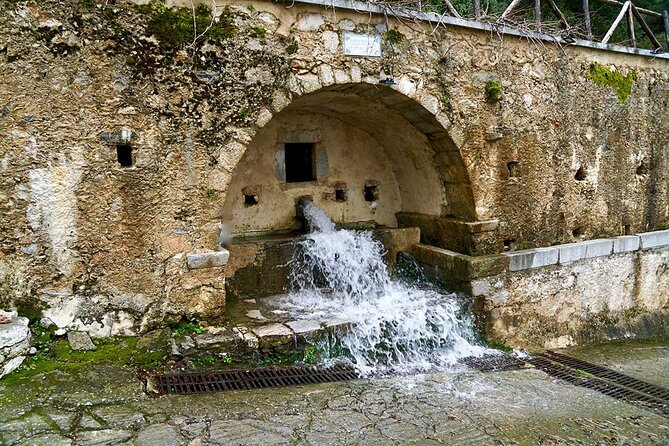
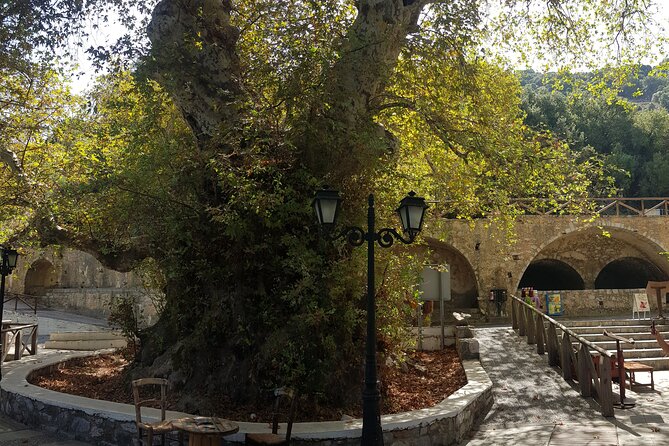
The highlight is the Platanus tree, described as the oldest and biggest, plus you’ll see an old aqueduct nearby. That mix—tree, water system, and village living—turns this short stop into something more meaningful than a quick photo.
This is also where the tour feels authentically local. You’re not just driving past history. You’re given time to move through it.
What to watch: the time here is about 30 minutes. If you want extra strolling, you’ll have to balance it with the overall day. For me, this kind of stop works best when you walk with purpose—look at the doors, windows, stonework, and then enjoy the tree/aqueduct moment before it’s time to move on.
Aposelemi Dam Viewpoint, a Monastery Pass, and Mochos

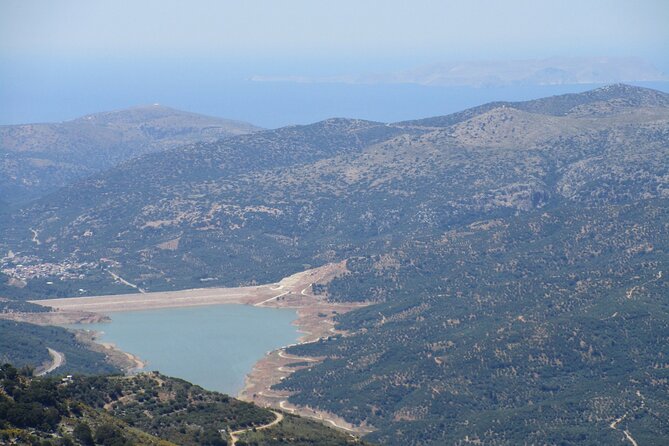
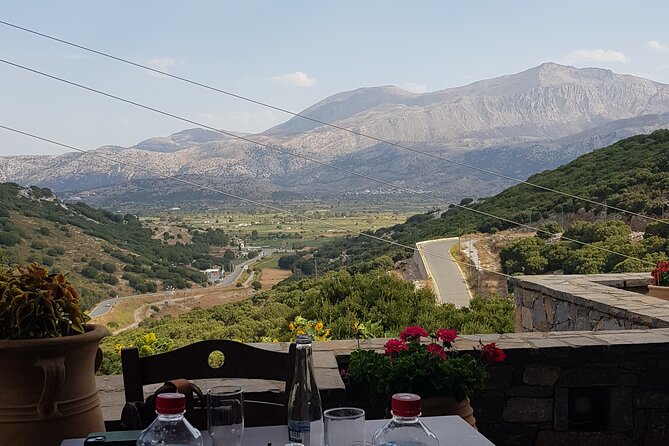
After Krasi, there’s a brief stop near the Aposelemi canyon/dam area. It’s mainly for photos and viewpoints, so don’t expect a long walk. You’ll get a scenic break, a chance to stretch, and a quick “mountain Crete” moment.
Then you pass by an older monastery. The visit time is short, so think of it as a glimpse—enough to feel the religious and historical layer, not enough to treat it like the day’s main event.
Next is Mochos, another old village stop. You’ll spend about one hour exploring around the church and square. This is a solid village-and-culture block, with time to observe daily life, take in architecture, and slow down compared to the transit between big sites.
Practical tip: if you’re sensitive to cold, this day can surprise you. One recommendation you’ll hear is to bring a jacket and long trousers for the mountain sections. Even on a sunny Crete day, higher areas can feel chilly.

Psychro Cave of Zeus (Diktaean Cave): Steps, Chandelier-Stalactites, and Cool Air
If Zeus Cave is open during your season, this is the big-ticket moment.
It’s Psychro Cave, also known as the Diktaean Cave, tied to Greek legend about the birthplace of Zeus. The route to the cave includes a scenic ascent—either by a paved path or a traditional donkey ride (options depend on what’s available and practical that day).
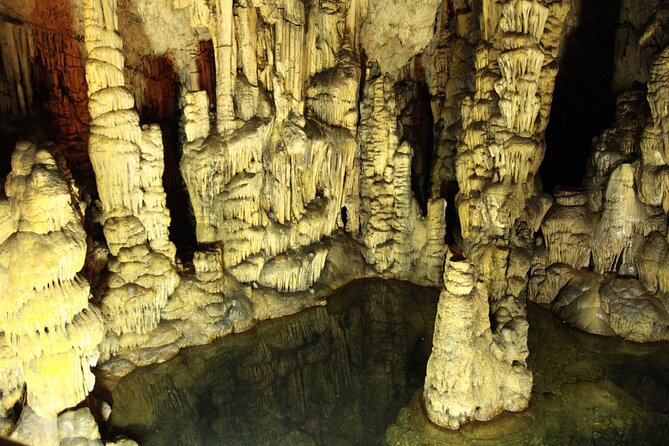
Once inside, the cave does what caves do best: it makes everything feel older. You’ll walk through five illuminated chambers with high-density stalactites and stalagmites, then see the cave’s most dramatic formation: the Mantle of Zeus, a curtain-like stalactite hanging above an underground lake.
There’s also a human layer to it. You’ll explore areas connected to ancient offerings left by the Minoans, and the site is often described with a special nickname tied to the ancient world’s mythology.
Important logistics note: Zeus Cave is not included in the ticket price, so there’s an extra entrance fee. Also, even though the tour calls the hike moderate, you should plan for it: there’s about 10–15 minutes uphill to the entrance, and once you arrive it’s around 180 steps down, with handrails for support.
If you have mobility concerns, go slowly and use the rails. If you get winded easily on stairs, this might be the hardest part of the whole day.
Knossos Palace: Pay the Entry, Skip the Crowds Where You Can
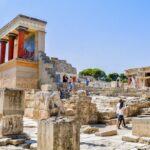
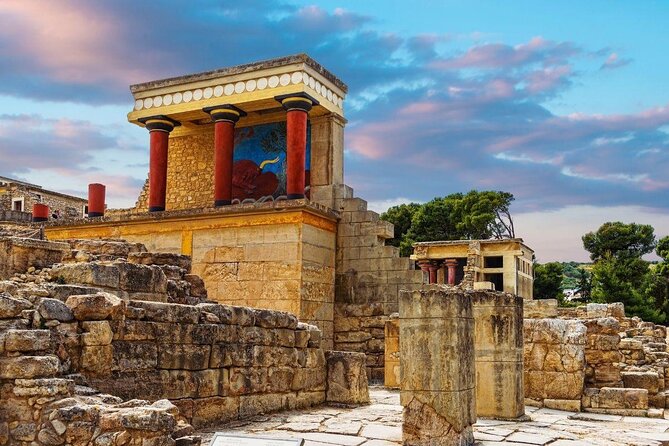
The tour finishes with a visit to the Palace of Knossos. Entrance is not included, so you’ll need to budget for it—about 20 euros for adults and half price for kids.
You can explore on your own at your own speed. If you want the deeper context (and most people do), you can arrange an official licensed guide inside Knossos for an extra charge. That option matters if you want help connecting the rooms and layout to the Minoan story.
Timing is the whole game here. For cruise passengers especially, the day is managed around the need to return to the ship on time. If your pickup is later in the morning and time gets tight, your guide may adjust which sites you see.
Still, Knossos remains worth it. It’s one of those places where seeing the physical space turns mythology into something you can map in your head.
Lunch at Restaurant Tzanakis Michael: Local Food, Not Included
For lunch, the tour stops at Restaurant Tzanakis Michael for traditional Cretan-style food. The lunch is not included, but you’ll have time to eat and reset before the final stretch back.
You can also plan for flexibility here. Vegetarian options have been mentioned as available, so if you have dietary needs, it’s smart to communicate them directly at the restaurant.
What to do: keep your lunch choices efficient. This is a day with multiple sites, so a slow meal can crowd out time later—especially if you’re aiming to catch a cruise shuttle on schedule.
Transport and Group Size: Why Shared Feels Like Semi-Private
This tour runs with a small group—a maximum of 10 travelers. That small number changes the experience. You’re less likely to feel like you’re herding people and more likely to get quick answers from your guide.
Pick-up is also a big part of the value. You can be picked up from your hotel or designated areas in the Heraklion region, and for cruise passengers the guide meets you at the port holding a sign with your name. Drop-off returns you to your meeting point.
There’s also a common-sense detail: if you’re coming from a cruise, the guide plans with the ship’s timing in mind. Reviews you might read highlight a focus on returning you in time for the ship’s shuttle. So if you like tours that respect schedules, this setup is a good match.
If you’re prone to running late, this is the one day you shouldn’t test that habit. A small group means delays affect everyone faster.
Price and Value: What’s Included, What Costs Extra, and Why It Adds Up
At $109.42 per person, this tour sits in the mid-range for a Crete day. The value comes from what’s included:
- Pickup and drop-off in the Heraklion area (shared tour)
- An informative local English-speaking driver guide
- Coffee and bottled water
- Olive oil and raki tasting (plus bread)
- Liability insurance
What’s not included:
- Knossos entrance (about 20 euros adult; half for kids)
- Zeus Cave entrance (ticket not included)
- Official licensed guide inside Knossos (optional extra)
- Lunch (traditional Cretan lunch, not included)
- House wine (not included)
When you do the math, the base price is less painful because you’re not paying for all transfers and the key tastings out of pocket. Still, the extra site fees can push your total higher. If you’re comparing to a cheap bus tour, remember this day includes a structured guide plus multiple stops that would otherwise require separate planning.
My take: if Zeus Cave is open on your date, the value gets a lot better. If it’s closed, you’ll need to accept that one of the day’s big anchors becomes unavailable and the itinerary may shift.
Who Should Book This Tour, and Who Might Want a Different Plan
This tour is a great fit if you want:
- A single day that covers both ancient sites and everyday Cretan life
- A guide who explains myth locations and also how olives and water systems shaped rural Crete
- A small group (up to 10) with less standing around
It may not be ideal if you:
- Hate stairs or steep walking (Zeus Cave steps and the uphill access are real)
- Want only flat, easy sightseeing
- Are very strict about not paying extra on the spot (Knossos and Zeus Cave tickets are not included)
Should You Book This Tour?
I’d book it if your dream day in Crete includes olive oil tastings, mountain villages, and the chance to visit Psychro Cave if it’s open. The small group size, pickup convenience, and built-in tastings make it feel like more than just a transport service.
I’d hesitate if Zeus Cave would be a must-do for you and your dates fall during its closure window, since the tour notes it can be closed until April and beyond. And if your mobility is limited, treat the cave portion as the deciding factor.
If you’re flexible, this is one of those days that leaves you with more than souvenirs. You’ll have stories tied to places: wind powering water, olives powering households, and a cave tied to the origin myths of Zeus.
FAQ
How long is the tour?
It runs about 7 to 8 hours, depending on the day and the order of stops.
Is pickup included?
Yes. Shared group pickup and drop-off are offered from the Heraklion area, including many hotels and designated areas. Cruise passengers meet the guide at Heraklion port.
Are entrance fees for Knossos included?
No. Knossos entrance fees are not included. The cost listed is about 20 euros for adults and half price for kids.
Is the Cave of Zeus entrance included?
No. Cave of Zeus (Psychro Cave) entrance is not included.
What is included in the tasting?
The tour includes olive oil and raki tasting, along with coffee and water.
Is lunch included?
Lunch is not included. There is a stop at Restaurant Tzanakis Michael for traditional food, but you pay for your own meal.
Is Zeus Cave open all year?
No. Zeus Cave is noted as closed until April and further notice, so opening depends on the season and updates.
How difficult is the walk to Zeus Cave?
There is an uphill hike of about 10 to 15 minutes (moderate level), and then roughly 180 steps down to the cave entrance, with handrails.
What languages are available?
The tour is offered in English.
How big is the group?
The tour has a maximum of 10 travelers.