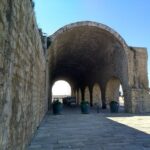
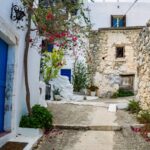
Zeus Cave is the reason most people sign up. This day trip strings together Vidiani Monastery, Psychro Cave (Cave of Zeus), the village of Krasi, and an olive mill stop, all in an air-conditioned vehicle with a guide. My favorite parts are the clear storytelling and the sense that you’re seeing real Crete—religious life, mountain villages, and how olive oil is made—rather than just rushing between photos. One thing to plan for: the day can feel long because of widespread hotel pickup and because the walk to the cave is steep.
I also like that the tour is built for comfort without hiding the work. The guide-led rhythm keeps transitions smooth, and the group size is capped at 100, so you’re not stuck in an impossibly huge mob. Still, the cave visit depends a lot on your pace and the crowd situation, so if you hate stairs and lines, you’ll want to think twice.
In This Review
- Key things to know before you go
- The real value: what this trip includes (and what it doesn’t)
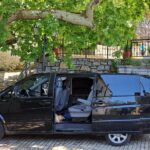
- Heraklion pickup: the comfort part (and the time trade-off)
- Vidiani Monastery at Mount Louloudaki: a quiet reset before Zeus
- Psychro Cave (Cave of Zeus): what to expect underground and on the stairs
- Krasi village: plane tree, springs, and a real village pause
- Olive mill farm: the production tour and the lunch reality
- Timing and logistics: how the day can feel longer than expected
- Guides and guides matter more than you think
- Who this tour is best for (and who should adjust expectations)
- Should you book this Lasithi, Zeus Cave, Vidiani, Krasi and Olive Mill Farm trip?
- FAQ
- How long is the tour?
- Where is the tour starting from?
- What’s included in the price?
- Do I need to pay extra for the Cave of Zeus?
- Is lunch included at the olive mill farm?
- What language is the tour in?
- Is the tour physically demanding?
Key things to know before you go
- Air-conditioned vehicle: A practical win on a long 10 to 11 hour day.
- Vidiani Monastery first: A calm start at the base of Mount Louloudaki.
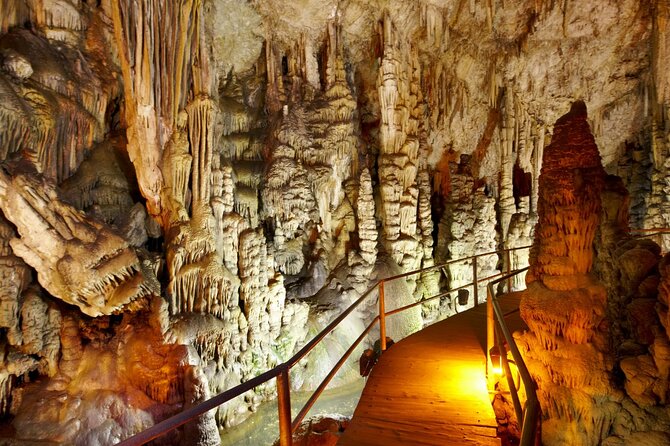
- Psychro Cave highlight: Famous stalactites and stalagmites, plus a real uphill/walk segment.
- Krasi stop is short: Enough to see the plane tree and freshwater springs, not enough to linger.
- Olive mill tour is guided: You’ll learn about olive oil and honey production, with optional lunch at your own expense.
The real value: what this trip includes (and what it doesn’t)
At about $48.06 per person, the value is in the transport and the guided structure. You get pickup from Heraklion town and multiple nearby areas, an air-conditioned bus, a tour guide, and a professional driver. There’s also liability insurance coverage through ALLIANZ for participants, which is a nice safety layer on a long road day.
What’s not included matters for your budget. Cave of Zeus entrance costs €15 per person, and lunch at the olive mill farm is at your own expense. One common frustration is expecting a meal to be included when it isn’t—so set your expectations now and plan for either lunch purchases or skipping lunch.
Also note the day runs roughly 10 to 11 hours, and the pickup/drop-off timing depends on where you’re staying. If you’re easily annoyed by waiting, this is the kind of tour where your tolerance for van time becomes part of the experience.
You can also read our reviews of more tours and experiences in Heraklion

Heraklion pickup: the comfort part (and the time trade-off)
Morning starts with collecting people from a long list of places in the Heraklion region, including Sisi, Malia, Stalis, Hersonissos, Gouves, Amoudara, Agia Pelagia, and more. If you’re staying farther from the first pickup point, you can end up with longer drives just to reach the head of the route.
That’s the trade-off for covering more hotels without you needing to coordinate your own transport. The upside is simplicity: you show up, get on the bus, and the day has a plan. The downside is that the van can feel slow when the group is big and the circuit is wide.
If you want to make the most of those early minutes, I’d bring a small bottle of water and something light to snack on. The schedule packs in multiple stops, and the later parts of the day can come fast after pickup.
Vidiani Monastery at Mount Louloudaki: a quiet reset before Zeus
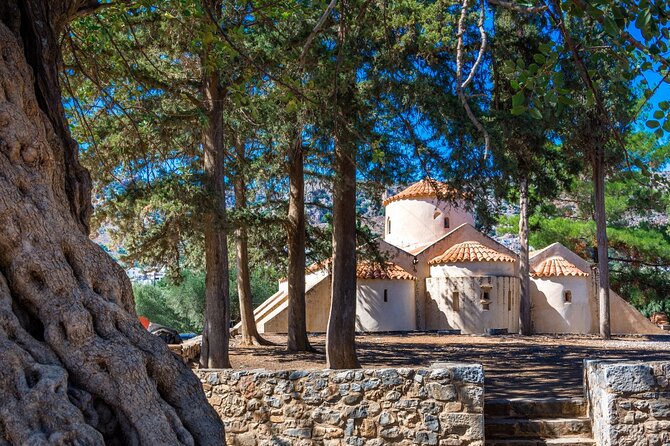
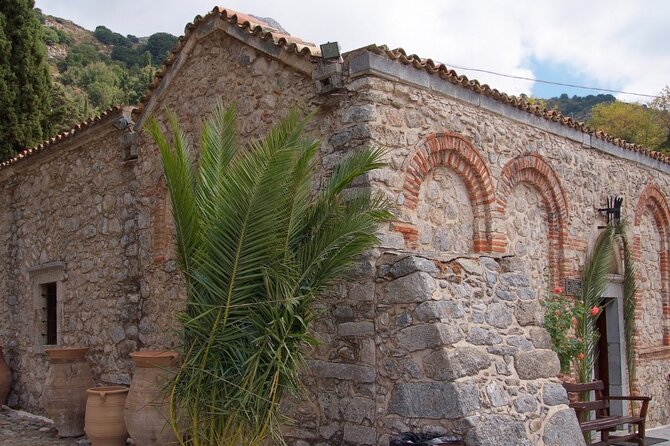
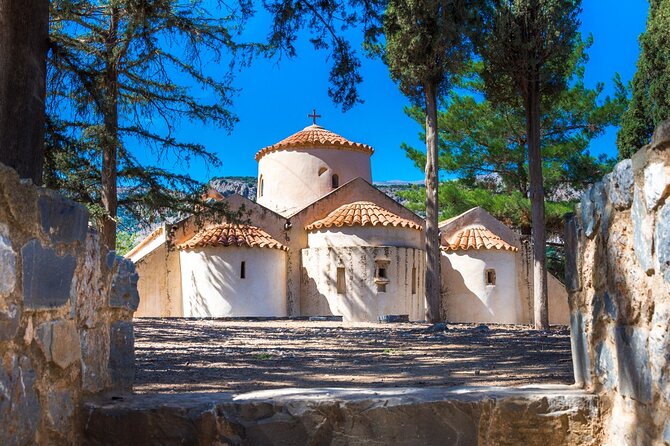
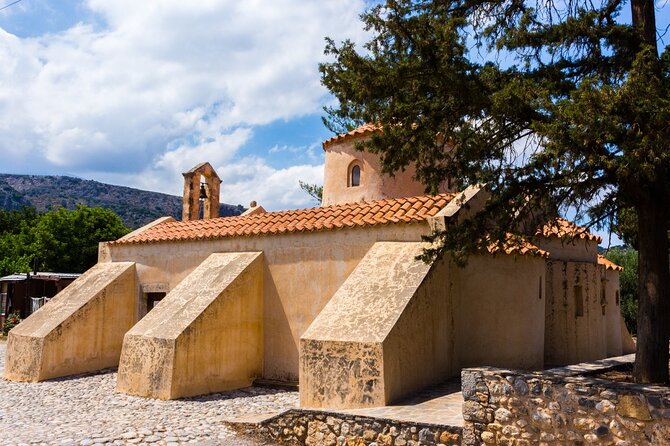
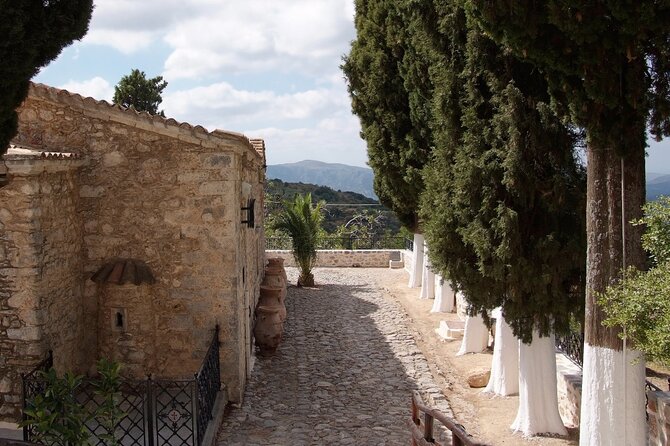
Your first major cultural stop is Vidiani Monastery, a small Eastern Orthodox site dedicated to the Virgin Mary. It sits at the base of Mount Louloudaki, so the setting feels both peaceful and grounded, not staged. You’ll spend about 25 minutes at the monastery area, which is short, but enough for a proper look at the courtyard and frescoes if you move at a normal pace.
This stop works because it changes the mood. Instead of jumping straight to myth and caves, you get a taste of Cretan religious life and mountain spirituality. Even if you’re not into religious art, the frescoes and calm courtyard are worth the quick stop.
The possible drawback is timing: 25 minutes disappears fast. If you want deep reading time or slow photo time, plan to focus on the highlights and let the guide point out what matters most.
Psychro Cave (Cave of Zeus): what to expect underground and on the stairs
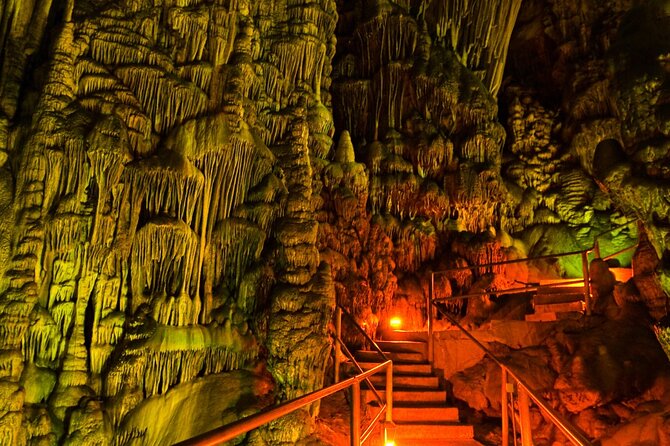
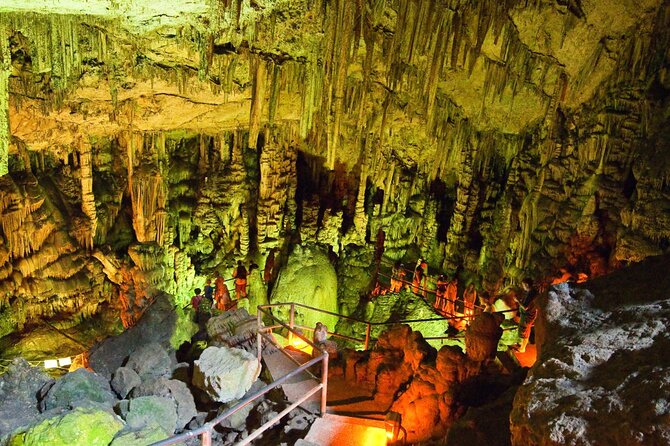
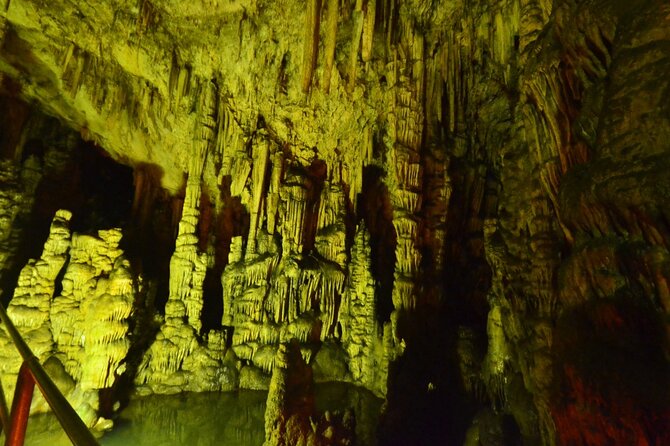
The big centerpiece is the Cave of Zeus in Psychro Cave, commonly treated as the birthplace of the king of the gods. You’ll descend into an illuminated cavern where stalactites and stalagmites form over thousands of years. It’s dramatic in a way that diagrams never fully explain, and the guide’s myth tie-in makes the place feel more than just rock and lighting.
Here’s what you should plan around: the walk and the stairs can be the hardest part. Expect a steep approach and a stair climb down and back up. Even when the cave itself is fascinating, the physical effort and queue time can shrink the amount of time you spend inside.
Practical tip: if you’re choosing between routes, one review specifically suggested using the ramp rather than the stairs (the names Treppe and Rampe came up). If your legs are the issue, ask the staff or look for the easiest route option at the entrance area.
Also, if mobility is a concern, there may be an alternative near the site—a green museum was mentioned as a possible option. That won’t replace the cave, but it can help you still have a rewarding stop when the cave walk feels too steep.
Entrance fee is €15 and not included, so keep that in mind for your day budget. And if you’re the type who hates crowds, go in mentally ready for lines and a steady flow through the cave.
Krasi village: plane tree, springs, and a real village pause
After the cave, you head to Krasi, a traditional Cretan village known for natural freshwater springs. The standout is the oldest and largest plane tree in Crete, which makes the stop feel specific instead of generic.
This is not a long lunch-style break. You’ll have around 45 minutes for the village area, which is enough for a short wander, a drink or snack, and a few photos of the central scene—plus some shade under the plane tree if the sun is strong.
The value here is pacing. You go from cave darkness to open air, and you get a quick look at everyday village life rather than only tourist infrastructure. The drawback is obvious: you can’t fully explore with such a short window. Treat Krasi as a reset, not a deep dive.


Olive mill farm: the production tour and the lunch reality
The final main activity is a visit to the Lyrakis Family Olive Mill Farm with views toward the mountains and the Aegean. You’ll get a guided tour focused on how olive oil is produced, and you’ll also learn about honey and handmade olive-based products. This is one of the best parts of the day because it connects food to place—how local ingredients become local products.
The time on-site is about 2 hours, which gives enough room for the tour, tastings, and shopping if you want it. Some people love this segment because it feels educational without being overly formal, and the panoramic setting helps the whole experience feel relaxed.
Lunch, though, is where expectations can trip you up. The farm meal is not included in the tour price, and you pay your own way. One disappointed comment described the lunch situation as overpriced for what it was, so I’d treat lunch as optional. If you want lunch, decide on the spot after you see the menu and what’s being served.
If you’re not a big meal person, you can use the 2 hours to focus on the tastings and skip a paid buffet approach entirely. You’ll still leave with better context for what you’re eating back in Heraklion.
Timing and logistics: how the day can feel longer than expected
This trip is listed at about 10 to 11 hours, and in practice the “moving parts” add up. You have morning pickup from different areas, a route that includes driving between sites, and drop-off spread across many towns.
Some reviews also described long pickup and drop-off windows, including nearly two hours for collecting people. I can’t promise your exact timing, but the route design makes it possible. The best way to handle it is mindset: this is a road trip day, not a quick hit.
Group tours also mean time gets shared. With a cave visit as the main highlight, queues can influence how much time you feel you actually get underground. The cave is smaller than it looks from photos, so it helps to understand that the highlight may be intensity, not long duration.
The good news is that the bus is air-conditioned, and the guide helps keep the story flowing while you travel between stops. If you’re the type who enjoys learning while you move, you’ll likely find the day moves better than someone counting minutes.
Guides and guides matter more than you think
When a day is packed, a good guide changes everything. Several comments praised guides by name, including Tanya and Helena, and one driver named George was mentioned for being highly professional on steep roads.
So what should you watch for? You’ll want a guide who can connect each stop: monastery life to Cretan history, cave myths to real geography, and olive production to what you see and taste. If your guide is strong, the cave story and monastery context can make the stops feel connected rather than random.
If you get a guide who explains patiently and keeps the group on schedule, the tour can feel worth every minute—even when the cave walk takes effort.
Who this tour is best for (and who should adjust expectations)
This is a great fit if you want history, myth, and culture in one day and you don’t want to organize transport yourself. You’ll get orthodox religious context, a headline attraction tied to Greek mythology, a real village stop, and an olive oil education component.
It’s also a good fit if you can handle moderate physical effort. The day includes a steep walk to the cave, stairs, and a climb back up. If your mobility is limited or you struggle with steep grades, you’ll want to consider your comfort level carefully.
I’d steer more toward this tour if you’re a flexible “see the main sites” type and you enjoy guided explanations. If you prefer slow travel, lots of free time, and minimal walking, you may feel rushed—especially around the cave, where the main bottleneck can be stairs and crowds.
Should you book this Lasithi, Zeus Cave, Vidiani, Krasi and Olive Mill Farm trip?
I’d book it if you’re after a structured day from Heraklion that combines myth (Zeus), culture (Vidiani Monastery), and food education (olive mill tour). The price can be a good deal because transport, guide, and insurance are covered, and the stops are spaced to keep the day from feeling like one long straight line.
I’d think twice or at least plan better if you’re budgeting tightly for meals and entrances. The €15 cave fee is extra, and lunch is not included at the olive mill farm. Also, treat the cave approach as a workout. Wear solid shoes and plan for a climb.
If you’re sensitive to crowds, it helps to know that the cave segment can be time-limited by queues. And since the experience requires good weather, you should be ready for possible rescheduling if conditions aren’t ideal.
Bottom line: this tour is best when you’re okay with a full, active day and you value guided context as much as the destination itself. If that sounds like you, it’s an efficient way to experience a slice of the Lasithi area without driving yourself.
FAQ
How long is the tour?
The tour runs about 10 to 11 hours, depending on timing and traffic.
Where is the tour starting from?
It starts in the Heraklion area with pickup from specified locations including Heraklion town and nearby areas such as Sisi, Malia, Stalis, Hersonissos, Gouves, and others.
What’s included in the price?
Included are an air-conditioned vehicle, a tour guide/leader, a professional driver, and liability insurance coverage. Pickup is also included from the listed areas, and you receive a mobile ticket.
Do I need to pay extra for the Cave of Zeus?
Yes. The cave entrance fee is €15 per person and is not included.
Is lunch included at the olive mill farm?
No. Lunch at the olive mill farm is at your own expense.
What language is the tour in?
The tour is offered in English.
Is the tour physically demanding?
You should have a moderate physical fitness level. The cave visit involves challenging walking and stairs.