Agyia Lake makes Chania feel wilder. This Chania e-bike tour pairs easy pedaling with stops that feel real, from birdwatching at Agyia Lake to a countryside snack break. One consideration: the ride is not for everyone, including people with heart problems and kids under 10.
I especially like the small-group pace and the way the guide keeps things moving without rushing. You’re in a group of just up to 8, you get a proper guide listening setup, and the tour ends with a stretch along the north coastline. The main drawback I’d flag is that summer heat can hit hard, so plan on hydrating.
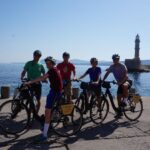
You’ll roll out from Meeting Point C with helmets, knee pads, and an e-bike that makes uphill feel manageable. Then you connect agricultural Crete—orange, olive, and avocado groves—with a quieter side of Chania that most visitors skip.
In This Review
- Key highlights worth circling on your map
- Why this Chania e-bike route feels different from a standard tour
- From Meeting Point C to citrus villages: easy pedaling, real scenery
- Agyia Lake: wetland wildlife time with binoculars in hand
- Passing WWII villages: history told at road speed
- Drakiana Park by the river: a Cretan snack stop that’s actually scenic
- Cycling the north coastline: sea air for the last stretch
- What you’re really paying for: value at $79 per person
- Who should book this Chania e-bike tour (and who should skip)
- Tips to make your ride smoother and more fun
- Should you book the Chania Ebike Eco-Long Tour + Traditional Snack?
- FAQ
- How long is the Chania Ebike Eco-Long Tour + Traditional Snack?
- Where does the tour start and end?
- What stops are included on the tour?
- What’s included in the price?
- What language is the live guide?
- What group size is this tour?
- Is the tour suitable for children?
- Is the tour suitable for older adults or people with certain health conditions?
- What should I bring for a comfortable ride?
- Are there different starting times?
Key highlights worth circling on your map
- Agyia Lake birdwatching with binoculars provided for spotting wildlife at the wetland
- Citrus-and-groves riding through villages like Galatas, framed by orange, olive, and avocado trees
- WWII-era village stories that explain local resilience and sacrifice
- Drakiana Park riverside snack break in a calm setting with local Cretan food
- North coastline views with sea air on the final ride back
Why this Chania e-bike route feels different from a standard tour
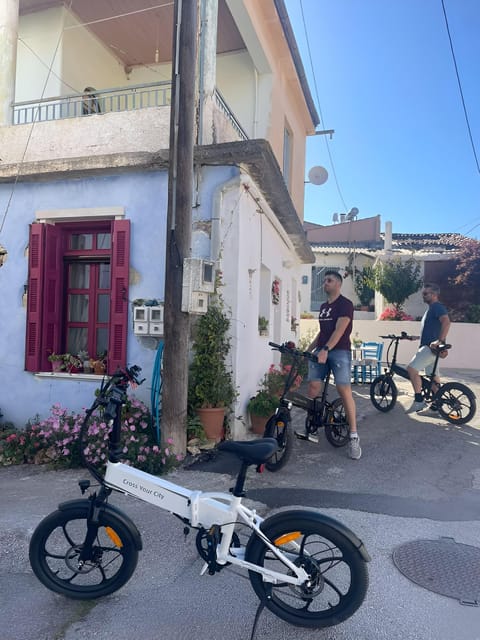
Chania has plenty of day trips that stop at the same photo spots. This one feels more like you’re traveling through lived-in Crete. The route threads together three things: farmland, wetlands, and coastal roads. That mix keeps the ride from feeling repetitive, even though the total time is just 4 hours.
The e-bike matters more than most people expect. You still pedal, but you’re not fighting every hill. That means you can focus on what you came for—views, villages, and the small moments like a shaded roadside stop or a glance at birds around the lake.
It also helps that this is built for a small group of 8. With fewer people, the timing feels smoother. You’re more likely to hear the guide’s explanations clearly, and the pace gives you real chances to look around.
You can also read our reviews of more cycling tours in Chania
From Meeting Point C to citrus villages: easy pedaling, real scenery
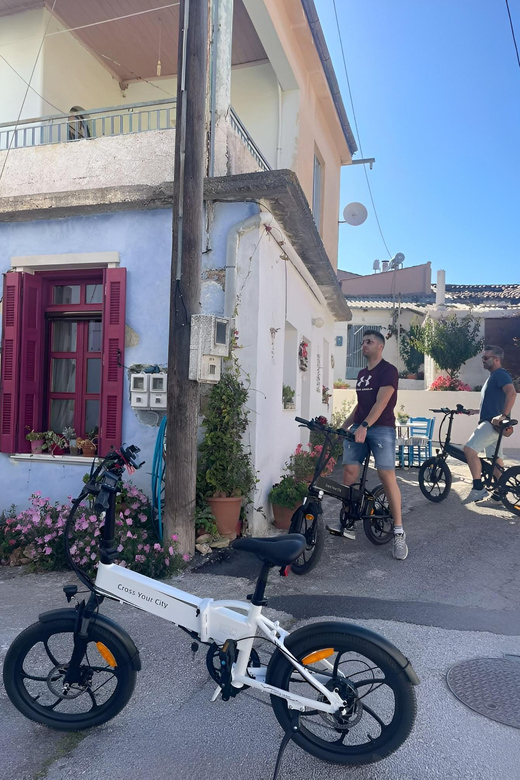
You start at Chania Ebike Tours Meeting Point C, and you’ll want to arrive about 30 minutes early so the bikes and gear are ready. The tour begins by sending you out into the countryside through Galatas and nearby village lanes.
What I like here is the “soft entry” into the day. You’re not immediately thrown into a long stretch of open road with no context. Instead, you ease into the setting: farm paths, quiet village streets, and the kind of agriculture you see everywhere in Crete but often miss while rushing between highlights.
Expect to ride through areas marked by orange, olive, and avocado groves. That doesn’t just look pretty. It helps you understand what people in this region grow and how the landscape is shaped by daily work. Even if you’ve seen olive trees in photos before, there’s something different about traveling alongside them at bike speed, with the smell of the groves and the rhythm of the road.
Practical tip: bring water and keep an eye on sun exposure. The route is designed to be easy on an e-bike, but summer temperatures can still drain you faster than you expect.
Agyia Lake: wetland wildlife time with binoculars in hand
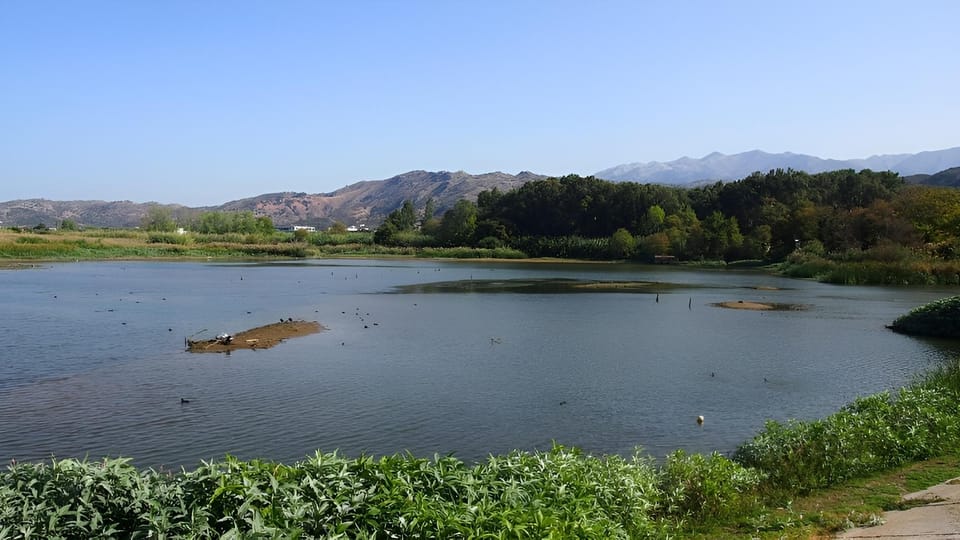
The first real “wow” moment is Agyia Lake. The plan is a 45-minute stop at the café area by the lake, with time focused on sightseeing and wildlife viewing.
This isn’t a decorative lake stop. It’s described as a wetland with a large variety of species, and wildlife watching is part of the point. You’ll be given binoculars and use them to look for birds around the water. Your guide also shares what you’re seeing and why the lake matters in the local environment.
Here’s how I’d use this stop: don’t treat it like a quick photo break. If you want to enjoy it fully, slow down when you see a cluster of birds or movement near the waterline. Scan patiently. On a bike tour, you’re already moving through open countryside—this lake stop is where the day shifts into calm observation.
Also, the fact that it’s a break in the middle of the ride is key. You get to stand, reset your eyes after farmland, and then continue with energy.
Passing WWII villages: history told at road speed
After the lake, the tour heads through historic WWII villages. The route doesn’t just pass through them like scenery. The guide explains stories about resilience and sacrifice, connecting what you see on the ground to the past.
This kind of stop is valuable because it changes the way you look at ordinary places. A village road is one thing when you’re just trying to get to the next viewpoint. It’s another when you understand that people lived through war, rebuilt, and carried those experiences forward.
On an e-bike, this works well because the villages don’t feel like a separate museum visit. You see the countryside layout and then hear the context right where it belongs. You’ll likely notice how the villages sit in relation to roads and fields, and that helps history feel grounded instead of abstract.
If you prefer tours with stories, this segment is a good match. If you’d rather focus only on scenery and movement, you can still enjoy it, but plan for the guide’s commentary to be part of the experience.
Drakiana Park by the river: a Cretan snack stop that’s actually scenic
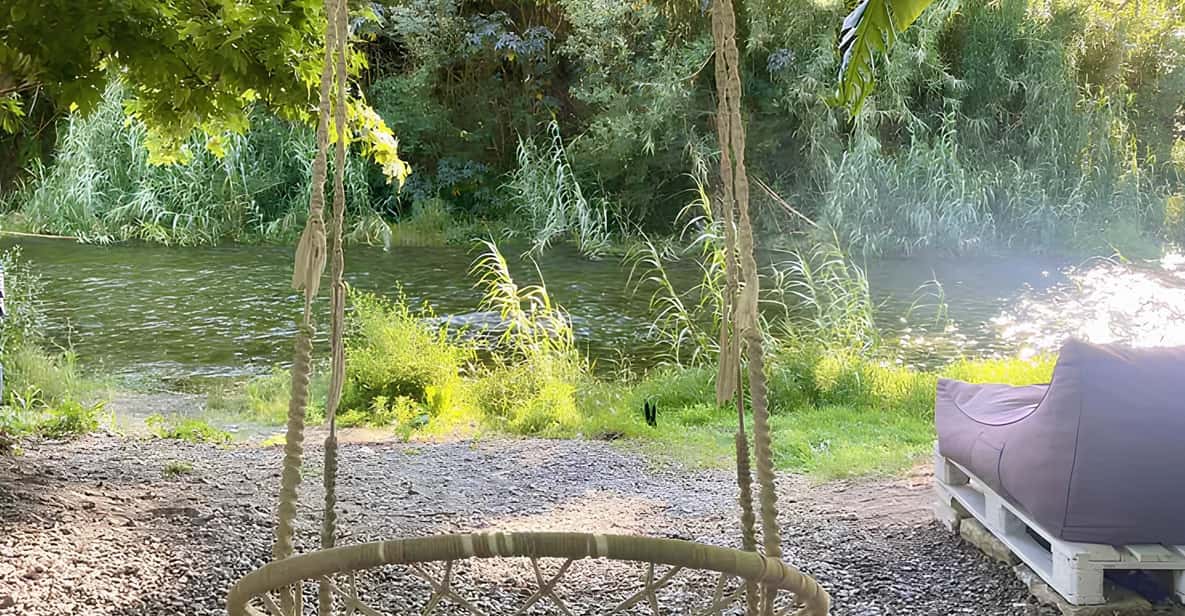
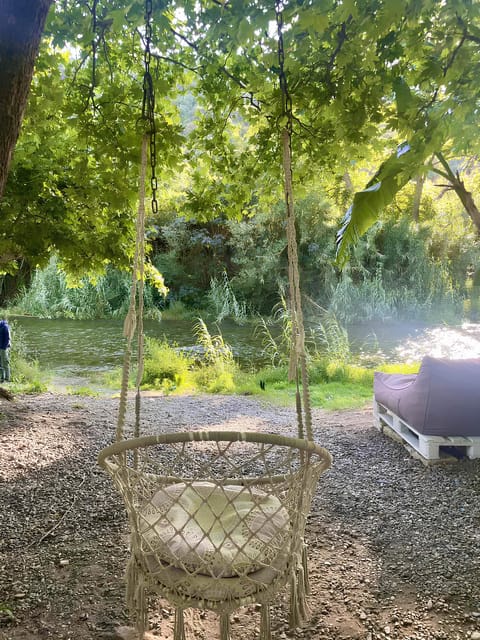
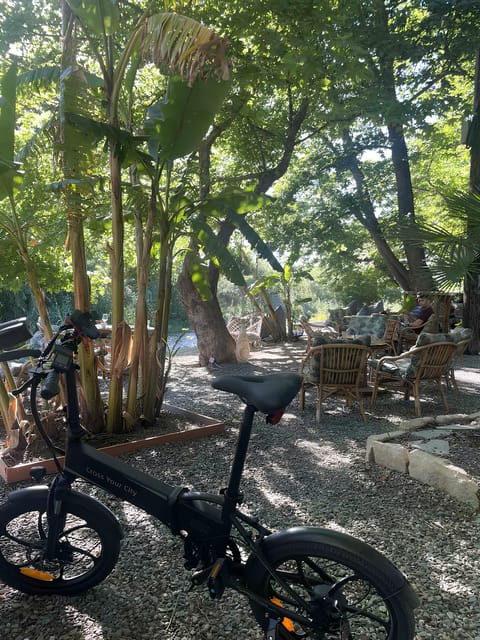
Next comes the longish break at Drakiana Park—around 1 hour—at a restaurant by a tranquil river. This stop includes a traditional Cretan snack plus welcome refreshments, and it’s intentionally placed so you can rest without feeling like you’re stuck in a tourist trap.
What makes this more worthwhile than a random stop is the setting. Being by the river gives you shade and atmosphere, and it turns the “snack break” into a small reset. You get a chance to eat and talk, then return to the ride feeling human again.
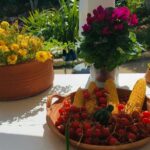
The snack itself is described as traditional and prepared with fresh, local ingredients. I like stops like this because they give you something to taste while you’re already surrounded by Crete’s agriculture. You’ve just been riding through groves and countryside—then you get food that matches that rhythm.
Small-group rhythm tip: if the seating area is busy, step out for a minute. Watch the water, then go back for your food. It’s an easy way to make the break feel longer than it is.
You can also read our reviews of more tours and experiences in Chania
Cycling the north coastline: sea air for the last stretch
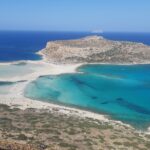
The final stage takes you along the north coastline of Chania. This is the “reward” portion of the day: panoramic views of the Aegean Sea and that coastal breeze you can feel on your face when you’re moving.
What I like about placing the coastline at the end is timing. You’re already warmed up by the earlier stops, and you’re not pushing through fatigue during the most scenic part. If you’ve spent the morning with wetlands and village lanes, the sea view feels like a real change of scenery.
This segment is also a good moment for photos, but don’t ignore the ride itself. Coastal roads can be windy. That breeze is part of the experience, and it helps cool you down—use that to your advantage before you get back.
What you’re really paying for: value at $79 per person
At $79 per person, you’re not just buying a bike rental. You’re getting a guided loop with equipment and stops built into the total time.
Here’s what’s included:
- E-bike
- Helmet and knee pads
- Local traditional snack
- Tour guide system receiver (so you can hear clearly)
- Binoculars
For many tours, the “hidden cost” is that you still have to arrange gear, navigation, and extra entrances or food stops. This one wraps the main needs into the price: you show up and ride, and the tour provides what you need for the wildlife portion and the snack break.
Also, the duration is a real plus. Four hours is long enough to feel like a day out, but short enough that you don’t end up exhausted—especially important in summer. And because it’s a small group, your guide time doesn’t get diluted.
Who should book this Chania e-bike tour (and who should skip)
This tour is a great fit if you want:
- a guided countryside day without complicated logistics
- wildlife time at a wetland setting
- a snack stop with local food in a peaceful outdoor location
- an easy pace thanks to the e-bike
It’s also a solid choice for people who want to go beyond the most crowded areas of Chania. The route hits citrus villages, WWII villages, and then finishes with the coastline. That combination helps you see more than a single neighborhood.
It may not be for you if:
- you have heart problems
- you’re traveling with a child under 10
- you’re over 65
- you’re below 145 cm (4 ft 8 in)
- you’re over 250 lbs (113 kg)
Even if you’re physically able, I’d still take the summer heat seriously. The e-bike helps, but hydration is on you.
Tips to make your ride smoother and more fun
A few practical moves can make this tour feel effortless:
- Wear comfortable shoes and clothes you can move in. You’ll be cycling, stopping, and standing for lake viewing.
- Bring sunscreen and water. The tour description calls out that temperatures can be high in summer.
- Pack a small backpack if you have one. You may want to stash your phone, hat, and extras during stops.
- If you’re birdwatching-focused, slow down at Agyia Lake and use the binoculars right away. That’s where the provided gear makes the biggest difference.
The goal is simple: arrive ready to enjoy the outdoors without constantly thinking about basics.
Should you book the Chania Ebike Eco-Long Tour + Traditional Snack?
I’d book it if your ideal day in Chania includes countryside riding, a wildlife stop, and food that feels local—not just convenient. The Agyia Lake birdwatching and the riverside snack at Drakiana Park are the two parts that make it feel more complete than a basic sightseeing bike ride.
Skip it if you’re looking for a purely city-and-sea photo sprint, or if you’re in a group that needs an extra accessible plan. Also consider your comfort in warm weather: the route is easy on an e-bike, but you’ll still be outside a lot.
If you want a balanced, story-aware countryside experience—without heavy walking—this is a smart way to spend 4 hours near Chania.
FAQ
How long is the Chania Ebike Eco-Long Tour + Traditional Snack?
The tour duration is 4 hours.
Where does the tour start and end?
It starts and ends at Chania Ebike Tours Meeting Point C, and the ride returns back to the same meeting point.
What stops are included on the tour?
You’ll stop at Agyia Lake for sightseeing, then take a break at Drakiana Park/restaurant for local snacks, and finish with the north coastline ride back.
What’s included in the price?
The tour includes an e-bike, helmet and knee pads, local traditional snack, a tour guide system receiver, and binoculars.
What language is the live guide?
The live tour guide is English.
What group size is this tour?
It’s a small group limited to 8 participants.
Is the tour suitable for children?
No. It’s not suitable for children under 10 years old.
Is the tour suitable for older adults or people with certain health conditions?
It’s not suitable for people over 65 years and not suitable for people with heart problems.
What should I bring for a comfortable ride?
It’s recommended to bring a backpack, water, sunscreen, and comfortable shoes and clothes.
Are there different starting times?
Yes. Starting times vary, so you’ll need to check availability to see when the tour departs.