Samaria Gorge is a day you’ll feel in your legs. This full-day trip turns Chania into the start line for a serious trek through Samaria Gorge and finishes with a sea breeze in Agia Roumeli. You’ll get an English-speaking guide, time to learn about plants and birds, and a late-afternoon boat-and-bus return so the logistics don’t eat your energy.
I love the way the day is built around the hike. You start up in the White Mountains at Omalos with breakfast, drop into the gorge, then end in a village where you can actually cool off. I also like the education side: the guide work focuses on the indigenous rare plants, plus local bird species you might not notice on your own.
My one caution is that the walk is genuinely tough. Even with guidance and a slower pace at the back of the group, you’re looking at about 17 km of rocky, mostly downhill terrain, and there are narrow spots where crowds can feel tight.
In This Review
- Key things to know before you go
- From Chania to Omalos: the ride that sets the mood
- Entering Samaria Gorge: the hike is the point
- What your guide actually adds (rare plants, birds, and safety)
- Mid-hike reality check: 17 km sounds simple, but it isn’t
- Agia Roumeli: the reward stop with real time to breathe
- Ferry to Sougia and the late return by bus
- Price and value: what you’re paying for, and what you’re not
- Who should book this (and who should skip it)
- If Samaria closes: what happens to your day
- Should you book this Samaria Gorge day trip?
- FAQ
- How long is the Samaria Gorge trek and day?
- Is the hike beginner-friendly?
- What should I bring?
- Are entrance tickets and the boat included?
- Is there time to swim in Agia Roumeli?
- What if Samaria Gorge is closed due to weather?
Key things to know before you go
- Omalos start + breakfast: You begin in the White Mountains and fuel up before the gorge proper.
- A long, rocky downhill: Expect 17 km on stone and uneven ground, so you’ll want real ankle-support shoes.
- Nature-focused guidance: You’ll learn about rare plants/flowers and bird species while you hike.
- Agia Roumeli downtime: Plan for lunch plus free time that can include a swim or snorkeling.
- Ferry to Sougia, then bus back: The sea segment breaks up the day before you return close to 8:30 PM.
- Closure can change the plan: If Samaria closes for safety, the operator may offer an alternative gorge day.
From Chania to Omalos: the ride that sets the mood
Most “big hikes” in Crete start with a long transfer, but this one uses that time well. You’ll get picked up from a long list of Chania-area locations, then ride in an air-conditioned coach toward the White Mountains. The drive matters because it gets you up to the starting altitude before you’re tired and muddy with effort.
The schedule includes a break and visit stop around Omalos, then breakfast before you enter the gorge area. That breakfast piece is small, but it’s smart: you’re about to do a serious amount of walking, and you’ll feel it more if you go in under-fueled. One review also noted the bus stops at a cafe before entering the gorge, giving you a chance for a snack if you want a little extra.
If you hate rushing, arrive early at your pickup point. The trip is long (about 9 to 12 hours), and the early start is part of how they fit the hike, the ferry, and the return bus.
You can also read our reviews of more guided tours in Chania
Entering Samaria Gorge: the hike is the point
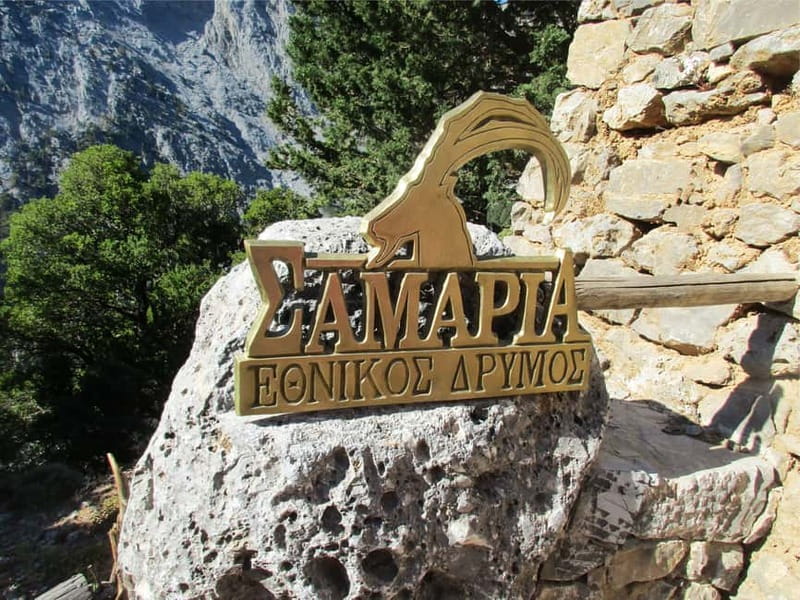
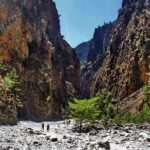
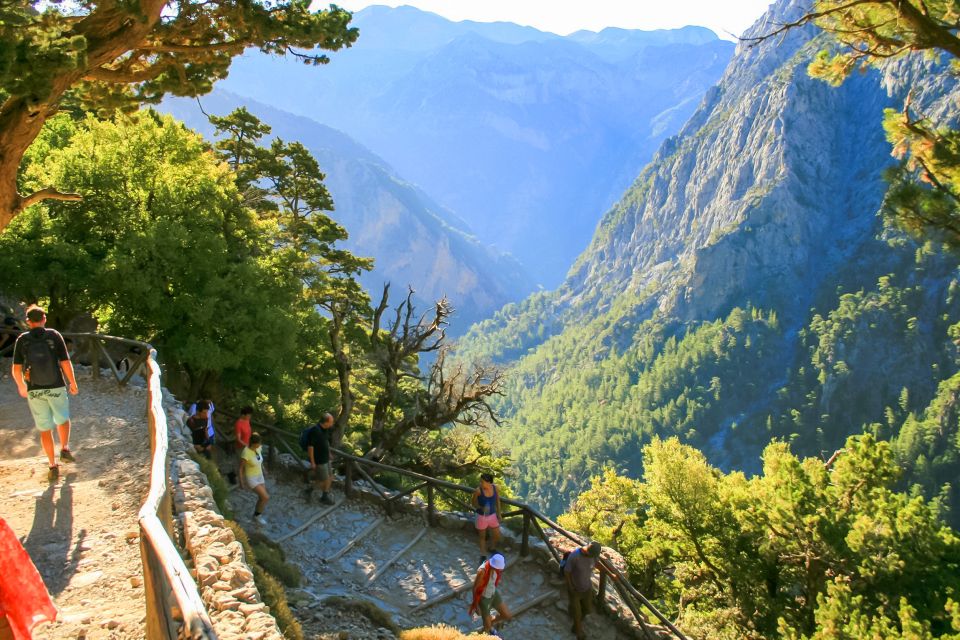
Once you enter Samaria Gorge National Park, you’re on a route that’s famous for its length and scenery. The trek is described as about 4.5 hours inside the gorge, and the walking total for the day is roughly 17 km. The good news is you don’t have to keep a “race pace.” You walk at your own speed, with an English-speaking guide near the group and added help at the end if you need support.
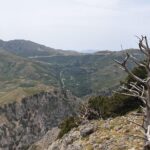
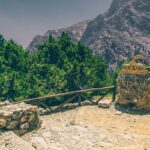
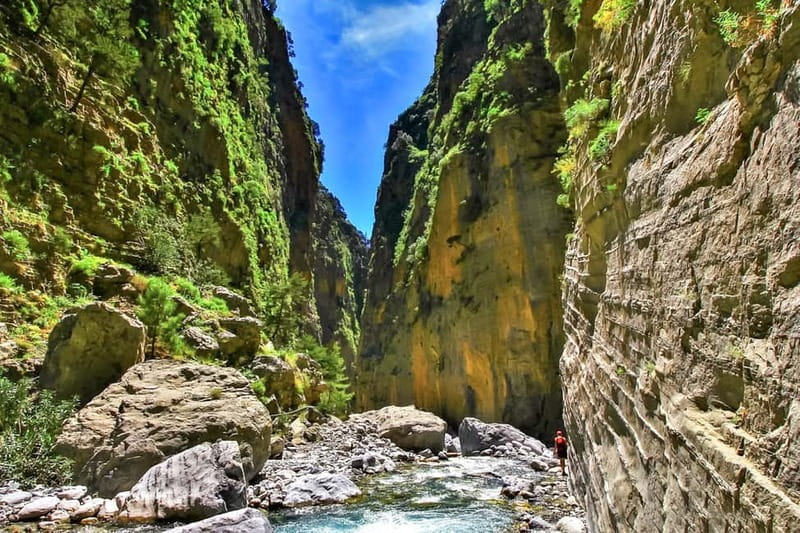
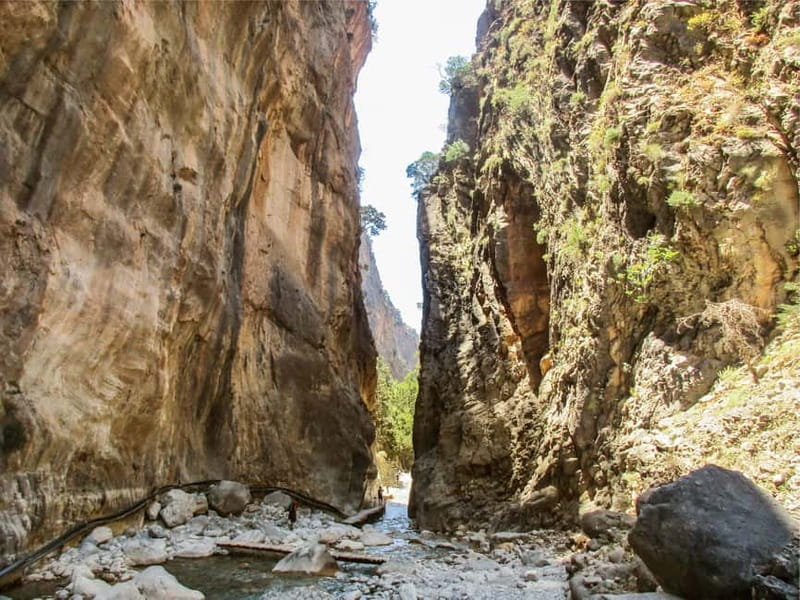
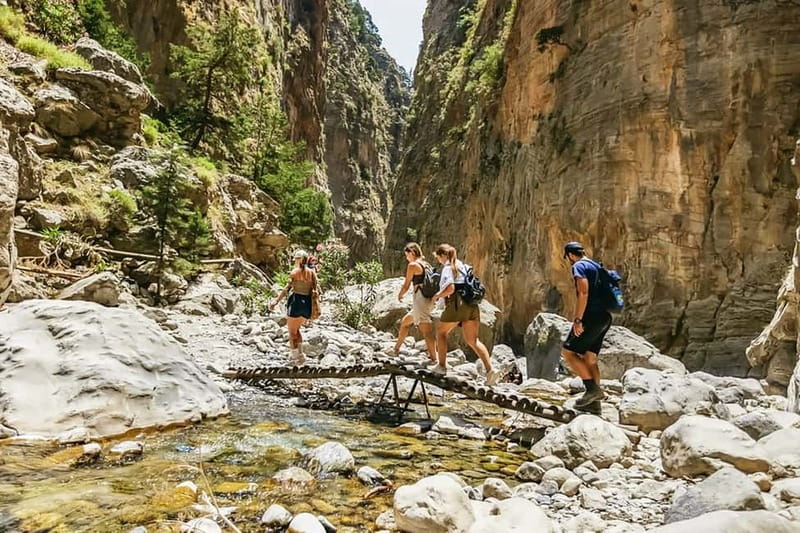
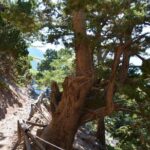
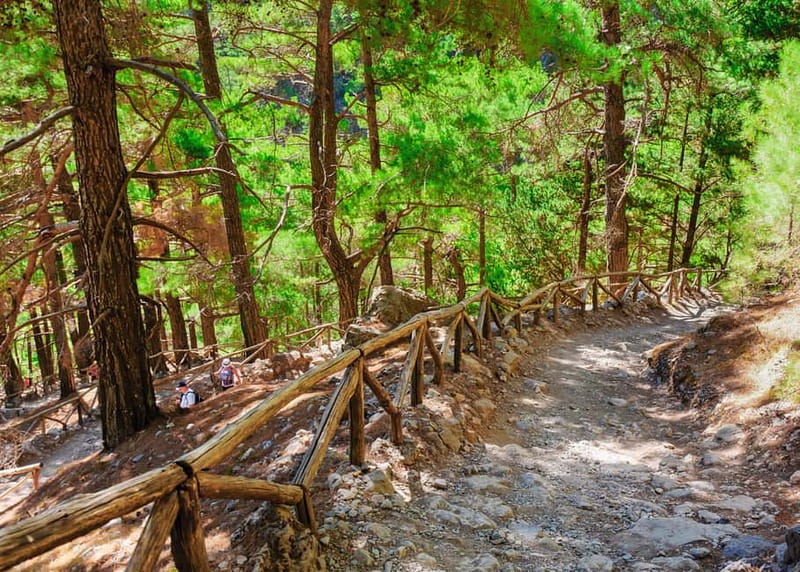
What makes the gorge special is the mix of terrain and “nature theatre.” You’ll hike over rocks and stones, pass through a forest of thousand-year-old trees, and follow the river along the way. Fresh-water springs show up during the walk, and there’s a good chance you’ll spot mountain goats roaming in the wild. That combination of forest shade, river sounds, and sudden open views is a big part of why this gorge draws hikers year after year.
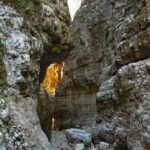
Expect the walking to be mostly downhill. A few hikers described it as steep and slippery in places, with water crossings over rocks. That means the challenge isn’t just distance—it’s foot placement. The best tip I can give is to treat the first half of the gorge like reconnaissance. Look where you’re stepping, slow down on the tricky patches, and don’t try to fix blisters by “toughing it out.” Reviews were very consistent about footwear: hiking boots with sturdy tread (ideally with ankle support) make a noticeable difference.
Also, go in with realistic crowd expectations. One review said the gorge can feel crowded and narrow, with people moving at different speeds. The route is one of the main attractions, so you’ll share the path.
What your guide actually adds (rare plants, birds, and safety)
The guide role here isn’t just giving directions. The trip is built to be educational as you hike: you’ll learn about indigenous rare plants and flowers, along with local bird species. That’s the kind of detail that changes how you experience a hike. Instead of only staring at big peaks, you start noticing smaller things—leaf textures, flower types, and the places birds tend to hang out.
The guides also handle pacing and safety. Reviews named guides like Sara and Christina as being thorough with instructions and supportive if someone struggles. One review mentioned Christina helping right away when a child fell, and it also said there were doctors along the route. That kind of care is exactly what you want on a long, rocky downhill day.
One thing to watch: some guides spend time on “don’ts” and practical rules at the start. It can feel a bit pragmatic in the first hour, but those reminders are there because injuries are real when you look down at your phone instead of your feet.
Mid-hike reality check: 17 km sounds simple, but it isn’t
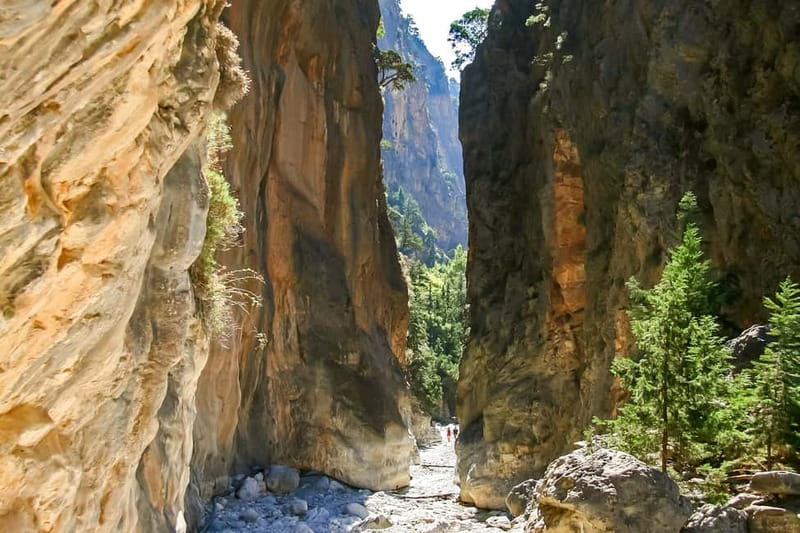
If you’re imagining a gentle nature walk, recalibrate now. This is a challenging trek with 17 km of walking and rocky terrain. Even experienced hikers warned that your feet and calves can hurt even when you’re fit, because it’s long and mostly downhill on stone and uneven ground.
So I’d prep like this is an advanced hike:
- Wear hiking shoes with strong tread and plan for ankle stability.
- Consider trekking poles. Reviews specifically recommended them for stability on steep, slippery slopes.
- Bring a hat, sunscreen, and water. Water is listed as a must-bring item, and you’ll want it because exposure adds up quickly on open sections.
- Pack trekking socks if you’re someone who gets blisters easily.
If you’re the type who likes to “power through,” don’t. Instead, aim for steady steps and short breaks. The pace discipline is also what helps you make the timed checkpoints without feeling panicked.
Agia Roumeli: the reward stop with real time to breathe
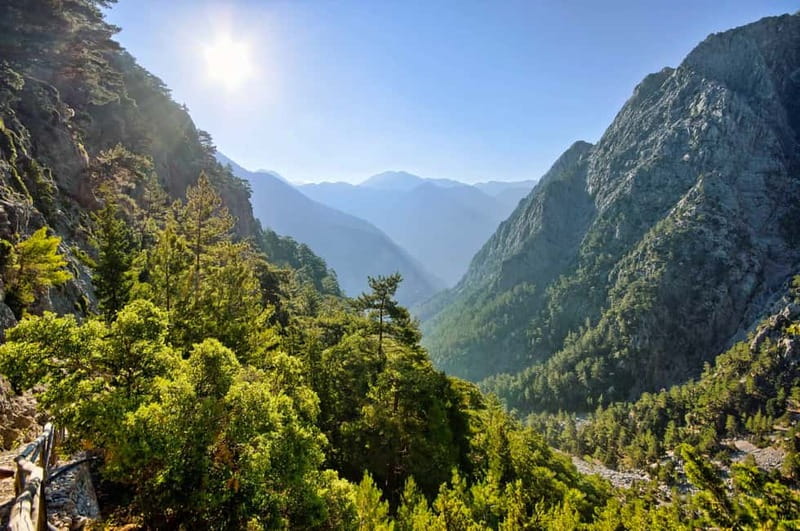
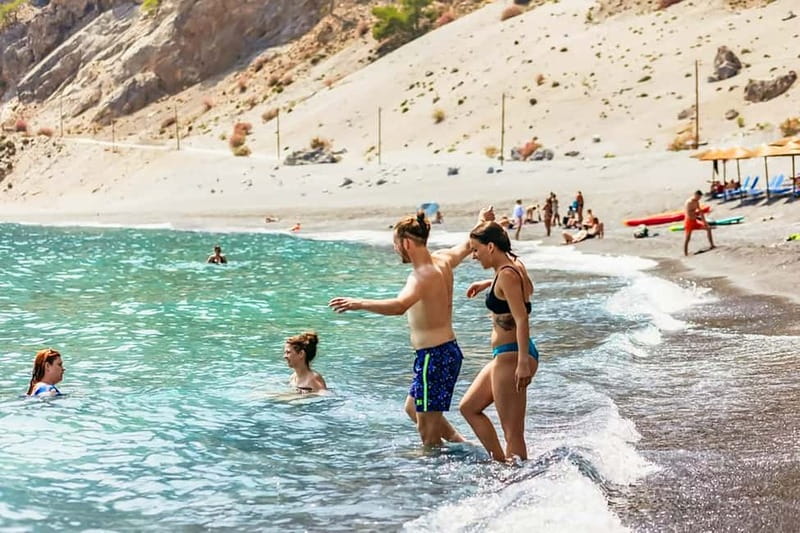
At the end of the gorge trek, you reach Agia Roumeli, and that’s where the day softens. You’ll have a couple of hours for a break, photos, lunch, and free time. This is the part that makes the long hike feel worth it.
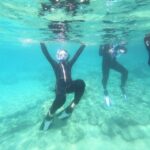
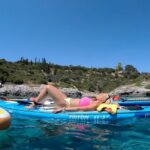
Agia Roumeli is a village with taverns, bars, and shops. Reviews mentioned the relaxing payoff: time to rest, eat, and spend a moment at the beach. The trip data also says you may swim or snorkel and do wildlife viewing during your free time. Just remember that after hours on rocks, you’ll want your feet to recover before you go back into the water—choose beach time that matches your energy level.
This stop is also where the day’s timing matters. If you stay focused on making the schedule, you get that sea-view boat ride and don’t end up stressed at the end.
You can also read our reviews of more hiking tours in Chania
Ferry to Sougia and the late return by bus
After Agia Roumeli, you board a boat (about 1 hour) to Sougia. The goal of this segment is simple: trade the hard ground for sea time. Coastal views during the ferry ride were described as stunning, and the ferry is also a psychological reset after a demanding walk.
Once you arrive in Sougia, a bus is waiting to take you back. The return is described as about 8:30 PM at the starting area, depending on traffic and timing. That means this is a full-day commitment, not an easy excursion. If you’re the kind of person who needs a nap afterward, plan one.
Price and value: what you’re paying for, and what you’re not
The listed price is about $41 per person, and it covers a lot of the hard-to-organize pieces: hotel pickup and drop-off in the Chania area, an English guide, air-conditioned coach transport, and the hiking excursion. For many visitors, that’s the main value: you don’t have to figure out buses, entrances, and timing on your own.
What it does not include:
- Samaria National Park entrance ticket (reported as €10 paid onsite)
- Boat ticket (reported as €14; kids details listed)
- Food and drinks
There’s also a separate entrance fee structure by age and nationality. So budget a bit extra for park access and the ferry. If you’re comparing options, think of it this way: the fee mostly pays for transportation plus guided structure; the gorge and sea segments still require their own paid access.
Still, even with add-ons, the overall value can be strong if you want a guided experience with pickup and a fixed end-of-day plan. If you’re a totally independent hiker with your own transport, you might find cheaper ways to do it, but you’ll be giving up the convenience.
Who should book this (and who should skip it)
This trek makes the most sense if you:
- Want one of Crete’s signature hikes with a guide
- Are comfortable with a long, rocky, mostly downhill walk
- Plan to invest in proper footwear and basic hiking gear
- Appreciate guided nature info on plants and birds
It’s not a fit for certain people. The tour info lists it as not recommended for children under 6, pregnant women, people with back problems, anyone with mobility impairments, and those with heart problems. If any of those apply, I’d avoid the gamble and choose a less demanding day.
Also, if you’re very sensitive to crowds, go in with eyes open. Narrow sections mean you’ll be sharing the trail with other hikers, and your pace may need to adapt.
If Samaria closes: what happens to your day
This is a big one. Samaria Gorge National Park may close without advance notice due to safety concerns like heavy rainfall, extreme heat waves, strong winds, or snow/ice. If that happens, the operator aims to reschedule your tour to an alternative date during your stay, but rescheduling depends on capacity and weather.
One review described a pivot on the spot: Samaria closed about five minutes before start, and the guide offered Imbros Gorge instead, followed by time in Hora Sfakia. You shouldn’t assume that exact swap every time, but you can take comfort in this: the operation can try to salvage your day rather than sending you home empty-handed.
So if you can, book early in your trip. That gives you a better chance to move the excursion to another day if the gorge is closed.
Should you book this Samaria Gorge day trip?
Book it if you want a guided, high-impact Crete hike with an organized return and built-in “cool down” time in Agia Roumeli. The combination of English guidance, nature education (rare plants and birds), and the practical end-of-day ferry beats doing this purely on your own.
Skip it (or pick a lighter hike) if you aren’t ready for 17 km of rocky terrain, mostly downhill, where footwear and careful stepping matter. This is not a casual stomp in the park. It’s a real trek.
If you do book, set yourself up for success: bring trekking poles if you have them, wear proper shoes, pack water and sun protection, and don’t underestimate how long your legs will stay sore after the sea day.
FAQ
How long is the Samaria Gorge trek and day?
The tour runs about 9 to 12 hours total. The time walking inside Samaria Gorge is listed as about 4.5 hours, and the overall walking challenge is described as 17 kilometers.
Is the hike beginner-friendly?
No. The trek is labeled very challenging, with rocky terrain and a long downhill hike on stones and rocks. It’s not recommended for children under 6, pregnant women, people with back problems, people with mobility impairments, or anyone with heart problems.
What should I bring?
Bring a hat, hiking shoes (or sturdy footwear), sunscreen, water, and trekking gear.
Are entrance tickets and the boat included?
No. Samaria National Park entrance ticket and the boat ticket are not included. The park entrance is listed as €10 paid onsite, and the boat ticket is listed as €14 (with reduced pricing details for kids).
Is there time to swim in Agia Roumeli?
Yes. After the gorge you’ll have free time in Agia Roumeli, including options for swimming or snorkeling and time for lunch.
What if Samaria Gorge is closed due to weather?
Samaria Gorge National Park may close for safety. If closure happens, the operator will try to reschedule to an alternative date during your stay, but availability depends on limited capacity and weather. If rescheduling isn’t possible, a full refund is provided.