Crete’s WWII story hits harder when you stand on the ground. This 6-hour Battle of Crete day tour runs from Chania with a small group and an English-speaking local guide, taking you to the main sites people miss when they travel solo. You’ll stop at places tied to both the invasion and the aftershocks for Cretans and Allied forces.
Two things I really like: first, the route stays focused on key locations—Maleme, Tavronitis Bridge, the German Military Cemetery, and Souda Bay—so you don’t waste time guessing what matters. Second, you’re not just driving past history; you’re given context, and guides like Yannis/Janos/Ioannis and Babis are praised for being friendly, answering questions, and making the story feel personal. One possible drawback: this is a short day, and depending on where you’re standing, you may get more viewpoint-and-map explanation than a lot of walking on the actual battle ground.
In This Review
- Key moments you’ll remember
- WWII Battle of Crete Sites: Why This Route Works
- Price and Value for a 6-Hour WWII Day From Chania
- Minivan Pickup and Small-Group Feel: What Your Morning Is Like
- Maleme Stop: Getting Oriented at the Battle’s Opening Area
- Tavronitis Bridge Stop: The Power of a Crossing
- German Military Cemetery: A Quiet Reality Check
- Souda Bay War Cemetery: Commonwealth Memory in Focus
- The Extra Charge of a Personal WWII Memorabilia Stop
- Guides Who Answer, Adjust, and Keep the Day Moving
- Timing, Walking, and How Much Battlefield Ground You’ll Get
- Who This Tour Is Best For
- Should You Book This Battle of Crete Day Tour?
- FAQ
- What time does the Battle of Crete day tour start?
- How long is the tour?
- Where does the tour run?
- Does it include entrance fees?
- Is the tour offered in English?
- Is there a group size limit?
- What’s included for food and drinks?
- What kind of transportation is used?
- Is free cancellation available?
- Does the tour depend on weather?
Key moments you’ll remember
- Maleme as the start point: a strong opening that sets the map of the whole invasion story.
- Tavronitis Bridge: one of those “small” locations that helps explain how movement and defense worked.
- German Military Cemetery: quiet, structured, and heavy—history with visible weight.
- Souda Bay War Cemetery: where the Commonwealth story comes through clearly.
- Small group energy (max 15): easier questions, easier photos, less crowd noise.
WWII Battle of Crete Sites: Why This Route Works
If you’ve only read about the Battle of Crete, you might know dates and names—but it’s tough to feel the geography. This day tour makes the terrain part of the lesson. You’re guided between points that connect like puzzle pieces: where troops landed, where they advanced, and where the aftermath was sealed.
What makes this route practical is that it doesn’t try to cover everything. Instead, it hits the places that help you understand the invasion’s logic—especially the way bridges, bays, and coastal positions mattered. On Crete, distance and elevation can change everything. Even if you don’t know the battle already, the day is built to help you get your bearings fast.
You can also read our reviews of more tours and experiences in Crete.
Price and Value for a 6-Hour WWII Day From Chania
At $114.89 per person for about 6 hours, this isn’t a bargain tour—but it does offer a lot of what usually costs extra when you DIY it. Here’s where your money tends to go:
- Transport: an air-conditioned minibus/minivan, with pickup and drop-off from places in the Chania region.
- Guide time: an English-speaking local driver/escort, not just a driver who points out stops.
- Tickets and access: entrance fees are included, so you’re not scrambling for payments mid-day.
- Comfort basics: snacks and bottled water per person.
For me, the value is the combination of limited group size (max 15) plus a route that’s tight enough to actually feel like you learned something, not just drove around. And because it’s timed and structured, you avoid the “how do I string these scattered WWII sites together?” problem that can eat your day.
One more reality check: you’re doing a focused WWII route, not a relaxed sightseeing loop. If you want beaches, markets, and long lunches, you might feel boxed in.
Minivan Pickup and Small-Group Feel: What Your Morning Is Like
You start at 9:00 am, and the day is designed around pickup from the Chania region. That matters on Crete. Driving yourself can be fine—but it’s also easy to lose time navigating, parking, and figuring out which road gets you to each site efficiently.
This is also a small-group tour. In practice, that usually means:
- You get more chances to ask questions during stops.
- Guides can adjust the pace if people need a moment for photos.
- The whole group feels less like a school bus and more like a conversation with a good instructor.
And yes, the tour uses a mobile ticket, which is handy if you don’t love printing things.
Maleme Stop: Getting Oriented at the Battle’s Opening Area
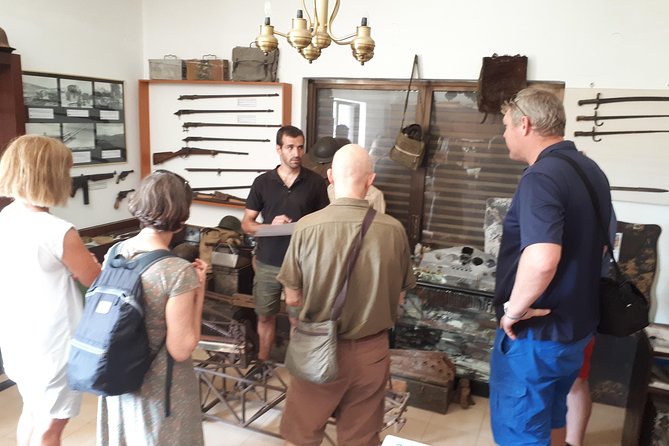
Your first stop is Maleme, and you’ll spend about 50 minutes there. This is where the day needs to start strong, because it’s the foundation for everything that comes next. Maleme is often the first place people connect with the battle, and using it as the opening makes it easier to follow the story as you move around Crete.
Why it works: Maleme helps you understand how an invasion becomes more than an event—it becomes a chain reaction across the island. During your time there, you’re not just looking at a point on a map. You’re getting the story connected to location, so later stops make more sense.
Practical tip: this is a longer early stop, so wear comfortable shoes and be ready to stand and listen for a bit.
Tavronitis Bridge Stop: The Power of a Crossing
Next comes Tavronitis Bridge, with about 40 minutes on the clock. Bridges sound simple, until you realize how much military planning depends on choke points—where movement slows down, redirects, or becomes predictable.
This is one of the stops where you often appreciate the guide’s explanations. You’ll likely start noticing how the battle wasn’t just about who had more firepower, but about who could control routes and timing. If you’ve ever wondered why “small” infrastructure ends up deciding big outcomes, this is your answer.
One thing to expect: stops like this are often less dramatic to look at than cemeteries, so the storytelling matters. You’ll get the context that makes the location meaningful.
German Military Cemetery: A Quiet Reality Check
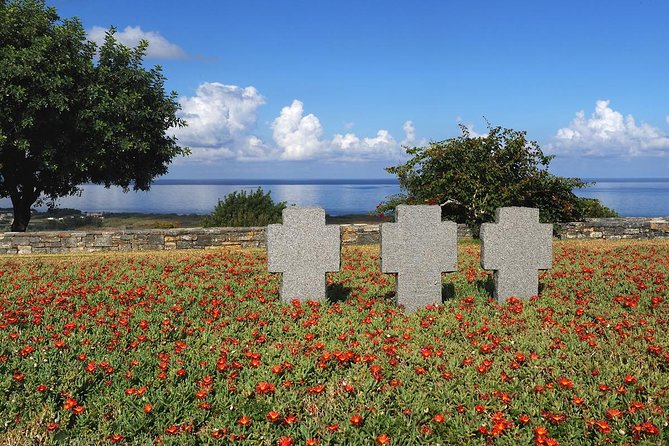
After Tavronitis Bridge, you visit the German Military Cemetery for about 30 minutes. Cemetery visits are always serious, but this one has an important lesson built in: history isn’t just a battle narrative. It’s losses on multiple sides.
In the reviews, I kept seeing the same theme—guides handle the material with empathy, not just facts and dates. That’s a big difference. It can turn a quick stop into a moment where you actually understand what war costs, not just what armies did.
A practical note: cemeteries are usually calm places. Keep your voice low, take your time with photos, and let the silence do part of the work.
Souda Bay War Cemetery: Commonwealth Memory in Focus
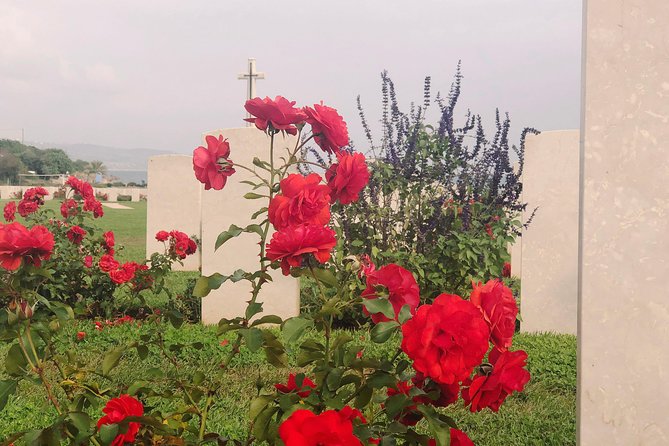
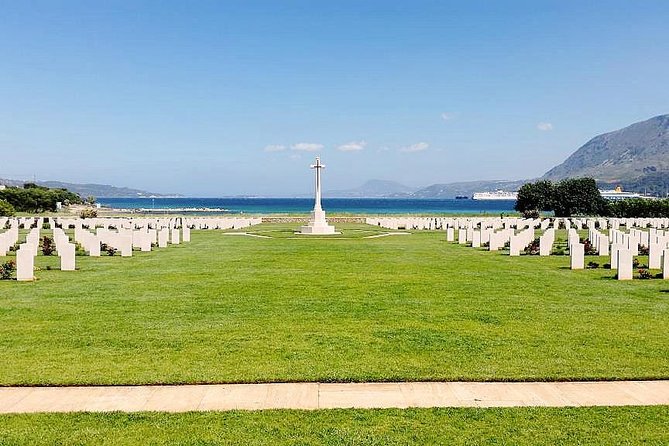
Then you move to Souda Bay War Cemetery, also about 30 minutes. This stop is where the Commonwealth story becomes harder to ignore. It’s a different emotional register than the German cemetery, and guides typically connect it to the battle’s outcome and the broader impact on Allied forces.
Souda Bay also comes up in multiple accounts as a “fitting end” to the day—because by the time you arrive, you’ve got enough geography and context to connect the dots. You stop understanding the battle as a distant event and start seeing it as something that happened to real people, in real places, with lasting consequences.
If you’re the type who likes to connect history to family stories, this stop is especially meaningful. One person described it as showing them where their grandfather’s path intersected with the evacuation process at Souda Bay. Even if your family doesn’t have a direct connection, this is the kind of place that makes you feel the scale.
The Extra Charge of a Personal WWII Memorabilia Stop
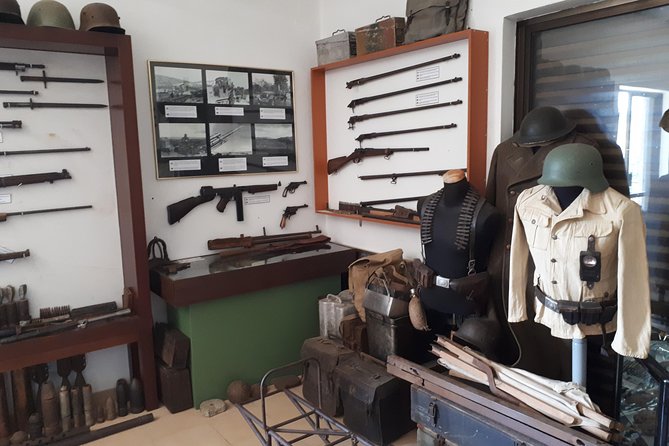
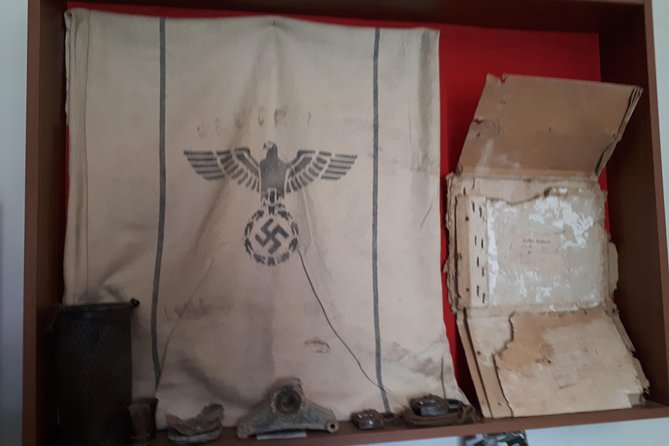
A number of guide-led versions of the day include a visit to a private collection of WWII battle memorabilia linked to the region. In accounts, this has been described as a chance to see artifacts in a more personal setting than a standard public museum, and in at least one case people mentioned hands-on moments with historical items.
I’m cautious here: this kind of add-on isn’t always listed in the same way in every tour outline, so treat it as a bonus you might experience rather than a guaranteed museum ticket. Still, if it is offered on your day, it’s the part where the war stops feeling like textbook content and starts feeling like lived detail—without turning it into spectacle.
If you’re bringing kids or you don’t want weapon-related history, talk to your guide on the day about what you’ll see before you commit your comfort level.
Guides Who Answer, Adjust, and Keep the Day Moving
A huge reason this tour earns a near-perfect rating is how the guides work. Names like Janos/Yannis/Ioannis, Babis, Stelios, and Nicos show up repeatedly in people’s comments, and the common thread is clear: guides are friendly, they field questions during the day, and they have a way of explaining the battle so it becomes understandable.
In plain terms, good guides do three things:
- They give you a quick framework so you don’t get lost.
- They connect what you’re seeing to what happened next.
- They treat questions like part of the learning, not interruptions.
Also, humor shows up in comments. That matters. WWII is heavy. A guide who can balance seriousness with a light touch helps people stay focused instead of shutting down.
Timing, Walking, and How Much Battlefield Ground You’ll Get
Here’s the one thing I’d flag if you’re a hardcore military-history fan. The day is built around multiple key stops that include viewpoints, cemeteries, and locations tied to movement and command. That can mean more explanation from a position of observation, not necessarily getting down onto every field where the fighting took place.
One constructive note mentioned difficulty grasping the full three-day flow because the experience included map-based explanation from a hill with the Allied HQ, rather than walking on the most active ground. That doesn’t mean the tour isn’t authentic—it’s still on the real sites—but it does mean your learning style matters.
If you love battlefield trekking and want a lot of ground-level wandering, you might find a few hours of “look, listen, connect” less satisfying than “walk the exact action.” Still, if you’re okay with learning through context and location, you’ll likely leave with a clearer picture than you had before the day.
Who This Tour Is Best For
This tour is a great fit if:
- You’re interested in WWII and want more than general reading.
- You want a structured day that’s easy to manage from Chania.
- You like asking questions and learning from a local who lives with the story.
- You appreciate seeing both sides’ memorials in one route.
It’s also a good choice if you’re traveling with someone who doesn’t want to research bus schedules and entrance fees. The pickup/drop-off and included admissions do the heavy lifting.
Where it might not fit:
- If you want lots of free time, beach breaks, or casual pacing.
- If you want a long, on-foot battlefield hike with minimal stops.
- If cemeteries feel hard for you, plan for extra quiet and be honest with yourself.
Should You Book This Battle of Crete Day Tour?
Yes, I think you should book it if you want an organized way to understand a complicated battle without spending your vacation doing logistics.
Here’s the quick decision guide I’d use:
- Book it if you want a guided route through Maleme, Tavronitis Bridge, two major cemeteries, and Souda Bay in one day.
- Book it if you value small-group time and guides who answer questions and keep the story clear.
- Reconsider if you need a lot of ground-level battlefield walking, or if the idea of visiting cemeteries will stress you out.
One last tip: come with at least one question. Something like, How did the geography force the invasion’s rhythm? A good guide will pick it up and use it to sharpen the whole day.
FAQ
What time does the Battle of Crete day tour start?
It starts at 9:00 am.
How long is the tour?
The duration is about 6 hours.
Where does the tour run?
The tour is in Crete, Greece, and it departs from and returns to locations in the Chania Region.
Does it include entrance fees?
Yes. All entrance fees are included.
Is the tour offered in English?
Yes. The tour is offered with an English speaking driver/escort.
Is there a group size limit?
Yes. The tour has a maximum of 15 travelers.
What’s included for food and drinks?
The tour includes snacks and bottled water per person.
What kind of transportation is used?
You travel by air-conditioned minibus/minivan.
Is free cancellation available?
Yes. Free cancellation is available up to 24 hours in advance for a full refund.
Does the tour depend on weather?
Yes. The experience requires good weather; if it’s canceled due to poor weather, you’ll be offered a different date or a full refund.