A cool hour and a half of Cretan wine. This ARISMARI experience pairs a brief winery tour with a walk through the vineyard before you sit under a traditional pergola for a tasting of six estate wines. You’ll also get a small starter of rusks and Cretan cheeses, plus water, all handled at a comfortable pace.
The main thing to think about is logistics: transportation isn’t included, and there’s no kids supervision, so it’s not set up like a family drop-in activity.
In This Review
- Key things that make ARISMARI different
- Entering The Douloufakis Winery World in Dafnes
- Getting There: the Dafnes meeting point and your easiest approach
- The short winery tour that sets up your tasting
- A tasting that’s more than six pours
- Walking the sunlit vineyards (and why shade is part of the plan)
- The value check: what you’re really paying for
- Who this tour suits best (and the one group to watch out for)
- What to expect from the experience flow
- FAQ
- FAQ
- How long is the ARISMARI vineyard tour and wine tasting?
- Where does the tour start?
- What time does it end?
- How many wines are included in the tasting?
- Are food and water included?
- Is transportation to the winery included?
- Is the tour offered in English?
- Is there a limit on group size?
- Should you book ARISMARI?
Key things that make ARISMARI different
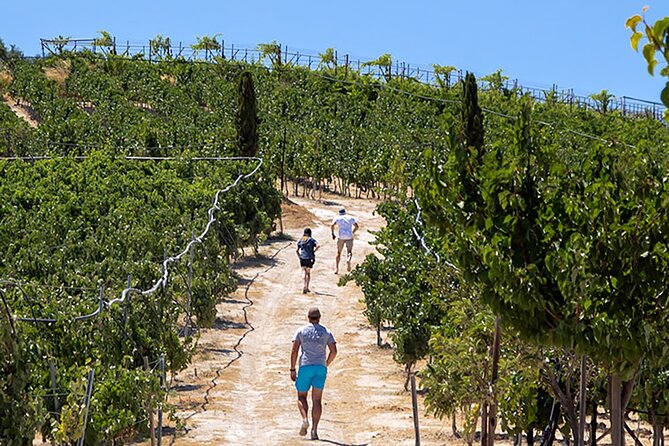
- Small-group feel (max 12 travelers), so your guide can actually answer questions.
- Six estate wines, 60 ml each, paired with Cretan rusks and cheese, not just a quick sip-and-go.
- Traditional pergola tasting spot, with shade built in for the hot Crete hours.
- Short winery walk plus vineyard views, structured enough for first-timers but still worth it for wine people.
- English-speaking guided experience with a clear focus on the wines and the area around the winery.
Entering The Douloufakis Winery World in Dafnes

If you’re spending time in Crete and want something that feels personal, ARISMARI is the kind of tour that fits. It runs about 1 hour 30 minutes, which is long enough for a proper tasting flow but short enough that you won’t lose your whole day to traffic and timing.
You start in Dafnes (Dafnes 700 11, Greece), then shift into the Douloufakis Winery experience right away. There’s a simple rhythm here: a quick look at the winery, then moving out to the vineyards, then back to a shaded tasting area.
One practical plus: the group size is capped at 12 travelers, which usually means less waiting around and more chance to hear what you actually care about—how the wines are made and what you’re tasting.
You can also read our reviews of more food & drink experiences in Crete

Getting There: the Dafnes meeting point and your easiest approach
Transportation to the winery isn’t included, so you’ll want to plan how you’ll reach Dafnes 700 11. If you’re driving, this is straightforward. If you’re relying on local transit or taxis, build in extra buffer time, because wineries tend to be outside the center of town.
Also, come ready to find the meeting spot efficiently. In real life, rural meeting points can be easy to misread—street numbers, small signage, narrow roads. I’d keep your phone charged and your booking confirmation accessible, since you’ll have a mobile ticket and you’ll want to lock onto the right place quickly.
You’ll finish back at the same meeting point, so you’re not signing up for a long round-trip day.
The short winery tour that sets up your tasting
The experience begins at Douloufakis Winery. The goal of the first part is simple: you get context before you drink. You’ll start by sampling what’s essentially the “why” behind the wines—what the winery is like and how the tasting experience is organized.
What I like about this approach is that it doesn’t pretend you need a wine degree to enjoy it. A short tour is perfect when you’re not trying to cram three hours of production details into your afternoon. You get enough background to understand what you’ll notice later in the glass.
It’s also a good moment to ask questions. Since the group is kept small, you can usually speak directly with the guide rather than shouting over a crowd. One guide named George in particular stood out for explaining the wines and the area with real passion, and that kind of back-and-forth is exactly what makes the tasting more fun than just receiving a flight.
A tasting that’s more than six pours
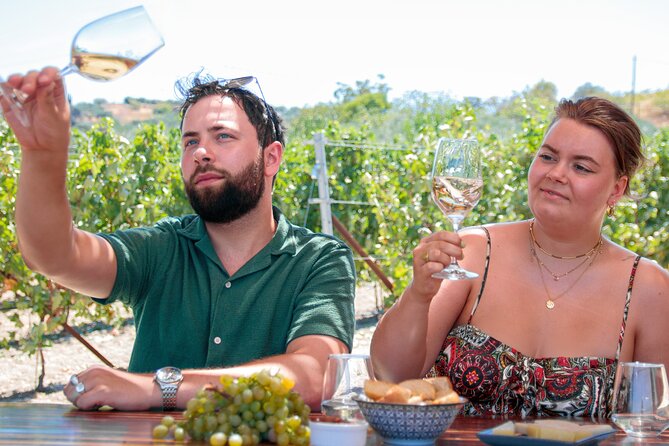
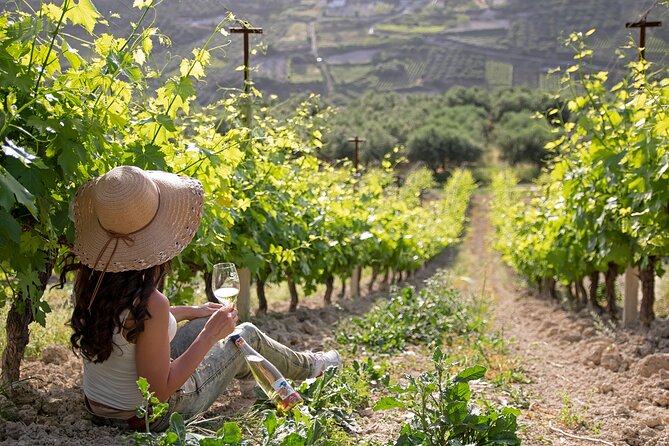
Under a traditional pergola, the tasting is where the tour turns into an enjoyable break. The tasting portion is 60 ml of each of six estate-crafted wines. That matters, because 60 ml is enough to taste, compare, and get a sense of character, but it’s not so much that you feel hammered.
You’ll also have a starter: small portions of rusks and Cretan cheeses, plus water. I appreciate this pairing because it makes the tasting feel grounded in Cretan food, not just a tasting menu of alcohol. The rusks and cheese help you keep your palate refreshed between wines, and water keeps the whole experience comfortable.
How to get the most out of it:
- Take small sips and breathe between wines. Smell changes fast.
- If you’re new to wine, focus on simple signals: dryness (dry vs round), fruit (more citrus/stone fruit vs darker fruit), and weight (light vs fuller).
- Ask what the guide thinks you’ll notice. With a small group, it’s not awkward to make it interactive.
And yes—this is designed to slow down. The pace is relaxed, not rushed, which is a big deal when you’re paying attention to taste and not just collecting photos.
Walking the sunlit vineyards (and why shade is part of the plan)
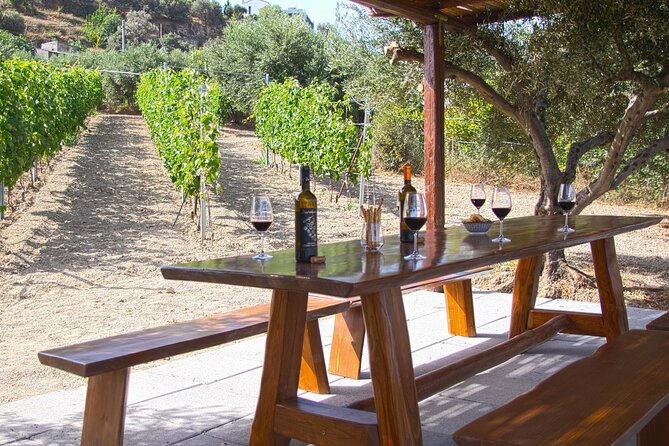
After the winery intro, you walk through the sunlit vineyards. This isn’t a strenuous hike. It’s more of a guided stroll that puts you near the vines and helps you connect what you’re drinking to the place it comes from.
The timing is set up so you’re not stuck out in direct sun forever. The tasting happens under the shade of a traditional pergola, which is smart in Crete’s warmer daytime conditions. If you’ve ever done tastings where everyone melts before the first pour, you’ll appreciate this little bit of planning.
Weather matters here. The experience requires good weather, so if conditions aren’t right, you’ll be offered a different date or a full refund. Practically, that means you should keep an eye on the forecast if you’re traveling during a changeable stretch.
If you’re sensitive to heat, wear a hat, use sunscreen, and bring water even though water is included at the tasting. It’s just easier.
You can also read our reviews of more wine tours in Crete





The value check: what you’re really paying for

At $56.41 per person for about 1 hour 30 minutes, you’re not just paying for glasses of wine. You’re paying for a guided structure: the winery context, the vineyard walk, and the tasting format that includes six estate wines with food (rusks and cheeses) and water.
The small group cap (max 12 travelers) is a quiet value boost. Bigger tours often mean shorter interactions and less time for questions. Here, the format stays human-scale, which usually improves both the learning and the enjoyment.
You’re also getting an experience offered in English, with a mobile ticket, and you receive confirmation at the time of booking. Those details matter because they reduce friction on travel days. Wine tours are fun—until you lose time finding the start point.
Finally, note the booking pace: it’s commonly reserved around 47 days in advance. That’s a hint that people plan around it, likely because it fits well into a day schedule. If your dates are set, booking earlier is a sensible move.
Who this tour suits best (and the one group to watch out for)
ARISMARI works well for most people. The experience says most travelers can participate, and service animals are allowed, which is helpful if you travel with one.
This is especially a good match if:
- You want Cretan wine without a long day.
- You like guided explanations but don’t want a lecture.
- You enjoy a tasting with food included.
- You’re traveling with a small group vibe and want more than just standing in line.
There’s one consideration that affects who should book: no supervision for kids is included. That doesn’t mean kids can’t join, but it does mean the experience isn’t set up for childcare. If you’re traveling as a family and need hands-on supervision, this probably won’t feel like the right format.
Also, since transportation isn’t included, this is easiest if you’re comfortable getting to Dafnes on your own.
What to expect from the experience flow
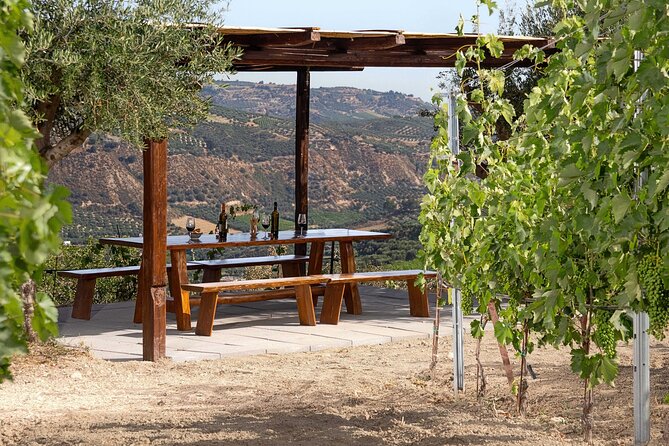
Here’s what the experience feels like in real time, based on how it’s structured:
- Start at Dafnes 700 11 and check in.
- Douloufakis Winery first, with a guided tour and a sense of place.
- A walk through the vineyards where you connect the wine to the growing environment.
- Back under a traditional pergola for the tasting.
- You sip six estate wines (60 ml each), with rusks, Cretan cheeses, and water.
- The tour ends back at the meeting point.
It’s a clean arc: see → walk → taste → relax. That makes it a good option when you want something “worth it” without turning your day into a marathon.
FAQ
FAQ
How long is the ARISMARI vineyard tour and wine tasting?
It lasts about 1 hour 30 minutes.
Where does the tour start?
The meeting point is Dafnes 700 11, Greece.
What time does it end?
The activity ends back at the same meeting point.
How many wines are included in the tasting?
You’ll taste six estate wines, with a 60 ml portion of each.
Are food and water included?
Yes. You get Cretan rusks, Cretan cheeses, and water.
Is transportation to the winery included?
No. Transportation to the winery is not included.
Is the tour offered in English?
Yes, it’s offered in English.
Is there a limit on group size?
Yes. The tour has a maximum of 12 travelers.
Should you book ARISMARI?
If you want a compact, guided Crete wine tasting that includes food, a vineyard walk, and a relaxed tasting setting under shade, ARISMARI is a strong bet. The best signs for me are the small group size, the full tasting of six estate wines, and the fact that the experience is designed to be comfortable—especially with the pergola setup and water included.
Book it if you’re aiming for an authentic winery visit without losing half your day. Skip it if you need transportation provided, or if childcare and supervision are a must for your group. If your plan includes getting to Dafnes on your own, you’ll likely find this one fits beautifully into a well-paced day on Crete.