A fortress, olives, and wine in one day.
This private 7.5-hour tour strings together Ottoman-era views, Cretan food rituals, and small inland villages near Chania, with tastings built into the route. You’ll stop at the Ottoman Fortress, an olive oil mill in Kalyves, the Gavalochori folklore museum, a coffee break in the village, the Saint Georgios monastery ruins at Karydi, and finish with a winery visit and lunch.
I love how much is included, so you’re not rationing money or snacks all day. Olive oil mill tastings plus a winery stop with five wine glasses make the day feel like a proper Cretan “best hits” playlist without the usual tourist pinch points.
One consideration: the itinerary is a full schedule, and several stops run around 30 minutes, so if you want lots of free time to wander, plan to keep your expectations flexible.
In This Review
- Key things to know before you go
- A 7.5-hour route that feels personal, not rushed
- Ottoman Fortress views over Souda Bay and the White Mountains
- Kalyves olive oil mill tour: how to spot quality in liquid gold
- Gavalochori folklore museum and a real coffee stop
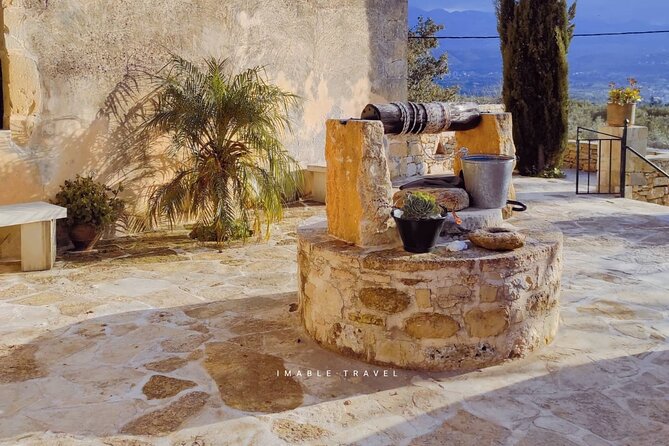
- Agios Georgios monastery at Karydi: Venetian-style arches in ruins
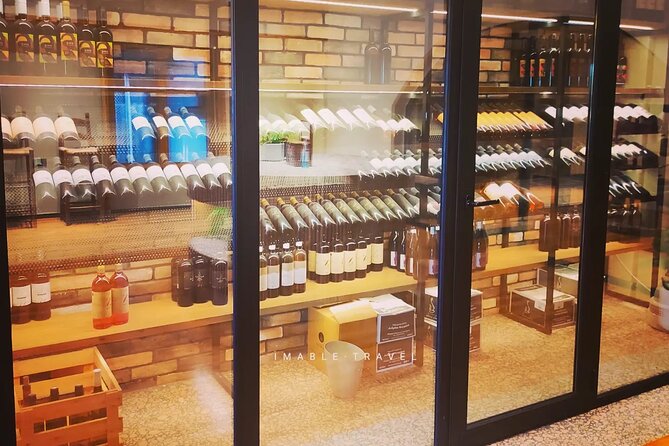
- Dourakis winery: five wine tastings plus a Cretan lunch
- What makes the private format worth paying for
- Price and value: $168.95 with a lot already paid
- Who this tour suits best
- Should you book this Chania villages tour?
- FAQ
- FAQ
- How long is the full-day private tour?
- What does the tour cost per person?
- Does it include pickup from my hotel?
- Is this tour private or shared?
- What language is the tour offered in?
- What are the main stops during the day?
- What tastings and food are included?
- How much wine tasting is included?
- Is alcohol served to everyone?
- Is the tour accessible for guests with mobility needs?
Key things to know before you go
- Private pacing with one English-speaking driver/guide so the day doesn’t feel like a bus tour.
- Tastings that teach you what you’re tasting at the olive oil mill and at the Dourakis winery.
- Village culture between big sights: Gavalochori coffee and a folklore museum with handmade knitting art.
- Big views from the Ottoman Fortress over Souda Bay, the Apokoronas valley, and the White Mountains.
- Accessibility-minded transport with an adapted vehicle option for mobility needs (tell them what you need in advance).
- Food and drinks are handled: Cretan snacks, water, coffee/tea, lunch, and refreshments are all included.
A 7.5-hour route that feels personal, not rushed
This is the kind of day trip that works because it mixes three things you actually want on Crete: scenery, stories, and food. The total time is about 7 hours 30 minutes, and the day is built around short-to-medium stops—mostly 30 minutes, plus longer time for the olive oil mill and winery.
The private setup matters. You’re not squeezed into a herd. Your guide can adjust pace and attention, which is a big deal when you’ve got kids, older family members, or anyone who needs breaks. The vehicle is also air-conditioned, and it’s set up for mobility needs when required.
You can also read our reviews of more private tours in Chania
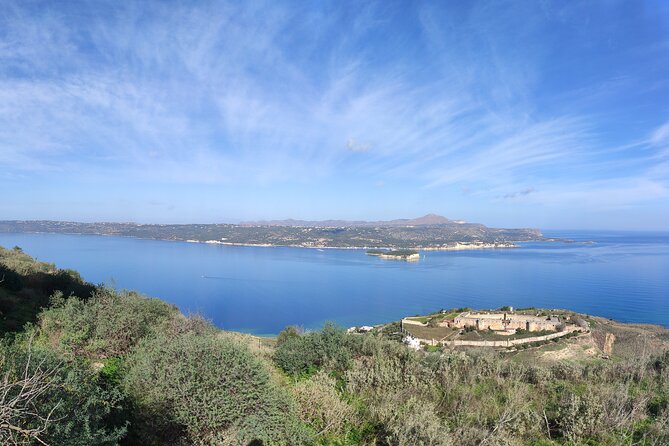
Ottoman Fortress views over Souda Bay and the White Mountains
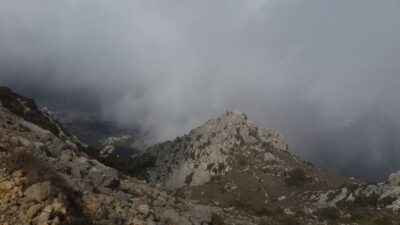
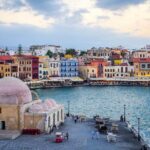
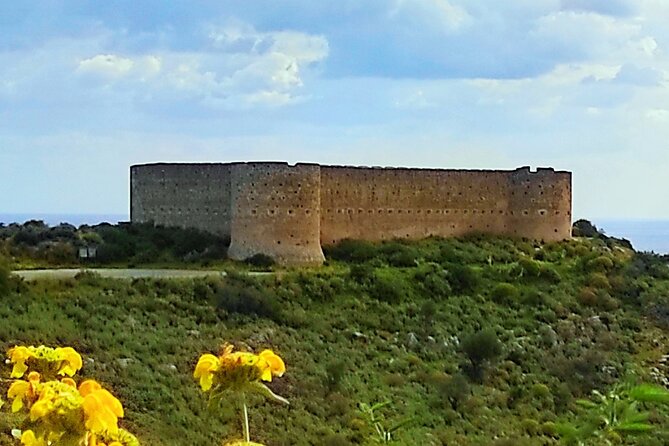
The day starts at the Ottoman Fortress, positioned above Souda and the Apokoronas valley. Even if you’re not a fortress person, the setting does most of the work. You get commanding views across the sea and the valley, and on a clear day you can see the White Mountains and Souda Bay.
This is also one of those stops where the “why” helps the “what.” Your guide talks through the fortress’s historical significance and the myths connected to the area. The ticket admission is listed as free, and the stop is about 30 minutes—enough time to take photos and get the background without turning it into a lecture.
Practical tip: bring sun protection and something for the wind. Fortress tops can feel cooler or breezier than you expect, then go right back to hot when the sun hits.
Kalyves olive oil mill tour: how to spot quality in liquid gold
Next comes the olive oil mill in Kalyves, one of the most Cretan things you can experience beyond a restaurant plate. The visit runs about 45 minutes, and it’s structured like a mini lesson: how olives are grown, how they’re processed, and why olive oil matters culturally and nutritionally.
You also get a numbers-and-tradition perspective. Crete has a massive olive footprint—your guide will point out that cultivated land is largely covered by olive groves, with tens of millions of trees in total across the island. That helps you understand why olive oil is more than a condiment here.
Then you taste. You’ll try different olive oils and learn how to identify differences in quality. This is where the tour becomes more than sightseeing. Instead of buying random bottles at the end, you’ll know what you’re picking and why.
Admission for the mill/tour is listed as free, and the included tastings are one of the day’s best “wow, I get it now” moments.
Gavalochori folklore museum and a real coffee stop
After the olive oil lesson, the day slows into village rhythm. In Gavalochori, you’ll visit the Historical & Folklore Museum, which is described as a trip back to simpler community life. The museum has seven rooms, and you’ll see artifacts like tools, utensils, household items, and textiles.
One specific feature: the rooms are filled with handmade knitting artworks. That detail gives the museum personality—you’re not just viewing glass cases; you’re seeing craft that feels tied to real daily life.
This museum stop is about 30 minutes, and admission is included. After that, you get coffee at a traditional coffee shop in Gavalochori for about 30 minutes. It’s a practical break in the schedule, and it’s also a chance to watch village life at an easy pace.
Practical tip: use the coffee stop to ask your guide where to walk in Gavalochori on your own later—if you have energy after the day’s full schedule.
Agios Georgios monastery at Karydi: Venetian-style arches in ruins
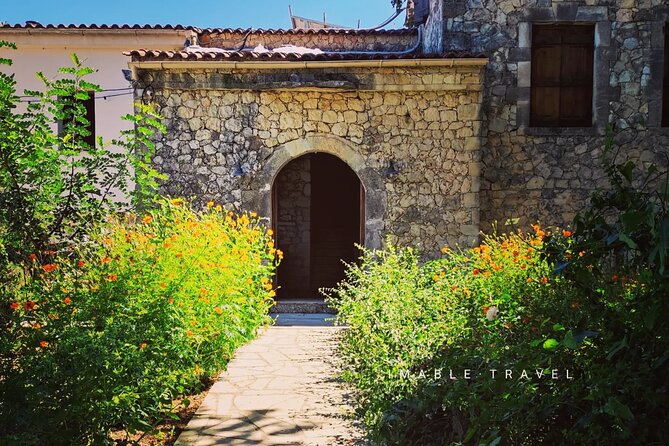
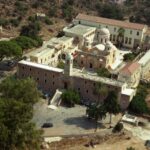
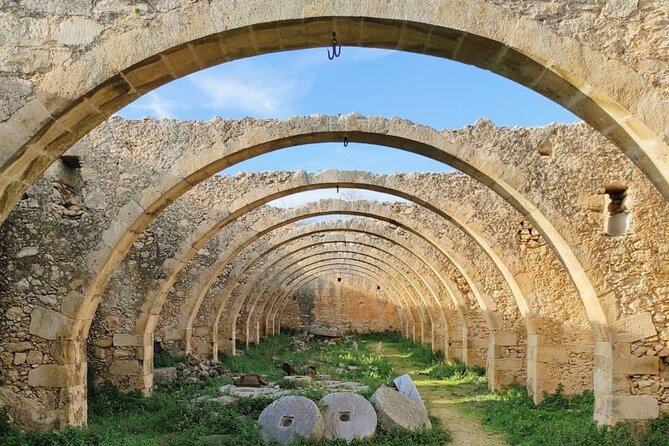
Crete’s religious sites aren’t just “pretty churches.” They’re often tied to older industry, local architecture, and layers of cultural influence. Here, you visit the Monastery of Saint Georgios at Karydi, which is known for Venetian-influenced architecture.
The most eye-catching detail is in the ruins: 12 stone-built arches from the old olive oil factory. That connects nicely back to earlier in the day. Olive oil isn’t just something you toured—it’s the economic engine behind the region’s history.
This stop is around 30 minutes, and admission is included. Expect a short walk, some uneven ground, and time to take photos of the arches and the surrounding views.
You can also read our reviews of more tours and experiences in Chania

Dourakis winery: five wine tastings plus a Cretan lunch
The final major stop is at Winery Dourakis in the Apokoronas region. This part of the day is long enough to feel like a proper sit-down experience: about 1 hour 30 minutes, and it includes both wine and food.
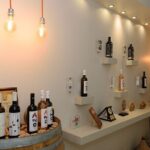
You’ll learn about winemaking from vineyards to bottle, then do a structured tasting: five different glasses of wine, each with its own flavor and aroma. Your guide will explain local grape varieties and the history of wine on the island as you taste.
Then comes lunch. The winery portion includes a delicious local lunch with Cretan specialties. This is one of the reasons the tour feels like a value: you’re not paying separately for meals after already paying for transport and admissions.
Also note the alcohol rule: wine is only served to guests aged 18+. If you’re traveling with teens or you don’t drink, you can still enjoy the lunch side of the experience, but it depends how your group handles the tasting.
What makes the private format worth paying for
At around $168.95 per person, you’re paying for a day that’s built around your group instead of mass logistics. The route is the same “big anchors” for everyone, but the experience doesn’t have to run on rails.
In practice, private tours are best when:
- you want a guide to slow down for questions,
- you need flexibility for kids or someone with mobility needs,
- you’d rather stop at smaller places that feel local.
The tour provider highlights that the vehicle is fully adapted to accommodate guests with mobility needs. Many of the stops—including wineries and historic sites—are chosen with accessibility in mind, and you can request what you need ahead of time so the route matches your situation.
You’ll also spend less time stuck waiting around for a different group. The pacing is one of the reasons this tour gets such strong ratings.
Price and value: $168.95 with a lot already paid
Let’s talk numbers the way you’ll feel them on the ground.
You’re paying about $168.95 per person for a full day that includes:
- private air-conditioned transportation,
- pickup within 20 km of Chania city center (with notes for Old Venetian harbor pedestrian zones),
- an English-speaking driver and local guide (one person),
- bottled water and refreshments,
- Cretan snacks plus coffee and/or tea,
- olive oil mill tour with tastings,
- museum entrance,
- monastery entrance fees,
- winery tasting (five glasses) and lunch,
- all fees and taxes with no hidden costs.
If you were to do this on your own, you’d likely pay separately for transport (and time), museum/monastery entry, and at least one guided tasting experience. Here, it’s stacked into one day. The trade-off is you’re on their schedule, not yours—so it helps to arrive ready for a busy, fun day.
Who this tour suits best
This is a great fit if you want a “more Crete, less checklist” day.
You’ll likely enjoy it most if you:
- like history and culture, but also want it tied to everyday life,
- care about tasting local products instead of just looking at them,
- want small-village atmosphere around Chania,
- appreciate a guide who can tailor the pace.
It’s also a solid pick for cruise days. The day runs long enough to feel complete, and the private format is helpful when your shore time is limited. If you’ve got a group with mixed ages or mobility needs, the adapted vehicle option makes the planning much easier.
Should you book this Chania villages tour?
If your goal is a full, satisfying day that combines villages, Ottoman-era views, olive oil tastings, a folklore museum, and a winery lunch, I’d say yes—this is one of the more efficient ways to pack those priorities into a single route.
Book it especially if you hate the idea of coordinating entrances, tastings, and meals yourself. The included food and drinks alone take pressure off your day. And if you want to bring family members who may need extra comfort and accessibility planning, this tour is set up for that.
FAQ
FAQ
How long is the full-day private tour?
The tour lasts about 7 hours 30 minutes.
What does the tour cost per person?
The price is $168.95 per person.
Does it include pickup from my hotel?
Pickup is offered. It’s included within 20 km of Chania city center. If you’re in the pedestrian zone of the old Venetian harbor, you meet at the nearest accessible spot for the vehicle.
Is this tour private or shared?
It’s private. Only your group participates.
What language is the tour offered in?
It’s offered in English.
What are the main stops during the day?
You’ll visit the Ottoman Fortress, an olive oil mill in Kalyves, the Historical & Folklore Museum of Gavalochori, Gavalochori for coffee, the Agios Georgios Monastery at Karydi, and Winery Dourakis.
What tastings and food are included?
You get olive oil tastings, coffee and/or tea, snacks and refreshments, and a winery tasting with five glasses of wine plus a local lunch with Cretan specialties.
How much wine tasting is included?
You can taste five different glasses of wine during the winery stop.
Is alcohol served to everyone?
Alcohol is only served to guests aged 18 and older.
Is the tour accessible for guests with mobility needs?
The vehicle is adapted for mobility needs, and the tour notes that many stops are selected for accessibility. Let the provider know your requirements in advance.