Food, farms, and village life in one morning. This 7 Villages of Apokoronas tour is interesting because it strings together real Crete stops, from kafenio coffee in Stilos to cheese tastings and olive oil breaks, all with a private-style guide/driver in the van. I love the way it feeds you along the route, with lunch plus multiple tastings, so you are not stuck waiting for the one big meal.
I also like the human scale: the tour runs as a small group (up to 20), so your guide can actually slow down and explain what you are seeing instead of rushing through everything. One catch to consider is pickup limits: hotel pickup/drop-off is only in the Chania region, so if you are staying outside that area, you may need to get yourself to Chania city center first.
In This Review
- Key things that make this tour worth your time
- A half-day taste trail through Apokoronas villages
- Price and logistics: what you are really paying for
- Stop 1: Stilos coffee at a traditional kafenio
- Stop 2 and 3 in Vrises: village views and a cheese factory tasting
- The cheese tasting specifics
- Stop 4 in Emprosneros: olive oil on warm bread and Cretan biscuits
- Stop 5 in Fres: lunch in a traditional kafeneio
- The guide/driver effect: local stories you can use
- What the small group size changes (and what it does not)
- Come hungry: pacing and snacks built into the route
- Vegetarian option and practical food planning
- Should you take this tour from Chania?
- FAQ
- FAQ
- What time does the 7 Villages of Apokoronas Tour start?
- How long is the tour?
- Is lunch included?
- What tastings are included?
- Does the tour include coffee?
- Do I need to pay for admissions or entry tickets at the stops?
- Is there a vegetarian option?
- What language is the tour offered in?
- Where does pickup and drop-off happen?
- How big is the group?
- What is the minimum drinking age?
Key things that make this tour worth your time
- Tastings are the main event: coffee, local cheese varieties, olive oil with warm bread and biscuits, plus lunch
- Small-group pace: up to 20 people, with room for questions and practical stops
- Private-guide feel in a group: you get local history and everyday village context, not just driving directions
- Chania hotel pickup (with limits): convenient if you are in the Chania region, but not if you are elsewhere
- Food-friendly timing: the day is built around eating, so plan to arrive hungry
A half-day taste trail through Apokoronas villages
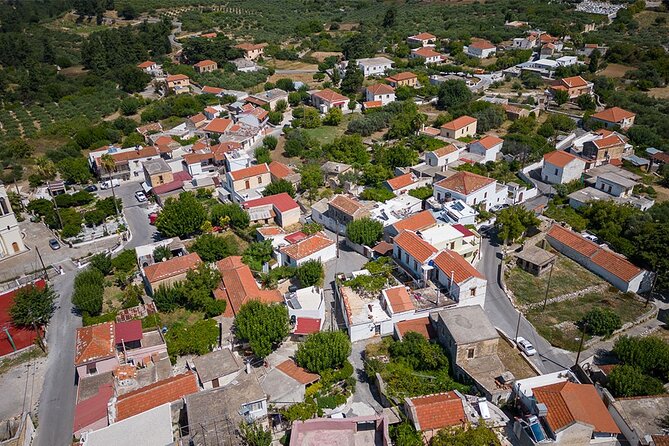
This is the kind of day trip that feels more like a visit with locals than a checklist. You start early (8:00 am) and spend roughly 6 hours moving through small villages east of Chania, with stops designed around daily life: coffee at a traditional kafenio, a cheese factory visit, a bakery break, and lunch in a village setting.
The tour is also built for conversation. Your guide/driver shares local context as you go—Cretan history and traditions, plus small details that help you understand why these places look the way they do. Even if you are not a big “history person,” the way it is taught makes it stick, because you see it right after you hear it.
One practical reason this works well: the itinerary is not one long stretch of sightseeing with random snack breaks. It is structured. You taste, you eat, you pause, and then you move on—so the day feels full without feeling chaotic.
You can also read our reviews of more tours and experiences in Chania.
Price and logistics: what you are really paying for
At $139.13 per person for about 6 hours, the headline price can look steep until you break down what is included. This tour bundles in transportation by air-conditioned minivan, driver/guide time, hotel pickup and drop-off within the Chania region, lunch, and all tastings.
In other words, you are paying for a guided food-and-village day with logistics solved. If you were to replicate it on your own, you would need a car, route planning between villages, and then figure out where to eat and what to try (especially the cheese and bakery stops). Even more important: you are not just eating for fun—you are stopping at local businesses where the guide can explain what you are seeing.
Group size is capped at 20. That matters more than it sounds. Smaller groups usually means less waiting, more personal interaction, and a better chance your guide can adjust the day based on what the group seems to enjoy.
Two small logistics notes you should keep in mind:
- Pickup is only for the Chania region. If you are staying outside it, you have to drive to meet the group in Chania city center.
- It runs in English, and you get a mobile ticket.
Stop 1: Stilos coffee at a traditional kafenio
Stilos is where the tour begins gently, with coffee at a traditional kafenio. This is a simple stop on paper, but it is a smart opener. Kafenio culture is how a lot of village social life plays out in Crete, and starting there helps you shift into the slower rhythm of the countryside right away.
If you are thinking this will be stiff and museum-like, this stop usually changes that. Coffee here is about atmosphere—how people talk, where you sit, and how the guide sets the context for what comes next. You also get a quick reset before the tasting-heavy stops later.
The coffee time is about 1 hour, and the admission ticket is listed as free. You are not being asked to budget extra for entry fees at this point.
Stop 2 and 3 in Vrises: village views and a cheese factory tasting
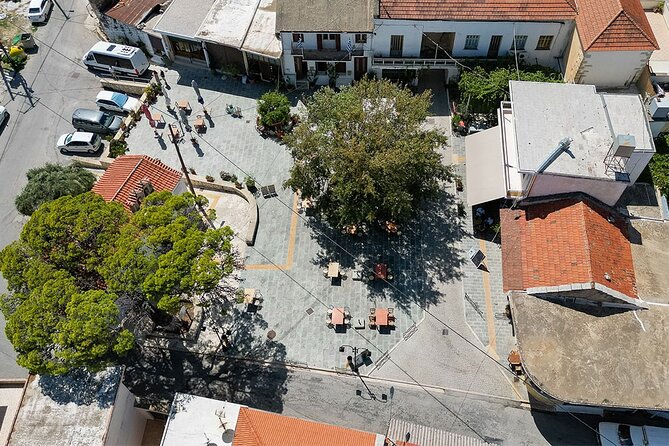
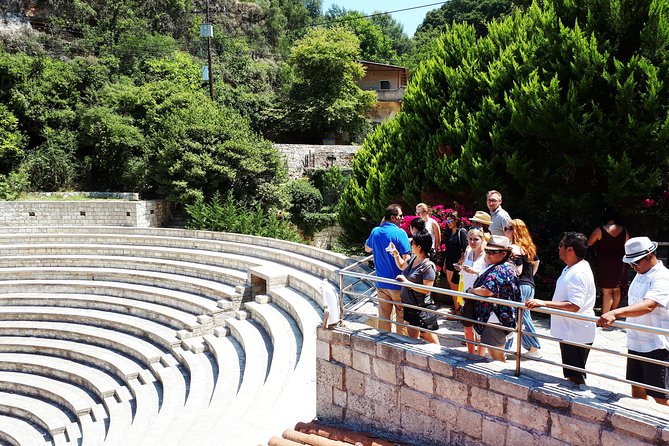
Vrises is the visual breath of the day—green, water, and a picturesque village feel. You get around 1 hour here, then you come back to the area for the cheese factory tasting.
That pairing is the key. You do not just drive past “pretty villages.” You stop, look, and then follow the route into a food-related visit that makes the region feel connected. The guide adds context so the cheese stop is not random; it is part of how everyday life and local production overlap.
The cheese tasting specifics
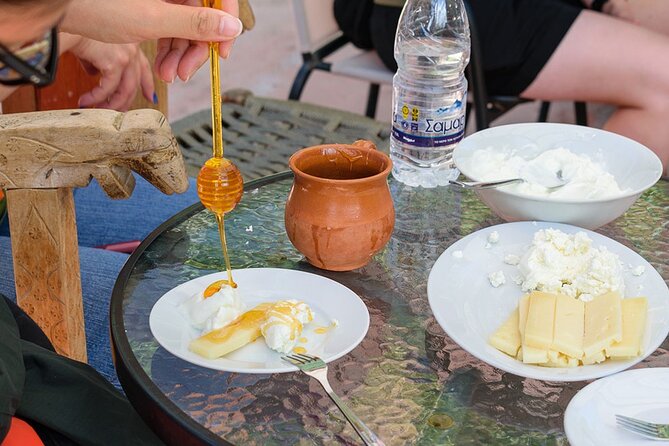
This is one of the most praised parts of the day. You visit a cheese factory where you taste local varieties including Graviera, Mizithra, and Anthotiros. The visit lasts about 1 hour 30 minutes, and tastings are included.
Practical tip: come in ready to taste. This tour is built around eating in several rounds, and the pace makes it easy to get caught off-guard if you had a big breakfast right before pickup.
Also keep your expectations flexible. One less-perfect experience mentioned that a cheese factory stop can vary in quality depending on the day and the exact operation you land in. The overall structure is still good, but if you are extremely picky about where and how you taste, go with a mindset of trying everything and judging for yourself in the moment.
Stop 4 in Emprosneros: olive oil on warm bread and Cretan biscuits
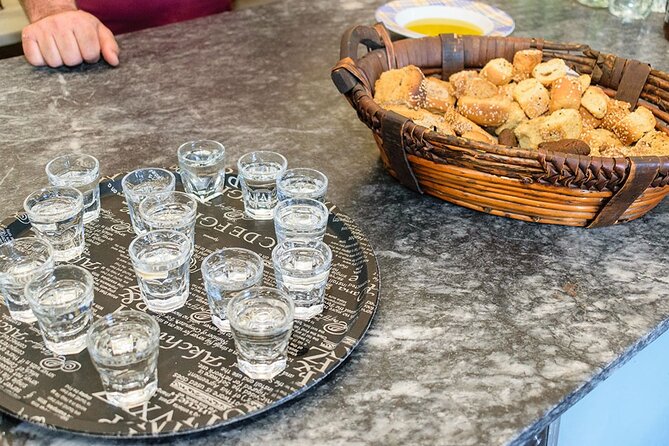
After cheese comes the bakery side of Crete’s food culture. In Emprosneros, you taste olive oil paired with warm bread, cookies, and Cretan biscuits. This stop runs about 1 hour 30 minutes.
This part is valuable because olive oil is more than a flavor—it is part of how people prepare everyday food. The tasting format also keeps it practical: you get to sample what is offered rather than just hearing about it.
I like that this stop gives you a change of pace from the stronger flavors of cheese. It also helps balance the day so lunch later feels like a complete meal rather than the finish line.
Stop 5 in Fres: lunch in a traditional kafeneio
You close the tour in Fres with lunch at a traditional kafeneio. Lunch lasts about 1 hour, with admission listed as free and lunch included.
The big advantage here is that lunch is not tacked on as an afterthought. It is the day’s payoff—after coffee, after cheeses, after olive oil and biscuits. And because it is in a village setting, it often feels different from the standard “tourist lunch.”
One honest consideration: like any food-included day trip, quality can vary. A few comments pointed to lunch being less satisfying on one specific run (like portions or ingredient freshness). That does not seem to be the norm, but it is worth knowing that food stops are always partly dependent on which local kitchen you end up in that day.
My advice: treat lunch as part of the experience, not a guarantee of your single best meal in Crete. If you keep that mindset, the tour still tends to deliver.
The guide/driver effect: local stories you can use
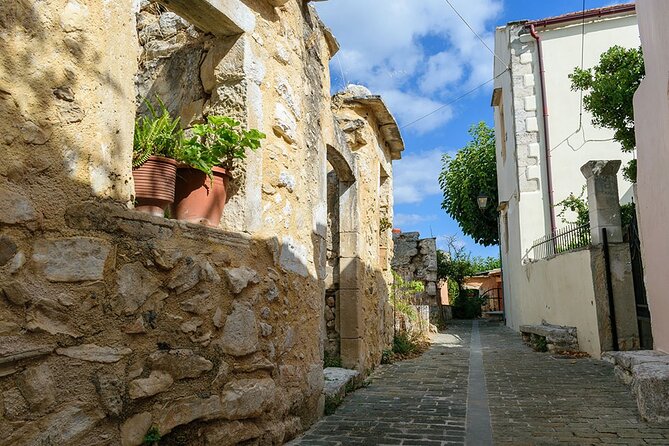
This tour shines when your guide brings the region to life. Across the experiences you can find names like Yannis, Nikos, Yanis, Iannis, Andres, Alex, and Thanasis associated with great days. The common thread is storytelling that connects food, plants, and daily life.
You might hear about agriculture and local crops. Some guides point out herbs and plants you would use in the food you are tasting. Others add bits like a brief walk by a river through fruit orchards, or even a note about fossil remains of a manatee found in the mountains. None of that is “extra fluff” when it is tied to what you see and taste—it helps you place Crete in your head beyond the shoreline view.
The humor shows up too. Multiple comments described guide personalities that kept the group smiling, which matters because long van rides become more pleasant when you are laughing and listening instead of staring at passing walls.
What the small group size changes (and what it does not)
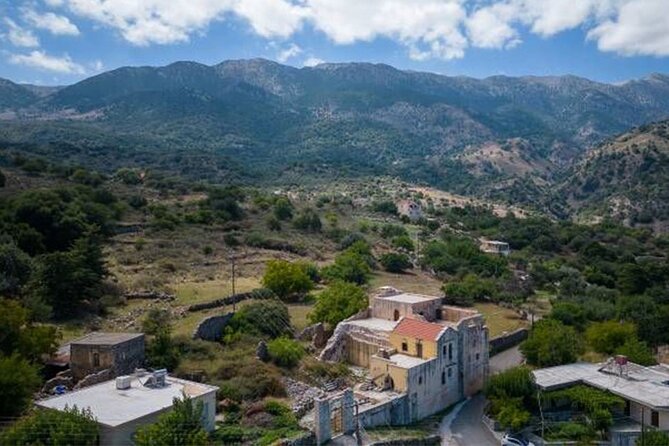
A max group of 20 is not just a marketing detail. It usually means:
- you can hear the guide over the van noise
- stops feel less crowded
- the guide can check in with the group instead of managing a large crowd
That said, one caution came up about seating comfort when the group felt too crammed in the minivan. The vehicle is air-conditioned and ideally comfortable, but comfort can still depend on how full the van is and where you sit.
If you are sensitive about legroom or window views, pick a seat that gives you the best line of sight during the drive. And if you know you get motion uncomfortable, you might want to plan for that like you would on any countryside day trip.
Come hungry: pacing and snacks built into the route
This tour is honestly designed around hunger. You are fed multiple times before lunch: coffee in Stilos, cheese tastings in the Vrises area, olive oil with warm bread and biscuits, then lunch in Fres.
If you show up starving, you will enjoy the day more because each stop feels like a reward. If you arrive stuffed, you might still enjoy it, but you lose part of the fun—especially at the cheese tasting, which is meant for sampling and comparing.
Also, the day includes enough breaks for restrooms during the route. That makes a difference on a morning start, because you are not stuck waiting until the lunch stop to take care of basics.
Vegetarian option and practical food planning
A vegetarian option is available—just advise at booking. That means the tour is designed to handle dietary needs, at least in the broad sense.
What you should do: communicate your needs early, so the lunch and tastings are more likely to fit your requirements. If you have multiple restrictions beyond vegetarian (like dairy-free), you do not have details here, so you would want to ask the operator directly before booking.
Minimum drinking age is 18. This tour is not framed as a party event, but it does include tastings, so the age rule is worth noting.
Should you take this tour from Chania?
Here is my straight answer: I think you should book if you want a countryside day that mixes food stops with real village life and local explanations. This tour is best for people who like:
- tasting local products in context (cheese and olive oil)
- learning through everyday places (kafenio, bakery, cheese factory)
- a guided route that reduces planning stress
I would skip it if:
- you want mostly big sights or ruins (this day is more about villages and food than monuments)
- you are very sensitive about vehicle comfort on full van rides
- you cannot make the Chania region pickup and do not want to arrange your own transport to the city center
FAQ
FAQ
What time does the 7 Villages of Apokoronas Tour start?
It starts at 8:00 am.
How long is the tour?
The duration is listed as about 6 hours.
Is lunch included?
Yes. Lunch is included, and it is served at Fres in a traditional kafeneio.
What tastings are included?
You get tastings at the stops, including local cheese varieties (Graviera, Mizithra, Anthotiros) and olive oil with warm bread, cookies, and Cretan biscuits.
Does the tour include coffee?
Yes. You enjoy coffee at a traditional kafenio in Stilos.
Do I need to pay for admissions or entry tickets at the stops?
The listed admissions are marked free for the stops described.
Is there a vegetarian option?
Yes. A vegetarian option is available if you advise at booking.
What language is the tour offered in?
The tour is offered in English.
Where does pickup and drop-off happen?
Pickup and drop-off are only for the Chania region (selected hotels/meeting points). It is not for Rethimnon, Heraklion, and Lasithi. If you stay in those other regions, you need to drive to Chania city center to meet the group.
How big is the group?
The tour has a maximum of 20 travelers.
What is the minimum drinking age?
The minimum drinking age is 18 years.