Crete turns spiritual when you follow Paul’s path. This private day links Orthodox Christianity with real places you can stand in—monasteries, caves, and Gortyna’s coastline—while a local guide explains the why, not just the what. I love the storytelling from guides like Gethsemane and Ioanna, especially their ability to make early Christian themes feel clear. I also love the practical comfort details: pickup, a chauffeured premium vehicle, and on-board perks like Wi‑Fi and snacks that keep the day from feeling like a slog.
One thing to consider: some stops are short by design, and the Palace of Faistos admission is not included, so you’ll want to plan for a separate ticket.
In This Review
- Key Points Worth Knowing
- A Private Day Through Orthodox Crete: Paul, Monasteries, and Coastal Caves
- Pickup, Premium Vehicle Comfort, and How the Day Stays Smooth
- Stop 1: Heraklion Area Context for the Apostle Paul
- Stop 2: Agios Myronas and the Ascetic Cave with Healing Water
- Stop 3: The Messara Plain Through Local Eyes
- Stop 4: Moni Palianis and the Assumption—Myrtle Tree Traditions
- Stop 5: Palace of Faistos (Festos) and the Admission Ticket You’ll Need
- Stop 6: Odigitria Monastery (Agiofarango) and Fortified Southern Crete
- Stop 7: Matala Beach, Gortyna’s Prehistoric Port, and Seafood Time
- What You Get for the Time: Value Beyond the Stops
- Should You Book This Orthodox Crete Tour?
- FAQ
- How long is the tour?
- Is this tour private or shared?
- Do I get hotel pickup and drop-off?
- What language is the tour offered in?
- Are admission fees included?
- What’s included in the vehicle during the day?
- Will I need to buy tickets myself?
- Is there time to relax at the beach?
- Can I get a full refund if I cancel?
Key Points Worth Knowing
- Private guide + tailored pace: Your day is shaped around what you care about, not a rigid checklist.
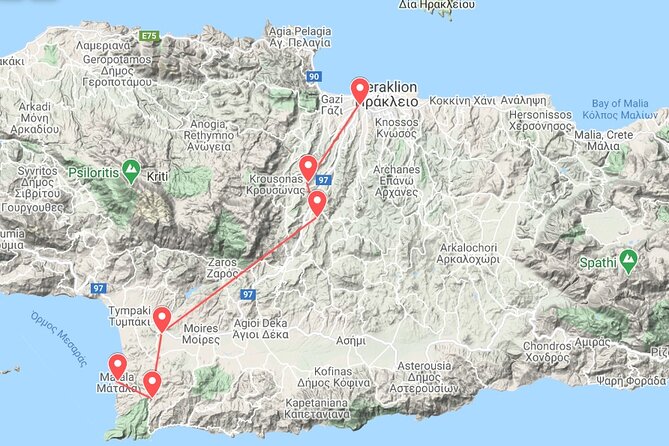
- Paul-to-coast route: You’ll move from Heraklion-area Orthodox context to caves and down to Matala Beach.
- Healing-water stop at Agios Myron: A visit to the ascetic cave at about 400m is one of the most memorable segments.
- Moni Palianis + the Assumption connection: Expect a monastery visit tied to a sacred myrtle tree linked to older Crete traditions.
- Faistos Palace needs an extra admission ticket: Skip-the-line help exists, but the entry fee is still on you.
- Comfort moves with you: Mineral water, Cretan fruits & snacks, hygiene amenities, USB sockets, and Wi‑Fi help the drive feel easy.
A Private Day Through Orthodox Crete: Paul, Monasteries, and Coastal Caves
This tour is built for people who want faith and history to feel physical. You’re not only seeing buildings. You’re walking into the kind of landscape where stories are tied to prayers, rituals, and place names that have lasted for generations.
You’ll follow a route that starts in the Heraklion area and works its way through monasteries and sacred sites, with a clear theme: how Orthodox Christianity connects to the footsteps attributed to the Apostle Paul around 55 AD. The day ends where the coast takes over—Matala Beach—with time to relax and eat well.
What makes it especially appealing is that it’s private. You’re not sharing a bus full of strangers or getting rushed by a big group timeline. The guide can slow down when you ask good questions, and speed up when you’re ready.
You can also read our reviews of more tours and experiences in Heraklion.

Pickup, Premium Vehicle Comfort, and How the Day Stays Smooth
The logistics are handled in a way that matters. You get personal pick-up & drop-off from your hotel, villa, cruise, or another point on Crete, with a flexible pick-up time confirmed after booking. That alone removes the biggest friction for a full 8-hour day.
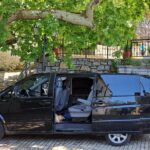
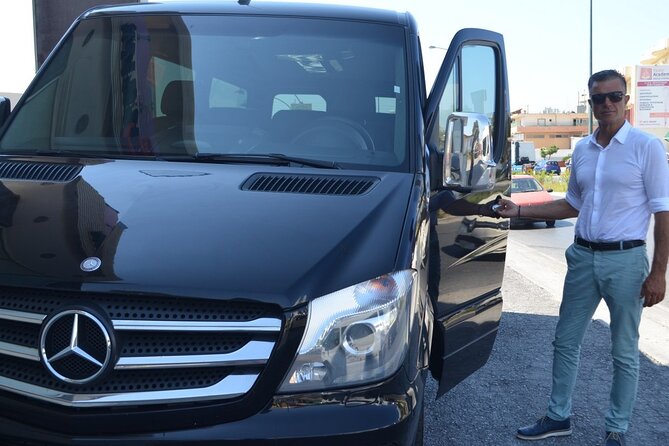
You also ride in a chauffeured premium vehicle with comfort and practical extras: mineral water, Cretan fruits and snacks, Wi‑Fi, USB sockets, and hygiene amenities. In plain terms, it helps you stay pleasant on a day with multiple stops and driving time.
If you like structure, this tour gives it. You’ll have assistance with restaurant recommendations and reservations, which is handy when your schedule is tight and you still want food that tastes like Crete—not like a tourist trap.
Stop 1: Heraklion Area Context for the Apostle Paul
Your first stop is in the Heraklion Prefecture area, with about 45 minutes to get oriented. This isn’t a quick photo stop. The idea is to set the frame: how Orthodox Christianity in Crete connects to early Christian messages, including the footsteps linked to Paul.
I like a start like this because it changes how you read everything later. When you reach monasteries and caves, you’re not guessing at meaning. You’re listening for connections—why certain sites matter, how faith is carried through time, and how people interpret their own spiritual geography.
This first segment is also one of the better “warming up” parts of the day. If you’re starting at sea level and you’re not sure how much walking you’ll do, 45 minutes gives a gentle entry.
Stop 2: Agios Myronas and the Ascetic Cave with Healing Water
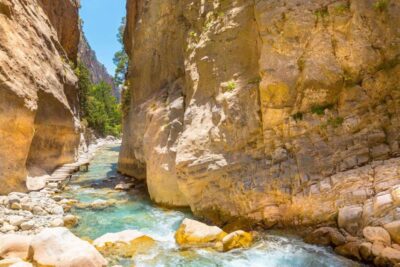
Next comes Agios Myron, reached up to an altitude of about 400m. You’ll spend around 35 minutes here, and the focus is the storied village plus an ascetic holy cave.
The standout detail is the healing water described as still gushing from within the rock. Even if you keep your expectations grounded, that kind of place always hits. The setting does the work: stone, water, and the sense that people have returned here for a long time for spiritual reasons.
A practical note: caves and sacred spaces often mean uneven ground, cooler air, and places where you’ll want to slow down. Bring shoes that are comfortable and stable. This is one of the times when good footwear is worth more than extra scenery patience.
Stop 3: The Messara Plain Through Local Eyes

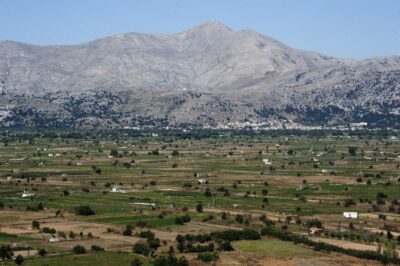
After the cave, you shift into the broader world of Crete’s interior with the Messara Plain and the ancient Messara valley. You get around 45 minutes, and the goal is to see the island through a local lens—how people read the land, and how spirituality and daily life overlap in regions that feel less polished than the coast.
This is a good place in the itinerary because it balances intensity. When religious sites stack back-to-back, you can run out of mental space. The Messara segment gives you room to breathe and look.
It also helps you understand why monasteries and sacred communities weren’t just random stops. Historically, people built and protected faith in places tied to travel routes, water access, and the rhythms of agriculture. You’ll feel those rhythms more when you see the plain rather than only the cliffs and villages.
Stop 4: Moni Palianis and the Assumption—Myrtle Tree Traditions
Then you arrive at Moni Palianis, a monastery dedicated to the Assumption. You’ll have about 35 minutes here, and it’s described as one of the oldest Cretan monasteries.
What makes this stop interesting is the sacred myrtle tree. The tour notes it as a relic connected to Minoan Crete dendrolatry, a tradition tied to worship or reverence related to trees. That mix—Orthodox practice with traces of older Crete traditions—can give you a fascinating lens on how beliefs change without disappearing.
This is a good stop for anyone who enjoys details: how sacred objects are treated, how religious spaces are arranged, and how symbols repeat across eras. If you’re the type who likes to ask why something is in a sanctuary or how a particular relic is understood, this is where your guide can really shine.
The limitation here is time. Thirty-five minutes sounds fine on paper, but you’ll want your guide’s explanations to be part of your viewing. If you’re more into roaming than listening, you might feel slightly rushed.
Stop 5: Palace of Faistos (Festos) and the Admission Ticket You’ll Need
Now you go from spiritual sites to one of Crete’s archaeological heavy hitters: the Palace of Faistos (Festos). Plan around 35 minutes for this stop.
Two important things:
- Admission fees are not included. The guide can assist with purchasing tickets and has VIP skip-the-line access, but the entry cost is still separate.
- You’ll want to treat this like a “big highlight” visit, not a long museum session.
This timing works best if you want the main contours—how a Bronze Age palace complex functioned, and why this site matters in the story of the island. If you’re an archaeology fanatic who wants to read every inscription or compare multiple buildings, you may wish you had more time.
Still, for most people, 35 minutes with a guide is enough to leave with a clear picture and good photos.
Stop 6: Odigitria Monastery (Agiofarango) and Fortified Southern Crete
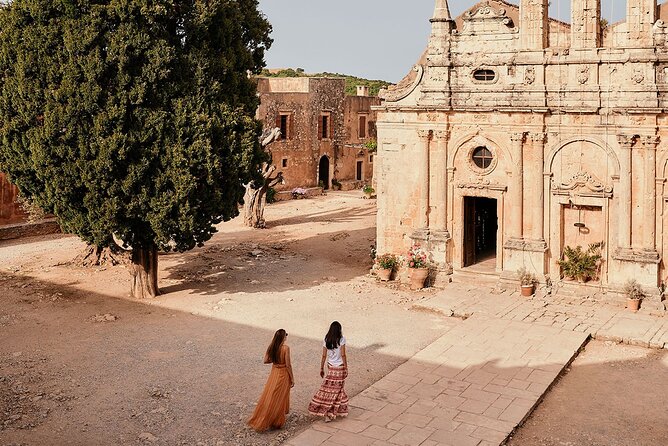
The day turns more dramatic in the south with Odigitria Monastery, also known as Agiofarango. You’ll spend about 45 minutes here, and the architecture is described as fortified.
Fortified monastic architecture usually signals protection and survival, not just devotion. When you look at stonework like this, you start to understand how religious life often had to be practical—defendable in tough times, durable across centuries, and built to last.
This stop has a different emotional feel than the cave at Agios Myron. The cave connects through water and ascetic tradition. The monastery connects through walls, corridors, and the sense of ordered faith.
If your group likes photography, this is often a strong one because the structure and setting give you angles that feel more than scenic. They feel purposeful.
Stop 7: Matala Beach, Gortyna’s Prehistoric Port, and Seafood Time
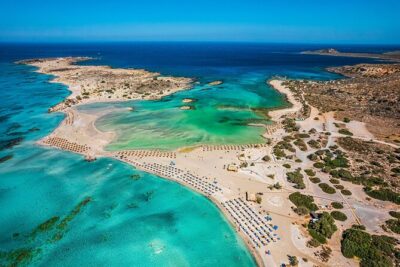
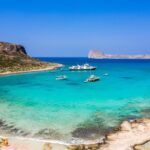
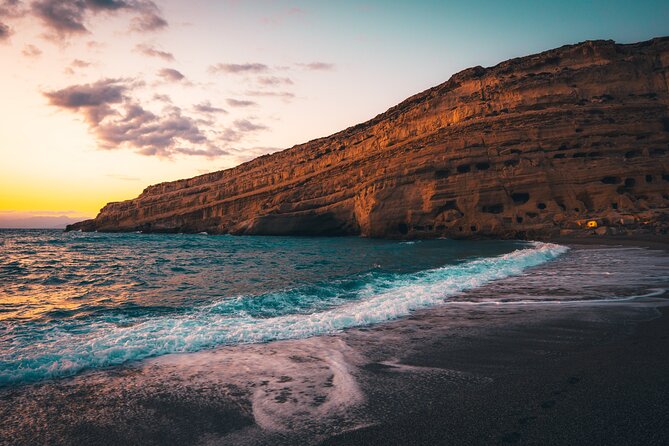
Finally, you get the payoff stretch: Matala Beach for about two hours. This part of the route matters because it lets the spiritual day cool down into something you can actually enjoy without standing still in a quiet sanctuary.
Matala is described as a prehistoric port of Gortyna, with iconic caves from the Neolithic Age. So even here, the past isn’t background. It’s part of the place.
You’ll also have time to indulge in seafood dishes. Drinks and meals aren’t included, but the tour includes help with restaurant recommendations and reservations, which is useful when you want a good meal with less decision fatigue.
Two hours at the beach is the right amount for most people. Long enough to swim if conditions allow, or at least to relax and eat well. It also gives you a buffer for the day’s momentum.
What You Get for the Time: Value Beyond the Stops
It’s easy to look at this as a list of places. I think it’s better to look at how the day is packaged.
You’re paying for:
- A private guide who connects early Christian themes to the specific sites you visit.
- VIP help like skip-the-line assistance and support buying admission tickets.
- A chauffeur-driven route that keeps your energy for the places that matter.
- Comfort perks that make the travel time feel shorter: Wi‑Fi, USB sockets, mineral water, and snacks.
The value is strongest if you care about meaning—if you want your guide to explain why Paul’s footsteps matter in Orthodox Crete, and why certain sacred traditions show up where they do. The most praised part across guide experiences is the conversation and the way the guide makes explanations feel alive, not like a lecture you endure.
The only real value warning is the admission fee at Faistos. Since that cost isn’t included, your total day expense will be a bit higher than you’d expect from a tour description that emphasizes free admission for many stops. Budget for it and you’re fine.
Should You Book This Orthodox Crete Tour?
Book it if you want a private, guide-led day that connects Orthodox Christianity to place—caves, monasteries, and archaeology—then ends with real downtime at Matala Beach. It’s a strong pick for couples, families who want structured engagement (especially kids who enjoy stories), and anyone who prefers fewer logistics and more explanation.
Skip or consider carefully if you hate ticket add-ons or you want lots of slow time at archaeology sites. Faistos is only about 35 minutes, and you’ll handle admission fees separately. If you want a long, deep archaeology day, you might pair this with a different itinerary that gives more time to fewer sites.
If you’re the kind of person who likes to ask questions and hear the why behind the walls and caves, this is an easy yes.
FAQ
How long is the tour?
The tour lasts about 8 hours.
Is this tour private or shared?
It is a private tour/activity. Only your group participates.
Do I get hotel pickup and drop-off?
Yes. Personal pick-up and drop-off is included, and pick-up time is flexible after final confirmation.
What language is the tour offered in?
The tour is offered in English.
Are admission fees included?
Admission fees are not included. Some stops are listed as free, but the Palace of Faistos explicitly says admission is not included.
What’s included in the vehicle during the day?
The vehicle includes mineral water, Cretan fruits and snacks, Wi‑Fi, USB sockets, and hygiene amenities.
Will I need to buy tickets myself?
You get assistance with purchasing admission tickets, along with VIP skip-the-line access.
Is there time to relax at the beach?
Yes. Matala Beach is about 2 hours, with time to unwind.
Can I get a full refund if I cancel?
Yes. Free cancellation is available up to 24 hours in advance for a full refund. If you cancel less than 24 hours before start time, the amount paid is not refunded.