Swim, trek, and chase Kourtaliotiko’s waterfall. I love the waterfall swim at the start and the way you track the river into clear pools where you might spot frogs, dragonflies, and freshwater turtles. With Panos as the English-speaking guide, the pace stays friendly, and you learn what to look for in the gorge. One caution: you’ll feel the cold water and you do need moderate fitness for the mix of walking and on/off-land scrambling.
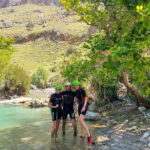
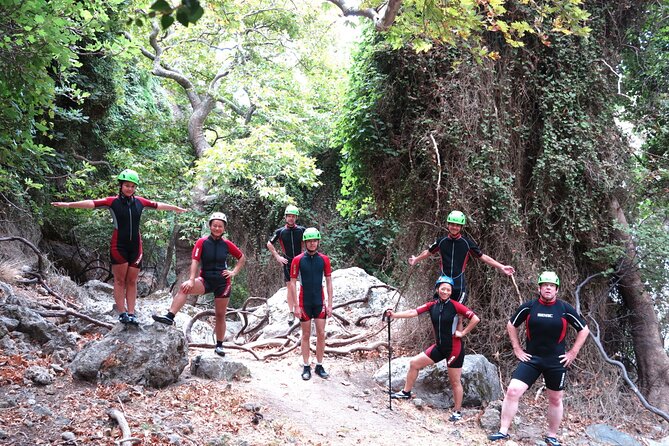
If you’re trying to get off the usual Crete checklist, this is a practical way to do it. You spend about 4 hours 30 minutes in the gorge, in a group capped at 12, with a smaller feeling once you’re actually on the trail and in the water. You’ll also be looked after with gear (including a summer neoprene suit, poles, and rock helmets) and a snack stop under huge plane trees with local tea.
The experience isn’t about big-city comfort. It’s about moving through Kourtaliotiko Gorge, getting wet, and paying attention. If that sounds like fun, you’ll likely have one of those days you remember when you’re back on dry land.
In This Review
- Key things you’ll notice in Kourtaliotiko Gorge
- Kourtaliotiko Gorge: the setting you reach by swimming
- What you do in 4½ hours: waterfall to river pools to plane-tree tea
- Stop: Kourtaliotiko Gorge
- The middle part: fewer crowds, simpler sections
- Snack under huge plane trees, plus local tea
- Gardens and an olive grove finish
- Optional lunch if you want to keep eating
- Gear and comfort: neoprene suits, helmets, and hiking poles
- Wildlife and nature notes: frogs, dragonflies, turtles, and vultures
- Price and value: why $112.38 can make sense for an active Crete day
- Who this tour suits (and who might want a different plan)
- Transfers, weather, and simple logistics that matter
- Should you book River Trekking at Kourtaliotiko Gorge?
- FAQ
- How long is the river trekking experience in Kourtaliotiko Gorge?
- Where do I meet, and what time does it start?
- Is the tour guided in English?
- What equipment is included?
- Is lunch included?
- How physical is this tour?
- What if the weather is bad, or I need to cancel?
Key things you’ll notice in Kourtaliotiko Gorge
- Waterfall swim right away: you start by swimming over to a hidden waterfall, then keep going through the gorge.
- River-bed walking into natural pools: it’s not just sightseeing; you’re literally following the water and splashing along.
- Wildlife spotting with Panos: focus on amphibians and freshwater life, plus the chance of vultures above.
- A calmer middle section: the middle part is described as isolated from crowds and suitable for everyone without demanding sections.
- Plane-tree snack and local tea: you get a break that still feels in place with the gorge setting.
- Optional taverna lunch: if you want more food after trekking, there’s an easy add-on.
Kourtaliotiko Gorge: the setting you reach by swimming
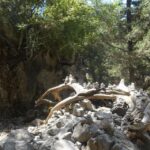
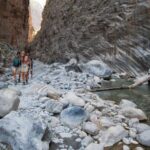
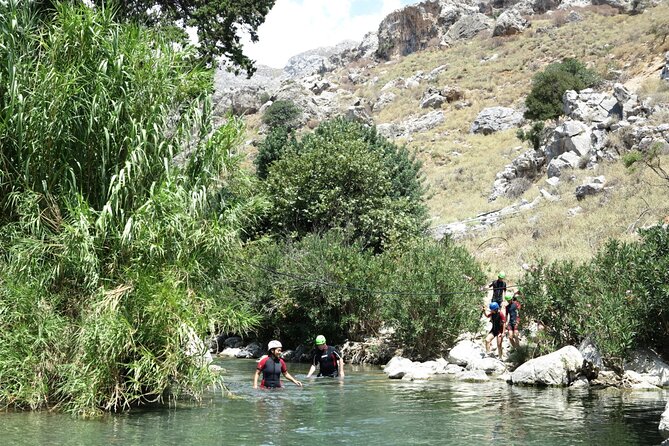
Kourtaliotiko Gorge is one of those places where the best parts aren’t staged for photos. The route is built around the river itself. You’re not just looking at a canyon from a path above; you’re moving with it—at times on foot, at times in the water.
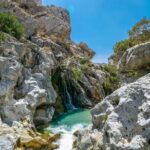
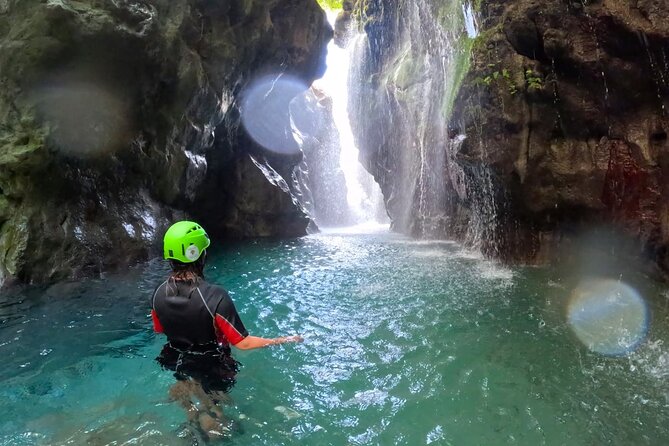
The most memorable moment is the first one. You begin with a swim to a waterfall that’s described as hidden and well tucked away. The water is powerful, and the water you feel against your legs early on sets the tone for the whole trek: this is active, cold (at least at first), and genuinely wild-feeling.
This kind of setting also changes how you experience Crete. Instead of thinking about beaches and towns, you start noticing the tiny signs of a working ecosystem—where animals hang out, how the riverbed forms pools, and how the gorge stays cooler than the surrounding hills.
You can also read our reviews of more hiking tours in Crete
What you do in 4½ hours: waterfall to river pools to plane-tree tea
The day runs about 4 hours 30 minutes, and it’s structured so you don’t feel rushed or stuck for too long in one spot. You start at 10:30 am near Foinikas (your start point is listed as 8G765FH7+P975FH7+P97), then you finish back at the meeting point.
Here’s what the flow feels like, in plain terms:
Stop: Kourtaliotiko Gorge
You’ll spend the bulk of the time inside the gorge. The early stage sets the pace. The tour begins with that swim to the waterfall, which means you’re getting the cold water experience out of the way while the rest of the group is still fresh.
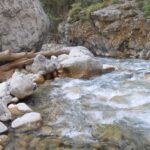
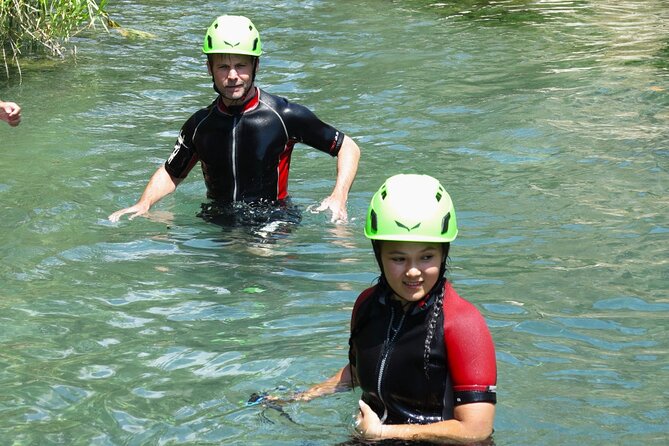
After the waterfall moment, you follow the river’s bed. Think of it as a series of short transitions: splash along sections of the river, reach calmer spots, then move again. The description emphasizes crystal clear waters and natural pools, so the walking comes with frequent chances to pause, look around, and cool off.
The middle part: fewer crowds, simpler sections
A big plus is that the middle part of the route is said to be isolated from crowds and suitable for everyone without the demanding parts. That matters because river trekking can sometimes feel like a nonstop test. Here, you get some breathing room—time to watch water movement, spot wildlife, and enjoy the gorge rather than just focus on footing.
Snack under huge plane trees, plus local tea
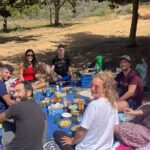
Later, you stop for a snack under huge plane trees. This is more than food on the timeline. It gives you a warm reset after time in water and shade-hopping terrain. You also have time to swim around and prepare local tea for everyone, which is exactly the sort of small, human detail that makes the day feel Cretan instead of just outdoorsy.
Gardens and an olive grove finish
To close, you walk through gardens with tropical vegetation and a typical Cretan olive grove. This end section is a nice contrast: after the river’s constant motion, you get calmer walking and more planted, everyday nature. It’s also a gentle way to come down from the physical effort before you head back to the meeting point.
Optional lunch if you want to keep eating
Lunch is not included, but if you want it, you can join the guide for a shady Greek taverna. The food described is Greek tapas with a cold beer. This works well if you like the idea of ending with a proper sit-down meal rather than rushing home hungry.
Gear and comfort: neoprene suits, helmets, and hiking poles
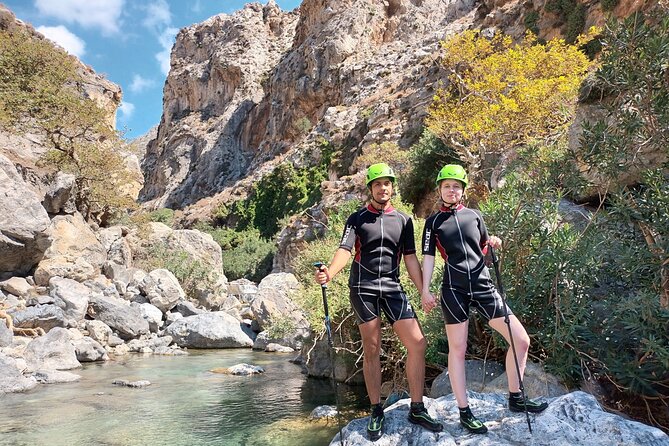
The included gear is one of the smartest parts of the package. You’re provided with:
- Summer neoprene suits
- Hiking poles
- Rock helmets
- Photos
- Coffee and/or tea
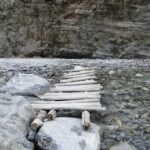
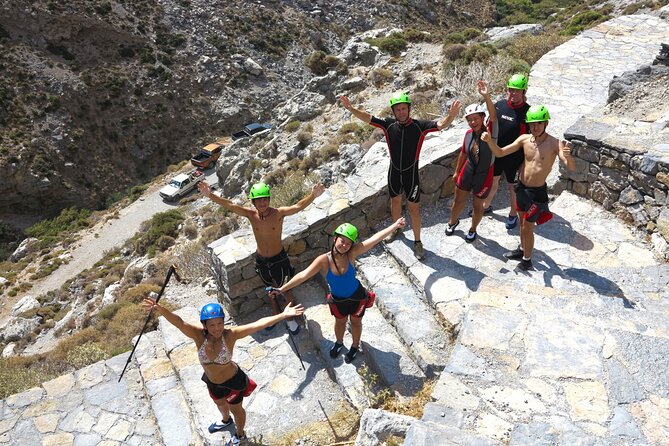
That combination tells you what the tour expects: you’ll be moving over uneven ground, spending real time near rocks, and getting wet enough that a normal swimsuit-and-hope setup would be miserable. The poles help your balance during river-bed walking, and the helmets are there for the practical reason you can’t control where your step lands in a rocky gorge.
I also like that they call out photos as part of the experience. River trekking can make it hard to keep a phone dry and stable. Having someone take pictures means you’re freer to focus on the moment.
One comfort tip I’d give without inventing details: plan your outfit strategy around the fact that you will get wet early and often. That means you’ll appreciate anything you can wear comfortably under gear, and you’ll want a plan for after you finish (like having dry clothes ready at the end of the day).
Wildlife and nature notes: frogs, dragonflies, turtles, and vultures
This is not a lecture tour. It’s a guided walk where the guide helps you pay attention to what’s around you. The tour description highlights the gorge as a unique ecosystem, with the chance to observe amphibious animals like frogs and sweet water turtles, plus colorful dragonflies.
The best approach here is mindset. Don’t treat wildlife as a guaranteed checklist. Instead, you’ll do better if you slow down when the guide points something out and keep your eyes open during quieter stretches—especially near pools where amphibians and freshwater life are more likely.
There’s also a mention that if you’re lucky, you might spot vultures flying above. That’s a classic gorge bonus: sometimes you don’t see much on the ground, but the sky delivers.
With Panos leading, the experience has extra meaning. His role in the day is described as knowledgeable and connected to the gorge: wildlife, herbs, and the little spots along the river. That kind of local, on-the-ground guidance helps you enjoy the trek more, because you’re not just following instructions—you’re learning how to read the environment as you go.
Price and value: why $112.38 can make sense for an active Crete day
At $112.38 per person for about 4 hours 30 minutes, this isn’t a cheap dinner-and-a-view kind of price. But it can be good value if you look at what you’re actually paying for:
- You’re getting real equipment (neoprene suits, poles, helmets), which would cost you extra if you had to rent or improvise.
- You have an English-speaking guide handling route timing and keeping you safe around rocks and water.
- You’re included in a full experience flow: gorge trekking, a snack stop, and local tea.
- The group size limit—maximum 12 travelers—keeps it from feeling crowded. Smaller groups often mean more time to notice details and ask questions.
Also, there’s a practical benefit: you don’t have to arrange your own half-day adventure logistics. Your start and end are connected to the same meeting point area, and there’s even a transfer from the exit point back to your vehicle if the group is over 4 people.
If you’re deciding between this and a more standard tour, ask yourself: do you want an active day where you get wet and move through a gorge? If yes, the price fits the effort and inclusions. If you want a mostly dry, gentle walk, this one may feel too physical too soon.
Who this tour suits (and who might want a different plan)
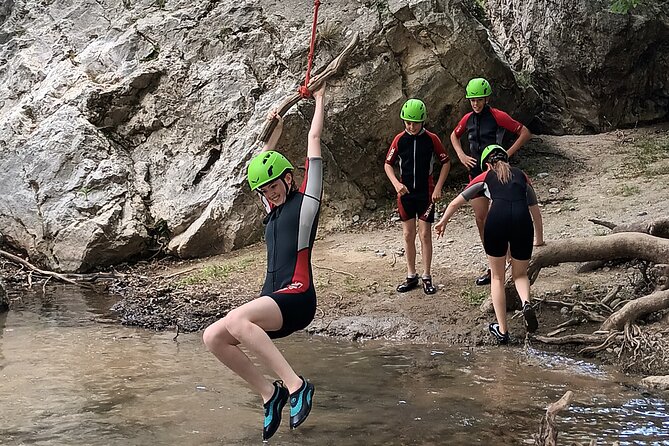
This experience asks for moderate physical fitness. The description also notes walking both on and off land, plus swimming and optional jumping. That doesn’t mean it’s extreme. It does mean it’s not for you if you want to avoid water and uneven footing.
It’s a great fit for:
- Families with kids or teens who can handle a medium activity day
- Active travelers who like wildlife and learning something along the way
- People who enjoy short swims as part of a larger hike, not as a separate beach plan
- Travelers who like small groups and guide-led context, especially with someone like Panos
It might not fit as well if:
- You’re uncomfortable with cold water
- You want zero swimming or minimal water time
- You have mobility issues that make stepping on rocky riverbeds stressful
If you’re in the middle—fit enough but cautious—this tour still could work because the middle section is described as isolated from crowds and without demanding parts. You’d just want to go in mentally ready for the first swim and for changing terrain.
Transfers, weather, and simple logistics that matter
A few practical notes will help you plan your day without stress:
- You’re told this tour is near public transportation, which is helpful if you’re not driving.
- Your start and end are tied to the meeting point area in Foinikas, and the tour ends back at the meeting point.
- There’s a transfer from the exit point back to your vehicle if the group size is over 4 people. If your group is smaller, you’ll want to keep an eye on how that part is handled so you don’t end up surprised.
- The experience requires good weather. If it can’t run due to weather, you’ll be offered another date or a full refund.
The weather requirement matters more than it sounds. River trekking changes fast with rain, and safety comes first. So if your travel schedule is tight, aim for flexibility on this day.
Should you book River Trekking at Kourtaliotiko Gorge?
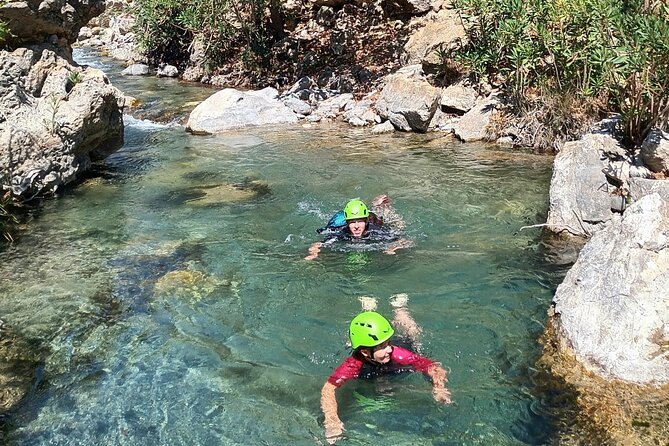
Book it if you want a half-day that feels real, active, and Cretan beyond the usual route. I think this works especially well when you’re craving something with a clear story arc: waterfall swim, river-bed trekking into pools, wildlife attention, then a gorge reset with snack and local tea under plane trees. The ending gardens and olive grove add a gentle finish instead of dropping you back right after the water.
Skip it or choose something softer if you’re allergic to cold water or you don’t want swimming or uneven rocky footing. This isn’t a sit-and-watch experience. It’s a do-it experience.
If you do book, go in with the right expectations: you’re not just traveling through Crete—you’re temporarily living inside the gorge for a few hours. And with Panos guiding and a small group limit, you’re likely to come out tired in a good way, with that rare mix of exercise, nature, and guided learning.
FAQ
How long is the river trekking experience in Kourtaliotiko Gorge?
It lasts about 4 hours 30 minutes (approx.).
Where do I meet, and what time does it start?
The start point is listed near Foinikas (8G765FH7+P975FH7+P97), and the tour starts at 10:30 am.
Is the tour guided in English?
Yes. You’ll have an English-speaking hiking guide.
What equipment is included?
You’re provided with a summer neoprene suit, hiking poles, rock helmets, and photos. Coffee and/or tea are also included.
Is lunch included?
Lunch is not included, but you can follow the group to a Greek taverna for Greek tapas and a cold beer if you wish.
How physical is this tour?
It’s recommended for travelers with moderate physical fitness. The experience includes hiking both on and off land and includes swimming (and some jumping may be involved).
What if the weather is bad, or I need to cancel?
The experience requires good weather. If it’s canceled due to poor weather, you’ll be offered a different date or a full refund. You can cancel for a full refund up to 24 hours in advance.