Chania Old Town rewards slow walking. This half-day, private guide-led stroll traces the city through churches, an Ottoman-era bath, the Venetian waterfront, and stops in Chania’s Jewish quarter. I like that the guided pace stays manageable and you get free entry at every major stop on the route. The main catch is simple: it’s weather-dependent, so plan for a rain-ready day.
Because this is a walking tour, you’ll be on your feet for about 2 hours 30 minutes at a city-alley rhythm. If you’re chasing a lot of museum time or big-city distances, this one is more focused and compact than you might expect.
In This Review
- Key highlights at a glance
- Why this 2.5-hour private walk fits Chania’s Old Town
- Meeting at Chalidon 87 and setting the tone
- Stop 1: Trimartiri (Holy Metropolitan Church of the Presentation of the Virgin Mary)
- Stop 2: Al Hammam Turkish Baths and the Ottoman minaret story
- Stop 3: Church of Agios Nikolaos in the eastern old town
- Stop 4: Old Venetian Harbor, Venetian Arsenal shipyards, and the view from Kastelli
- Stop 4 continuation: Yali Mosque and the Topanas area return path
- Stop 5: Etz Hayyim Synagogue in the Jewish quarter route
- What you’re really paying for: value, not just walking
- Who this tour suits best (and who should look elsewhere)
- Weather, comfort, and simple on-the-ground tips
- Should you book the Chania Old Town half-day walking tour?
- FAQ
- How long is the Chania Old Town walking tour?
- What does it cost, and how big is the group?
- What time does the tour start, and where does it meet?
- Does the tour include pickup?
- Are the sites on the route free to enter?
- What’s included in the tour price?
- Will I need a mobile ticket?
- How many stops are on the walk?
- What weather conditions are required?
- What’s the cancellation policy?
Key highlights at a glance
- Private guiding for up to 4 makes it easy to ask questions and set the pace
- All the planned stops have free admission tickets, so you’re not juggling extra fees
- Ottoman and Venetian chapters in one loop, with real places to point at and explain
- Old Venetian Harbor viewpoints plus the Venetian Arsenal shipyards area
- Topanas and Firka Fortress area included on the way back through the old quarters
- Etz Hayyim Synagogue option on the route if it fits your interests
Why this 2.5-hour private walk fits Chania’s Old Town
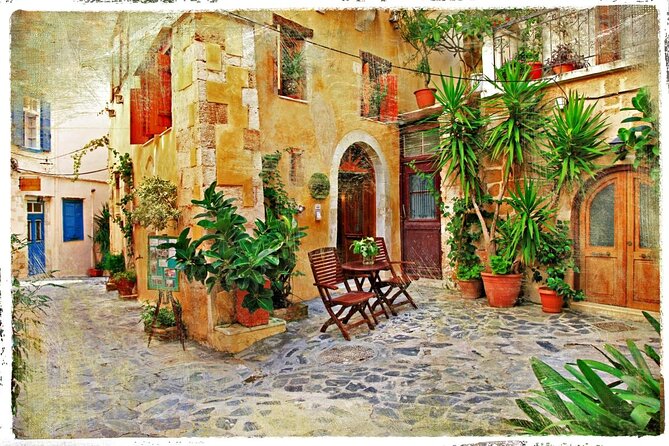
Chania Old Town is best enjoyed at walking speed. You’ll move along small lanes and squares and keep your bearings as you go, rather than trying to piece together a map while you’re squeezing between shops, courtyards, and walls.
This tour is also built around “stop and explain,” not “march and hope.” You’ll spend time at each place rather than just getting a quick photo. With a group size up to four, it stays flexible—good if someone in your party wants a bit more context at a church or wants to linger at the harbor.
One more practical perk: the tour includes pickup (if you arrange it with your operator) and a mobile ticket. That matters in a place where meeting points are easy to miss if you arrive late or with a dead phone.
You can also read our reviews of more walking tours in Crete


Meeting at Chalidon 87 and setting the tone
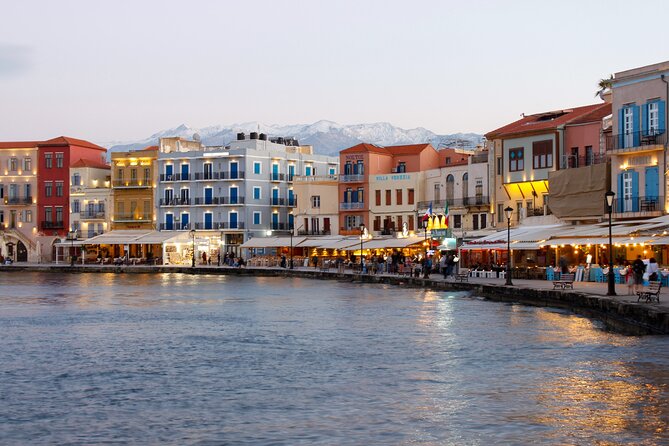
You start at Chalidon 87 in Chania, with the tour beginning at 9:00 am and ending back at the same meeting point. That round-trip structure is ideal for a half day, because you don’t have to worry about transit at the end while your feet are already tired.
The route also makes sense geographically. It moves from central religious sites down toward the Old Venetian Harbor, then back through the old quarters. Even without being an expert on the city, you’ll feel the logic: churches and community buildings first, then the maritime zone, then the neighborhood layers on the return.
Expect a steady walking pace with short breaks. The itinerary lists planned time blocks of about 15 minutes at the first stop, 20 minutes at two early stops, about 1 hour at the harbor/arsenal area, and 20 minutes at the synagogue stop. That timing is enough to learn something without turning the day into a rushed checklist.
Stop 1: Trimartiri (Holy Metropolitan Church of the Presentation of the Virgin Mary)
Your first stop is the Holy Metropolitan Church of the Presentation of the Virgin Mary, also known locally as Trimartiri. The meeting point is on the beginning of Chalidon Street, and you start walking right away into the old town flow.
This is a smart start for two reasons. First, it gives you a clear visual anchor early: you’ll see how faith and community architecture shape the street scenes around Chania. Second, starting with a church helps your guide frame the city’s layers—how different eras left marks in the same neighborhoods.
The entry part is straightforward: the itinerary lists free admission and about 15 minutes here. That’s long enough to step in, take a look around, and hear the key points without spending half your tour inside.
Practical tip: churches can still have quiet rules about where you stand and how you dress. If you’re unsure, follow your guide’s lead and don’t treat it like a museum stop.
Stop 2: Al Hammam Turkish Baths and the Ottoman minaret story
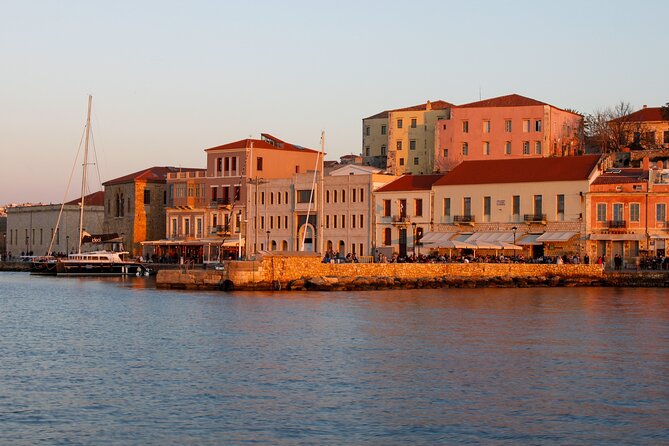
After the church area, you’ll head toward Al Hammam Authentic Turkish Baths and stay near the Turkish minaret for history tied to the Ottoman period. The itinerary gives about 20 minutes, with free admission.
This is where the tour starts to feel like more than just walking past pretty buildings. The Turkish bath site and the minaret area give you a tangible way to think about cultural shifts in Chania—how one era’s building style and urban presence can still be readable centuries later.
Even if you don’t know Ottoman history yet, you don’t need to. The value here is your guide connecting “what you see” to “why it’s here.” In the feedback for this tour, guides like Christos get praised for explaining 4,000 years of Crete and Chania and for making the complexity of life under different invaders feel understandable. That kind of explanation fits perfectly at a place like Al Hammam, where architecture does the storytelling.
Practical tip: this is also a good moment to ask questions. If something feels confusing—what era you’re looking at, why a minaret matters here—this is an early point where you can clear it up before the route gets more layered.
Stop 3: Church of Agios Nikolaos in the eastern old town
Next up is the Church of Agios Nikolaos, again listed with free admission and about 20 minutes. After the Ottoman area, walking through the eastern old town gives you a different feel—more neighborhood texture, more street-level character.
This stop works well because it’s positioned as a transition. Your guide is likely to connect the earlier religious architecture and Ottoman-era elements with the ongoing life of the city—how residents live among these landmarks, not just how tourists view them.
If you’re the type who likes understanding how people relate to place, this is a good time to listen closely. Reviews for this tour highlight guides such as Vangelis for leading the old town “like a pro,” with strong professionalism and attentiveness. That kind of guiding matters at stops like Agios Nikolaos because the explanation helps you see beyond the façade.
Practical tip: keep an eye on your footwear. Old town lanes are compact, uneven in places, and built for centuries-old pedestrian traffic, not for quick strides.



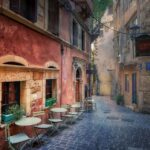

Stop 4: Old Venetian Harbor, Venetian Arsenal shipyards, and the view from Kastelli
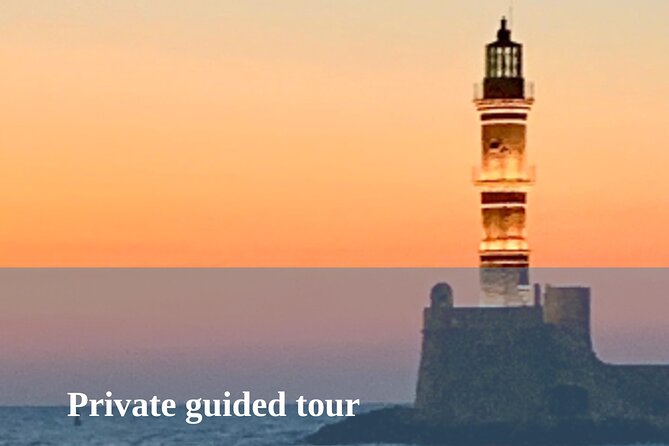
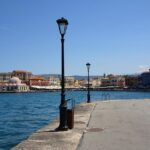
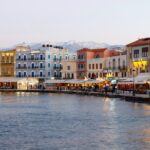
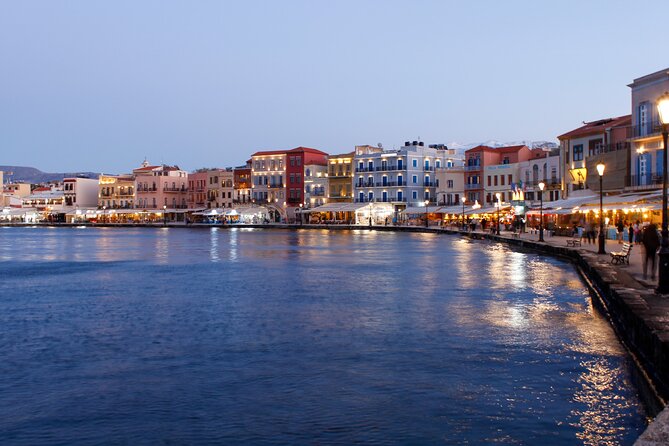
Now you get the payoff area. After Agios Nikolaos, you head down to the Old Venetian Harbor, walking through the eastern old town until you reach the Venetian Arsenal area (shipyards). The itinerary lists a full hour here, with free admission.
This is the longest stop, and it earns that time. The harbor zone gives you two kinds of value at once:
- Waterfront scale, where you can feel how Chania functioned as a maritime city
- Specific places tied to shipyards and urban development
The tour also points to the Kastelli area and notes the continuation of excavation of the Minoan city of Kydonia (3,000 BC). Even if you don’t go into excavation details, it’s powerful to hear that this harbor and city life connect back to very early settlement layers.
You’ll also see the excellent view of the Old Port from this zone. That matters because a walking tour in a historic harbor city isn’t just about facts—it’s about letting the setting do part of the teaching.
Practical tip: take your time with photos, but don’t let photos swallow your listening time. The longer harbor pause is where the guide’s storytelling is most useful, because there’s more to interpret than you can capture in a frame.
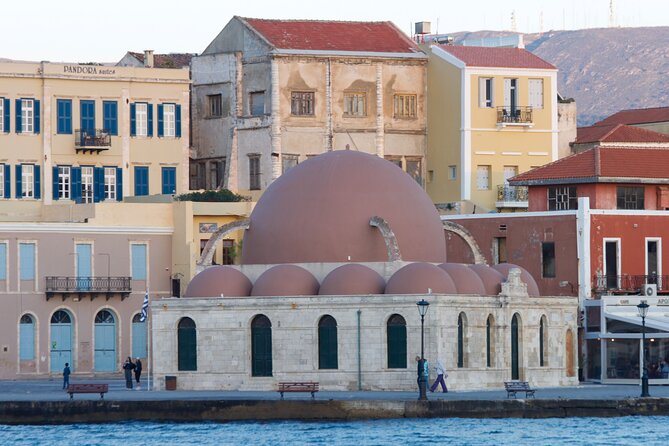
Stop 4 continuation: Yali Mosque and the Topanas area return path
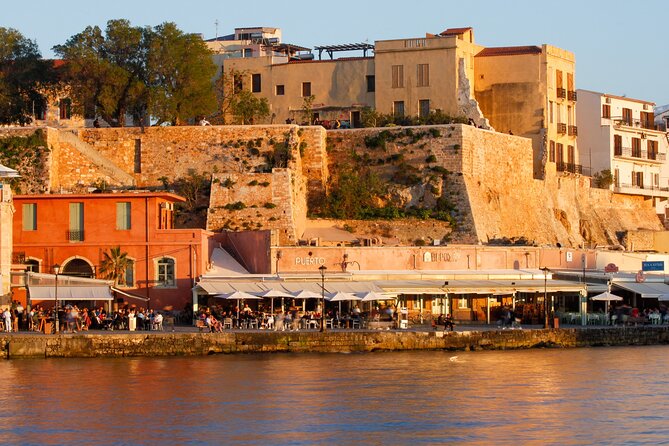
Within the larger Venetian harbor/arsenal segment, the route also includes the Yali Mosque (listed as an old mosque) and continues toward the Topanas area. This part is less about one single “photo moment” and more about how the old town’s layers connect as you move.
Think of it like this: once you’re at the harbor, you’ve earned the right to slow down. As you head toward Topanas, the architecture changes, and the guide’s job shifts from describing maritime history to explaining how Ottoman and Venetian traces fit into the walk back through the neighborhood fabric.
If you want to understand Chania as a city shaped by different rulers and cultures, this is a key segment. It gives you a mental map of “where I am” relative to the old power centers and the living quarters that grew around them.
Stop 5: Etz Hayyim Synagogue in the Jewish quarter route
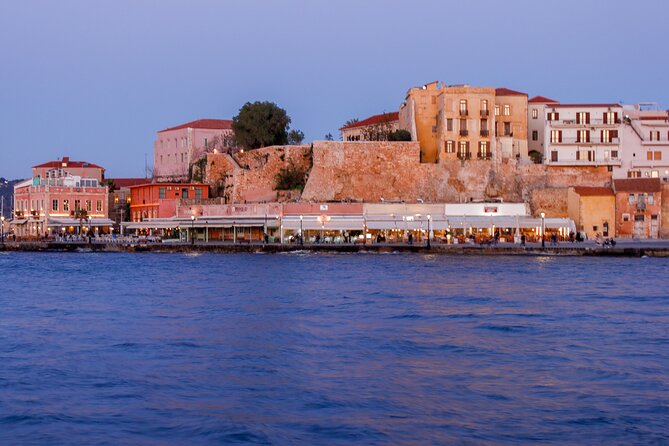
On the way back, you continue through the old Venetian mansions of Topanas and pass by the Firka fortress area. The route then moves toward the square of 1866, passing through the Jewish quarter and stopping at Etz Hayyim Synagogue.
This stop is listed for about 20 minutes, with free admission. If you’re someone who likes seeing how all communities shaped the city—not only the dominant churches and waterfront structures—this is an excellent final chapter.
A synagogue stop at the end of a walking route also changes how you experience the places you’ve already seen. After churches, an Ottoman bath and minaret area, and Venetian harbor shipyards, you start noticing how each community’s buildings were practical and symbolic at the same time. The tour’s value is that it doesn’t treat these as random landmarks; it ties them into a city story.
Practical tip: since this is an optional interest-driven stop in spirit (the walk is guided and you’re invited to visit if it interests you), keep an eye on your timing and energy. If you’re running late due to photos earlier, this is the stop where you might need to choose your focus.
What you’re really paying for: value, not just walking
The price is $219.94 per group (up to 4). That’s not “cheap,” but it can be very good value if you compare it to what a private guide costs in places where walking tours are often just a scripted route with no real context.
Here’s the value logic that matters for you:
- You’re paying for private guiding, not just a route
- You’re getting a tour that links multiple eras and neighborhoods into one coherent flow
- The big bonus is that the major planned sites list free admission, so your money goes toward interpretation, not tickets
Also, the tour tends to get booked fairly ahead of time—about 69 days in advance on average. In practice, that suggests demand is steady, especially around good weather periods. If you already have Chania on your plan, booking early can keep options open for the date and time you want.
And yes, if your group needs a bit of help getting in from Souda port, the provider can organize private transportation, noted as 50 euro taxi. That’s useful if you’re arriving by ship and want to skip the stress.
Who this tour suits best (and who should look elsewhere)
This walk fits best if you want your Chania with context. If you like hearing how different eras shaped everyday spaces—churches, Ottoman sites, Venetian shipyard areas, and community buildings—this is a great match.
It also suits small groups. Because it’s private for up to four, it works well for:
- Couples who want a guide to respond to questions
- Families with older kids who can handle steady walking and church etiquette
- History-minded travelers who prefer a tighter route over long museum days
Who might find it less satisfying? If you’re hoping for long museum time, hours of interior visiting, or a very wide sweep across every district, this is designed to be a focused half-day. The itinerary gives you a strong overview, but it isn’t meant to cover everything in Chania Old Town.
Weather, comfort, and simple on-the-ground tips
The tour notes that it requires good weather. If it’s canceled due to poor weather, you’ll be offered a different date or a full refund. So if rain is common during your travel week, consider planning this walk earlier rather than your last day in town.
Comfort tips that make the tour easier:
- Wear shoes you trust on uneven old-stone lanes.
- Bring a light layer; morning shade and breezes near the harbor can change how it feels.
- Have water with you even though bottled water isn’t included, since stops are spaced for explanation and walking.
Should you book the Chania Old Town half-day walking tour?
Book it if you want a guided, small-group way to connect the dots across Ottoman, Venetian, and other community landmarks in Chania Old Town. The route is built around free entry stops, a solid harbor segment, and explanations that help you read the city instead of just photographing it.
Skip it (or at least think twice) if your day is already packed with long indoor attractions, or if walking 2.5 hours feels like a challenge. This tour is a great use of time, but it’s still a walking tour.
FAQ
How long is the Chania Old Town walking tour?
It runs for about 2 hours 30 minutes.
What does it cost, and how big is the group?
The price is $219.94 per group for up to 4 people, and it’s a private tour/activity.
What time does the tour start, and where does it meet?
It starts at 9:00 am and meets at Chalidon 87, Chania 731 32, Greece.
Does the tour include pickup?
Pickup is offered.
Are the sites on the route free to enter?
The listed admissions for the planned stops are free.
What’s included in the tour price?
It includes private guiding. The provider can also organize private transportation if someone needs it (example: from Souda port by taxi for 50 euro).
Will I need a mobile ticket?
Yes, the tour uses a mobile ticket.
How many stops are on the walk?
There are five main stops, including Trimartiri (Metropolitan Church), Al Hammam Turkish Baths, Church of Agios Nikolaos, the Old Venetian Harbor/Venetian Arsenal area, and Etz Hayyim Synagogue.
What weather conditions are required?
The tour requires good weather. If it’s canceled due to poor weather, you’ll be offered a different date or a full refund.
What’s the cancellation policy?
Free cancellation is available up to 24 hours in advance for a full refund.