Rethymno tastes better at night. This small-group evening tour links Old Town backstreets with real food stops, including a phyllo baklava workshop and a Cretan meze taverna. I like how the evening pace makes the sights feel human, not rushed, and I like the focus on Cretan staples rather than generic tourist snacks. One watch-out: some shop stops can feel sales-forward, so if you want strictly food samples, go in with that mindset.
You’ll meet in the old town at 4 Martyron Square, then walk cobbled lanes toward the places locals actually use. In smart casual clothes, with your ID ready, you’ll end up tasting enough variety to feel like you learned something about Crete’s food culture—without spending an entire night on your feet.
In This Review
- Key things to look forward to
- Meeting in Rethymno’s Old Town: 4 Martyron Square at Dusk
- Old Town Food Shops: Learning Cretan flavors in real places
- Your Food Break in a Historic Alley: A moment to slow down
- The Baklava Workshop Experience: Mr. Giorgos Chatziparaschos and handmade phyllo
- Meze and Cretan Wine: Ending at a traditional taverna
- Price and value: Is $41 worth it for 2 hours?
- What to bring (and what to skip) so the tour goes smoothly
- Who this evening tasting tour is best for
- Should you book this Rethymno evening tasting tour?
- FAQ
- Where does the tour start?
- How long is the evening tasting tour?
- How big is the group?
- Is the tour in English?
- What’s included in the price?
- What drink do I get, and are there age rules?
- Is there a vegetarian option?
- What should I bring?
- What should I know about what I can bring during the tour?
- What happens if the weather is bad?
Key things to look forward to
- Small group (up to 6) keeps the pace relaxed and the guide’s attention closer.
- Phyllo baklava workshop with Mr. Giorgos Chatziparaschos shows the craft behind the pastry.
- Historic alley snack stop gives you a proper “sit and taste” moment in the Old Town.
- Cretan wine plus meze ends the tour in a traditional taverna setting.
- 1 glass of wine or juice included keeps the price predictable for most travelers.
- Evening timing means cooler temperatures and a calmer feel than midday crowds.
Meeting in Rethymno’s Old Town: 4 Martyron Square at Dusk
This tour starts at 4 Martyron Square (Gerakaris 6). Your guide is waiting there holding a sign that says Rithyland, and you should be facing the 4 Martyron church. That’s a nice setup because you can orient fast: the square sits right where the newer parts of Rethymno meet the walled Old Town.
Even though you’re walking, the timing matters. In the evening, the old streets feel more like a neighborhood and less like a funnel for day-trippers. I also like that the tour is set up as a short, focused experience—2 hours—so you’re not committing your whole night.
Practical tip: wear comfortable shoes. The Old Town streets are cobbled, and you’ll be moving from stop to stop without much time to rest.
You can also read our reviews of more food & drink experiences in Rethymno



Old Town Food Shops: Learning Cretan flavors in real places
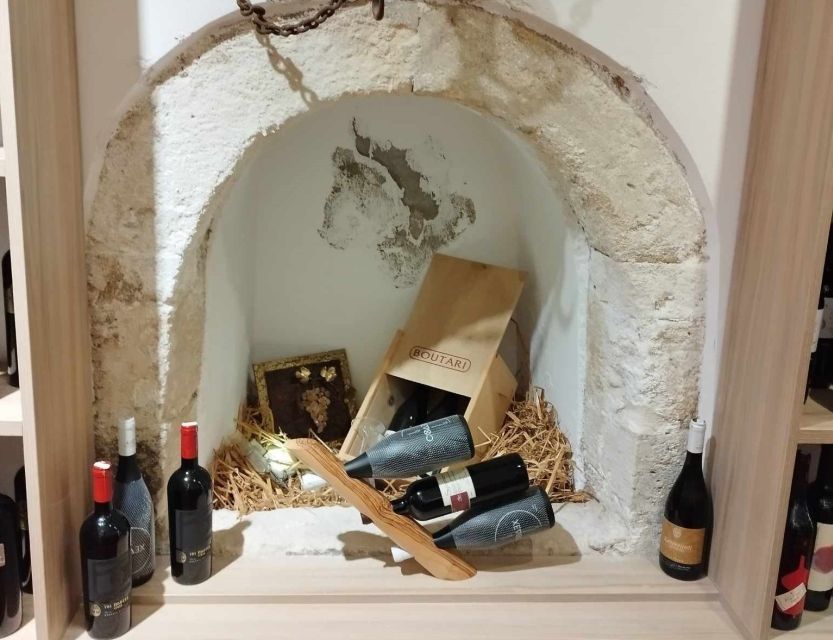
The core of this experience is simple: you stroll through Rethymno’s Old Town and taste from traditional food shops. The guide brings you into places you might not find on your own, which is the point of a guided tasting tour. You’re not just collecting bites—you’re learning what Cretans actually look for in everyday food.
You’ll stop at shops along the way and try selected samples. The tasting style is designed to keep you moving, so expect smaller portions rather than a full meal at each stop. That can be a win if you like variety, but it also means you should come hungry enough to enjoy the flow.
There’s one more reality to consider. Some shop visits can include a push to buy the shop’s products (sometimes items that don’t directly relate to food). If you’re the type who gets irritated by sales pressure, tell yourself ahead of time: your main job here is tasting and asking questions, not shopping.
And since the group stays small, you’ll usually have more time to ask what something is—like what makes a local version different, or when it’s typically eaten.
Your Food Break in a Historic Alley: A moment to slow down
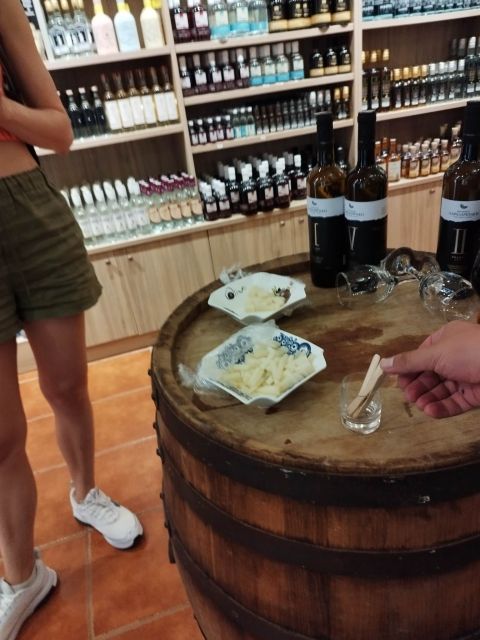
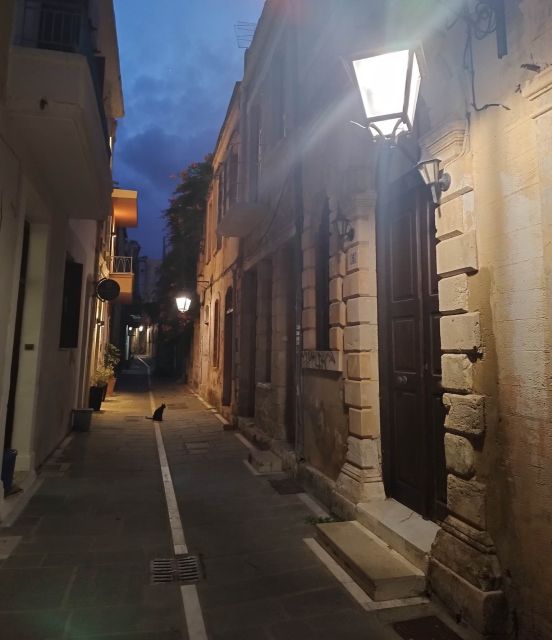
One of the most enjoyable parts is the snack stop in a central historic alley. This is where the tour gives you a proper pause, not just a walk-by tasting. It’s a good setup for pictures too, but the real value is that you can actually taste and talk without standing on a crowded sidewalk.
In a place like Rethymno, the atmosphere matters. Eating in the Old Town alleys feels like you’re part of the street rhythm, not hovering around a landmark. It also helps you digest what you just tried before you move on to the workshop.
If you’re planning to shop for food items later, this is also the moment to take notes mentally: flavors you liked, names you can remember, and what you want to buy later if you find it elsewhere.
The Baklava Workshop Experience: Mr. Giorgos Chatziparaschos and handmade phyllo
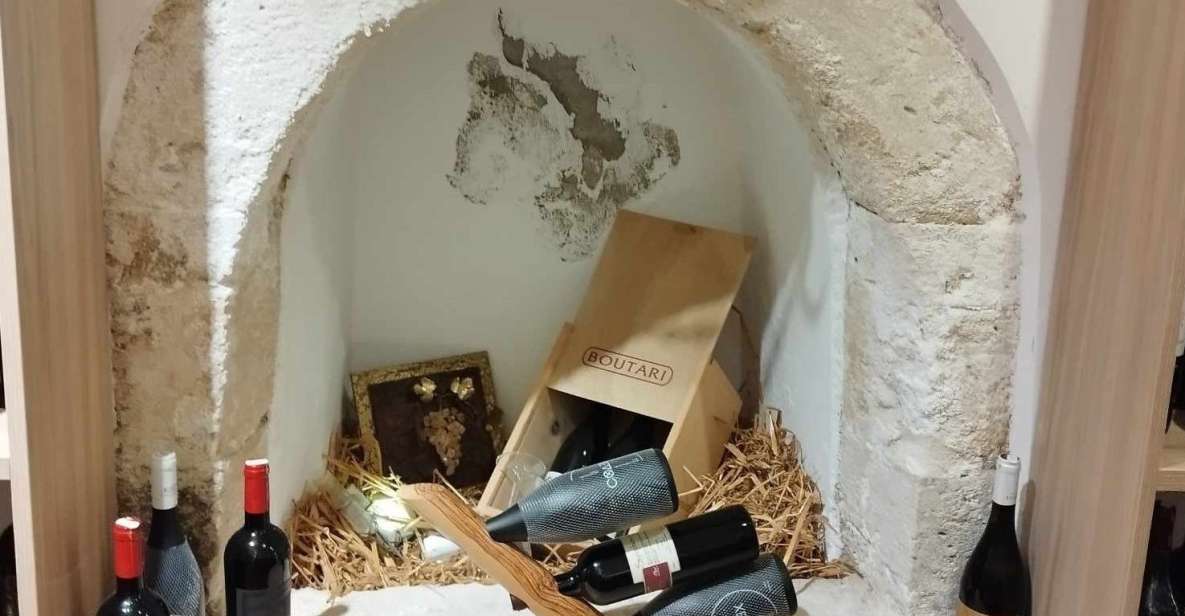
The highlight for many people is the baklava workshop. You’ll meet Mr. Giorgos Chatziparaschos and watch how handmade phyllo crust and kadaifi are produced in the traditional way. This isn’t a quick photo-op stop. It’s built around the idea that the pastry starts with technique—thin dough work, careful layering, and dough prepared with texture in mind.
Why this matters: you’ll taste baklava differently after you see how it’s made. Even if you don’t know every step, you start noticing things like crispness, thickness, and how syrup interacts with the pastry layers. That makes the tasting feel connected instead of random.
Also, watching the process helps you understand why Cretan sweets have their own character. They’re not just dessert; they reflect work, patience, and the kind of kitchen craft that gets passed down.
As a practical note, workshops can involve time sitting or standing near the work area. Dress for smart casual comfort so you can watch without feeling squeezed.
Meze and Cretan Wine: Ending at a traditional taverna
The tour ends with meze and a glass of Cretan wine (or juice). This is where the evening tasting shifts from sampling to settling in. In a traditional taverna setting, meze helps stitch everything together: you’ve learned about ingredients and snacks, and now you experience how they work as part of a proper dining tradition.
The included drink is one glass, which is a good middle ground. It gives you that local pairing moment without turning the tour into a heavy-drinking event. And if alcohol isn’t your thing, you can go with juice since that’s part of what’s included.
Cretan meze culture also tends to reward a relaxed pace. If you ask questions and slow your eating down, you’ll get more out of the meal. The guide can help connect the flavors you’ve just tried to what you’ll see and taste later in Crete.
One more consideration: the tour is only 2 hours total. That means the meze stop is likely concise, not a long dinner. If you want a long sit-down meal, treat this as your tasting intro rather than the full food night.
You can also read our reviews of more evening experiences in Rethymno



Price and value: Is $41 worth it for 2 hours?
At about $41 per person for a 2-hour evening tour, the value depends on what you want most: guidance, access, and variety. You’re paying for an English-speaking local guide, a curated walk through the Old Town, multiple food samples, and the included drink. You’re also getting a group limited to 6 participants, which usually improves pacing and question time.
If your travel style is: I want to taste my way through a place without planning routes and searching menus, then this price makes sense. The tour is short enough that you’re not losing a huge chunk of your day, and the workshop component adds a layer you won’t get from a self-guided “eat where you see a sign” approach.
If you’re expecting large portions or a long restaurant meal, you might feel disappointed. One practical reason: this is a tasting tour, not a sit-down feast. The meze is meant to complement earlier samples, not replace them.
Also, some visitors have different expectations about shopping pressure at food stops. That’s not “bad” by itself, but it can change how satisfying the experience feels—especially if you want maximum tasting time for the money.
My advice: come in hungry, focus on the samples, ask what you’re tasting, and don’t let sales chatter derail your appetite.
What to bring (and what to skip) so the tour goes smoothly
You don’t need much, but the small rules help everything flow. Bring comfortable clothes and a passport or ID card. The tour is smart casual, so you don’t need formal wear, but you also shouldn’t show up in full beach mode.
You’ll want to travel light. Food and drinks aren’t allowed, and you shouldn’t bring luggage or large bags. Pets aren’t allowed either. One more odd-but-important rule: smartphones are not allowed, so you’ll be living without constant screen-checking for these 2 hours.
Finally, check the weather in general. If conditions get bad, the program continues and you’ll have free umbrellas available. That’s the kind of practical setup that keeps your night from turning into a cancellation story.
Who this evening tasting tour is best for
This is a smart fit if you want an evening walk plus guided tastings, and you’re interested in learning how Cretan foods are made and eaten. It’s also a good choice for first-timers in Rethymno who feel overwhelmed by Old Town streets and want a route that makes sense.
It suits all ages, but children must be accompanied by an adult. If you’re traveling as a family, plan around the fact that the pace is still a guided walking tour with tastings.
If you’re a wine-only person, note that you get just one glass included. If you’re a foodie who likes variety, you’ll likely enjoy the mix of shop samples, the baklava workshop, and the meze ending.
On the other hand, this isn’t ideal for wheelchair users or people with mobility impairments. The tour is built around walking cobbled old streets and workshop-style stops, so mobility is a real factor.
Should you book this Rethymno evening tasting tour?
Book it if you want a guided food route, you like tasting lots of small bites, and you’re especially curious about how phyllo baklava is made. The workshop with Mr. Giorgos Chatziparaschos is a strong reason on its own, and the meze finale gives you a satisfying end point instead of endless standing.
Skip or reconsider if you hate sales pressure at food shops or you’re the type who needs full-size portions. Also, if you prefer long meals and lots of free time, a 2-hour format might not feel enough.
If you’re flexible and come with the right expectations, this is a solid value way to experience Rethymno’s food culture after dark.
FAQ
Where does the tour start?
The meeting point is 4 Martyron Square, Gerakaris 6. Your guide will be there holding a sign that says Rithyland, and you should be facing the 4 Martyron church.
How long is the evening tasting tour?
The tour lasts 2 hours.
How big is the group?
It’s a small group limited to 6 participants.
Is the tour in English?
Yes. The tour includes a local English-speaking guide.
What’s included in the price?
You get a walking tour of the Old Town, tastings of Cretan delicacies, and 1 glass of wine or juice. Taxes, fees, and handling charges are included, and there is liability insurance.
What drink do I get, and are there age rules?
Participants 18 or older can have alcoholic beverages. Participants under 18 are provided non-alcoholic beverages.
Is there a vegetarian option?
Yes, a vegetarian option is available on request. You should advise dietary requirements at booking.
What should I bring?
Bring comfortable clothes and a passport or ID card.
What should I know about what I can bring during the tour?
Food and drinks are not allowed. Luggage or large bags are not allowed, and pets are not allowed. Smartphones are also not allowed.
What happens if the weather is bad?
If there are unforeseen weather conditions, the program continues as normal, and free umbrellas are available.