Cooking in someone’s garden turns Greek food into a story you can taste. This Rethymno class brings you to Pigi to cook Cretan dishes with locals, then sit down outdoors for lunch with raki and wine.
I love how hands-on it is: you don an apron, learn each recipe step by step, and end up eating what you made. I also like the personal touch from hosts like Maria and Rebecca, plus the easy conversation that turns a cooking lesson into real insight on daily Crete.
One thing to plan for: hotel pick-up and drop-off cost extra, so you’ll want a workable way to get to Pigi.
In This Review
- Key highlights at a glance
- Entering Pigi: Why the family garden setup matters
- What you’ll cook: Cretan classics, from cheese to salad
- Homemade cheese and the value of doing it yourself
- Ntakos and the “layering” logic of Cretan food
- Tzatziki and stuffed vegetables: comfort with technique
- Greek salad as the bright, simple anchor
- The best part of lunch: outdoor cooking, raki, and real conversation
- A note on pace and comfort
- How the hosts teach: small groups, English/French, and an easy-going flow
- Price and value in Rethymno: what $123 really buys you
- Who should book this class, and who might want a different plan
- Should you book this Rethymno cooking class?
- FAQ
- Where does the cooking class meet?
- How long is the class?
- How much does it cost?
- Is the class offered in English or French?
- Will I be able to eat vegetarian food?
- What dishes are you taught to cook?
- Is pickup and drop-off included?
- Is it possible to book privately or in a small group?
- Is the experience wheelchair accessible?
- What are the cancellation and payment options?
Key highlights at a glance
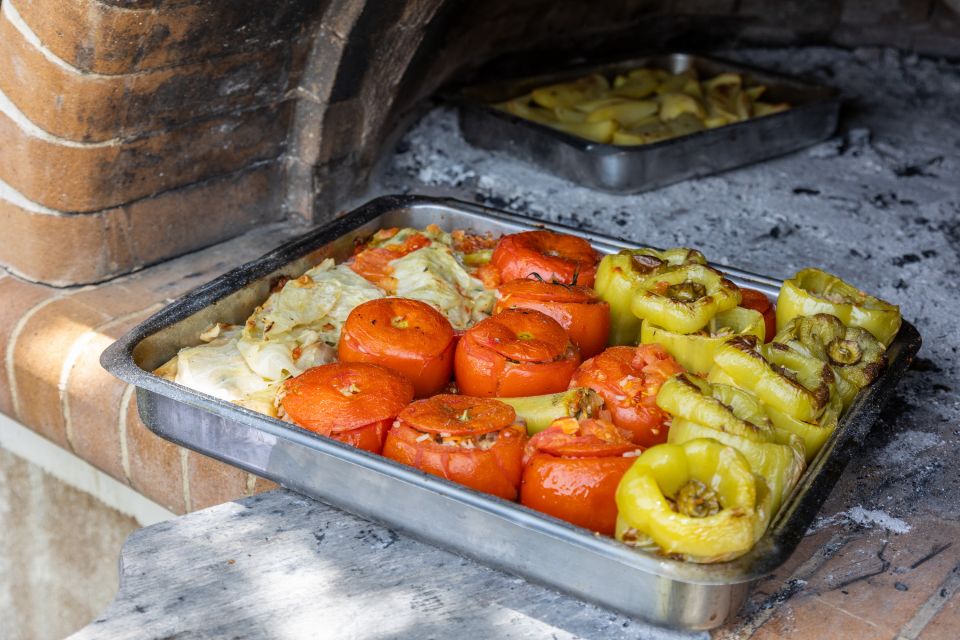
- Pigi meeting point and family garden setting with a vegetable and herb plot you can visit
- Wood-fired oven cooking that actually shapes the flavor and texture
- Classic Cretan recipes you make yourself, not just watch
- Raki and local wine throughout the meal, plus plenty of good-natured stories
- Private or small-group options with instruction in English or French
Entering Pigi: Why the family garden setup matters
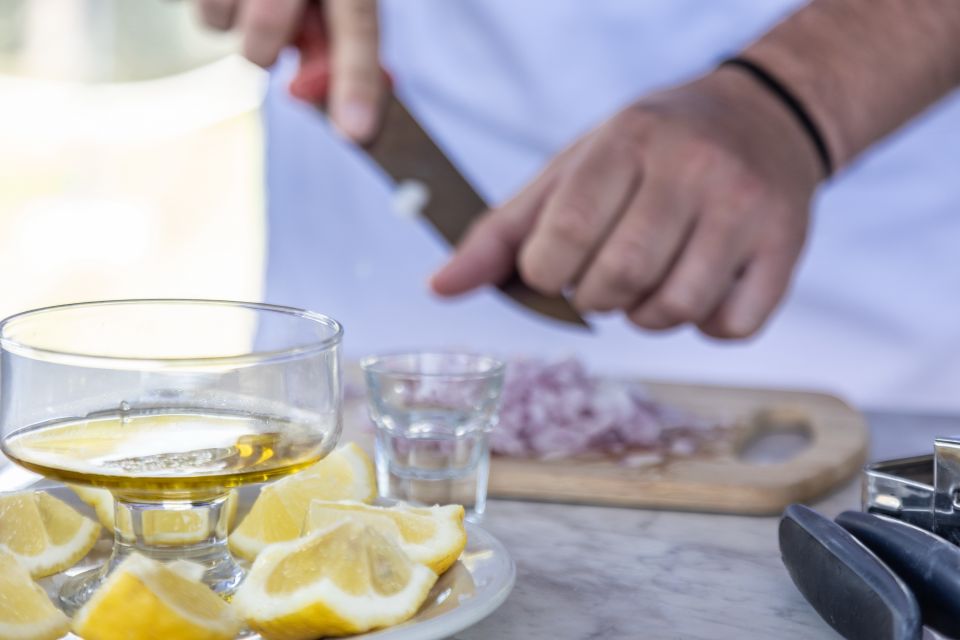
The experience starts in the village of Pigi, where you arrive not at a restaurant counter, but at a spacious family garden. This is a key part of why the class feels different. You’re cooking in a place that looks lived-in, with the everyday rhythm of Crete around you rather than a performance for tourists.
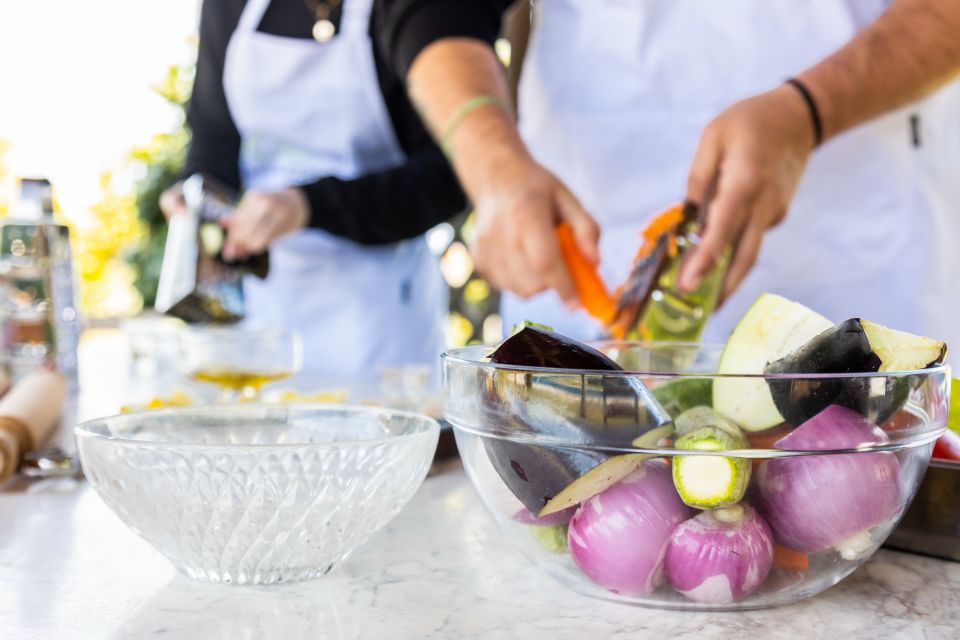
Before the real work starts, you’ll get to know your hosts and the group. You may also get a look around the vegetable and herbs garden, which helps you understand why Cretan cooking tastes the way it does. Herbs and greens aren’t an abstract idea here; you can connect them to the dishes you’ll prepare later.
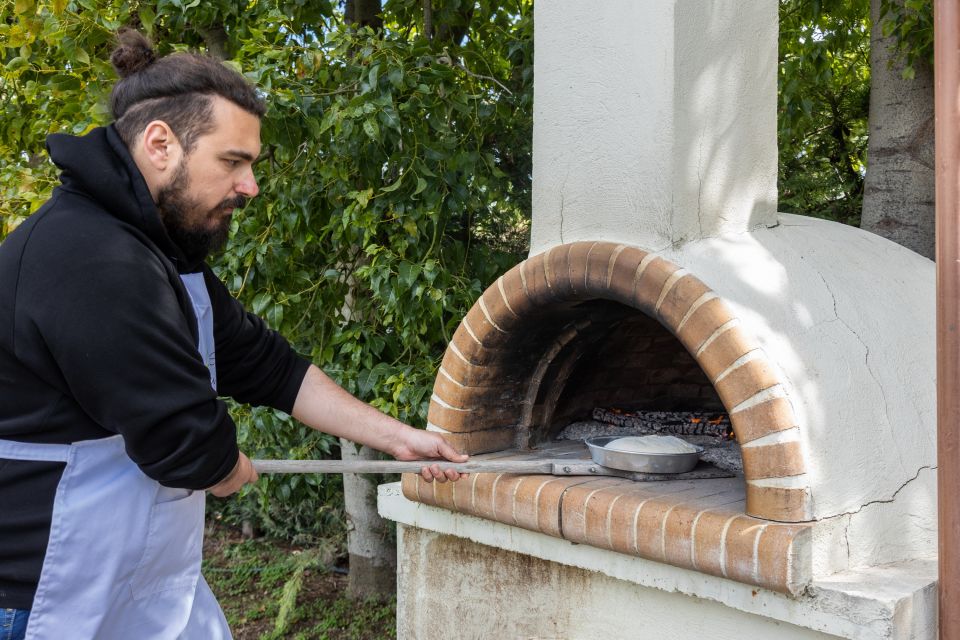
Then the wood oven is already hot and ready. That detail matters more than you might think. A wood-fired oven changes how bread, baked vegetables, and rustic dishes behave, and it sets the tone for the day: practical, warm, and focused on real cooking technique rather than shortcuts.
And yes, the atmosphere includes time by the pool. It’s not a marathon workshop. It’s a relaxed 4-hour flow where you work, taste, and then settle in outdoors for lunch.
You can also read our reviews of more cooking classes in Rethymno
What you’ll cook: Cretan classics, from cheese to salad
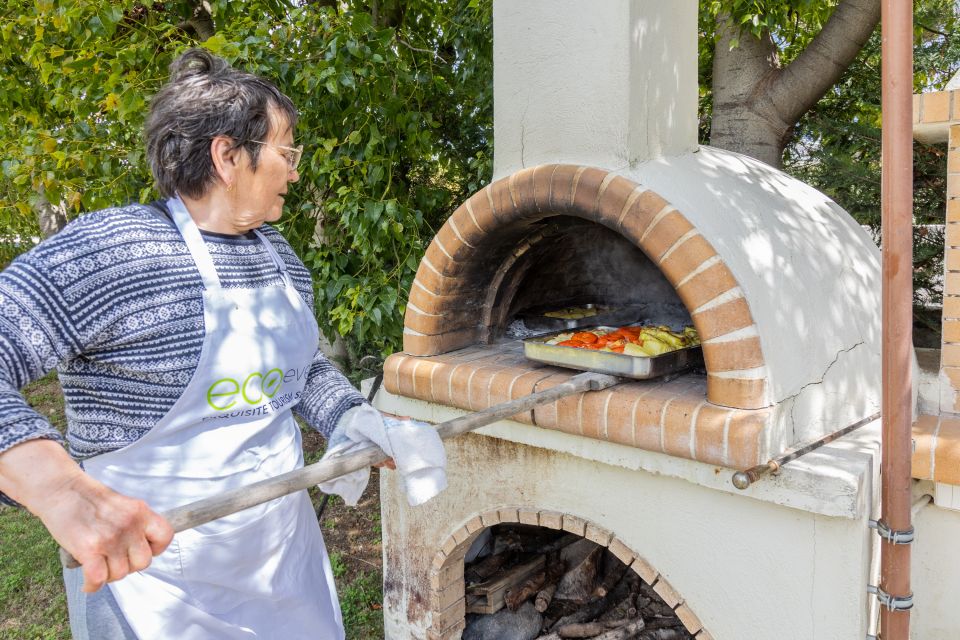
You’re guided through several recipes, and the day has a clear rhythm: introduce the ingredients, explain the steps, then put your hands to work. Your host dresses you with an apron and walks you through the process as you go.
Here are the main dishes you can expect to learn and make:
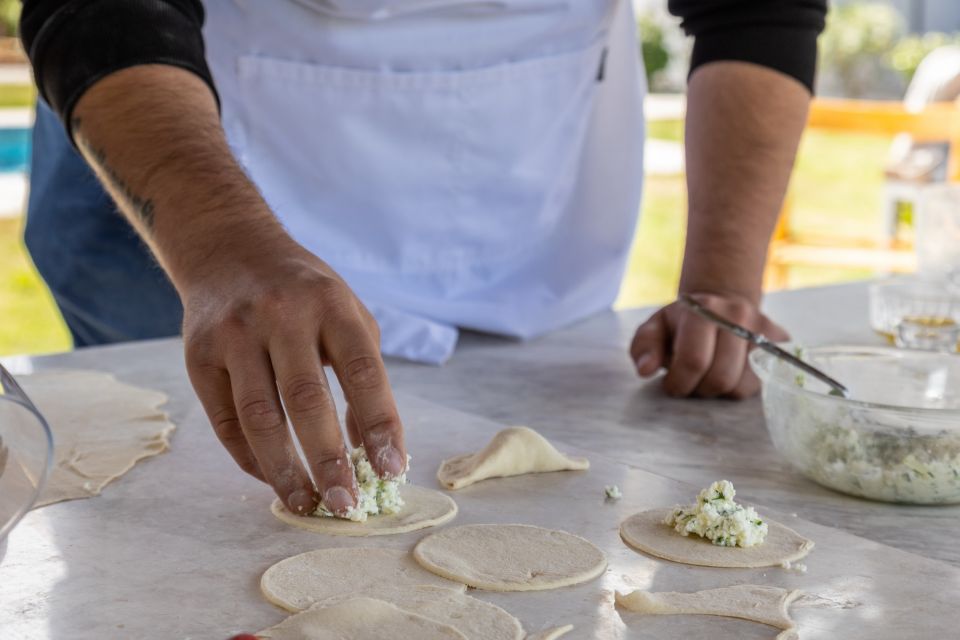
- Homemade cheese
- Ntakos (a Cretan classic; it’s built with local bread and toppings)
- Tzatziki
- Stuffed vegetables
- Greek salad
- Plus additional Cretan dishes, including meat and vegetarian options served at lunch
What I like is that the lineup hits several core parts of Cretan meals. You’re not just making one side. You’re building a full plate: something creamy, something fresh, something baked, and something savory.
Homemade cheese and the value of doing it yourself
Cheese sounds like a simple food until you’re trying to make it. When you do it in class, it becomes easier to taste what’s different about local ingredients and method. The payoff is practical: once you understand the basics, you’ll spot the difference between generic cheese and the kind used in traditional Cretan cooking.
Ntakos and the “layering” logic of Cretan food
Ntakos is a dish built around structure. You’re essentially learning how Cretan flavors stack together: bread base, toppings, and the balance of acidity, herbs, and richness. Even if you’ve eaten it before, making it is a faster way to grasp why it works.
Tzatziki and stuffed vegetables: comfort with technique
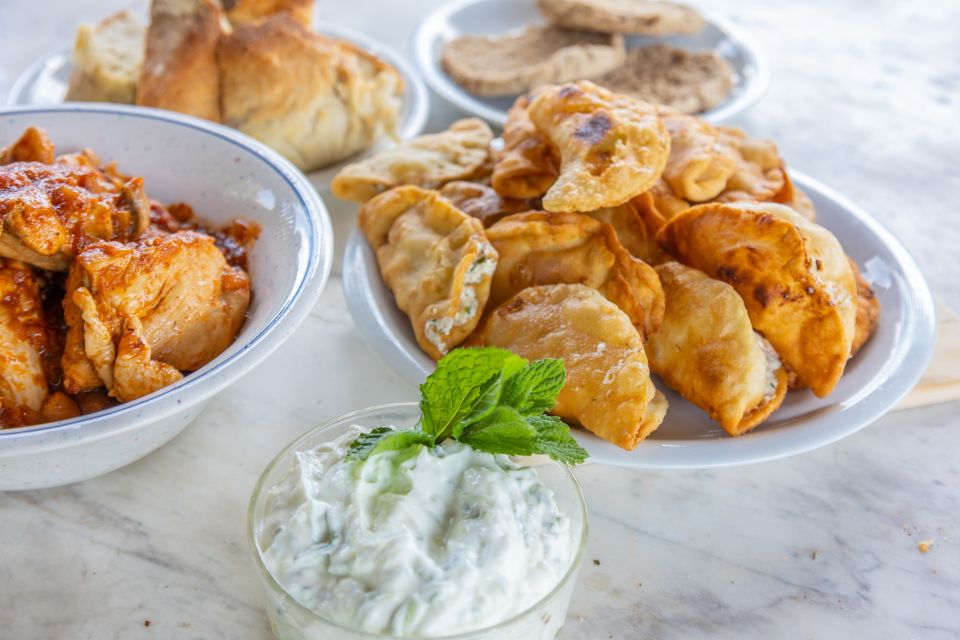
Tzatziki teaches you the balance—cool, tangy, and herby. Stuffed vegetables add another layer: handling, filling, and baking/oven time. It’s the kind of cooking where your attention to small steps shows up at the end, when everything comes out together.
You can also read our reviews of more tours and experiences in Rethymno
Greek salad as the bright, simple anchor
Greek salad is often underestimated. In this class, it’s part of a full menu, so it becomes a reference point for freshness. You’ll appreciate how much better the flavor gets when you’ve spent the morning cooking other components and then return to something clean and crisp.
The class also includes both meat and vegetarian options. That’s helpful if you want a variety without splitting your group or skipping key courses. And if you’re vegetarian, the day is still built to deliver a full lunch.
The best part of lunch: outdoor cooking, raki, and real conversation
After you prepare the dishes, lunch follows outdoors. The meal is cooked using a traditional wood-fired oven, and you eat what you made in an idyllic setting.
This is where the experience becomes more than cooking. You share the meal with the host, and conversations naturally turn toward Crete: products, origins, and everyday life. Maria, for example, is specifically noted for explaining products and where they come from, not just what to do with them.
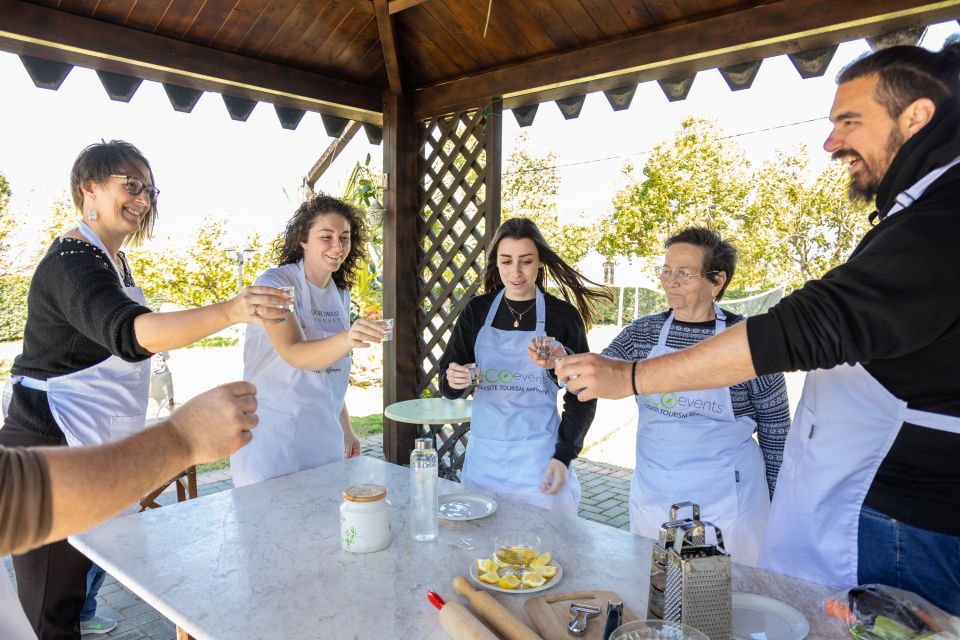
Then there’s the drinks side, which is part of the culture and also part of the mood. You’ll have raki and local wine. In fact, you can expect raki after activities during the day. That rhythm matters because it keeps the energy up while also giving you a reason to pause, taste, and laugh between steps.
One detail I appreciate is how the meal is served as a shared experience. You’re not herded into a dining room where the cooking is someone else’s job. You and your group sit down with your own food, compare notes, and trade small stories about the day.
A note on pace and comfort
The oven is hot, and cooking is tactile. So if you dislike getting hands-on, this may not be your best fit. But if you’re curious and okay with getting involved, it’s a fun way to learn.
Also, because raki is part of the flow, you’ll want to keep hydration in mind and not plan anything demanding right after.
How the hosts teach: small groups, English/French, and an easy-going flow
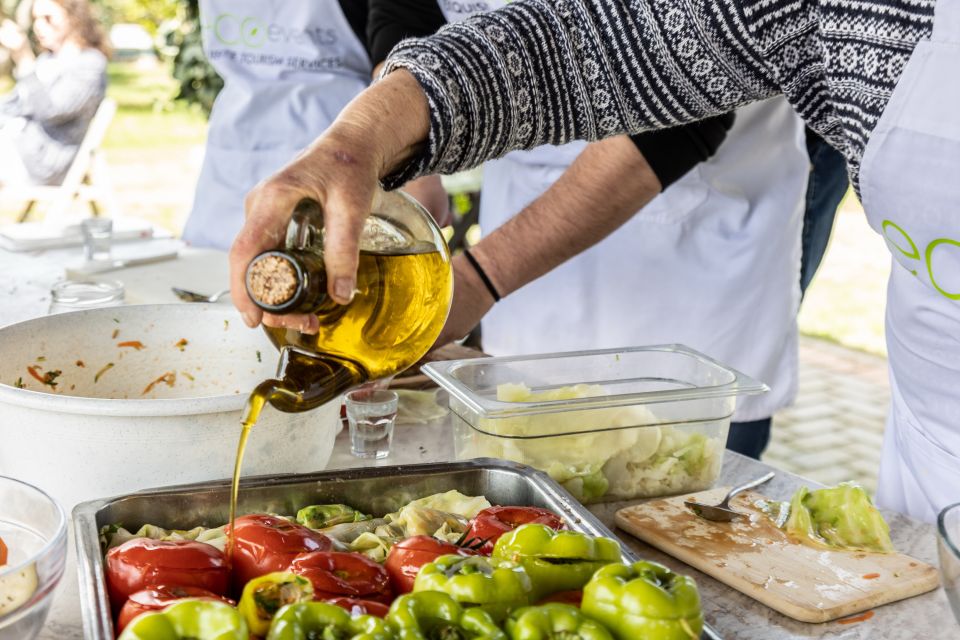
This class runs for 4 hours, and that’s a sweet spot. You get enough time to learn multiple dishes and actually participate, without feeling stuck for half a day.
Instruction is available in English and French, and you can choose between private or small groups. Private or small groups are especially worth considering if you’re traveling with kids, friends, or anyone who learns better with more conversation.
The teaching style also comes through in the feedback. Hosts explain things clearly, and the work feels approachable rather than rigid. People have described the explanations as easy to follow, and that matters because cooking classes can fail when they become confusing or too fast.
It’s also nice to see the experience works for families. One set of participants included kids ages 10 and 14, and they were able to actively take part rather than just watch. If you’re traveling with teens, this kind of hands-on responsibility can be a win.
Price and value in Rethymno: what $123 really buys you
At $123 per person for a 4-hour class, you’re paying for more than “a cooking session.” You’re paying for a full local meal plus the time and ingredients that go into making a multi-course spread.
Here’s the value equation as it stands:
- You’re given all equipment and ingredients needed for the cooking.
- You get a full meal with both meat and vegetarian options.
- You get raki and local wine, described as plentiful.
- You’re not stuck with a single dish. You cook multiple recipes that add up to a complete Cretan lunch.
- Instruction is provided in English or French.
If you’ve ever taken a cooking class and then realized the meal is just a small tasting portion, this is a better setup. You end the experience with a full outdoor meal that reflects your work, not just a sample.
Also, the group format can help the value. Small-group or private setups often mean more time with your host and less waiting around.
Who should book this class, and who might want a different plan
This cooking class is a great match if you want:
- A real local meal where you learn the process behind the flavors
- Hands-on time in a garden setting with a wood-fired oven
- A relaxed way to learn about Crete beyond beach and museums
- A social setting that includes conversation, raki, and laughter
It’s likely less ideal if:
- You want a sightseeing-heavy day with minimal effort
- You prefer only tasting over cooking
- You don’t want alcohol involved, since raki and wine are part of the experience flow
- You don’t have a practical way to reach Pigi without extra transport cost
If you’re staying in Rethymno, you can still make this work, but you’ll want to budget time and think about transport. The class doesn’t include hotel pick-up and drop-off, though you can arrange the extra service at cost.
Should you book this Rethymno cooking class?
I’d book it if you care about authentic Cretan food and you like learning by doing. The combination of a family garden, vegetable and herb viewing, wood-oven cooking, and a full shared meal makes it a strong use of your time in Crete.
Book it sooner if you’re traveling in a period when you want a specific group setup, especially since you can choose private or small groups and instruction is in English or French. And if you’re vegetarian, this class explicitly includes vegetarian options for the meal, so you’re not stuck eating around the main food.
On the practical side, make sure you’re comfortable getting to the village of Pigi. Once you handle that, the day’s format—cook, taste, eat, and talk—does exactly what a good local experience should: it turns food into understanding.
FAQ
Where does the cooking class meet?
You meet at the village of Pigi.
How long is the class?
The experience lasts 4 hours.
How much does it cost?
It costs $123 per person.
Is the class offered in English or French?
Yes. The instructor speaks English and French.
Will I be able to eat vegetarian food?
Yes. The meal includes vegetarian options.
What dishes are you taught to cook?
The class includes homemade cheese, ntakos, tzatziki, stuffed vegetables, Greek salad, and additional Cretan dishes.
Is pickup and drop-off included?
No. Hotel pick-up and drop-off are not included and cost extra.
Is it possible to book privately or in a small group?
Yes. Private or small groups are available.
Is the experience wheelchair accessible?
Yes, it is listed as wheelchair accessible.
What are the cancellation and payment options?
You can cancel up to 24 hours in advance for a full refund, and there is a reserve now & pay later option.