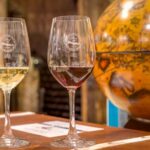
Six glasses, one village square. In Fres, about 25 minutes from Chania, this private tasting in the main square turns local grapes into a story you can taste with Andreas Stylianakakis. I like that it keeps the focus on Cretan terroir and grape variety, not a staged vineyard show.
I also like how the session connects wine history and winemaking progress in Crete to what you’re drinking, with a chemist’s eye for how flavors land on your palate. The only possible drawback: you’re not doing a vineyard or facility tour, so if that’s the core of what you want, this experience may feel more like a deep-taste conversation than a full production visit.
In This Review
- Key highlights to look for
- Fres village square: why this setting matters
- The private 90-minute format with Andreas Stylianakakis
- The six-wine Cretan lineup: what you’ll taste and why it clicks
- 1) Vidiano (White)
- 2) Muscat of Spina (White)
- 3) Retsina (White)
- 4) Liatiko (Red)
- 5) Romeiko (Red)
- 6) Fokiano (Dessert wine)
- Cheese, rusk, and olives: the pairing that keeps your palate honest
- Learning Crete through wine history and production progress
- Price and value: what $35 buys you in real terms
- Who this fits best (and who should skip it)
- Logistics that make the experience easy
- Should you book the Fres private wine tasting?
- FAQ
- How long is the private tasting?
- Where do I meet for the Fres wine tasting?
- What wines are included in the tasting?
- What snacks come with the wines?
- Is this activity private and does it have language options?
- Is it wheelchair accessible, and can I change my plans?
Key highlights to look for
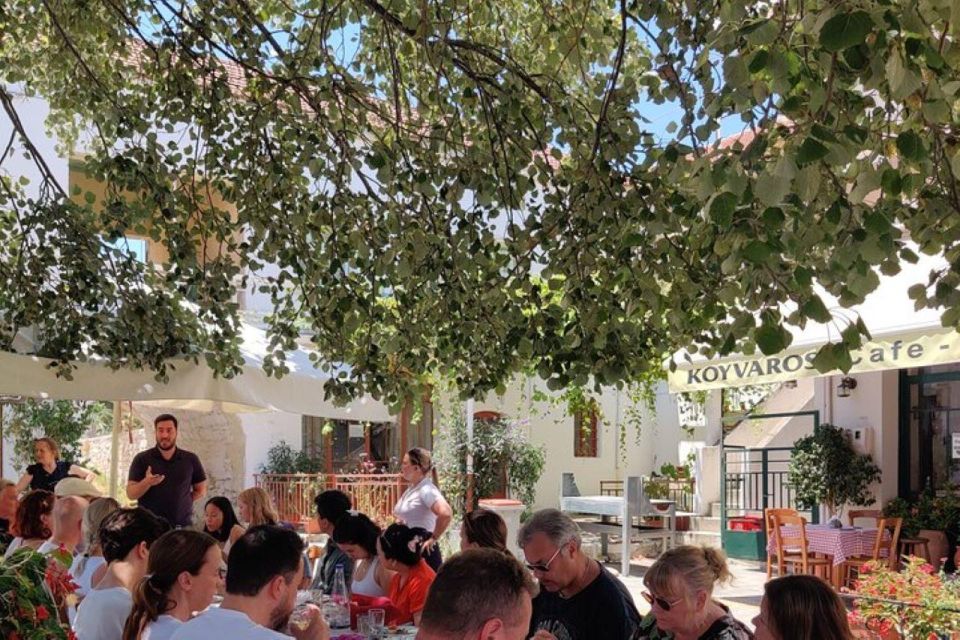
- A private table in Fres village’s main square, right by the church of St George
- Six Cretan wines in one flowing 90-minute lineup, from crisp whites to a dessert wine
- Snack pairings that match the wines, including local cheese, rusk, and olives
- Andreas Stylianakakis’ technical style, mixing wine education with chemistry-level explanations
- A quick chance to buy bottles and gifts after tasting, including soaps from the on-site shop
- Cold water on hand, so you can taste comfortably without feeling rushed
Fres village square: why this setting matters
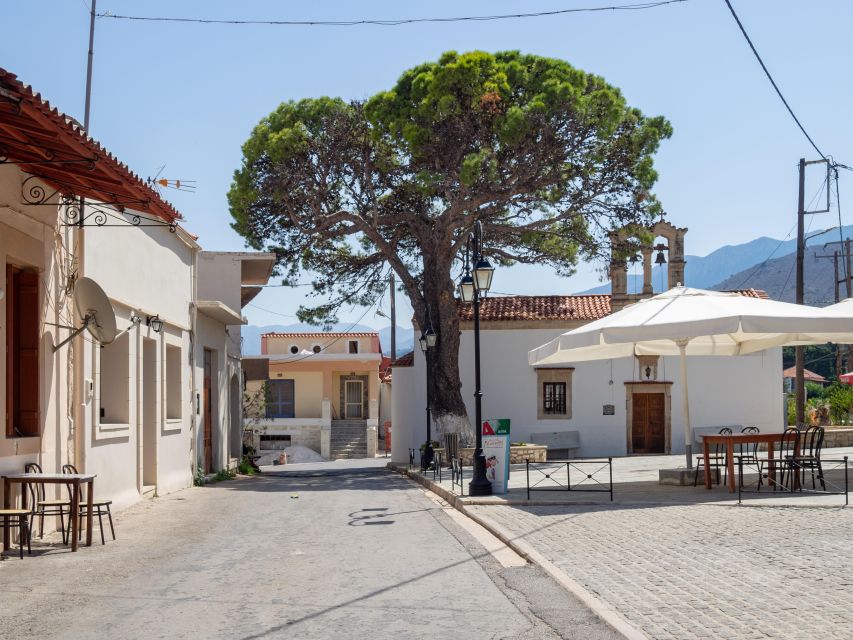
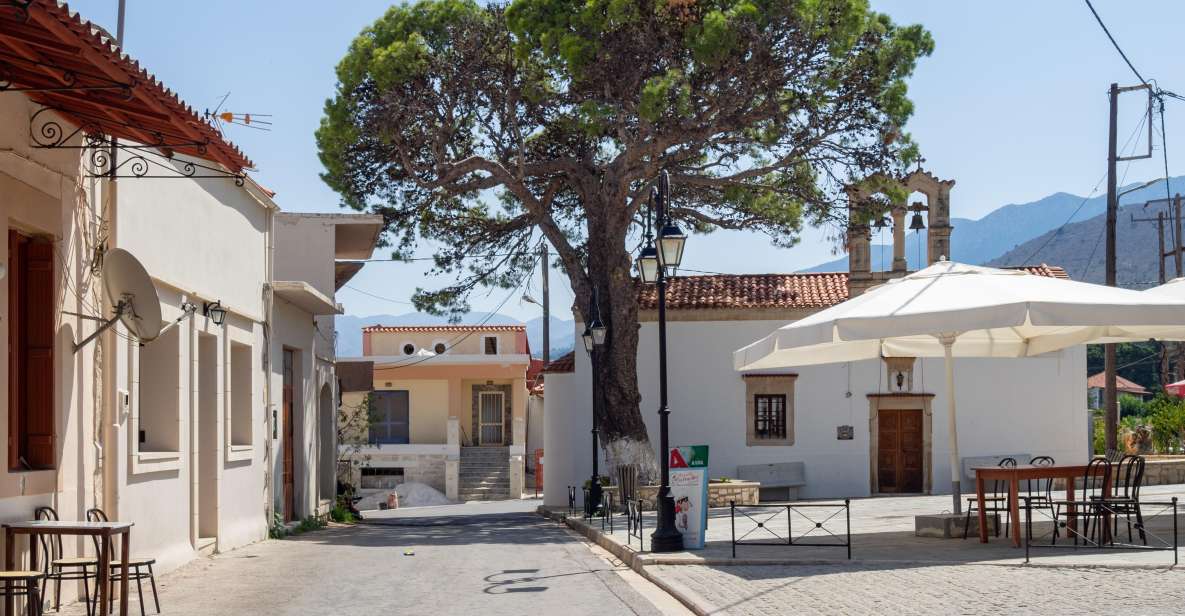
I love tastings that happen where wine is part of everyday life. This one takes place in the main square of Fres, in Apokoronas, and the location does real work for the experience. You’re not trapped in a tasting room. You’re in a living village center, with the pacing of locals around you.
Fres is also a practical day-trip option. It’s roughly 25 minutes from Chania, so you don’t have to plan your whole day around transportation. You get the feel of Crete beyond the tourist strip, and you’re close enough to still pair this with dinner afterward in the village.
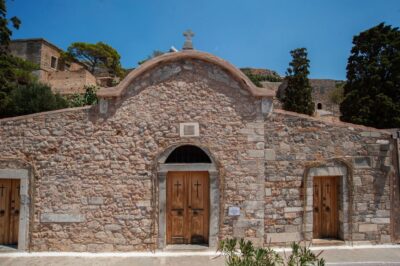
The meeting point is easy to orient to: you’ll gather in front of the church of St George, next to the Kouvaros tavern, at the central square (you can also use the provided pin starting location). That matters because wine tastings go best when you’re not hunting for the right doorway while your schedule tightens.
You can also read our reviews of more food & drink experiences in Chania


The private 90-minute format with Andreas Stylianakakis
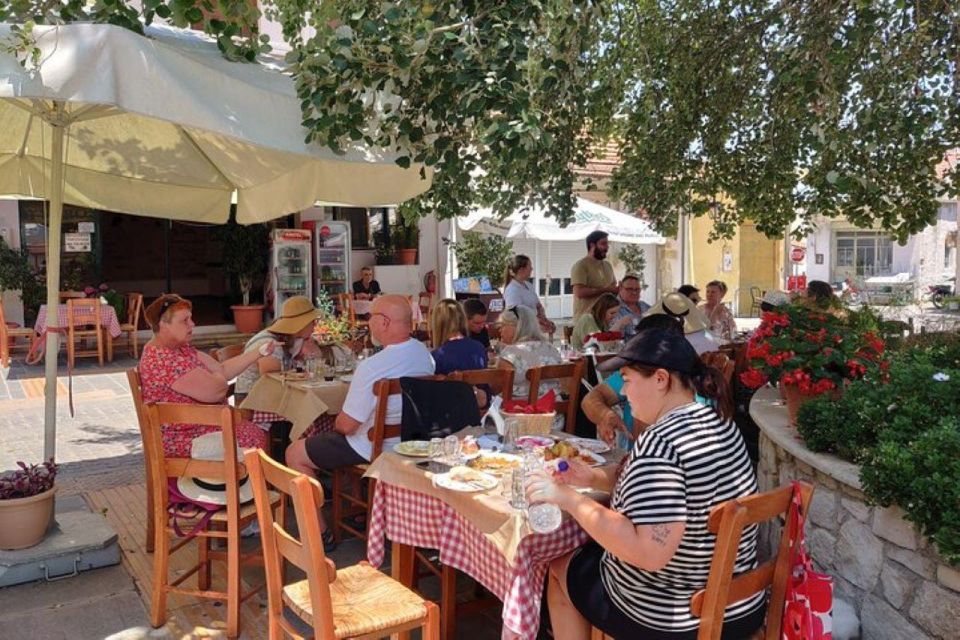
This is private, and that changes everything. In a small group, you can ask questions as you go, and the host can slow down when a wine needs explaining. The session is about 90 minutes, long enough to taste six wines properly and still connect them to bigger themes like local techniques and how tastes have evolved.
Andreas Stylianakakis runs the tasting, and the tone is both friendly and technical. Based on what people consistently praise, he doesn’t just label each pour. He explains how wine works—often with a chemistry-minded approach that makes the differences between grapes feel tangible. You’ll also get guidance like where to go next in Crete, which is handy if you’re building a day or two beyond Chania.
One more practical plus: the pacing is set up so you can keep your energy. There’s cold water available throughout, and the snacks are built into the flow, so the tasting doesn’t turn into that slightly grim moment where your palate is tired and your stomach is empty.
If you’re not looking for a walking tour, this works well. The experience stays focused on the table and the wines, so you can enjoy the education without adding extra steps.
The six-wine Cretan lineup: what you’ll taste and why it clicks
This tasting is built around a simple idea: Crete isn’t one style of wine. It’s multiple grapes, different climates, and winemaking choices that shape the same island into very different flavors.
You’ll taste six wines in one session:
1) Vidiano (White)
Vidiano is one of the core Cretan white varieties, and the value of starting here is that it gives you a baseline. Expect a clearer, grape-driven taste so you can compare what comes next. I like this order because it helps you notice changes as you move from wine to wine instead of trying to remember everything at the end.
2) Muscat of Spina (White)
This one typically leans more aromatic. Muscat varieties are often where people suddenly realize they’ve been tasting different things in the same broad category of white wine. Here, you can pay attention to how aroma affects your perception of sweetness, acidity, and finish.
You can also read our reviews of more private tours in Chania


3) Retsina (White)
Retsina is a fun transition. It shifts the flavor profile and gives you a chance to experience a wine style linked to Cretan traditions. You’ll likely talk about why this style exists, how it’s received, and what it does to the overall palate experience.
4) Liatiko (Red)
Moving into Liatiko, you get the red side of Crete. This is where the session becomes more than a tasting list: it becomes a lesson in how grape character and winemaking decisions can change texture and balance. Pay attention to how the red contrasts with the earlier whites in terms of weight and structure.
5) Romeiko (Red)
Romeiko adds another red voice. It’s a second data point for your palate, and that’s what makes the experience feel “progressive” rather than repetitive. By the time you reach this wine, you’ll probably start predicting the direction of each pour based on what you just learned.
6) Fokiano (Dessert wine)
A dessert wine at the end is smart for two reasons. First, it gives you a satisfying finale. Second, it lets the host explain why sweetness can feel complex rather than just sugary. People tend to remember this last pour the most, especially when it’s treated as more than an afterthought.
What to focus on: don’t just taste for whether you like it. Taste for how you experience acidity, aroma, and finish from wine to wine. That’s where the education part becomes useful.
Cheese, rusk, and olives: the pairing that keeps your palate honest
Snacks are not decoration here. The wine pairing is simple and practical: local cheese, rusk, and olives. These are classic balancing tools. Cheese helps soften sharp edges and makes whites easier to judge. Rusk gives you neutral crunch between tastings so you reset your palate. Olives add salt and a savory note that interacts differently with each style.
A detail that shows up repeatedly in feedback is that the olives are a favorite, and there’s often an emphasis on local, home-style quality. Even if you’re not chasing “authentic” as a buzzword, it helps because the food tastes like it belongs to the place you’re in.
You’ll also appreciate how the snacks are timed. This isn’t a situation where you get one cracker at the start and then taste your way through six pours on an empty stomach. The result: you can stay present with each wine instead of switching to survival-mode tasting.
Learning Crete through wine history and production progress
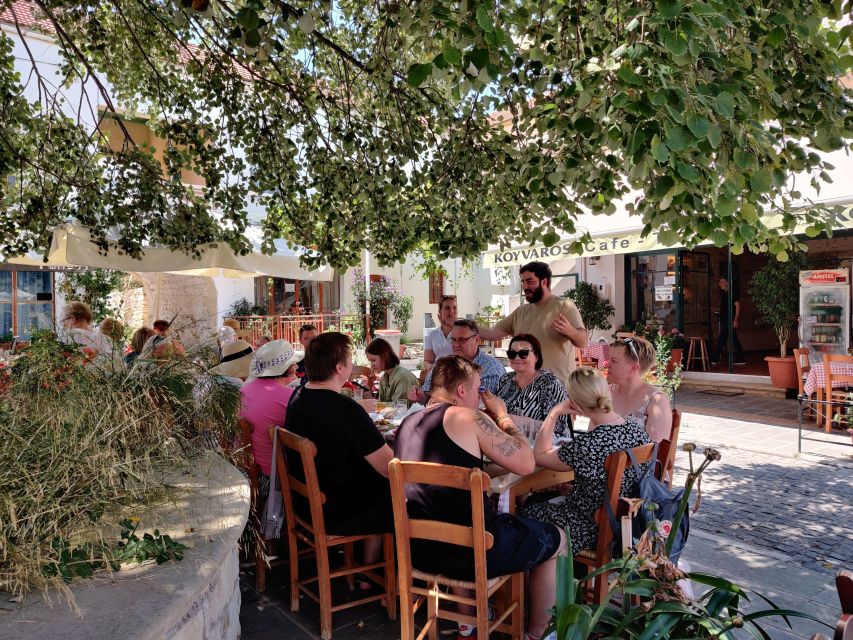
The strongest part of this experience is how it connects each pour to bigger themes. You’ll be taught wine history in Crete and how winemaking has progressed. The language is practical, and the host’s background as a chemist and winemaker is the reason the explanations land.
Here’s what that means for you: instead of memorizing grape names as trivia, you start to understand why a wine tastes the way it does. You can walk away with a mental framework for tasting—like noticing how different varieties shift balance, and how production choices shape the final glass.
The “progress” angle matters, too. Crete isn’t frozen in time. The session treats Cretan winemaking as something that keeps developing while still drawing on local identity. That’s a more interesting story than, say, only learning about old traditions with no link to today.
And yes, you’ll likely hear technical points about chemistry and palate behavior. Don’t worry if that’s not your background. The explanations are meant to make the wines clearer, not to test you.
Price and value: what $35 buys you in real terms
At $35 per person for six wines plus snacks, this isn’t just a “pay to drink” activity. You’re paying for:
- Six distinct tastings (not just a couple of pours)
- A structured 90-minute private session
- Pairing food: local cheese, rusk, and olives
- Guidance from Andreas Stylianakakis with history + production context
- Time to ask questions without the pressure of a large group
If you break it down, the price feels fair because you’re not only tasting, you’re learning. Tastings that cost a similar amount elsewhere often offer fewer wines or a more one-direction talk. Here, the lineup is specific, and the host’s approach tends to be detailed enough that you can actually use the knowledge later when you order wine.
Then there’s the “keep the value going” factor. There’s a small shop where you can buy bottles and local gifts, including home-made soaps. If you’ve got room in your suitcase budget, that can turn the tasting into a souvenir you’ll enjoy later.
Who this fits best (and who should skip it)
This is best for adults who want real wine education without the heavy-tour baggage. The session is suitable for a private group, and it’s designed for an engaging conversation at a relaxed pace.
It’s also clearly set up for people who enjoy local culture in small doses: you’ll get village atmosphere, not a checklist of big sights.
A few important fit notes from the activity details:
- It’s not suitable for children under 18
- It’s not suitable for pregnant women
- It’s listed as wheelchair accessible
If you’re the type who really wants a vineyard tour or a production facility visit, you may find this format too “table-centered.” But if you’d rather learn, taste, and ask questions, this is a strong match.
Logistics that make the experience easy
This one is straightforward once you know where to go. Head to Fres village’s central square. Meet in front of the church of St George, next to the Kouvaros tavern, and you’ll be in the right spot quickly.
The schedule is 90 minutes, which makes it easy to plan around a Chania day. If you’re starting from Chania, you’ll likely want to time your drive so you arrive a bit early and don’t feel rushed before you taste.
Language is covered, with instruction in English and Greek. That’s useful if you’re traveling with someone who speaks one language more comfortably than the other.
Also note the session stays in one place—so dress like you’re spending time outdoors in the village square, especially if weather is warm. And because there’s cold water, you don’t have to worry as much about pacing yourself, but you still should drink water between wines like a responsible adult.
Should you book the Fres private wine tasting?
I’d book it if you want a Crete-focused wine experience that feels personal and grounded. Six wines, built-in snack pairings, a private 90-minute conversation, and a host who connects taste to explanation—this is an efficient way to leave with both palate memory and practical understanding.
I’d hesitate only if you specifically want a vineyard or winery facility tour as the main event. Since the session takes place in the village square, the experience is more about tasting and learning than about walking through production areas.
If you’re in the Chania area and you like local culture that doesn’t feel manufactured, this is one of those bookings that makes the day feel more like Crete and less like a schedule.
FAQ
How long is the private tasting?
The tasting lasts about 90 minutes.
Where do I meet for the Fres wine tasting?
Meet in the main square of Fres village, in front of the church of St George and next to the Kouvaros tavern.
What wines are included in the tasting?
You’ll taste Vidiano, Muscat of Spina, Retsina, Liatiko, Romeiko, and Fokiano dessert wine.
What snacks come with the wines?
The wines are paired with local cheese, rusk, and olives.
Is this activity private and does it have language options?
Yes, it’s a private group experience, and the instructor provides instruction in English and Greek.
Is it wheelchair accessible, and can I change my plans?
It’s listed as wheelchair accessible. There is free cancellation up to 24 hours in advance for a full refund, and you can reserve now and pay later.