Knossos feels like a puzzle with answers. On this guided walking tour, you get an organized path through the palace ruins, plus the stories people still repeat: Minos, Ariadne, and the Minotaur. What makes it especially practical is skip-the-line entry, so you spend your time looking at the site instead of standing at a ticket counter.
I also really like how the guide connects what you see to why it mattered. You’re not just scanning stones. You learn the meaning behind key spots, including the oldest throne in Europe and the oldest theater within Europe, along with the Minoans’ surprisingly advanced water-management know-how.
One consideration: it’s a concentrated visit. Expect a significant walk in 1.5 hours, and the tour isn’t suitable for people with mobility impairments or wheelchair users.
In This Review
- Key things you’ll notice on this Knossos tour
- What the Knossos Palace tour is actually about
- The timed-entry reality: how skip-the-line helps (and what it doesn’t fix)
- Meet-up, transfer, and getting your bearings quickly
- Minos and the Minotaur: using myth as a way to read the ruins
- Oldest throne, oldest theater, and the drainage system you can almost admire
- Walking the palace: cult spaces, workshops, and the practical rooms
- A palace built in phases: why the ruins look the way they do
- Pace and timing: what 1.5 hours feels like
- Price and value: how $104 stacks up for what’s included
- Who this tour suits best (and who should skip it)
- Should you book the Knossos Labyrinth skip-the-line tour?
- FAQ
- How long is the Knossos Labyrinth skip-the-line walking tour?
- Is there skip-the-line entry for Knossos Palace?
- What is included with the tour ticket?
- Do I need to pick a specific entry time?
- Where do I meet the guide?
- Is hotel transfer included?
- Do I get a headset during the tour?
- What should I bring?
- Is food or drink included?
- Is the tour suitable for everyone with mobility needs?
Key things you’ll notice on this Knossos tour
- Skip-the-ticket-line entry to keep you moving while the ruins are at their best
- A licensed English guide leading a small group with a headset if the group is larger than 6
- Big highlights in a short time: the throne, the theater, and the famous drainage systems
- A clear story thread tying Minos and Ariadne to the Labyrinth myth
- You’ll see practical life, not just legends: cult areas, workshops, storage spaces, cleansing and bathing rooms, and toilets
- Timed admission matters: check in within the allowed window or you can be denied entry
What the Knossos Palace tour is actually about
Knossos is one of those places where myth and archaeology keep trading places. One minute you’re hearing the Minotaur story from your guide, and the next minute you’re standing in a part of the palace complex that shows how people lived, worshiped, cleaned up, and stored goods. That mix is exactly why a guided visit pays off.
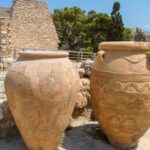
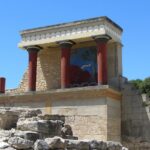
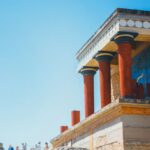
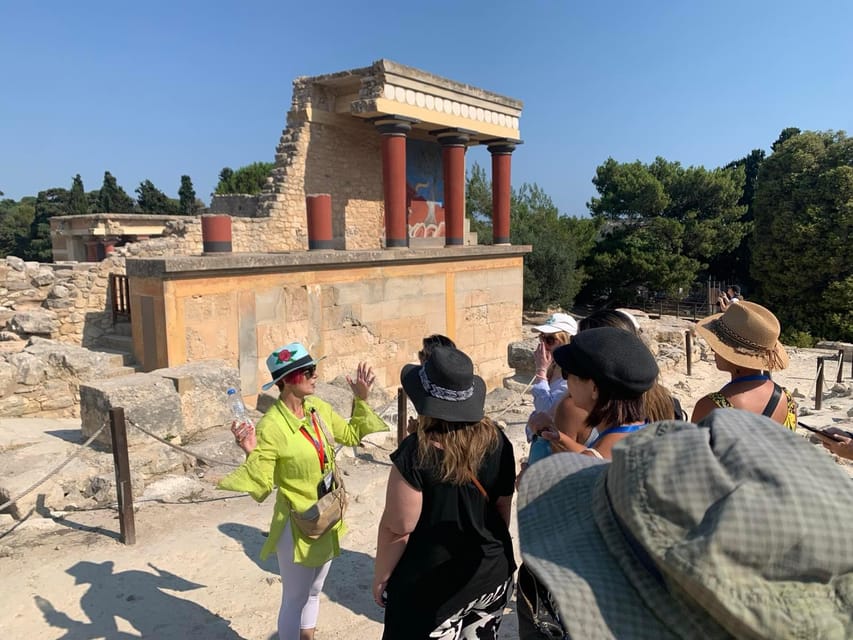
This tour is built around the palace as a whole, not just a couple of photo stops. The site covers about 20,000 square meters, and the palace complex includes more than 1,500 interlocking rooms. Even if you don’t remember every detail, you’ll leave with a mental map of how a Bronze Age power center could sprawl and still feel organized.
You can also read our reviews of more walking tours in Heraklion


The timed-entry reality: how skip-the-line helps (and what it doesn’t fix)
Skip-the-line usually sounds like magic, but it still depends on your time slot. This tour includes timed admission, and your ticket is valid for the selected time window. Check in too late and you can be denied entry, which means you’d need to buy a new entry ticket.
Here’s the practical rhythm: you meet your guide next to the archaeological site entrance by the ticket booth, and check-in begins 20 minutes before the tour start time. Your guide will be holding a sign with the WeGuide logo. The good news is that once you’re inside the entry flow, you’re guided and moving.
So, yes, the skip-the-line part is a real benefit. But the bigger benefit is that you show up on time and your guide keeps the visit efficient.
Meet-up, transfer, and getting your bearings quickly

Your tour starts at the main entrance of Knossos, right by the ticket office area. That matters more than it sounds. With a site this large, getting oriented early helps you understand what you’re looking at instead of treating it like one long corridor of ruins.
If you choose the add-on, there’s also a transfer from/to the Heraklion city center area. That can be a relief if you’d rather not think about buses, taxis, or parking before you even start walking. Either way, plan for heat and sun because you’ll be outdoors.
When you do get started, expect a clear sequence. The guide’s job isn’t just to name places. It’s to explain how the palace was laid out so the labyrinth concept feels less like a metaphor and more like a design problem the Minoans worked hard to solve.
Minos and the Minotaur: using myth as a way to read the ruins
The Labyrinth story is part entertainment, part explanation, and it works best when you can point to something concrete. Your guide walks you through the mythical palace of the legendary King Minos, Princess Ariadne, and the Minotaur. The details can vary depending on the telling, but the point stays the same: the myth gives the ruins a human storyline.
What I like about this approach is that you’re not stuck in “ghost story mode.” You learn how the palace functioned across ceremonial and practical spaces. Cult areas, workshops, temples, shrines, and storage areas aren’t just labels. They become clues for how power and religion connected to everyday work.
If you’re visiting with kids or you just love stories, this is where the tour shines. It keeps you engaged while you’re in the sections of the site where nothing looks obviously “new” or polished.
Oldest throne, oldest theater, and the drainage system you can almost admire
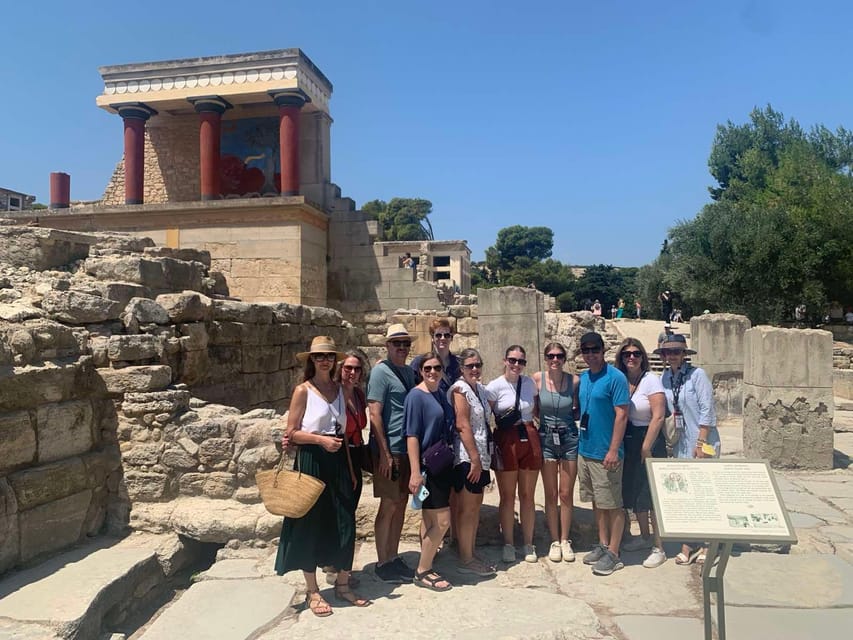
Knossos is famous for a few “superlatives,” and this tour makes sure you actually understand what you’re seeing.
The oldest throne in Europe: The guide helps you picture why a throne room or royal center would matter. In a palace that sprawls across four storeys in its grandest phase, the center of authority needs to be legible to visitors and participants in ceremonies.
The oldest theater within Europe: Even in ruin form, you can grasp the idea of public gathering and performance. A theater implies rhythm and audience design—people coming together on purpose, not wandering randomly through rooms.
Then there’s the part people often don’t expect: water and sanitation. The tour highlights the oldest drainage systems in the world and the Minoans’ technical sophistication. When your guide points out how water management likely worked, the palace stops being just a backdrop for legends and starts feeling like an engineered place built for real life.
You can also read our reviews of more tours and experiences in Heraklion


Walking the palace: cult spaces, workshops, and the practical rooms
One of the most useful things about a guided path is that you don’t have to guess what each zone might have been for. This tour covers a lot of the palace’s major categories, including:
- Cult spaces (areas tied to worship and ritual)
- Workshops and specialized areas
- Temples and shrines
- Storage spaces tied to the palace economy
- Cleansing rooms and bathing areas
- Toilets and sanitation-related spaces
Even though the structures are ruined, the layout helps you understand how different activities could happen side by side. And the fact that the tour includes cleansing and bathing rooms is a huge deal. People remember palaces for kings and frescoes; they should also remember them for daily systems—cleaning, comfort, and waste handling.
This is where the tour feels worth it versus trying to wing it alone. At Knossos, without guidance, it’s easy to walk past areas that look similar and miss why some rooms mattered more than others.
A palace built in phases: why the ruins look the way they do
The guide explains Knossos as a site that changed over time, not a snapshot. The first palace was erected soon after 2000 BC. Then around 1700 BC, a catastrophic earthquake destroyed it. Instead of abandoning the place, the people rebuilt quickly.
The second palace is described as the most significant and monumental phase, representing the pre-eminent center of power in Bronze Age Crete for more than 300 years. This rebuilding helps you make sense of what you see: new structures layered on older foundations, with architectural improvements and bold design choices.
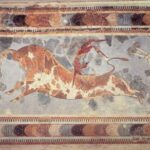
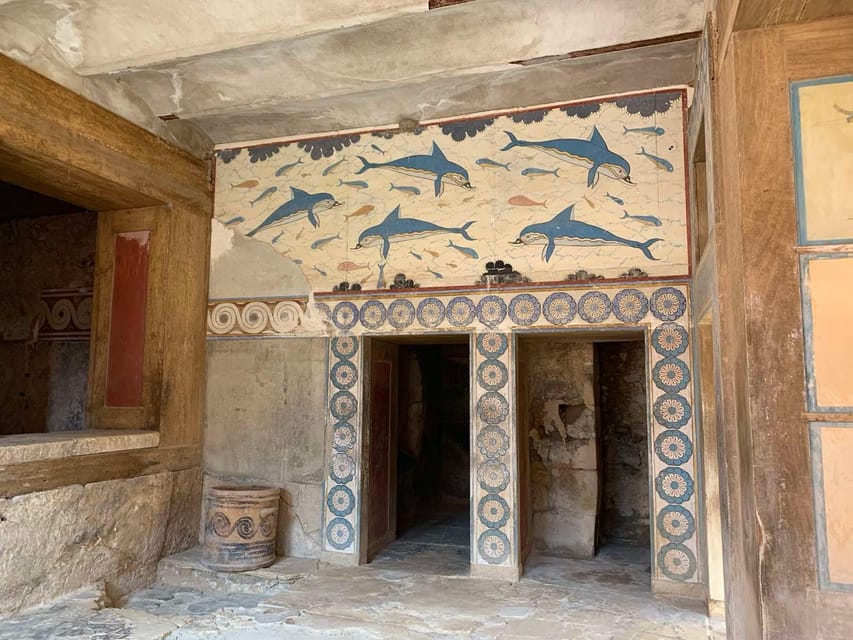
You’ll also hear about features that signal a major political center—splendid frescoes, hundreds of rooms distributed over multiple storeys, impressive storage areas, and spacious courts used for ceremonies and feasts. In other words, Knossos isn’t just “old stones.” It’s a working design for power, storage, and public rituals.
Pace and timing: what 1.5 hours feels like
This is a 1.5-hour walking tour. That’s long enough to cover meaningful highlights, but short enough that you can stay focused instead of getting lost in every wall segment.
The group is small, and if the group size is over 6 participants, you’ll get a headset so you can hear the guide better. That’s a smart touch in a place where wind, distance, and your own wandering attention can make explanations hard to catch.
Bring comfortable shoes, and I’d treat water as non-negotiable. The tour info is clear about what to pack: sun hat, sunscreen, and water. Knossos can be brutally sunny, and you’ll be moving through an outdoor archaeological site where shade may not be easy to find.
If you’re the type who gets tired quickly in heat, consider starting your day early. You’ll enjoy the tour more if you arrive already rested and hydrated.
Price and value: how $104 stacks up for what’s included
At $104 per person, the price looks steep at first glance—until you break down what’s inside.
You’re paying for:
- Skip-the-ticket-line service
- Entry ticket for Knossos Palace (listed as 20 EUR general admission)
- A licensed tour guide in a small group
- A headset when the group is larger than 6
- Taxes/VAT included (GST/VAT is included in the package)
That doesn’t just cover a lecture. It covers a guided walk through a complicated palace layout where the guide helps you interpret rooms and systems you’d likely miss on your own.
The optional Heraklion city center transfer adds cost if you want it, but the base tour still gives you the core value: efficient entry plus knowledgeable narration and a structured path through the highlights.
Who this tour suits best (and who should skip it)
This tour is a great fit if you:
- Want the big Knossos highlights in 1.5 hours without wasting time at the ticket counter
- Like explanations that connect myth and archaeology
- Enjoy practical details, like sanitation and drainage systems, not just legends
It may not be the best choice if you:
- Need wheelchair access or have mobility impairments (the tour is noted as not suitable for those cases)
- Are pregnant (also listed as not suitable)
- Prefer extremely unstructured visits with lots of free time to wander without a set pace
If you want a relaxed pace, this probably won’t match your style. But if you want clarity fast—how to look at Knossos instead of just looking at it—this works well.
Should you book the Knossos Labyrinth skip-the-line tour?
I’d book it if your goal is to understand Knossos quickly. The skip-the-line entry, timed admission, and guided route are designed for people who don’t want their trip to turn into a slow shuffle in the heat.
Skip booking only if you know you can’t handle steady walking outdoors or you need accessibility accommodations not supported here. Also, double-check your schedule so you’re at the meeting point and checked in within the time window—timed tickets are strict, and late arrival can mean denied entry.
If you’re trying to choose between a self-guided visit and a guided one, this is the kind of place where a guide can turn confusion into a clear story. You’ll leave with a better sense of the palace layout, a stronger grasp of the Minotaur myth in context, and a real appreciation for how technical the Minoans were.
FAQ
How long is the Knossos Labyrinth skip-the-line walking tour?
The tour lasts about 1.5 hours.
Is there skip-the-line entry for Knossos Palace?
Yes. The tour includes skip-the-ticket-line service to avoid the queue at the ticket counter.
What is included with the tour ticket?
The entry ticket for Knossos Palace is included as general admission (listed as 20 EUR). The tour also includes a licensed tour guide for a small-group guided visit.
Do I need to pick a specific entry time?
Yes. Tickets are valid for the selected time slot. If you arrive outside the allowed window, entry can be denied and you may need to purchase a new ticket.
Where do I meet the guide?
Meet your guide next to the entrance of the archaeological site, by the ticket booth. The guide will be holding a sign with the WeGuide logo.
Is hotel transfer included?
A transfer from/to Heraklion city center area is available as an add-on option. It costs extra and is only included if you select it.
Do I get a headset during the tour?
You get a headset if the group size is over 6 participants (listed as 7–16 pax).
What should I bring?
Bring comfortable shoes, a sun hat, sunscreen, and water.
Is food or drink included?
No. Food and drinks are not included, and food and drinks are not permitted inside Knossos Palace.
Is the tour suitable for everyone with mobility needs?
The tour is not suitable for pregnant women, people with mobility impairments, or wheelchair users.