Two days, four Cretan worlds. This private tour links Knossos, Lasithi, Rethymnon and Chania with a licensed guide at Knossos and careful timing, so you get real context without rushing. One catch: pickup is only from the Heraklion area, not from Chania, Ierapetra, or Sitia.
Best of all, the guide can add personal Cretan moments. In the happiest versions of the trip, Spyros shares his native village and even brings you to his summer house, vegetable garden, homemade drinks, and strawberry picking with a friend.
If you want a fast, high-value loop that mixes big sights with everyday food stops, this is an excellent fit. Just know it’s a lot of moving parts in two days.
In This Review
- Key highlights that make this Crete loop worth it
- Knossos Palace: the Minoans, explained in the right order
- Omalia Olive Press: tree to bottle, with olive oil and honey tasting
- Lasithi Plateau windmills: icons of irrigation history
- Psychro pottery at the plateau: watch clay become something useful
- Mesa Lasithi coffee and raki: the small stop that slows the day down
- Ano Kera tavern meal: Cretan comfort food in a family setting
- Krassi village and the Platanus tree: views plus a chance of seeing birds
- Agia Pelagia Greek coffee: an easy start for day two
- Rethymnon: Venetian harbor vibes and a relaxing coastal walk
- Chania Town: four hours to roam the old streets
- Fodele and the El Greco Museum: art history without the big-city feeling
- Value check: what you get for $1,182.09 per group
- Pacing and private comfort: small group, two long days
- Who should book this Crete highlights tour
- Should you book it or pass?
- FAQ
- How long is the Crete Highlights tour?
- Is this tour private or shared?
- What’s the maximum group size?
- Where does pickup happen?
- What language is the tour offered in?
- What’s included in the price?
- Which admission tickets are included?
- Do I get a mobile ticket?
- What if the weather is bad, or I need to cancel?
Key highlights that make this Crete loop worth it
- Knossos with a licensed guide: you get the kind of explanation that makes the ruins click, not just photos.
- Omalia olive press tasting: tree-to-bottle storytelling plus tastes of local olive oil and honey.
- Lasithi Plateau windmills + Psychro pottery: iconic views, then hands-on craft watching.
- Food and drink breaks that feel local: Greek coffee, cookies, raki, and a family tavern meal.
- Krassi village views and a Platanus tree: an easy stop that adds “wow” without feeling staged.
- A guide who adds real-life stops: Spyros-style village visits and homegrown hospitality.
Knossos Palace: the Minoans, explained in the right order
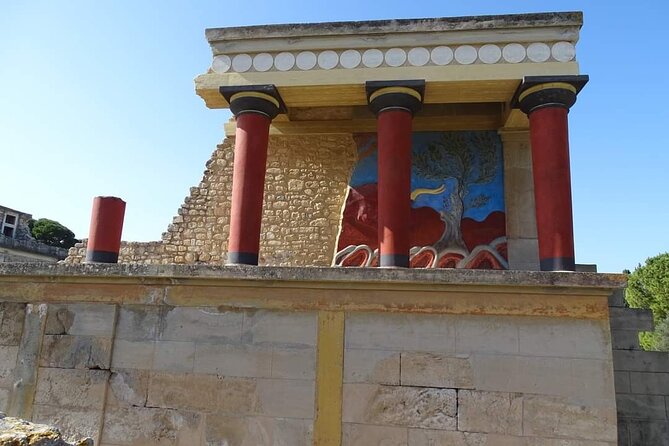
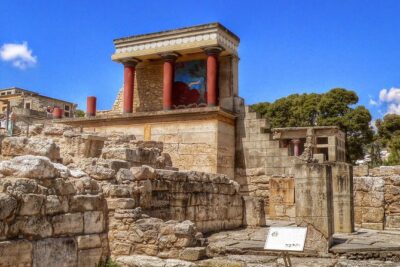
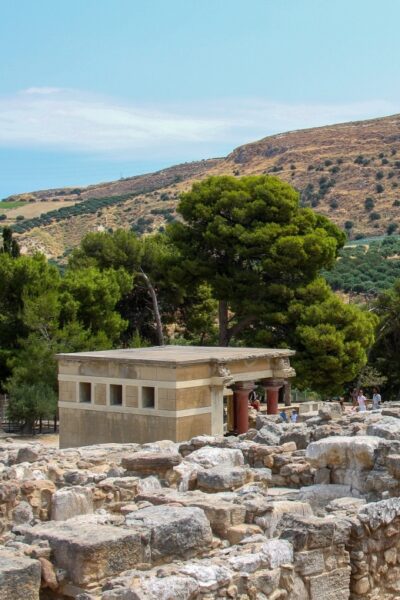
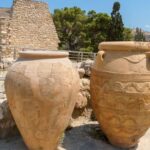
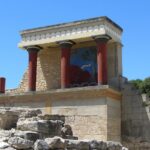
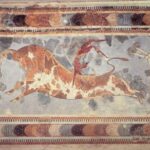
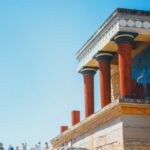
Knossos is the big anchor of day one, and the timing is part of the value. You’ll spend about two hours at the archaeological site, with admission included and a licensed tour guide at Knossos. That matters because Knossos can feel like a pile of rooms unless someone gives you a map of what you’re looking at.
This is where the Minoan story comes into focus: the palace as the legendary seat of King Minos, and the sense that this culture built a whole world around rituals, administration, and daily life. Expect to see the main structures that visitors usually point to—frescoed-looking areas, throne-room style spaces, and the layout that still reads like a functioning complex.
The practical takeaway: go in with a little patience. Two hours is enough to get oriented and understand the big ideas, but not enough to “solve” every wall painting. With a guide, you don’t need to.
You can also read our reviews of more tours and experiences in Heraklion
Omalia Olive Press: tree to bottle, with olive oil and honey tasting
After Knossos, the tour pivots into something more hands-on: the Omalia Olive Press. You’ll have about one hour here, with admission included.
This isn’t a generic “olive oil museum stop.” It’s a 4th generation family-run operation, and you’ll see the production process from tree to bottle. The best part for most people is the tastings: you get to sample different kinds of local olive oil and honey. That turns a topic most tourists oversimplify into something you can actually taste and compare.
I like this stop because it gives context for why Cretan olive oil is such a big deal locally. You’re not just buying a souvenir; you’re learning what changes in production can change flavor, and you’ll understand the difference between “good oil” and genuinely distinct oil.
If you have a sweet tooth, keep your schedule in mind. Honey tasting can make later coffee or dessert a bit less appealing, depending on how much you try here.
Lasithi Plateau windmills: icons of irrigation history
Then you head to the Lasithi Plateau area for its famous windmills. The stop is about one hour, and there’s no admission fee listed.
These windmills are now more of a visual symbol than a working system—many are no longer in operation—but that’s exactly why the stop works. You’ll learn how they used to pump water for irrigation, then you’ll stand in the same kind of open plateau setting that helped make that irrigation possible.
This is the kind of stop that’s easy to underestimate. Windmills sound “photo-only,” but the history of why they were needed makes the scenery feel purposeful. If you like agriculture stories, this is a strong early afternoon break from ruins and indoor spaces.
Psychro pottery at the plateau: watch clay become something useful
Next comes a shorter craft visit: Psychro, focused on a local pottery workshop. You’ll spend about 30 minutes here, and admission is listed as free.
You’ll watch skilled artisans shape clay—molding, carving, and firing in traditional kilns. The idea isn’t just to point at finished pieces; it’s to see the steps that turn raw material into functional ceramics.
Some workshops also offer interactive options where you can create a keepsake, but the tour doesn’t guarantee a specific activity beyond watching the process. Still, even without hands-on time, watching the workflow is more satisfying than buying a finished product right away.
Practical tip: if you think you might want a souvenir, keep an eye on space in your luggage. Ceramics can be beautiful, and also heavy.
Mesa Lasithi coffee and raki: the small stop that slows the day down
A lot of big tours rush from one highlight to another. This one adds a gentle pause with Mesa Lasithi, where you stop at a traditional café for Greek coffee, homemade cookies, and raki (about 30 minutes, admission free).
This is a great moment to reset. The earlier stops are structured and educational; this one is social and simple. You’ll get a feel for how people take breaks here—less “tour performance,” more “let’s sit for a minute.”
If you’re the kind of person who doesn’t care about constant site-checking, this café stop is often the part that makes the whole day feel human.


Ano Kera tavern meal: Cretan comfort food in a family setting
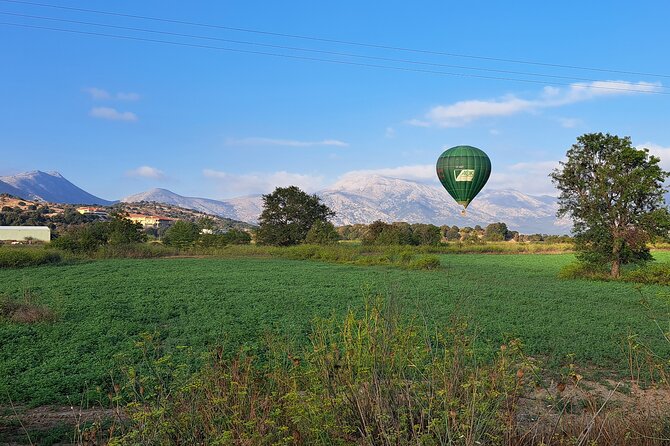
Food continues at Ano Kera, where you eat at a family tavern. The stop is about one hour, and admission is free.
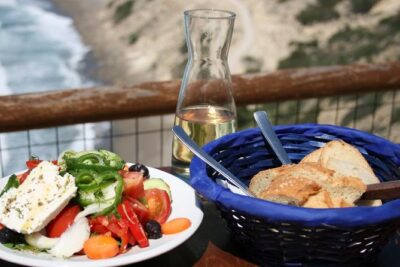
This is a meal stop, not a lecture. Expect Cretan dishes like moussaka, stuffed vegetables, Greek salad, saganaki, and stifado. It’s the kind of lineup that gives you a good cross-section of what people eat and cook at home.
Why I like this kind of stop: it removes the planning headache. You don’t have to figure out what to order or where. And because it’s built into the tour flow, you don’t lose time searching between viewpoints and towns.
Small consideration: you’ll likely be eating after several hours of sightseeing. If you’re sensitive to long days, eat slower and plan for a relaxed pace after lunch.
Krassi village and the Platanus tree: views plus a chance of seeing birds
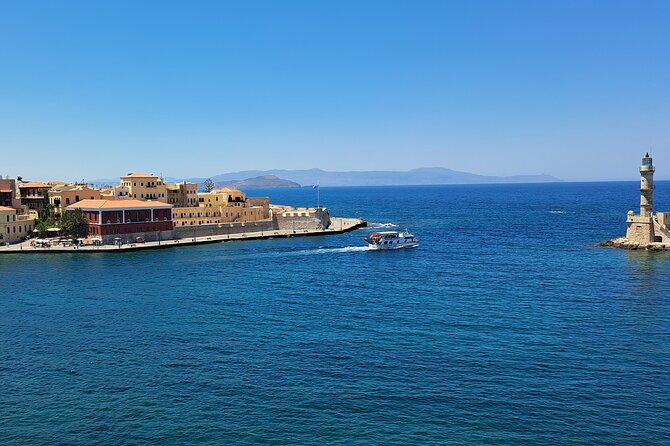
At Krassi, you get a scenic village moment (about 30 minutes, free). The tour highlights views and the monumental natural Platanus tree.
It also mentions a real possibility for spotting a bearded vulture (Gypaetus barbatus) if you’re lucky. You shouldn’t count on it, but knowing there’s potential for it is fun—especially for people who like wildlife.
This is a good stop for photos without turning into a long detour. It adds variety: you move from craft to food to scenery, all without feeling like you’re repeating the same type of experience.
Agia Pelagia Greek coffee: an easy start for day two
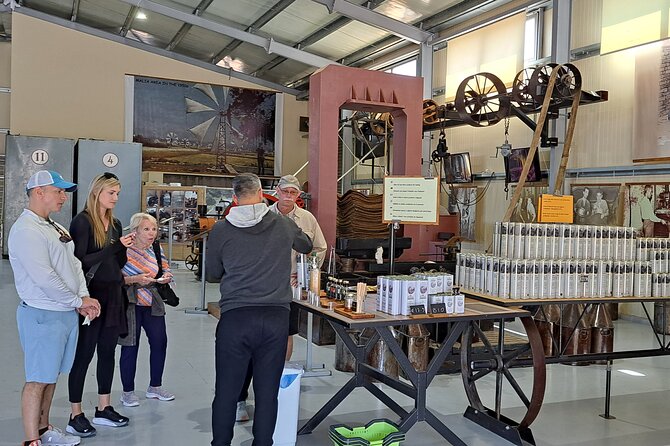
Day two begins with a classic Cretan routine: a Greek coffee stop at Agia Pelagia (about 30 minutes, free).
It’s short on purpose. You’ve already done Knossos and the plateau areas, so this coffee break helps you transition into the coastal towns. If you’re the type who likes to get your bearings before bigger walking blocks, this works.
Rethymnon: Venetian harbor vibes and a relaxing coastal walk
Next up is Rethymnon for about two hours. Admission is free.
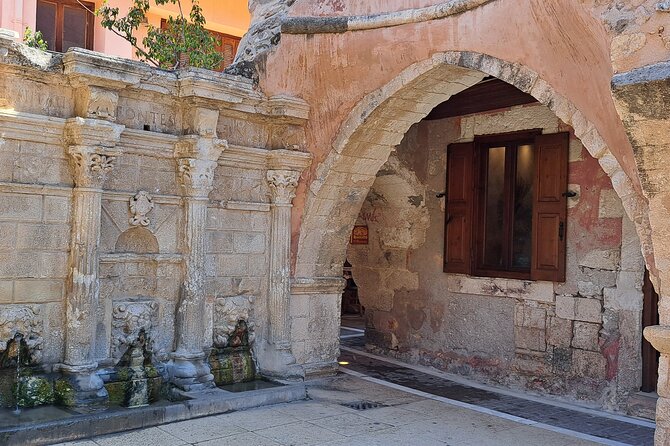
Rethymnon is described as a charming coastal town with Venetian architecture and a lively harbor lined with cafés and restaurants. The focus is on the walkable center around the harbor, where you can take in historic buildings and colored boats in a way that feels more like a stroll than a checklist.
This stop is valuable because it’s not just “pretty.” It’s a change in pace after inland driving. You’ll get the sea-air break, plus you’ll see how Crete’s history shows up in street shapes and building styles.
If you want a quiet window, aim to pause by the water rather than trying to cover every street at once.
Chania Town: four hours to roam the old streets
Then comes Chania Town for about four hours (free admission).
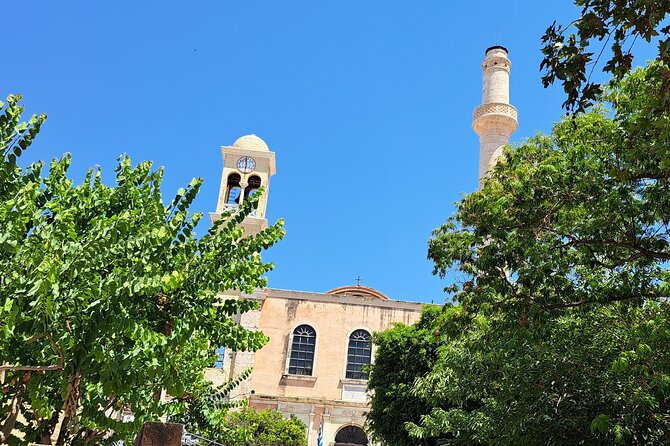
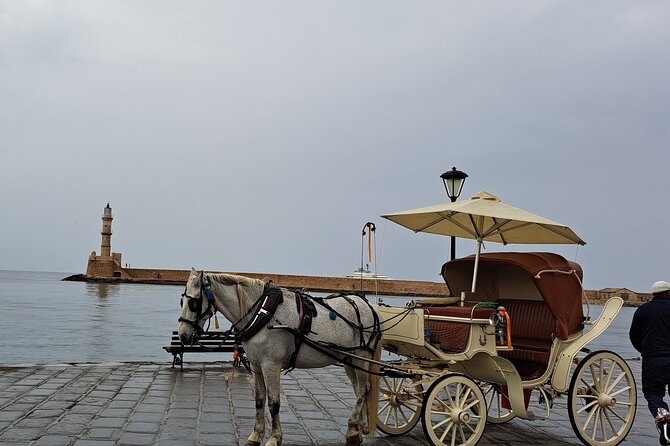
Chania is known for its old town and the mix of influences over time—Venetian, Ottoman, and Greek. With four hours, you’re not trapped in a rushed loop. You can wander, stop for a drink, and take your time with the harbor area and surrounding streets.
I like giving a town like this real time. Chania rewards wandering. If you only have a single hour, you end up sprinting from photo to photo. Here, you can slow down and make a few choices.
Fodele and the El Greco Museum: art history without the big-city feeling
The final stop is the El Greco Museum near Fodele, about one hour, with admission included.
Fodele is framed as a scenic escape from the busier towns, with orange groves and olive trees around the museum area. El Greco is the key story: he’s known for his Renaissance career, and this museum is tied to his birthplace on Crete.
The museum is in a traditional stone building thought to be close to where he was born in 1541. You’ll also see copies of his most famous works, plus insight into his journey from Cretan origins to his influential career in Spain.
This stop works well as a “brain break” at the end of a busy two days. It’s not another outdoor climb or another long walk. You can sit, read, and absorb.
Value check: what you get for $1,182.09 per group
At $1,182.09 per group (up to 7 people), the price makes sense best when you split it with others. If you fill all seven seats, the math comes out to roughly $170 per person. If you’re a smaller group, your per-person cost rises, so it’s worth weighing whether you’d otherwise buy separate tickets and pay for private transport.
Here’s what helps justify the cost:
- Pickup and drop-off from your Heraklion-area hotel/port/airport
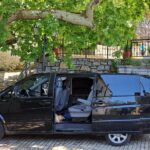
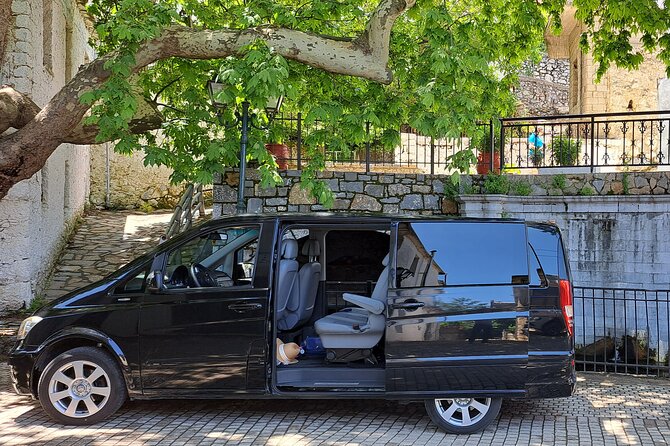
- Transportation in a Mercedes Benz van
- All fees and taxes, plus liability insurance
- Coffee, water, and refreshments
- A licensed tour guide at Knossos, plus an English-speaking driver guide
- Lunch (2)
Admission tickets are included for the big-name stops you’d usually pay for: Knossos, the Omalia Olive Press, and the El Greco Museum. Other segments (like windmills, pottery, coffee stops, and several village/town breaks) are listed as free.
That mix is the core value: you’re not just paying for movement; you’re paying for explanations and organized access where it counts.
One more planning note: this tour is typically booked about 12 days in advance, so if your dates are fixed, don’t wait too long.
Pacing and private comfort: small group, two long days
This is a private tour, meaning it’s only your group. That’s a big deal because you can adjust attention to the pace: spend a little longer at a café stop, ask questions at sites, or move more quickly when you just want the view.
Also, the itinerary is packed with short-but-meaningful stops: two-hour Knossos, one-hour olive press, a chain of plateau and village moments, then two coastal towns plus an art museum. It’s not a slow sightseeing day. It’s more like a smart “greatest hits” route with real food breaks sprinkled in.
If you hate sitting in vehicles for long stretches, this might feel like too much for two days. If you’re okay with being on the move, it’s a strong use of time.
Who should book this Crete highlights tour
This tour fits best if you want:
- A two-day Crete overview that actually includes context, not just roadside stops
- A food-focused day one with coffee, raki, a tavern meal, and olive oil/honey tasting
- Time in both coastal towns (Rethymnon and Chania), plus a focused art stop (El Greco)
- Private-group comfort with a driver-guide
It might not fit if:
- You’re staying outside the Heraklion pickup zone. The tour explicitly does not pick up from Chania, Ierapetra, or Sitia.
- You prefer deep, slow museum time over a broader route.
Should you book it or pass?
Book it if you’re trying to cover Crete efficiently while still getting hands-on culture: Knossos with real guidance, olive oil tasting with production context, plateau craft watching, and Cretan meals that are built into the schedule. The best part is the way the guide can turn a standard tour into something personal—especially when you’re with Spyros, whose village and home-style hospitality adds real texture.
Pass if your travel style is extremely slow and you only want one region in depth. This is a two-day sprint across multiple areas, even though the food and coffee stops help break it up.
If your dates are firm, I’d book soon—this one tends to sell ahead.
FAQ
How long is the Crete Highlights tour?
It runs for 2 days (approx.).
Is this tour private or shared?
It’s private, meaning only your group participates.
What’s the maximum group size?
The tour is priced for a group of up to 7 people.
Where does pickup happen?
Pickup and drop-off are available from the Heraklion area. The tour does not pick up from Chania, Ierapetra, or Sitia.
What language is the tour offered in?
The tour is offered in English, with a licensed Knossos guide and a local English-speaking driver guide.
What’s included in the price?
Included are pickup and drop-off, transportation in a Mercedes Benz van, liability insurance, all fees and taxes, coffee/water/refreshments, a licensed tour guide at Knossos, a local English-speaking driver guide, and lunch (2).
Which admission tickets are included?
Admission tickets are included for Knossos, Omalia Olive Press, and the El Greco Museum. Other listed stops have free admission.
Do I get a mobile ticket?
Yes, you get a mobile ticket.
What if the weather is bad, or I need to cancel?
The experience requires good weather. If it’s canceled due to poor weather, you’ll be offered a different date or a full refund. There’s also free cancellation up to 24 hours in advance for a full refund.