Heraklion has a delicious secret.
This walking experience is built for people who want the city as it actually feels: street stories, local rhythms, and plenty of tasting. I like the way the tour starts with the Venetian walls views and then uses food to explain how daily life and history overlap. I also really appreciate the olive oil, honey, and herbs focus, because it turns eating into something you can recognize and remember.
The best part is the guide-led pacing and conversation. You’ll hear context tied to each bite, and that makes Heraklion feel less like a list of sights and more like a place with routines. One thing to consider: this is a walking-heavy plan, so you should show up with comfortable shoes and a bit of stamina for the streets.
In This Review
- Key moments on this 4-hour Heraklion walk
- Starting at Evropis 7: how to begin without stress
- Venetian walls first: a view that puts the city in context
- The hidden urban forest stop: when you need a reset
- Neighborhood strolls, secret passages, and everyday meeting spots
- Greek coffee and local donuts: the sweet start that feels real
- 1866 Street Coffee Bar: spirits, shopping, and a market visit
- Olive oil tasting that teaches you what to look for
- Wine tasting and a light lunch with wine: where the walk becomes a meal
- The souvlaki finale: why the end stop is the point
- Price and value: is $115 a fair deal for four hours?
- Who should book this Heraklion local-food walk
- Should you book it?
- FAQ
- How long is the Heraklion Through Local Eyes walking tour?
- What is included in the price?
- Where do I meet the tour guide?
- Is the tour wheelchair accessible?
- What languages are available for the live guide?
- If I’m on a cruise ship, how do I find the meeting point?
Key moments on this 4-hour Heraklion walk
- Venetian walls panoramas that frame the city before you go off-route
- An urban forest pause that gives you a calm breath inside the city
- Greek coffee and local donuts taken the way locals do it
- Olive oil tasting with practical tips for spotting quality
- Wine tasting plus a light lunch with food-meets-neighborhood energy
- Souvlaki finale from a long-loved local spot
Starting at Evropis 7: how to begin without stress
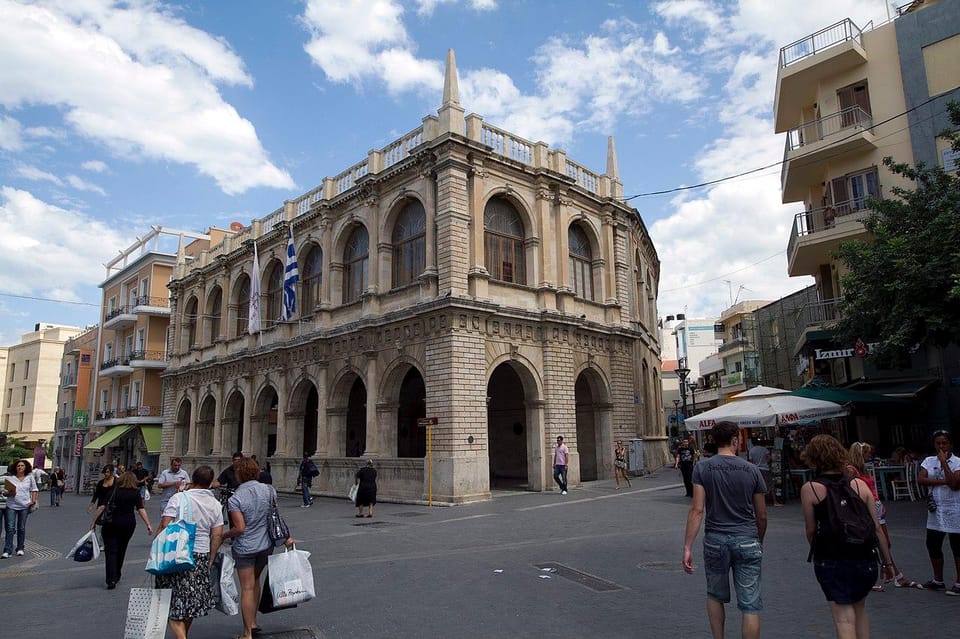
The tour meets at Evropis 7, at the Paas4Crete central office on the main street, near central Heraklion Parking and the IBIS Hotel. It’s an easy zone to find if you’re already walking around downtown, and it helps you start in the real center of things rather than at the edge of town.
If you’re arriving by cruise ship, the approach is simple: take the shuttle bus from the gate to passenger terminal number 5. Then you’ll walk along the coastline until you meet the guide in front of The Koules Fortress.
You can also read our reviews of more walking tours in Heraklion

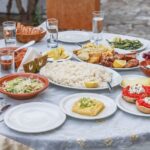
Venetian walls first: a view that puts the city in context
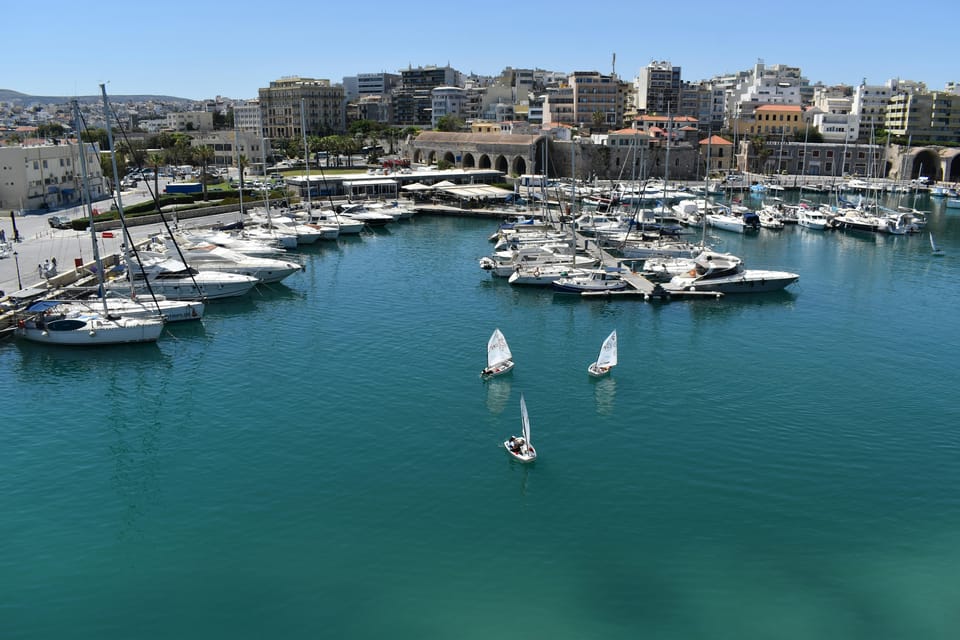
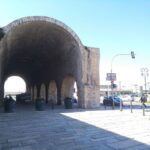
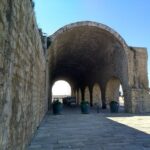
Most food tours jump straight to a counter and call it a day. This one starts with the Venetian walls and a proper look across Heraklion, with stories that connect past and present. That matters because it changes how you read the streets as you walk—suddenly you’re noticing why a neighborhood sits where it sits, and why certain corners feel like gathering places.
You’ll also get the kind of panoramic moments that make the rest of the walk feel more grounded. Before you taste anything, you get a visual map in your head, and that makes all the later stops easier to place.
The hidden urban forest stop: when you need a reset
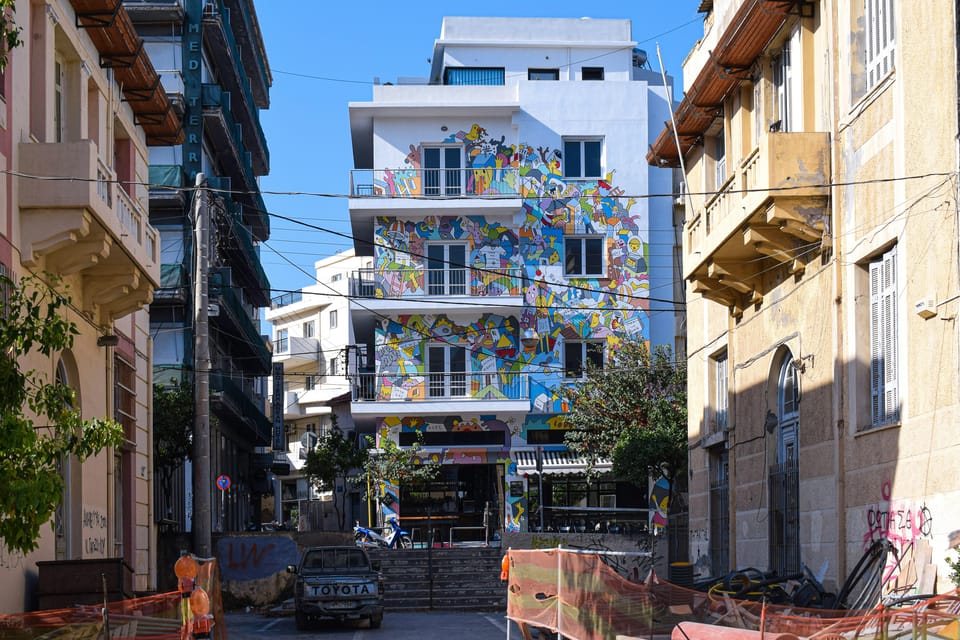
After the walls, you shift into a quieter mood with a hidden urban forest—a green corner many locals don’t even talk about to outsiders. I like this kind of break because it’s not just scenic. It changes your pace, and it helps you slow down before you’re back in the food part of the program.
Even if you think you know how walking tours work, this stop feels different. The city keeps moving around you, but inside that pocket of green you get to exhale, rehydrate, and mentally prepare for the tastings that follow.
Neighborhood strolls, secret passages, and everyday meeting spots
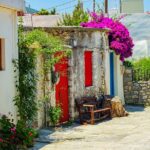
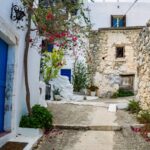
Once you’re back on the move, the tour focuses on what locals actually use: neighborhood routes, secret passages, and everyday meeting spots. This is where Heraklion stops being a museum-like experience and becomes a lived-in one.
You’ll get stories as you go, and the conversation helps you understand the layout of downtown beyond the obvious streets. If you like the feeling of getting your bearings fast, this section does that job well. It also makes the food tastings feel less random—each stop plugs into a local routine.
Greek coffee and local donuts: the sweet start that feels real
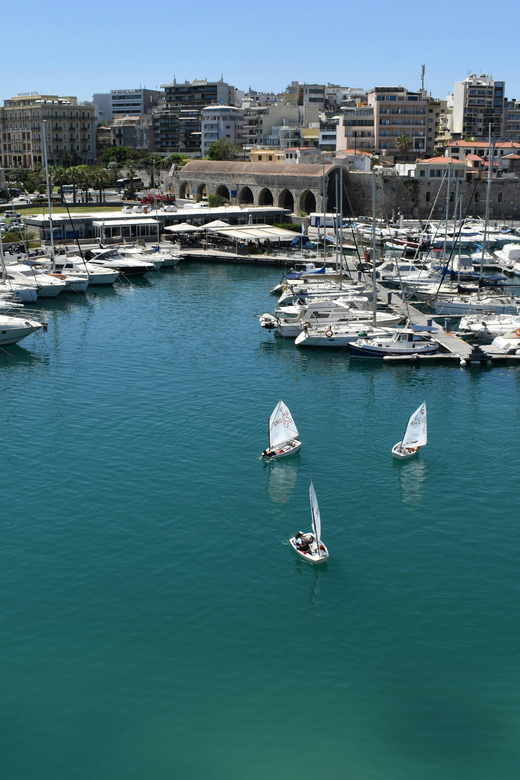
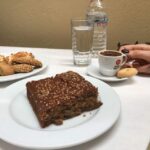
No matter how good the sights are, food tours win or lose on the first satisfying bite. Here, you stop at a local café for Greek coffee and freshly made local donuts. This is the kind of snack break that feels like it belongs in morning or afternoon life, not like a performance for visitors.
Greek coffee is a great choice for an early stop because it’s not just caffeine. It’s a cultural signal—slow, small moments, and a pause that doesn’t require a table reservation. The donuts add comfort and sugar balance, so you’re not rushing into heavier tastings right away.




1866 Street Coffee Bar: spirits, shopping, and a market visit
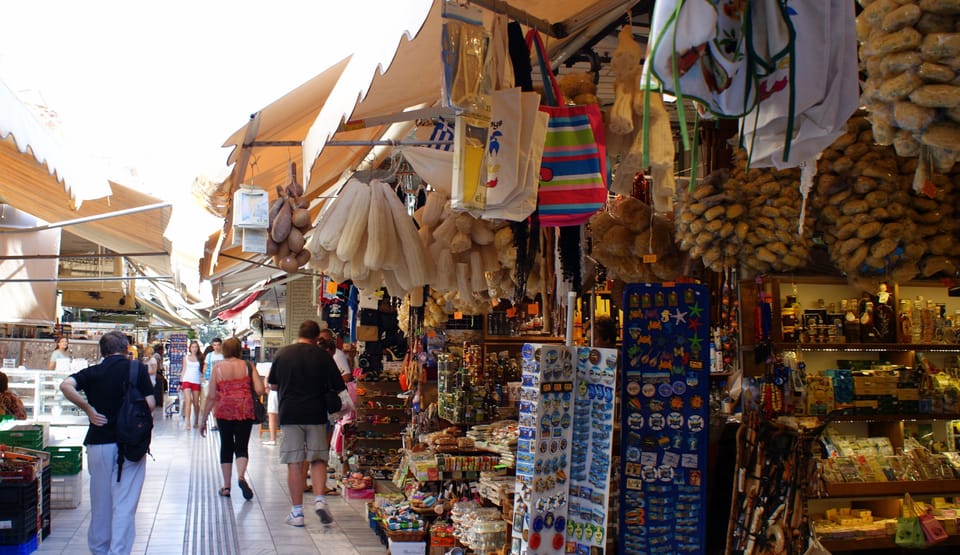
Next comes the 1866 Street Coffee Bar area, where the tour adds variety without getting chaotic. You’ll have stops that include spirits, shopping, walking, and food tasting, plus a food market visit.
This part is valuable because it lets you see how people source and buy the flavors you’ve been hearing about. You’re not stuck watching from the sidewalk—you get a practical sense of where things come from and what shops actually look like in daily use.
One small consideration: shopping is usually most fun when you go in knowing you’ll buy only a few things. Keep your hands free if you want to browse, and decide in advance whether you’re looking for gifts, cooking staples, or just tastes.
Olive oil tasting that teaches you what to look for
This tour’s tastings aren’t only about sampling. The honey, olive oil, and herbs component is built to help you recognize quality, especially with Cretan olive oil at the center of Mediterranean life.
You’ll taste olive oil and learn how to identify higher-quality characteristics—enough guidance that you can leave with more than a vague impression. That’s the kind of skill that makes food travel stick. Later, when you’re shopping at home or in another Greek island, you’ll have a comparison mindset.
I also like the way herbs and honey show up as more than toppings. They feel like part of an overall flavor language—sweetness, earthiness, and aroma working together instead of just one stand-out taste.
Wine tasting and a light lunch with wine: where the walk becomes a meal
After the oil and sweetness, you move toward a more meal-shaped section with wine tasting and then lunch. The included lunch is a light meal with wine, and it tends to feel like assorted mezzedes-style bites rather than one heavy plate.
That format fits the walking flow. You get to try more than one thing, but you don’t end up too full to keep enjoying the city. If you’ve ever had a walking tour derail into a sleepy food coma, this one avoids that trap with portion logic.
If you don’t drink wine, you’ll still get the structure of the lunch stop. But you might want to pace yourself and sip lightly so the rest of the walk feels comfortable.
The souvlaki finale: why the end stop is the point
The program closes with something many people think of as simple, but locals treat like a ritual: souvlaki from a place loved by locals for generations. This is the last big payoff because it’s the most universally satisfying end-of-walk food.
It also acts like a summary in edible form. Up to this point, you’ve tasted sweet, aromatic flavors, then moved through oil, coffee, and lunch rhythm. The souvlaki brings it all back to classic comfort and local preference—no fancy tricks, just good preparation and a setting that feels right.
Price and value: is $115 a fair deal for four hours?
At $115 per person for about 4 hours, the pricing makes sense if you care about three things: (1) a guided explanation, (2) multiple tasting stops, and (3) a structured walking route. This isn’t a single meal experience. It’s a chain of tastings—coffee and pastries, honey and olive oil, wine tasting, and a light lunch—plus the guided context that connects them.
Food and drink in Heraklion add up quickly, especially once you include tastings across several spots. What you’re paying for here is the convenience of not having to plan every stop yourself, plus a guide who can connect the dots so each flavor has a reason.
Transportation is not included, so you’ll want to be prepared to walk from the meeting point. If you’re already staying in or near central Heraklion, that’s usually easy.
Who should book this Heraklion local-food walk
This tour is a strong match if you want:
- A first-day in Heraklion reset that helps you understand the city’s layout fast
- A food experience that includes explanation, not just eating
- A relaxed pace with enough stops to taste, talk, and walk without sprinting
It’s also a good choice for people who like conversation. Guides on this experience tend to adapt to your tastes, so you’re not locked into a rigid script.
I’d skip it if you want minimal walking or if you’re only interested in major landmarks. This is about neighborhoods, food culture, and local rhythm more than a checklist of big-ticket sites.
Should you book it?
Yes—if you’re the type of traveler who likes to start with the city as locals experience it, not just as photos show it. The combination of Venetian walls views, a calm urban forest pause, and a sequence of tastings (coffee, olive oil, honey and herbs, wine, lunch, and souvlaki) makes the $115 feel like paying for a guided route plus a guided palate.
If you’re unsure, use this rule: if you can handle a walking tour and you genuinely want to taste your way through Heraklion, this one is worth booking.
FAQ
How long is the Heraklion Through Local Eyes walking tour?
It lasts about 4 hours.
What is included in the price?
The tour includes local delicacies, local pastries and coffee, honey and olive oil tasting, and a light lunch with wine. Transportation is not included.
Where do I meet the tour guide?
The meeting point is Paas4Crete, the central office on Evropis 7, close to central Heraklion Parking and the IBIS Hotel.
Is the tour wheelchair accessible?
Yes, the tour is listed as wheelchair accessible.
What languages are available for the live guide?
The live guide offers English and Dutch.
If I’m on a cruise ship, how do I find the meeting point?
You take the shuttle bus at the gate to passenger terminal number 5, then walk along the coastline until you meet in front of The Koules Fortress.