Food routes in Crete make sense here.
This East Chania tour takes you beyond the main tourist strips, into Apokoronas province villages where you taste Cretan products and learn how they’re made. Starting with olive oil and ending with a village lunch, it’s built as a day of hands-on food understanding, not just eating.
I especially love the focus on extra virgin olive oil production and tasting, from harvesting to flavor. I also like the cheese stop: you’ll sample Graviera, Anthotiros, and Mizithra with local honey and rusk, then eat your way through the next villages toward Fres.
One possible drawback: some tasting portions can feel small at certain stops (the bakery has limited samples), and at a couple of locations English may be hard to follow due to strong accents.
In This Review
- Key takeaways before you go
- A 6-Hour Food Circuit Through East Chania Villages
- Starting at an Olive Mill: Extra Virgin Olive Oil, Plain and Practical
- Tsikoudia (Raki) at a Village Distillery: From Tradition to Technique
- Embrosneros Bread and Cookies, Then Cheese Factory Magic
- Fres Village: Kafeneio Coffee Time and a Traditional Lunch
- Price and Value: What $135 Really Covers
- Guide Quality and Language Notes (Maria, Yannis, Andres)
- Logistics That Matter: Pick-Up Time and Being Ready
- What You Should Do Before Booking
- Who This Tour Fits Best
- Should You Book This Food Tour of Chania Villages?
- FAQ
- How long is the tour?
- How much does it cost?
- What’s included in the price?
- What isn’t included?
- What will I taste during the tour?
- Which stops are part of the route?
- Is the guide available in English?
- Where are pick-up points, and how does timing work?
- Can I cancel for a full refund?
Key takeaways before you go
- Extra virgin olive oil tasting with production context
- Raki/tsikoudia explained through both traditional and professional distilling
- Three-cheese experience (Graviera, Anthotiros, Mizithra) plus honey and rusk
- Village-time meals in Fres at a coffee shop and then lunch at a traditional tavern
- Hotel pick-up in the Chania region and air-conditioned transport
- Guide quality varies by stop, but strong English is a common highlight (Maria, Andres, Yannis)
A 6-Hour Food Circuit Through East Chania Villages
This is a six-hour food tour based on one simple idea: if you want to understand Cretan flavors, you have to see the people and processes behind them. You’ll move through inland areas of Chania and spend time in villages of Apokoronas, including the White Mountains foothills region.
The pace feels built for comfort: you’re in a minibus/minivan, you get stops that explain production, and you finish with a traditional lunch. You won’t be rushing from photo spot to photo spot, and that makes it a good fit when you want your day to feel restful.
If your goal is to taste things you’ll actually buy later—olive oil, raki, cheese—this kind of structured route helps. You’ll learn what to look for, what questions to ask, and how flavors connect to the way the product is made.
You can also read our reviews of more food & drink experiences in Chania
Starting at an Olive Mill: Extra Virgin Olive Oil, Plain and Practical

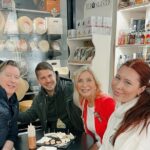
The day begins at a local olive mill, and that’s the right place to start because olive oil is the backbone of so much Cretan cooking. You’ll see how harvesting and processing lead to the final product, and you’ll get explanations tied to quality—especially extra virgin.
What makes this stop valuable is how it frames flavor. Instead of only sampling oil, you’ll connect taste to production steps and the craft behind it. It’s the kind of experience that helps you understand why some oils taste peppery or grassy and others feel milder.
This is also where I’d expect you to get the most out of bringing questions. If you’re shopping later, you’ll be better prepared to ask what makes one oil different from another, and what to expect when you pour it on bread.
Tsikoudia (Raki) at a Village Distillery: From Tradition to Technique
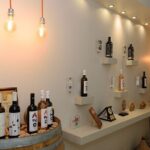
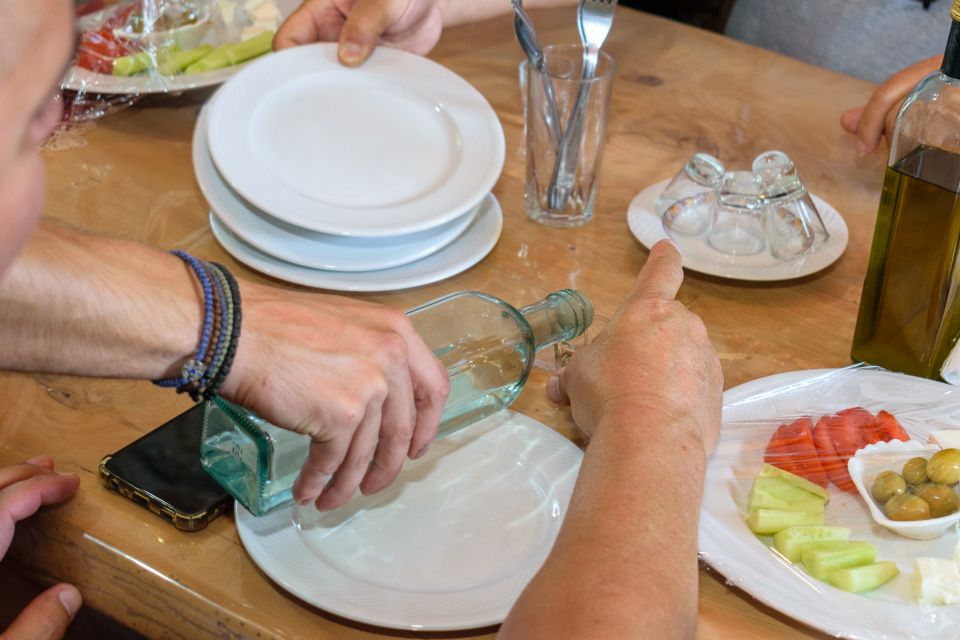
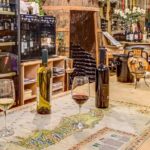
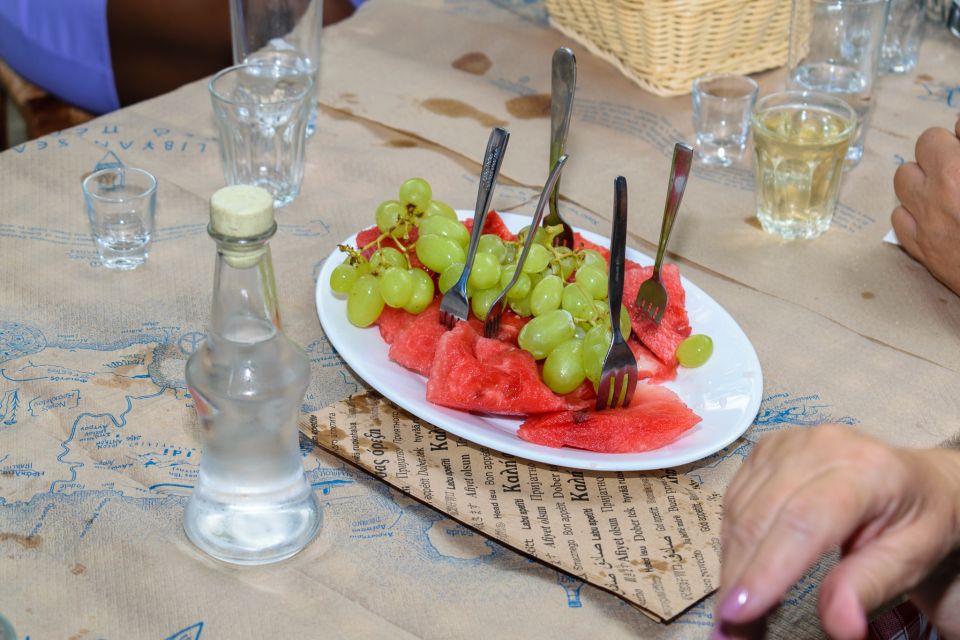
After the olive mill, you move on to a village distillery to learn about tsikoudia/raki, the well-known Cretan spirit. The tour includes time with both a time-honored conventional distillery and a more contemporary professional setup, so you can compare approaches.
Then comes the tasting session, which turns theory into something you can recognize. You’ll get a better feel for what people mean when they say one distillery’s spirit is smoother or more expressive—because you’re tasting in the place where it’s made.
If you’re not a big alcohol drinker, you can still enjoy this stop for the craft and the process. Even the non-drinkers usually enjoy learning how fermentation and distillation translate into taste.
Embrosneros Bread and Cookies, Then Cheese Factory Magic
One of the most satisfying sequences on this route happens in the village of Embrosneros. You’ll start with a bakery stop to taste local bread and biscuits/cookies, then you’ll continue to a traditional cheese factory.
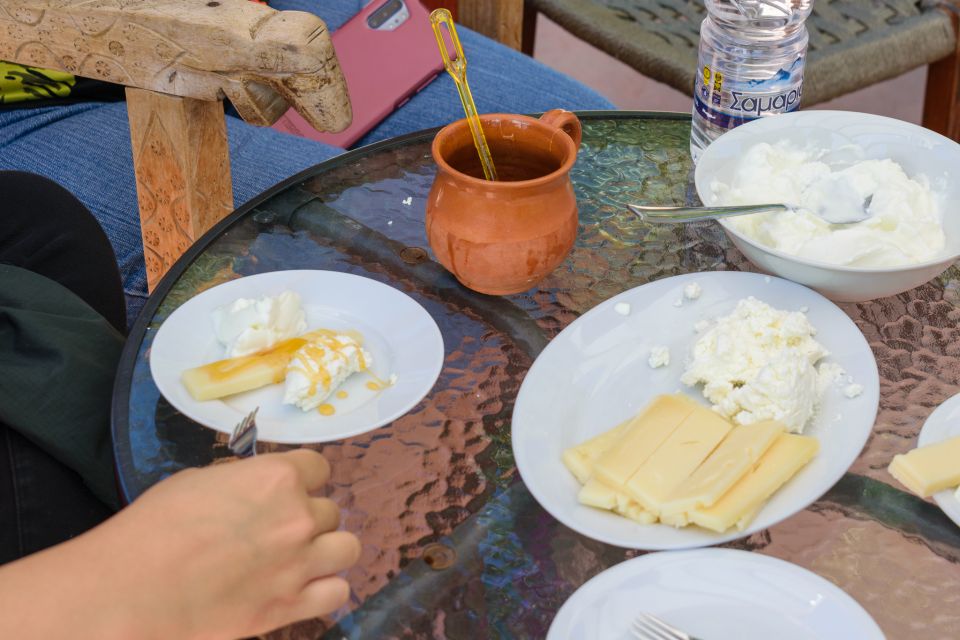
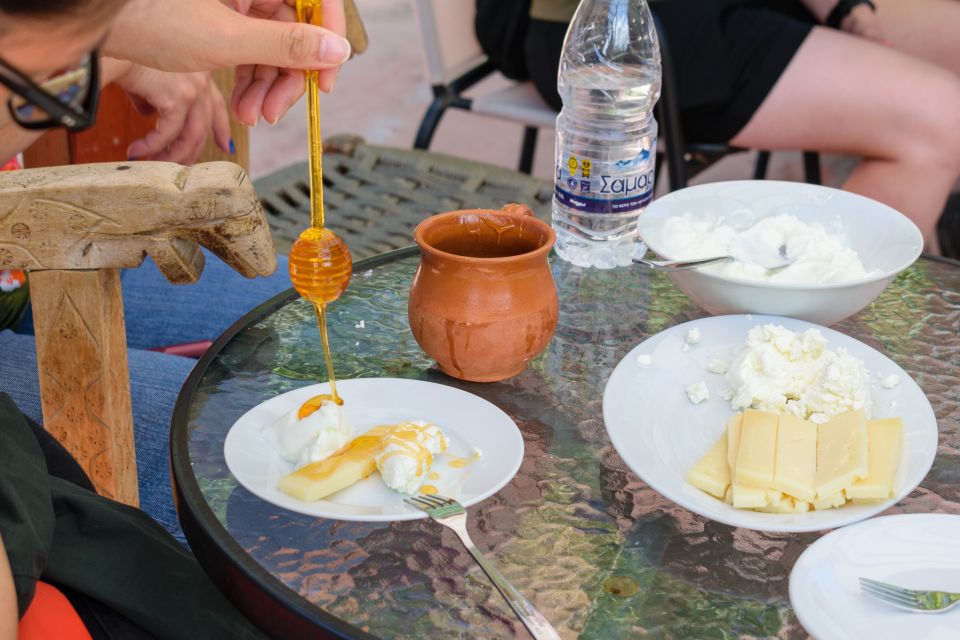
The cheese factory portion is a clear highlight. You’ll learn the production secrets of Graviera, Anthotiros, and Mizithra, and you’ll see the process in front of you. Then you’ll taste the cheeses paired with local honey and rusk (a dry bread). That pairing matters, because it shows how Cretans balance dairy richness with sweetness and crunch.
There is one practical note to keep in mind: the bakery tasting can be light. One review mentioned just a single chocolate cookie sample, so set expectations for small tastes rather than a full bakery spread.
Fres Village: Kafeneio Coffee Time and a Traditional Lunch
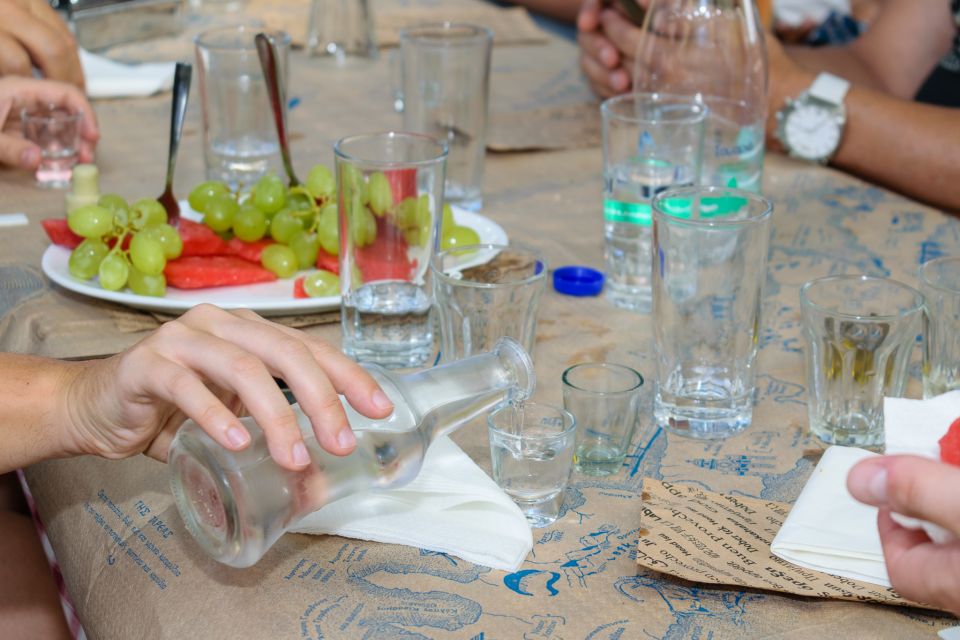
Your last major leg brings you to the charming square of the village of Fres. Before lunch, you’ll stop at a local coffee shop, called a kafeneio, where locals also enjoy meals.
That’s not just a break. It’s a chance to see how food and conversation work in everyday Cretan life. You’re not only learning in workshops—you’re also watching how people slow down, share, and order simple comfort.
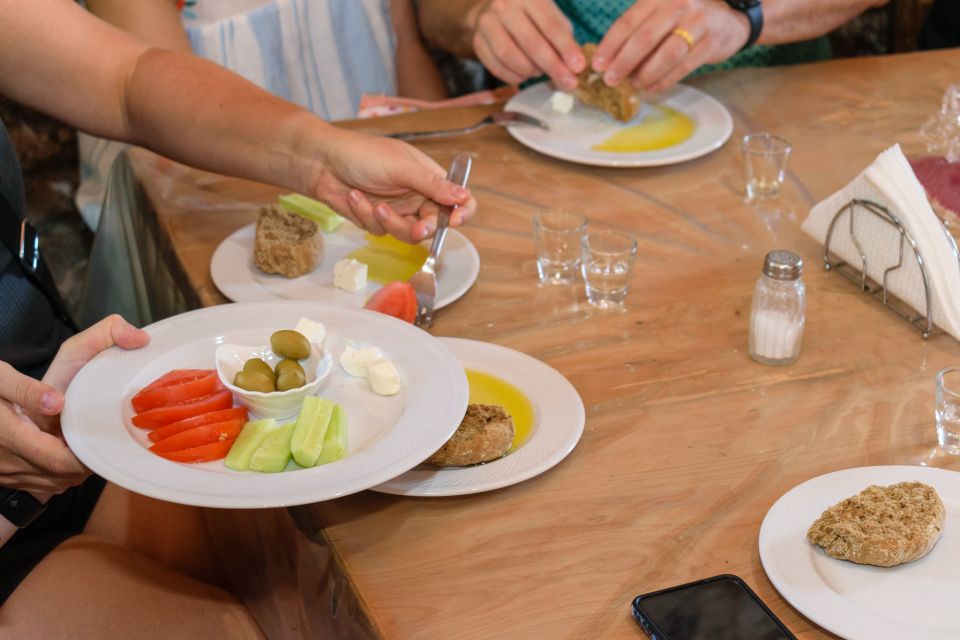
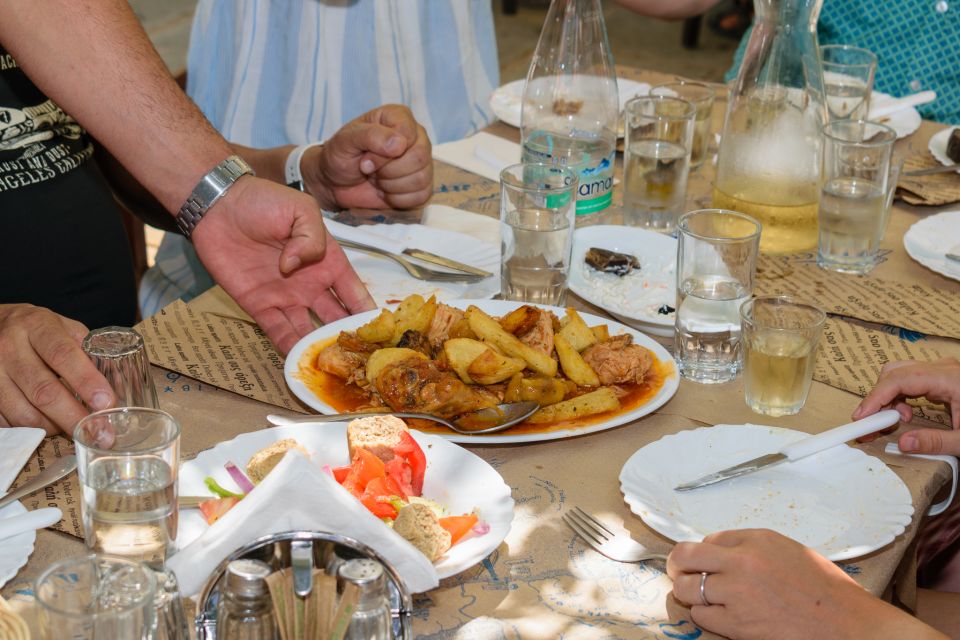
Lunch is traditional Cretan cuisine served in a nearby setting in the village. Based on feedback from the day’s flow, the meal is a satisfying finish—enough food to feel satisfied, and traditional enough to make the earlier tasting stops feel connected.
You can also read our reviews of more tours and experiences in Chania


Price and Value: What $135 Really Covers
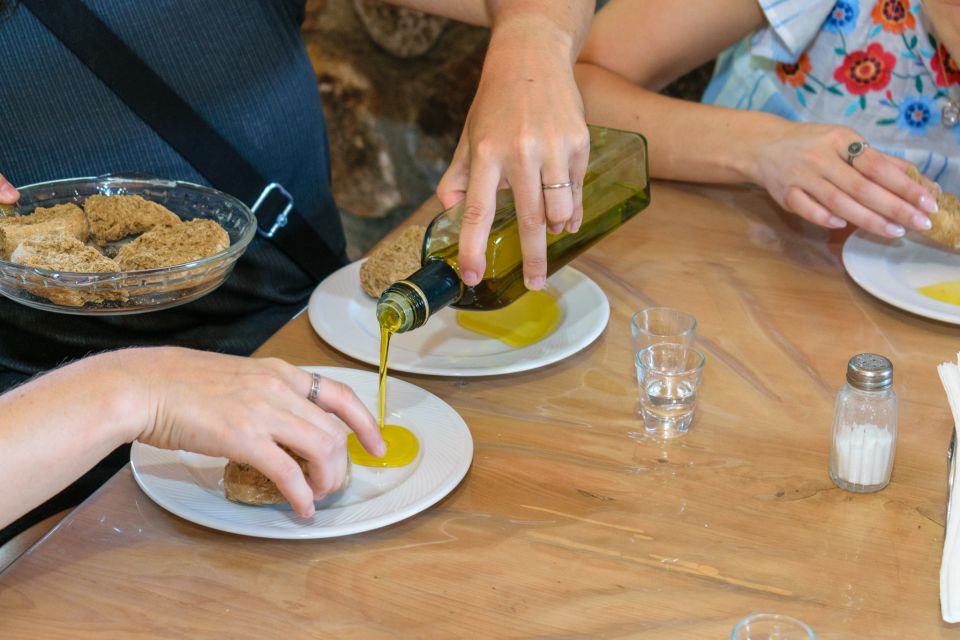
At $135 per person for a six-hour tour, the value comes from what’s included and how the time is structured. You’re paying for transport by air-conditioned minibus/minivan, hotel pick-up and drop-off in the Chania region, water, and all tours and tastings.
You also get a traditional lunch, plus an English-speaking local driver/escort who stays with you through the day. This matters because small producer visits can be hard to organize on your own, and the tasting portion is the point—not an afterthought.
What’s not included is additional food and drinks. So if you love to linger or you want extra beverages beyond what’s served as part of the tastings and lunch, plan to pay more on the spot.
If you’re the kind of person who enjoys understanding where things come from—oil, spirit, cheese—this price feels more reasonable than a generic sightseeing tour. You’re buying a day of guided tasting and context.
Guide Quality and Language Notes (Maria, Yannis, Andres)
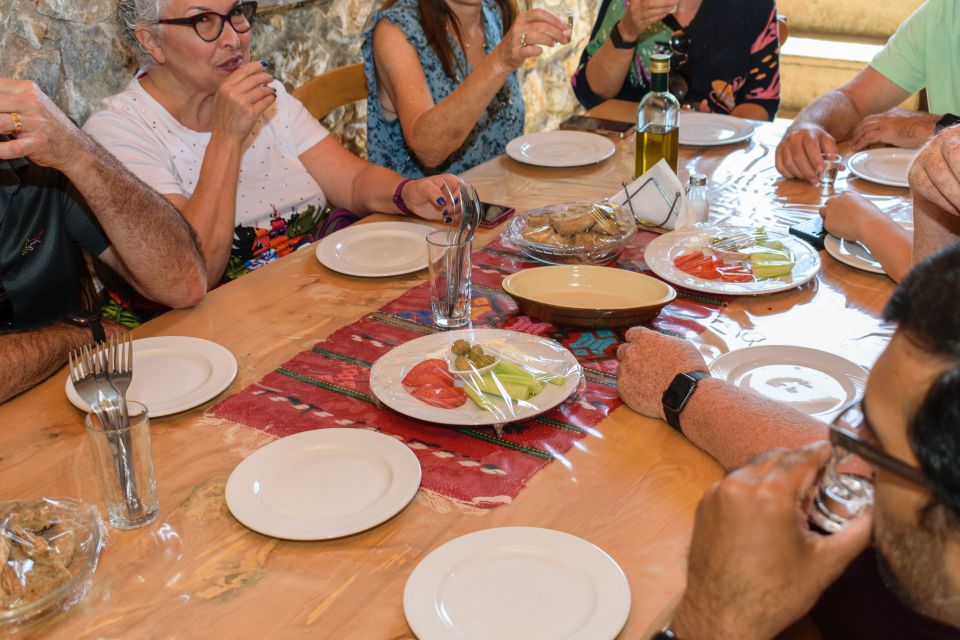
Guide quality is often the difference between a fun food walk and a memorable food education. In feedback you can see a pattern: Maria was described as attentive and made the day interesting, and guides like Andres and Yannis were also praised for being friendly and for helping the tour feel lively.
Still, language can be uneven at the producer level. Even when your guide is fluent in English, some shopkeepers or producers may speak with heavy accents, which can make details harder to catch in the moment. If this worries you, the best move is simple: ask your guide to translate the key points you want to remember—especially around production steps and how to recognize good product.
Logistics That Matter: Pick-Up Time and Being Ready
Pickup is included, but it’s not a vague, flexible window. You’ll need to wait outside the meeting point about 10 minutes before your scheduled pickup time, and the driver will wait no longer than 5 minutes after that scheduled time.
This is one of those details that can quietly make or break the day. If you’re mixing this with beach time or late breakfast, build in buffer so you’re not sprinting to the door when the minibus arrives.
The tour operates from pick-up points within the Chania region, so if you’re staying outside that area, you’d need to contact the provider to confirm options.
What You Should Do Before Booking
This tour works best if you go in hungry for learning, not only hungry for food. If you’re planning to buy gifts or pantry staples, you’ll be happier if you come ready to taste and compare.
A few practical ideas:
- Keep expectations aligned with tasting sizes: you’ll taste many things, but not everything will be a big sample.
- Dress for changeable conditions. One day ran even with rain, and the route still kept moving through stops.
- Ask about what makes each product different. The olive oil, cheese pairings, and raki tasting all connect back to production choices.
Who This Tour Fits Best
You’ll probably love this if you:
- enjoy food education tied to real producers,
- want olive oil and cheese context before you shop,
- like village atmosphere more than cruise-ship crowds,
- prefer a day with structured stops and a clear finish at lunch.
If you’re only looking for sweeping scenery and you’re not interested in olive oil, raki, and cheese, you might find the day more focused than you’d like. This tour is built for people who want to understand Cretan staples.
Should You Book This Food Tour of Chania Villages?
I’d book it if you want a meaningful food day in East Chania that goes beyond tasting. The biggest strengths are the olive mill start, the distillery learning and raki tasting, and the three-cheese factory experience with honey and rusk, capped by a traditional village lunch.
I’d be a little cautious if you’re the type who expects huge samples at every stop, or if you already did a very similar multi-village food route—because there can be overlap in the general style of stops. And if you’re sensitive to accents, know that the guide can help, but not every producer will explain in perfectly clear English.
Overall, this is strong value for a guided day built around craft, tastings, and village meals. If you’re in Chania for more than a couple days, this is the kind of experience that gives you flavors you’ll actually remember when you’re back home.
FAQ
How long is the tour?
The tour lasts 6 hours.
How much does it cost?
The price is $135 per person.
What’s included in the price?
It includes hotel pick-up and drop-off, an English-speaking local driver/escort, all tours and tastings, transport in an air-conditioned minibus/minivan, bottled water per person, and traditional Cretan lunch (plus taxes and fees).
What isn’t included?
The tour doesn’t include additional food and drinks beyond what’s part of the tastings and included meal.
What will I taste during the tour?
You can expect tastings of Cretan olive oil (extra virgin), tsikoudia/raki, and cheeses including Graviera, Anthotiros, and Mizithra, with honey and rusk. There’s also a bakery stop with bread and biscuits/cookies, plus a traditional lunch in Fres.
Which stops are part of the route?
The tour includes visits to an olive mill, a distillery for raki/tsikoudia, a bakery in Embrosneros, a traditional cheese factory in Embrosneros, and a kafeneio plus lunch in the village of Fres.
Is the guide available in English?
Yes. The tour provides an English-speaking local driver/escort.
Where are pick-up points, and how does timing work?
Pick-up points are within the Chania region. You should wait outside about 10 minutes before your scheduled pickup time, and the driver waits no longer than 5 minutes after the scheduled time.
Can I cancel for a full refund?
Yes. You can cancel up to 24 hours in advance for a full refund.