Samaria Gorge can make you forget you have a bus ticket. This full-day guided hike from Chania takes you through Europe’s longest gorge, with wild nature, springs, and the famous “Iron Gates,” then gives you payoff time to swim and unwind in Agia Roumeli.
What I love most is the mix of big scenery (those near-300-meter cliffs) and real, usable adventure—like getting your legs moving and then cooling off in the Libyan Sea.
The second reason I like this tour is the human factor: a live English guide plus a hiking escort, and a focus on keeping you on track and safe. If you’re lucky enough to get Ingrid or Nikos as your guide, the day tends to feel calm even when the walk gets tough. One possible drawback: the hike is demanding, mostly on stone, and footwear rules can be strict—so don’t treat hiking shoes as optional.
In This Review
- Key things to know before you go
- Samaria Gorge: why this hike feels so different
- Chania pickup and the coach ride to Omalos
- Arriving at the entrance: staircase start and first decisions
- The main event: a 16 km hike through cliffs, forests, and springs
- Wildlife moment: spotting the Kri-Kri in the real world
- Footwear reality check: when shoes matter more than comfort
- Midday recovery: Agia Roumeli lunch, free time, and the sea swim
- Ferry to Sougia, then coach back to Chania
- Price and value: what $32 actually buys you
- Group feel and guide quality: what stands out in real experiences
- What to bring (and what to skip)
- Who should book this Samaria Gorge hike (and who shouldn’t)
- My final take: should you book this tour?
- FAQ
- How long is the Samaria Gorge guided hike tour from Chania?
- How far do you hike in Samaria Gorge?
- What costs are included in the price?
- Are the Samaria Gorge entrance fee and ferry ticket included?
- Is there time to swim at Agia Roumeli?
- What kind of guide support do you get?
- What should I bring for the hike?
- Is the tour suitable for everyone?
- How does the pickup work?
Key things to know before you go
- Europe’s longest gorge: plan for real effort, not a casual stroll.
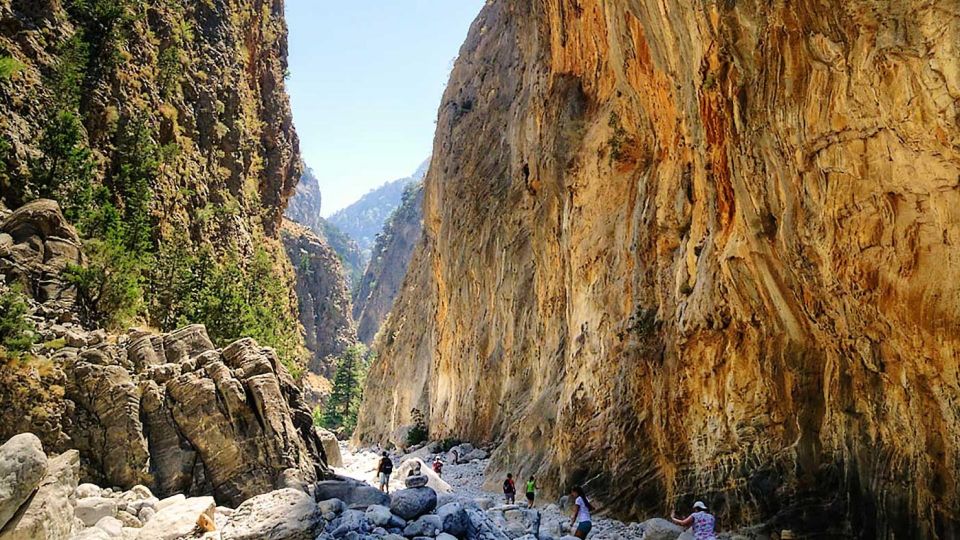
- Iron Gates timing: expect one of the day’s most dramatic narrow sections partway through the walk.
- Agia Roumeli swim time: you get a real break by the sea, not just a photo stop.
- Extra costs you must plan for: entrance and ferry/boat ticket are not included.
- Water and toilets are basic: you’ll find water filling spots, but toilets can be rough.
- Footwear can make or break the day: bring proper hiking shoes/gear to avoid surprises.
Samaria Gorge: why this hike feels so different
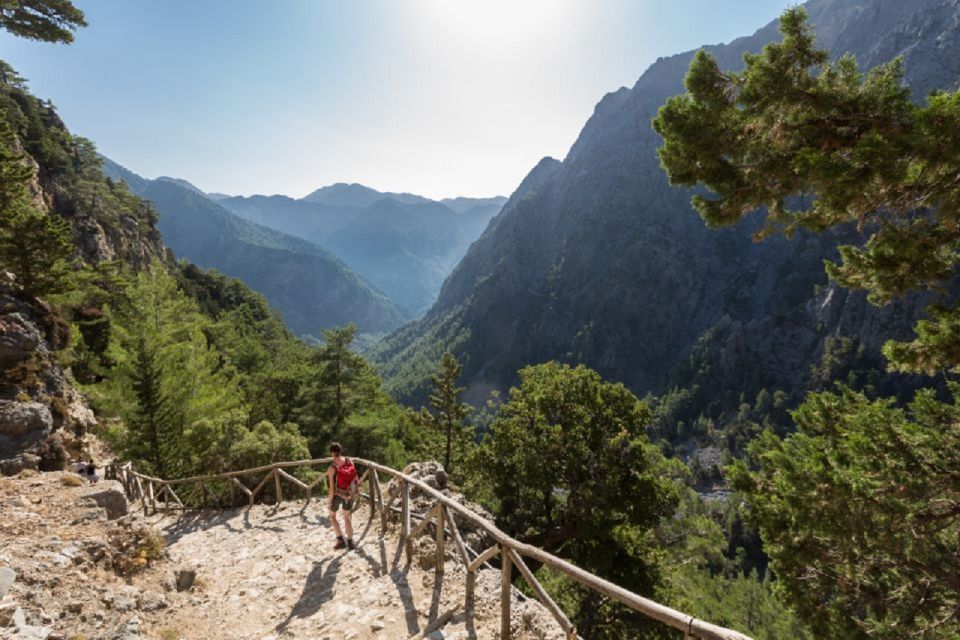
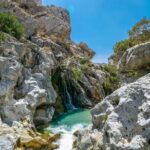
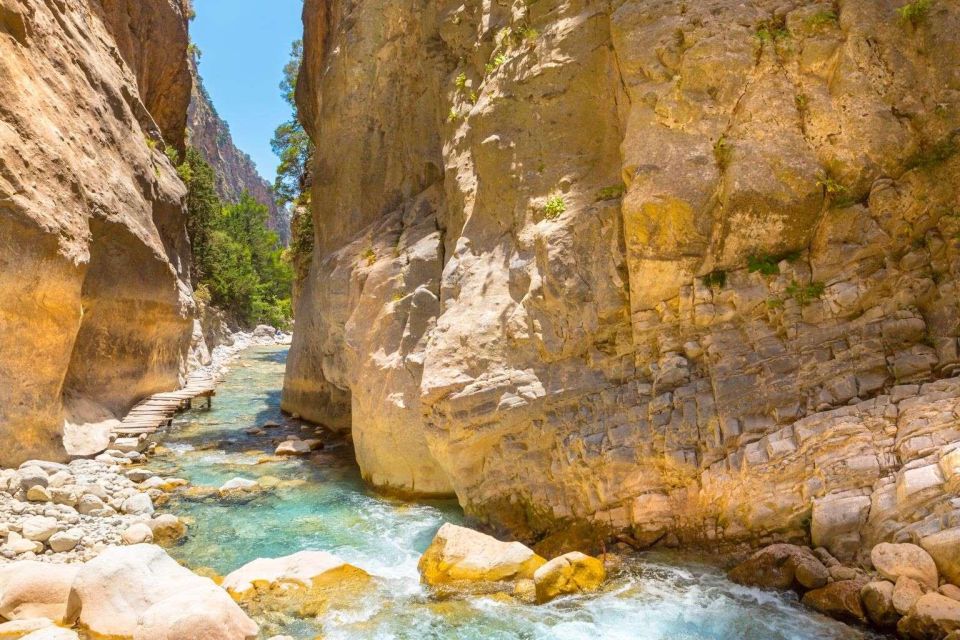
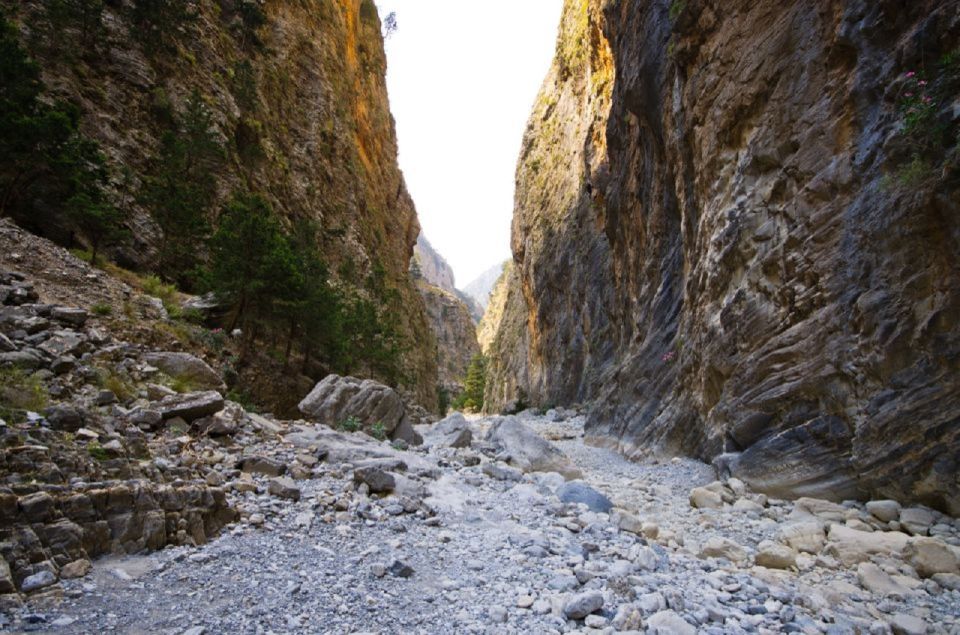
Samaria isn’t just a “pretty canyon.” It’s a full-on hiking route through deep terrain where you’re constantly moving: downhill, uphill, around bends, under stone walls, and through narrow sections where the cliffs feel close enough to touch. The trail runs through ancient forest areas and rugged rock formations, and it’s famous for the iconic “Iron Gates,” where the gorge narrows dramatically and the rock rises nearly 300 meters high.
What makes it especially satisfying is that the day doesn’t end the moment you finish the gorge. You walk out toward the seaside village of Agia Roumeli, and then the tour gives you time to sit, eat, and cool down with a swim in the Libyan Sea. It’s that built-in rhythm—effort, awe, then recovery—that turns the hike into a full experience rather than a one-note grind.
You can also read our reviews of more guided tours in Crete
Chania pickup and the coach ride to Omalos
Your day starts with pickup from one of many points around Chania (Agia Marina, Platanias, Stalos, Gerani, Maleme, Kolymvari, and more). You’ll get the pickup details in a voucher by email about one day before your tour, and pickup is from your hotel or close to it. A 1.5-hour coach ride follows, heading toward the White Mountains area and the Omalos plateau.
This matters because Samaria has a schedule that doesn’t really allow for late starts. A shared bus pickup keeps things organized, and the bus is described as an air-conditioned luxury coach—useful if you’re going in warmer months or if you catch an early start before the heat builds.
On the drive, it helps to think of the bus time as your warm-up for how the day will work: where to stand for tickets, what to have ready, and what to expect during the hike. Multiple guide experiences point to this being handled with care, including English explanations that help everyone understand the plan.
Arriving at the entrance: staircase start and first decisions
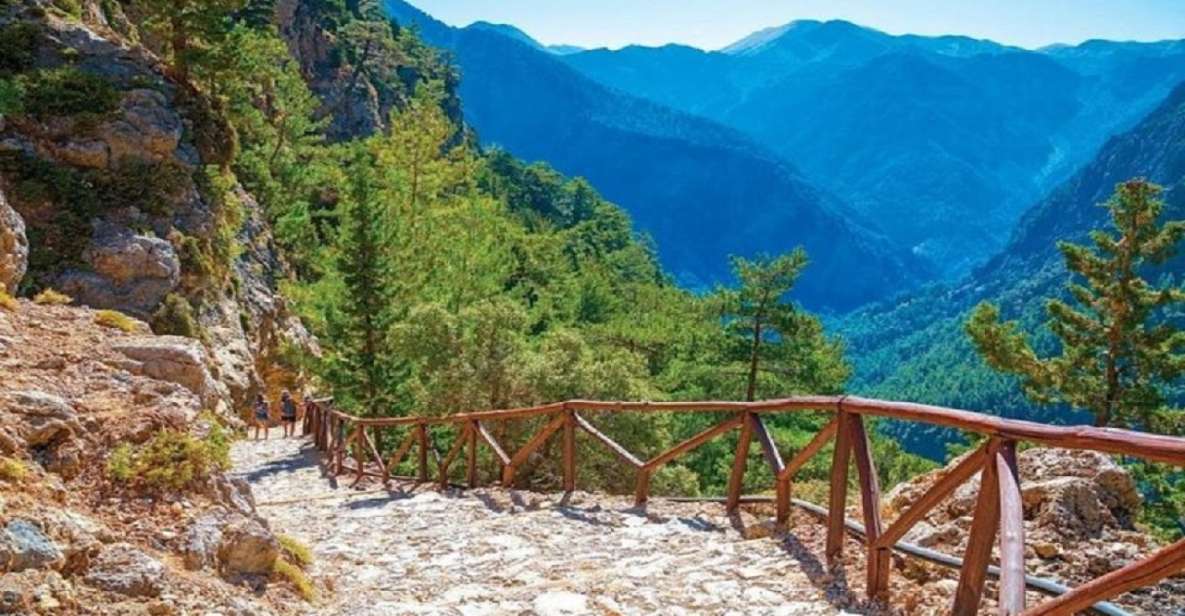
Once you reach Omalos, there’s a break plus a photo stop, and you’ll make your way to the famous wooden staircase marking the entrance of the gorge. At this point, you have two realistic options: start immediately, or grab breakfast first at a nearby traditional taverna.
I like having the breakfast option because you can tailor it to your hunger level. But keep your expectations practical: reviews note that breakfast can be expensive, so if you’re price-conscious, consider bringing a snack and treating the taverna meal as a convenience rather than your only food plan.
The main event: a 16 km hike through cliffs, forests, and springs
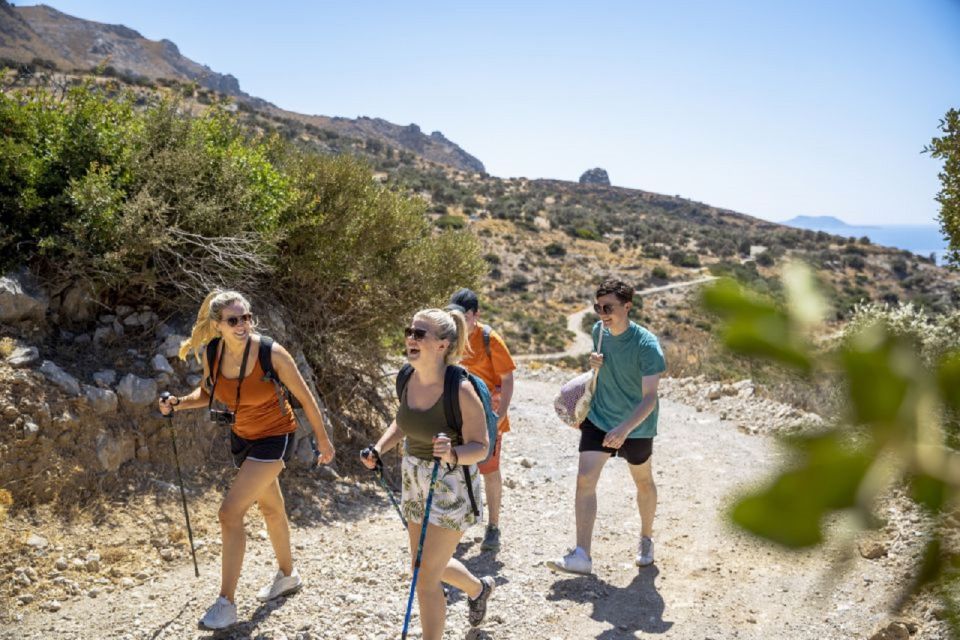
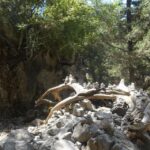
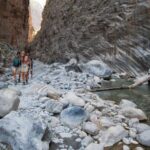
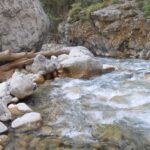
The heart of the day is a guided walk of about 16 kilometers through the gorge. This is where you’ll feel the “Europe’s longest gorge” reputation in your legs. The route is described as moving through mountain terrain, ancient forest areas, and rugged rock formations, so it’s not one long easy descent. Expect mixed footing, and expect you’ll be focusing on your steps more than you would on a smoother trail.
A big reason people come is the scenery that keeps changing:
- You’ll pass areas with rare Cretan flora and aromatic herbs.
- You’ll move through narrow sections and dramatic rock formations.
- You’ll reach the gorge’s most iconic moment: the Iron Gates.
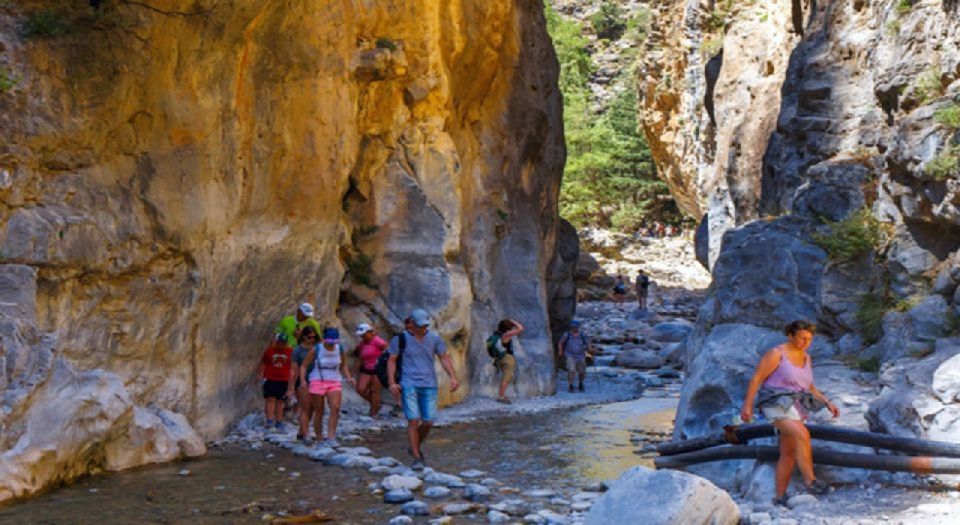
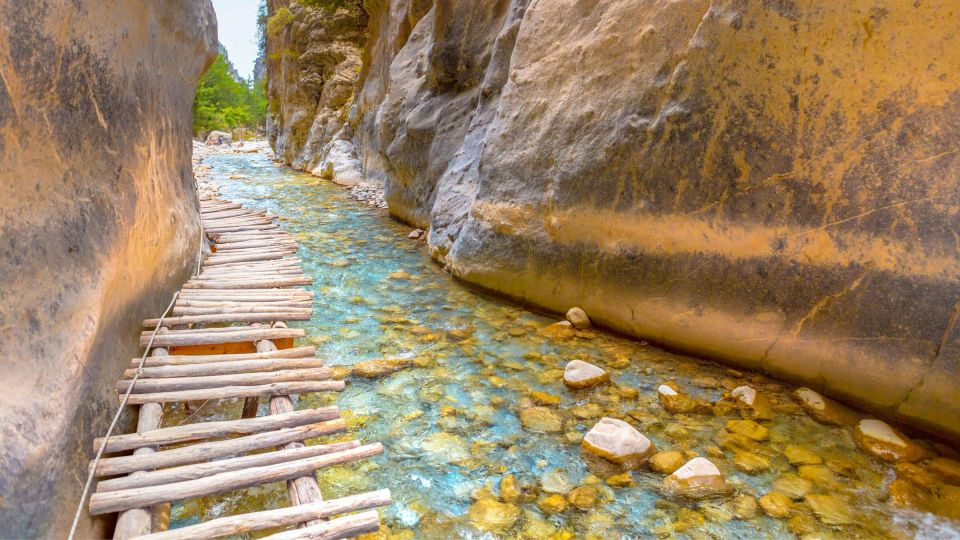
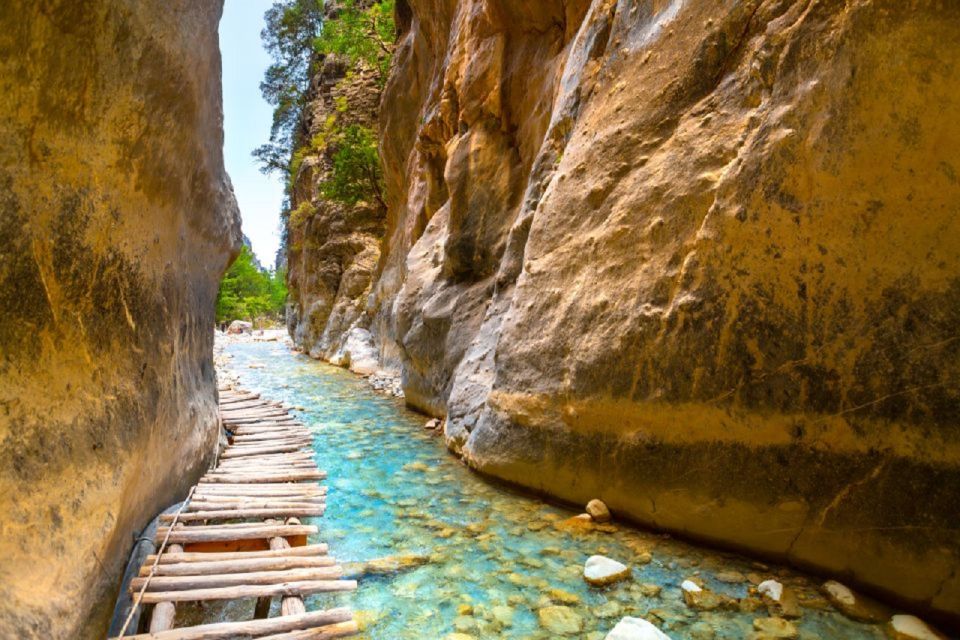
About the Iron Gates: think of it as the place where the gorge feels most “real,” like you’re in a cut through the mountain rather than walking along its edge. The cliffs rise nearly 300 meters, and the path tightens in a way that slows you down naturally—you look up, you watch your footing, and you start noticing how the gorge’s shape controls the light.
Along the way, there are also water filling points, so you don’t need a huge stash. One practical tip from a late-May experience: a normal 0.5-liter bottle was enough with refilling along the trail.
Wildlife moment: spotting the Kri-Kri in the real world
Crete has a special mountain animal: the Kri-Kri, a Cretan wild goat found only in this region. The tour information encourages you to keep your eyes open for them, and honestly, that’s part of the magic of Samaria—this isn’t staged. If you slow down enough to watch the edges of the trail and the rocky slopes, you give yourself a chance at an animal sighting.
Don’t expect an easy guarantee. But do expect the trail to make you pay attention. When you’re surrounded by limestone walls and scrub, your brain stops treating nature as background. Even if you don’t see Kri-Kri, the “living” feeling of the gorge stays with you.
You can also read our reviews of more hiking tours in Crete
Footwear reality check: when shoes matter more than comfort
Here’s the thing I respect most about this tour: it’s taken seriously. Reviews include one unhappy story where a person was turned back at the entrance because they didn’t have the required hiking boots/gear—even after being told by their guide that it would be fine. That doesn’t mean everyone will be refused, but it does mean you should plan for stricter enforcement than you might expect.
If you want my simple rule: bring sturdy hiking shoes with grip, and don’t rely on lightweight sneakers. Another review made the same point from a different angle: the hike is tough, and it’s mostly walking on stone, so footwear quality affects comfort and stability.
Midday recovery: Agia Roumeli lunch, free time, and the sea swim
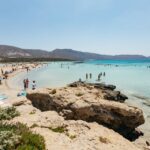
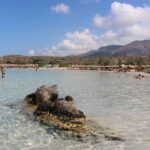
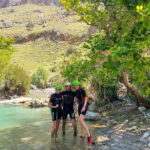
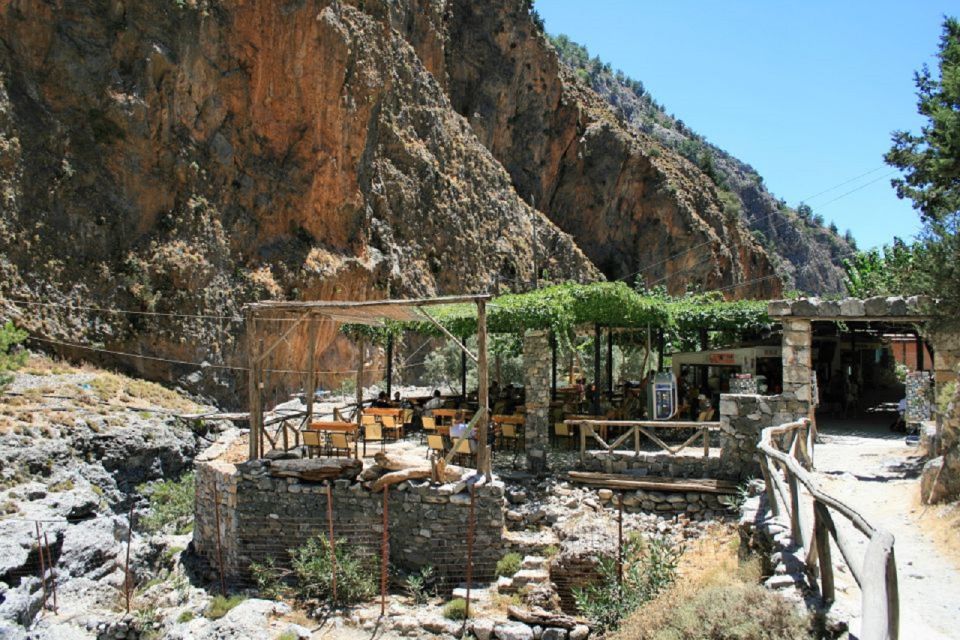
The hike ends in Agia Roumeli, where the pace shifts from “moving” to “recovering.” You’ll have time for lunch at a traditional beachfront taverna, plus free time. The big payoff is the chance to swim in crystal-clear waters of the Libyan Sea.
This is not a tiny splash-and-go. Reviews emphasize the pleasure of the swim, especially when the start temperature can be cold (one late-season account mentioned near-1°C at the beginning) and the arrival conditions feel much warmer. Even if your day doesn’t swing that dramatically, you’ll still feel the value of this reset.
A couple practical notes:
- Lunch can be hit or miss. One review called the food at a Samaria restaurant catastrophical, so if you have strong preferences, you might want to keep your expectations flexible.
- Toilets exist, but they may be basic. One person described WC toilets as a porcelain hole in the ground—functional, not fancy.
Free time is also where you can refuel and deal with the small stuff: rinse your feet, dry out what you can, and decide how long you want to linger before ferry time.
Ferry to Sougia, then coach back to Chania
In the afternoon, you board a ferry to Sougia. The boat ride is part of the experience because it changes your point of view—from walking tight canyon walls to seeing the coastline of southern Crete.
Then there’s a bus ride back to Chania, about 2 hours, with drop-offs across multiple areas (including Chania, Stalos, Platanias, Kolymvari, and others).
One more practical detail: the ferry/boat ticket is not included, and it’s typically a separate expense you’ll handle during the day. Reviews also suggest having cash or liquid available for the boat ticket, and some mention preferring exact amounts or keeping an eye on what’s easiest to pay on the spot.
Price and value: what $32 actually buys you
On paper, this tour is about $32 per person, and it includes pickup/drop-off, a hiking escort, and an air-conditioned luxury bus, plus full liability insurance. That’s a lot of logistics handled for you—getting you to Omalos, moving you through the day, and coordinating the ferry and return.
But two costs aren’t included:
- Entrance fee: 5 euro
- Boat ticket: 13 euro
So the true all-in cost is more than the base price. When you weigh it, the value comes from the guided structure and the “day packaged” convenience. You’re not just paying for a guide. You’re paying for transport, escort support during the gorge, and the timed handoff from walking to sea to ferry to bus.
If you’re the type who likes to plan everything yourself, you might find you can cobble together transport. But if you want less stress and a smoother flow, this is priced like a service that does the hard scheduling work for you.
Group feel and guide quality: what stands out in real experiences
You’ll hear guide names in the reviews, and those names line up with what you want from a hike guide: clear directions, focus on safety, and explanations that keep everyone aligned.
In some accounts, Ingrid is described as especially effective and engaging during the day, and Nikos also shows up as a standout guide with thoughtful explanations. There’s also mention of a bus driver named Herkules driving safely—small detail, but it matters because it reflects the overall seriousness of the operation.
I take that as a signal to expect a guided day that’s more controlled than chaotic. You still hike hard, but you’re not wandering around trying to guess what happens next.
What to bring (and what to skip)
The tour lists essentials, and I agree with all of them:
- Sunglasses
- Hat
- Hiking shoes
- Water
- Sunscreen
I’d add a couple practical “don’t regret it later” items based on how stone trails and basic facilities can feel:
- A backup snack or small energy bar, especially if you decide not to spend on breakfast.
- A small towel or something to help dry your feet at the end.
- Payment flexibility for the boat ticket and any entrance needs (some people recommend having cash).
One more caution that comes up in reviews: you may not be able to leave items on the bus for later. If you need something for the return, keep it with you.
Who should book this Samaria Gorge hike (and who shouldn’t)
This is best for active walkers and nature lovers who are comfortable with a long day and a demanding trail. It’s a good fit if you want a guided route where the most dramatic parts—the Iron Gates and the end-of-gorge sea time—are part of one coherent plan.
It’s also not for everyone. The tour data says it’s not suitable for:
- Children under 6
- Wheelchair users
- People with heart problems
- Pregnant women
- People with high blood pressure
- People with diabetes
If any of those apply, I’d strongly suggest talking with a medical professional before going. Even if you think you can handle the hike, the combination of length, stone footing, and a full-day schedule can be harder than it looks on a map.
My final take: should you book this tour?
If your goal is one big Crete nature day with a guided route, built-in recovery time, and a real chance to cool off in the sea, I think this is a strong choice. The value isn’t just the gorge—it’s the full chain of logistics from pickup to Omalos to the Iron Gates walk to Agia Roumeli to ferry and back again.
But book with clear eyes. This is a tough hike. Bring real hiking shoes and be ready for a stone-heavy trail. If you do that, you’ll get exactly the kind of day Samaria is known for: dramatic cliffs, iconic narrow passages, and an ending that actually feels like a reward.
FAQ
How long is the Samaria Gorge guided hike tour from Chania?
It’s a full-day experience lasting about 1 day.
How far do you hike in Samaria Gorge?
You walk approximately 16 kilometers through the gorge.
What costs are included in the price?
The tour includes pick-up/drop-off, a hiking escort, an air-conditioned luxury bus, and full liability insurance.
Are the Samaria Gorge entrance fee and ferry ticket included?
No. The entrance fee is 5 euro and the boat ticket is 13 euro. These are not included.
Is there time to swim at Agia Roumeli?
Yes. The tour includes free time in Agia Roumeli with the opportunity to swim in the Libyan Sea.
What kind of guide support do you get?
You have a live tour guide in English and a hiking escort.
What should I bring for the hike?
Bring sunglasses, a hat, hiking shoes, water, and sunscreen.
Is the tour suitable for everyone?
No. It’s not suitable for children under 6, wheelchair users, people with heart problems, pregnant women, people with high blood pressure, or people with diabetes.
How does the pickup work?
You’ll receive pickup details one day before the tour by email via your voucher. Pickup is from your hotel or close to it, and there are multiple pickup options around Chania.