Cooking with a local family beats a show. This 3.5-hour class at Chrysoula’s Traditional Cretan Home Cooking turns a morning in Arkadi, Greece into real Cretan meal-making, with you working side-by-side with the host team (including Chrysoula and her helper Dee) in a small group of up to 12 people.
What I love most is the hands-on feel: you prep and cook, not just watch. Another big plus is the meal itself, built around classic dishes like dakos and mousaka and finished with homemade ice cream.
One consideration: this experience is tied to good weather, so if conditions are poor, the plan may change or dates shift. Also, it’s a home-style cooking pace, so come ready to stand, stir, and get involved.
In This Review
- Quick highlights
- Why this Cretan cooking class feels like a visit, not a transaction
- What you’ll cook: dakos, mousaka, stuffed vegetables, and dessert
- Dakos as a starter
- Mousaka as one of the main dishes
- Stuffed vegetables as the second main
- Homemade ice cream for dessert
- The 3.5-hour rhythm: from welcome to a full multi-course meal
- Local ingredients and the techniques that actually travel home with you
- Olive oil, herbs, and the “more than you think” attitude
- Clear direction and real tasks
- Local sourcing from nearby land
- Dietary needs and who will enjoy this most
- Price and value: what $113.84 covers
- Getting there in Arkadi and what to bring
- Should you book Chrysoula’s Traditional Cretan Home Cooking?
- FAQ
- How long is Chrysoula’s Traditional Cretan Home Cooking?
- What dishes are included in the class menu?
- Where does the class start, and is it a round trip?
- Is the class offered in English?
- How big is the group?
- What’s the cancellation window?
Quick highlights
- Small group size (max 12): you’ll be involved throughout, not shuffled into the background
- Cretan staples you can repeat: dakos, mousaka, stuffed vegetables, and homemade ice cream
- Clear, practical instruction: you get guidance while you cook the dishes
- Warm hospitality from Chrysoula and Dee: the vibe is personal, social, and relaxed
- Dietary flexibility: vegetarian diners can be accommodated with a separate dish
Why this Cretan cooking class feels like a visit, not a transaction
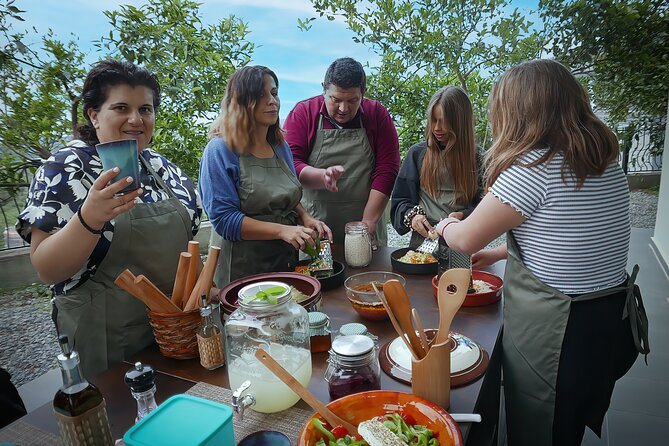
This is the kind of tour where you’re welcomed first, then fed, then taught. The setting matters: you’re not inside a commercial kitchen. You’re in a home space where the day runs on people-time, laughter, and food work happening in parallel.
In the best moments, it feels like you’ve joined a big Cretan family meal. Chrysoula’s style comes through in how she brings everyone into the flow. And Dee is a real part of the teamwork—handling tasks, keeping the group moving, and helping the day feel smooth even when multiple dishes are happening at once.
A small group cap of 12 people is not a marketing number here. It changes the whole experience. You’ll get enough attention to learn without feeling rushed, and it’s easier to meet people and keep the energy up across the full multi-course lunch.
You can also read our reviews of more cooking classes in Crete

What you’ll cook: dakos, mousaka, stuffed vegetables, and dessert
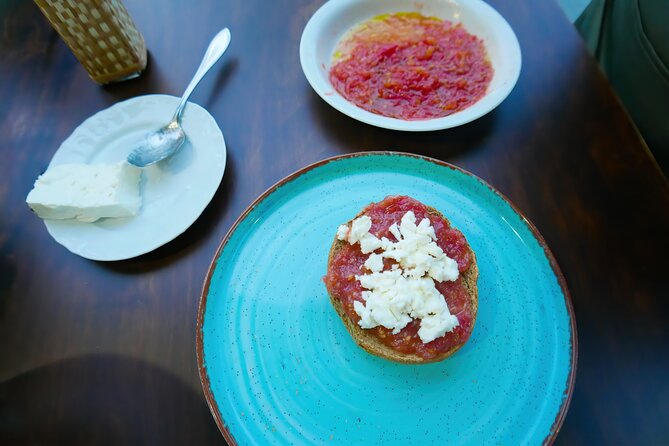
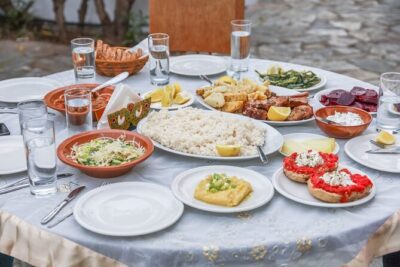
The sample menu gives you a good sense of the arc of the meal. You start with a starter, move into the mains, then finish with dessert made at home.
Here’s what you can expect to make:
Dakos as a starter
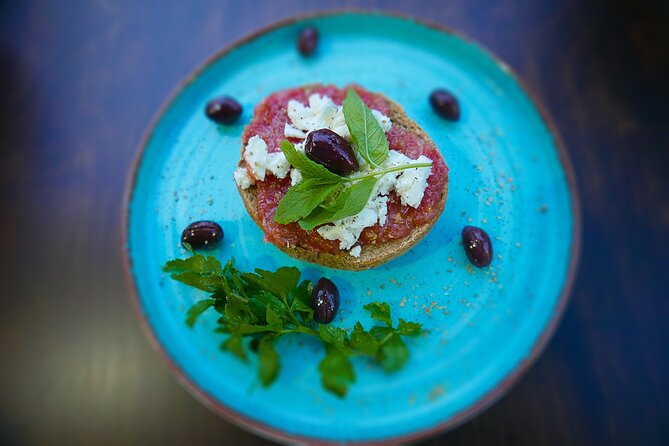
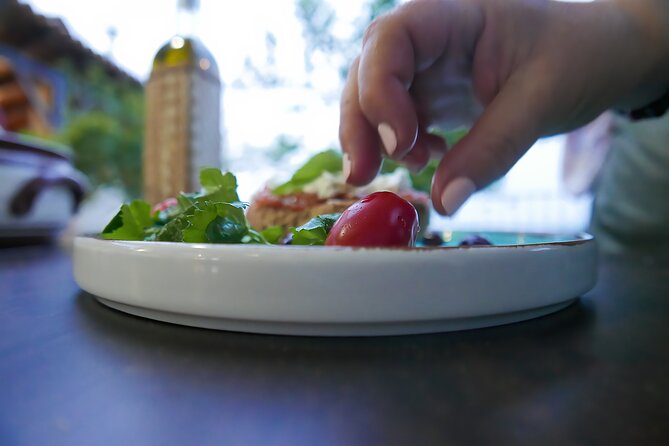
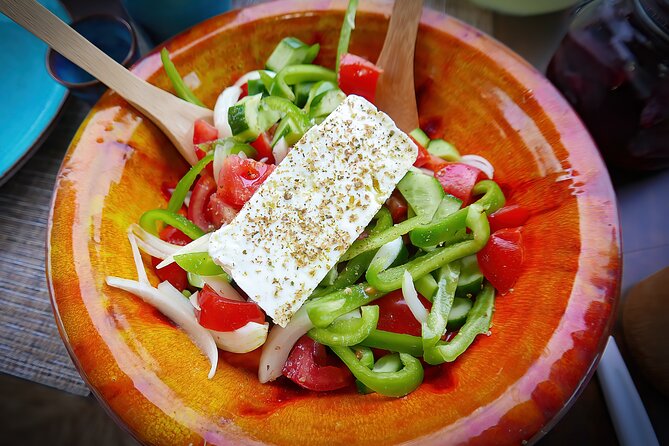
Dakos is a classic Cretan starter, built around bread and topped with the flavors that define the island: olive oil, tomatoes, and herbs. It’s a great first dish because it’s approachable and it teaches you how Cretan flavor starts with simple ingredients treated with care.
Mousaka as one of the main dishes
Mousaka is hearty, comforting, and a real test of technique: layering, seasoning, and baking so it sets properly. When you cook it yourself, you understand what makes the difference between okay and excellent—timing, thickness, and getting the balance right.
Stuffed vegetables as the second main
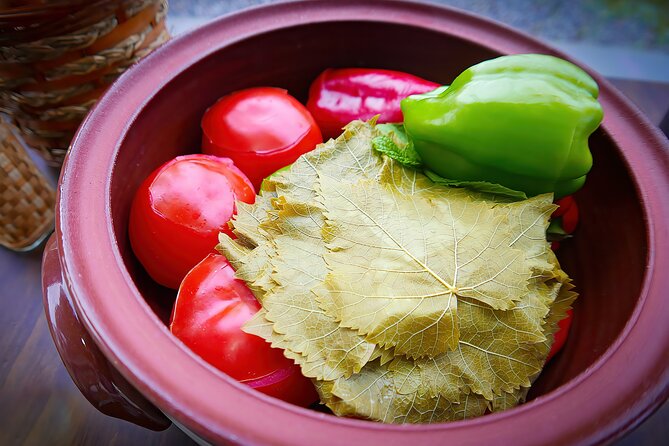
Stuffed vegetables are pure Cretan practicality. In this class, that category can include familiar stuffed forms such as grape leaves and squash blossoms, depending on what’s being prepared. Either way, you’re learning the method: make a filling, wrap or portion it, and cook it so it stays tender without falling apart.
This is also where you often see the “why” behind Greek cooking. The dishes don’t rely on fancy shortcuts. They rely on tasting, seasoning, and patience.




Homemade ice cream for dessert
You finish with homemade ice cream. Dessert is often what people remember from cooking classes because it signals the payoff: you didn’t just make a meal, you finished it with something you can keep thinking about long after you’ve left.
And if you’re the type who likes to leave with a handful of go-to ideas for later, a dessert taught in a home kitchen is a big deal. It’s one more piece of the island’s food culture you can actually reproduce.
The 3.5-hour rhythm: from welcome to a full multi-course meal
The class starts at 10:00 am and runs about 3 hours 30 minutes. The format follows a steady rhythm so you always have something to do, even when multiple dishes are happening.
A typical flow looks like this:
- Warm welcome and setup
You arrive, get oriented, and jump in. Chrysoula and Dee keep things friendly and organized from the start, which helps if you’ve never done a cooking class before.
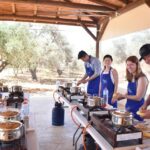
- Cooking in hands-on stations
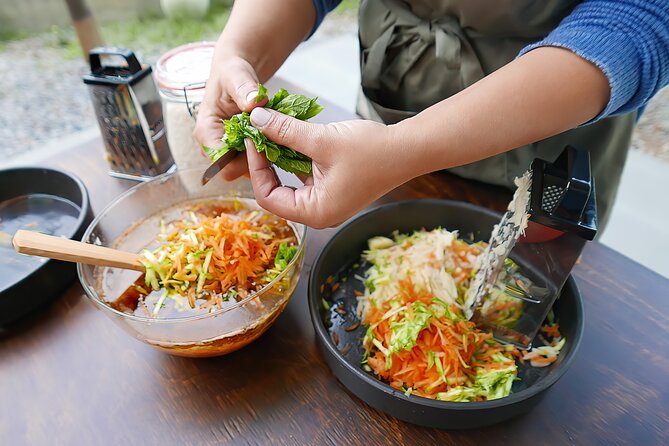
You’ll take on specific prep tasks and portions of the cooking process. One thing I like about this style is that it’s not vague. You get direction while you work, and you’re responsible for real steps, like handling ingredients and assembling components for the dishes.
- A multi-course meal you eat right after
You cook, then you sit down and enjoy what you made. That matters. Many classes teach, then move on. Here, the meal is part of the teaching, because you can taste the result while the explanations still feel fresh.
- Dessert after dinner
Homemade ice cream comes after the main meal, so your day ends with a sweet payoff rather than a rushed last step.
One small practical tip that’s worth remembering: recipes are provided after the class. That takes pressure off you during cooking. You’re free to focus on technique and taste, not scribbling olive oil quantities on your hand.
Local ingredients and the techniques that actually travel home with you
This is where the class has real long-term value. It’s not just about eating. It’s about learning a way of thinking about food.
Olive oil, herbs, and the “more than you think” attitude
Cretan cooking leans on olive oil, herbs, and the flavors that come from using good ingredients without overcomplicating them. People often underestimate how important seasoning and balancing are until they do the prep themselves.
If you’ve ever wondered what people mean by “a lot of olive oil,” a class like this makes that clear fast. You see how the oil functions: it carries flavor, softens textures, and brings ingredients together.
Clear direction and real tasks
Chrysoula’s teaching style comes through in how she gives guidance while letting you do the work. Dee’s support helps keep the group moving through the tasks without chaos.
The practical takeaway: you learn the steps, the reasons behind them, and how to adjust as you cook. That’s what lets you recreate the dishes later without needing a chef beside you.
Local sourcing from nearby land
The ingredients used in the class come from local sources, and part of what makes this work is that the flavors are already strong before they hit your cutting board. When ingredients taste right on their own, your job gets easier and the dishes come out better even if you’re new to Greek cooking.
Dietary needs and who will enjoy this most
Most people can participate, and the host team can accommodate dietary requirements when they’re noted. A vegetarian in the group is handled with a separate dish, so you’re not stuck just eating the sides.
That flexibility makes the class a strong option for mixed groups—couples, solo travelers, and friends traveling together. It also works well if you want something more meaningful than a one-off dinner, because you leave with both food and skills.
If you’re traveling with a service animal, this experience allows service animals. You’re also in a small, controlled group setting rather than a crowded restaurant, which can feel less stressful.
Language is English, and you’ll be in a class format designed for interaction, so if you like asking questions while you cook, you’ll be comfortable here.
Price and value: what $113.84 covers
At $113.84 per person for about 3 hours 30 minutes, this isn’t a budget snack. But you’re paying for more than “a cooking lesson.”
Here’s what the value includes based on how the day plays out:
- A small group setting (max 12), so you get real attention
- A multi-course meal you cook and then eat
- Hands-on instruction with direct feedback
- Dessert made in the class
- Recipes provided after the experience
- Time spent with Chrysoula and Dee in a true home setting
- Optional raki moments during the day, if it’s part of the celebration flow
When you price it against the cost of eating well in a sit-down place plus paying for a separate activity, the math starts looking reasonable. You’re not just buying food. You’re buying a structured way to learn the flavors and techniques you want to take home.
Getting there in Arkadi and what to bring
The meeting point is listed at an Arkadi location with the code 8G769H27+JHJ9H27+JHJ. The tour ends back at the same meeting point, so you’re not dealing with a long end-of-day transfer.
It’s near public transportation, which helps. The format is also tied to weather, so if Crete is having a rough day, expect the host to adjust plans. That’s a normal reality for outdoor elements around a home setting, so don’t plan anything too tightly right before or after.
What to bring:
- Comfortable clothes you won’t mind cooking in
- A positive attitude about getting involved
- If you have dietary restrictions, make sure they’re communicated in advance
If you have questions about how your needs will be handled, it’s worth checking before the day so the team can plan the dishes accordingly.
Should you book Chrysoula’s Traditional Cretan Home Cooking?
Book it if you want a real Cretan meal-making experience in a small group, with instruction you can use later. This is a strong pick if you care about technique, local ingredients, and leaving with recipes—not just photos.
Don’t book it if you’re looking for a strictly formal, lecture-style class. This one runs on people and food flow. And if you’re traveling during a period where weather is unreliable, keep in mind the experience depends on good conditions and may switch dates if canceled.
If you like to connect to place through cooking, this is one of the easiest ways to do it in Crete without needing a complicated itinerary.
FAQ
How long is Chrysoula’s Traditional Cretan Home Cooking?
It lasts about 3 hours 30 minutes.
What dishes are included in the class menu?
The sample menu includes dakos (starter), mousaka (main), stuffed vegetables (main), and homemade ice cream (dessert).
Where does the class start, and is it a round trip?
The activity starts at the Arkadi meeting point listed as 8G769H27+JHJ9H27+JHJ in Greece, and it ends back at the same meeting point.
Is the class offered in English?
Yes, the experience is offered in English.
How big is the group?
The class has a maximum of 12 travelers.
What’s the cancellation window?
You can cancel for a full refund up to 24 hours before the experience starts. If weather causes a cancellation, you’ll be offered a different date or a full refund.