Minoan palaces and Roman law in one day. This south-central Crete trip ties together Phaistos and the famous Gortyn Law Code, then breaks things up with seaside time in Matala and a calmer stop in Zaros. It is the kind of day that helps you connect the dots between civilizations without turning every hour into a museum slog.
What I like most is the contrast: you get proper archaeology at Gortyna and Phaistos, then you shift gears at Matala for free time to swim in clear water before heading inland. My other favorite is Zaros itself—an unspoiled village known for spring water (now bottled) and for easy access to nature around Lake Votomos, plus farm-raised trout in town. One possible drawback: it is an 8.5-hour, packed route, so you’ll have to accept limited wandering time at each stop and do your walking with comfortable shoes.
In This Review
- Key highlights you will actually care about
- How this 8.5-hour South Central Crete route fits together
- Starting point and the day’s rhythm in Heraklion
- Gortyna first: where the Roman world ran Crete
- The Gortyn Law Code: ancient courtroom life, carved in stone
- Phaistos Palace: the Minoan center you can still map in your mind
- Matala break: swim time, a former port feel, and an optional lunch
- Zaros: the unhurried village with monasteries and spring-water fame
- Lake Votomos and the trout angle (yes, it’s actually useful)
- Price and value: when $129 makes sense
- Guides: the one variable you can feel immediately
- Who should book this, and who might skip it
- Should you book this tour?
- FAQ
- What sites are included in this tour?
- How long is the tour?
- Is lunch included?
- Where do I meet the group?
- Which languages are the tour guide services offered in?
- Can I swim during the day?
Key highlights you will actually care about
- Gortyn Law Code on-site: see ancient rules carved in stone and understand what society was like
- Phaistos as a Minoan power center: not just ruins, but a place that explains how Crete worked
- Matala swim time: crystal-clear water break plus optional lunch, without the pressure of a long sit-down meal
- Zaros feels local: spring water, walking-friendly village streets, and Byzantine monasteries
- Lake Votomos + trout: a nature stop that pairs well with a real meal (often trout) nearby
- Guides make or break it: reviews specifically praised Sophia, Angeliki, Irini, and Rita for clarity and not rushing you
How this 8.5-hour South Central Crete route fits together
This tour is built as a practical loop: start in Heraklion, then swing down into the interior, and finish back in the city late afternoon. You are moving between key cultural stops—Roman Crete, Minoan Crete, a former port-town vibe, and then an inland village daydream.
The pacing is steady. You drive, you tour with your guide, you get a real breather in Matala, then you wind down in Zaros. That structure matters because Crete’s history can get confusing when you see sites out of order. Here, the route keeps the story in a sensible timeline.
You can also read our reviews of more tours and experiences in Heraklion.


Starting point and the day’s rhythm in Heraklion
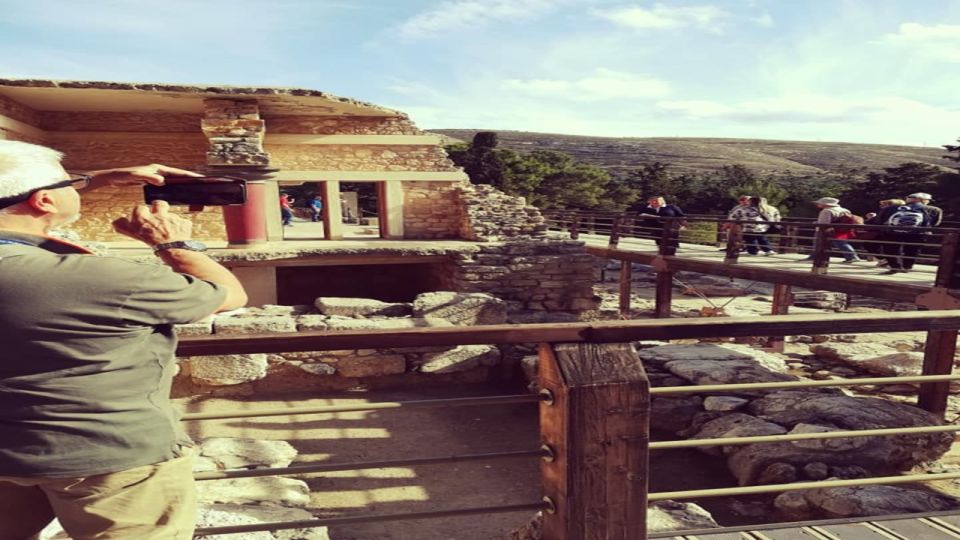
You meet across from the entrance of the Heraklion Archaeological Museum, in front of Hari’s Creperie. The start time is 08:30 from the Cretan Spiti Travel terminal, and the tour returns around 17:00 to the same Heraklion area.
Bring comfortable walking shoes. You will be moving around archaeological areas, and you do not want to fight slippery ground or uneven paths. If you plan to swim in Matala, consider packing a small bag for essentials so you are not hunting for things while everyone waits.
Also note: this experience is not suitable for people with mobility impairments, so plan accordingly if that could be an issue for you.
Gortyna first: where the Roman world ran Crete
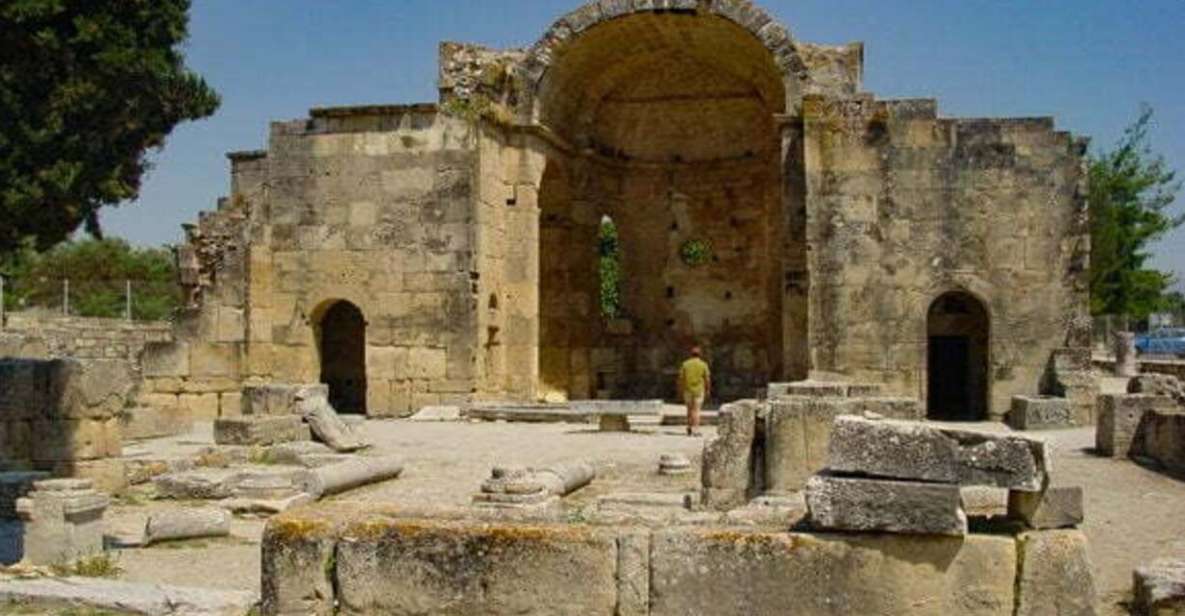
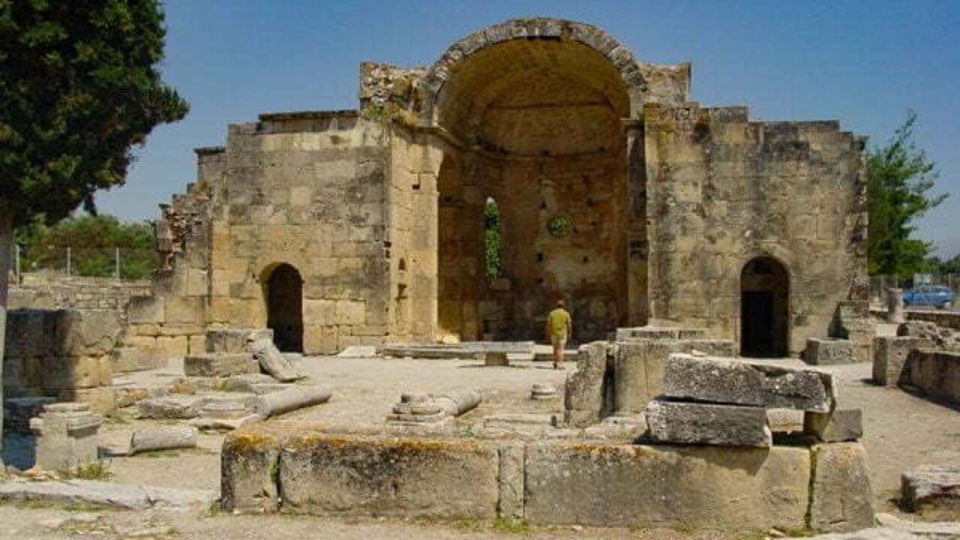
Your day begins with a drive to Gortyna, described as the Roman capital of Crete and Cyrenaica. The area was first inhabited around 3200 BC, so even before you get into Roman details, you are stepping into a long-used landscape.
Gortyna works well as an opening stop because it frames what you are about to see next. You start with the later layers of Crete’s power structure—how Rome organized law, society, and civic life—and then you can better appreciate the earlier Minoan layer when you reach Phaistos.
A helpful tour pattern here is that your guide ties geography to what you are viewing. Reviews praised guides who talked about what you could see from the van windows, and that kind of commentary can make the drive feel less like dead time.
The Gortyn Law Code: ancient courtroom life, carved in stone
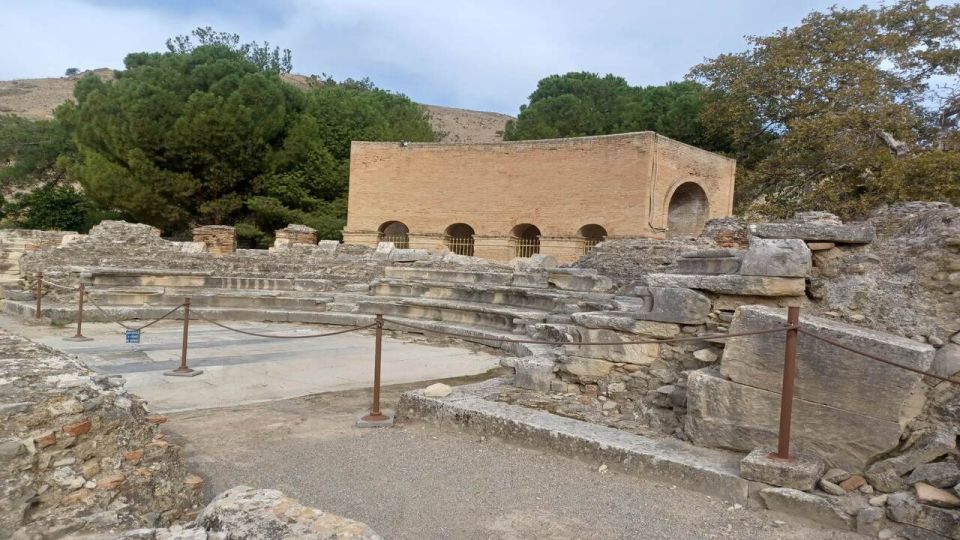
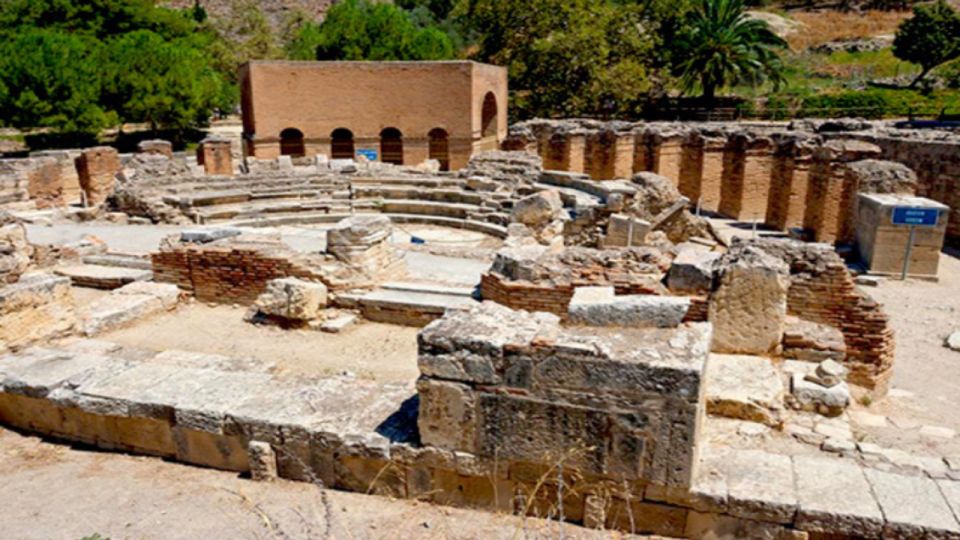
One of the standout moments is seeing the Gortyn Law Code. This is not just “cool ruins.” It is a rare chance to look at how rules were written down and used in real civic life.
When you stand in the vicinity of the carved text, it shifts the way you think about history. You stop treating ancient sites like pretty backdrops and start seeing them as places where everyday people lived within systems—property, family issues, civic obligations, and more.
This is exactly where a strong guide matters. Several reviews singled out guides who were attentive to detail and did not rush through explanations. If you like history that feels human and practical, this stop is one of the reasons to book the full day.
Phaistos Palace: the Minoan center you can still map in your mind
After Gortyna, you drive through the Mesara Valley to Phaistos, widely described as the most important center of Minoan civilization in this part of Crete. The palace site is presented as the most wealthy and powerful city in southern Crete, and the scale helps you understand why.
What I like about visiting Phaistos in a guided group is that you get a clearer sense of the layout. Even if you are not memorizing every room name, you start to understand how palaces functioned—administration, storage, control of goods, and the social order that went with it.
Also, the drive into the valley is not just scenery. It sets up a mental map. You are moving from one cultural layer to another, and your guide can point out how the landscape supports settlement patterns—useful context that makes the Minoan pieces fit.


Matala break: swim time, a former port feel, and an optional lunch
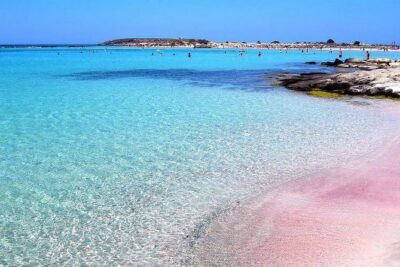
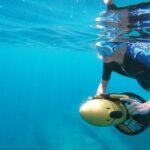
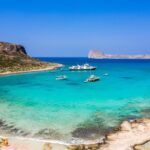
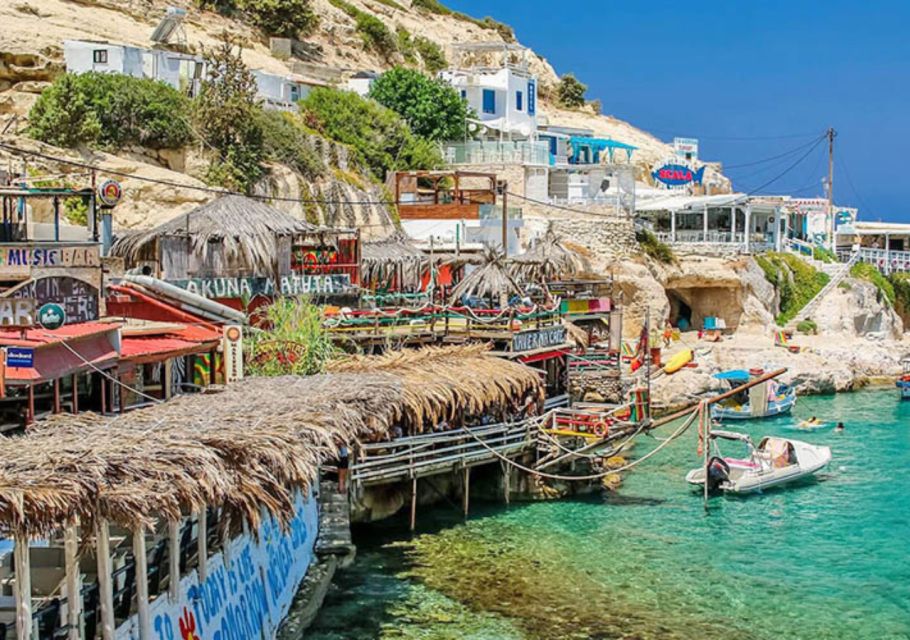
Next comes Matala, known as the ancient port of Phaistos and Gortys. This is where the tour changes pace in a very welcome way: you get free time to swim in crystal-clear water.
Swimming in Matala is one of the most tangible “memory triggers” from the whole day. Ruins and laws are fascinating, but your body remembers water and light. If you even slightly like swimming, do it—this is the part of the itinerary that feels like a reward instead of another stop.
Lunch is optional. The tour program mentions lunch in a restaurant with a 20.00 € cost (and drinks are not included). The practical move is to decide in advance if you want a sit-down meal with sea views or if you’d rather save time and energy.
The Matala meal setup can be part of the fun. Reviews specifically mentioned a restaurant at Matala with a wonderful view over the sea and delicious food served there.
Zaros: the unhurried village with monasteries and spring-water fame
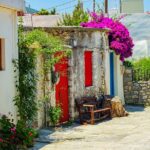
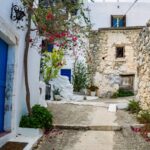
After Matala, you head to Zaros, described as attractive and refreshingly unspoiled. This is the stop that helps the day breathe. Instead of adding more big-site intensity, Zaros gives you village atmosphere and a nature-friendly base.
Zaros is famous for spring water, which is now bottled and sold all over Greece. That fact sounds like a small detail, but it actually gives the place a real identity. It is not just “pretty village time.” You are in a community with a known resource, and it helps explain why people settle here and why the water matters.
You also visit Byzantine monasteries. For many visitors, these are the more visually soothing religious stops—less about grand-city churches and more about calm settings and historical continuity. If you enjoy places where history feels tied to daily life, Zaros delivers.
Lake Votomos and the trout angle (yes, it’s actually useful)
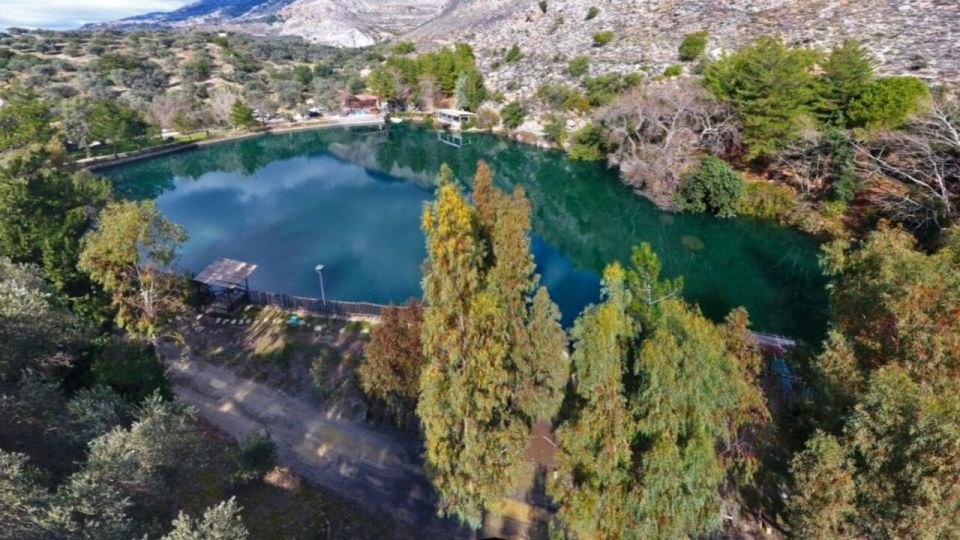
Zaros is also tied to Lake Votomos, which you visit as part of the day. The idea is simple: you get fresh-air nature time to balance the archaeological sites.
And there is a food payoff. The program notes farm-raised trout served in tavernas around town and on the lake. If you like eating what the region does well, this is one of the moments where food stops being an afterthought and becomes part of the experience.
If you have already decided on an optional Matala lunch, think of trout here as a second-chance meal choice. Either way, the lake stop gives you a reason to slow down and take in the place between big historic sites.
Price and value: when $129 makes sense
At $129 per person for an 8.5-hour day, the value depends on what you want out of the experience. This is not a budget “grab a seat and hope” deal. You are paying for guided interpretation, an air-conditioned motorcoach, and a full day route that would take real effort to coordinate on your own.
You also get VAT and legal taxes included, plus a professional guide. That matters because the sites on this route are easier to enjoy when someone explains what you are looking at—especially around places like the law code and the Minoan palace layout.
What is not included is also important. Lunch is not included in the base price, and it is listed at 20.00 € if you choose it. Drinks with the meal are not included either. So if you tend to eat out on tours, plan a little extra for meals and consider what you want most: swimming + a quick bite, or a more relaxed lunch with views.
Finally, the group format is built for time efficiency. That helps if you are short on days in Crete but want both Minoan and Roman highlights, plus a genuine nature village ending.
Guides: the one variable you can feel immediately
The tour reviews put a lot of weight on guides, and that’s worth paying attention to. Names that came up include Sophia, Angeliki, Irini, and Rita, and the praise patterns were consistent.
People liked that guides were intelligent and funny, that explanations were complete, and that they did not rush the stops. One review highlighted a guide who was attentive to detail and even accommodating of needs. Another mentioned that the guide gave the right amount of time at each site.
So if you care about understanding what you see, this tour’s strength is the human factor, not just the list of monuments.
Who should book this, and who might skip it
Book this tour if you want a single day that covers Gortyna + the Gortyn Law Code, Phaistos, and then mixes in Matala swim time and Zaros nature/village life. It suits you if you like seeing big ideas explained in plain terms and you prefer a structured route rather than trying to stitch together stops with bus schedules.
You might skip it if you hate tight timing. This is a full-day circuit with driving between sites and limited time for unplanned wandering. Also skip or reconsider if mobility is an issue, since it is not suitable for that.
Should you book this tour?
If your priority is connecting Crete’s layers—Roman law, Minoan power, a coastal port vibe, and then inland monastery-and-nature calm—then yes, this is a smart booking. The mix of archaeology plus a real swim stop is a strong combination, and the reviews consistently highlight guides who explain without rushing you.
If you want maximum solitude or deep time at one single site, you may prefer an A-to-B half-day option instead. But for most first-timers, this day strikes a good balance between major highlights and actual enjoyment breaks.
FAQ
What sites are included in this tour?
You visit Gortyna, the archaeological site of Phaistos and its palace, Matala (with free time for swimming), and Zaros, including Byzantine monasteries and a visit to Lake Votomos.
How long is the tour?
The total duration is 8.5 hours, with the return to Heraklion around 17:00.
Is lunch included?
Lunch in a restaurant at Matala is not included in the price. It is listed as 20.00 €, and drinks are not included.
Where do I meet the group?
You meet across from the entrance of the Heraklion Archaeological Museum, in front of Hari’s Creperie, at the Heraklion terminal area for Cretan Spiti Travel.
Which languages are the tour guide services offered in?
The live tour guide is available in Spanish, English, French, and Italian.
Can I swim during the day?
Yes. At Matala you get free time with the opportunity to swim in the crystal-clear water. Comfortable clothes and a plan for swim essentials help.