A Cretan village in your lap. Lychnostatis Open Air Museum lets you walk through reconstructed daily life and folk culture, with the real focus on how people lived and worked. I like that it’s open-air and spread out, so you can take your time moving from one craft space to the next.
I also love how hands-on it feels. You’re not just looking at artifacts—you’re stepping into traditional spaces like a village house, a distillery interior, and working-style setups such as presses and threshing areas. One thing to consider: the experience is in Greek, so if you don’t read or listen well in Greek, you may want to rely more on the audiovisual add-on (if you choose it) and go at a slower pace.
Even at $10 per person, it’s the kind of place where the “value” comes from variety: dwellings, workshops, nature displays, library time, and even a café break. Still, plan for a full day because there’s a lot to see, and the information you pick up along the way may be paper-based, so keeping your pages dry (or using your phone) can help.
In This Review
- Key things to know before you go
- Touring the Lychnostatis Open Air Museum in one practical day
- Tickets, add-ons, and how to pick the right version for you
- Walking through a Cretan village scene by scene
- Traditional houses and workshops: what you learn by looking closely
- The tsikoudia (raki) distillery and the food-and-drink connection
- Olive oil, presses, chapel, and the community rhythm
- Gardens, herbarium, and nature displays that aren’t an afterthought
- The auditorium (100 seats) and open-air theater (250 seats)
- Library, café, souvenir shop, and how to pace your time
- Price and value: is $10 worth it?
- Who should book Lychnostatis, and who might want a different plan
- Final thoughts: should you book it
- FAQ
- What is included with the Lychnostatis entry ticket?
- Can I add an audiovisual film or a private guided group tour?
- How long should I plan for this experience?
- Is transportation or food included?
- What language is the live tour guide in?
- Where do I start, and how do I get there?
Key things to know before you go
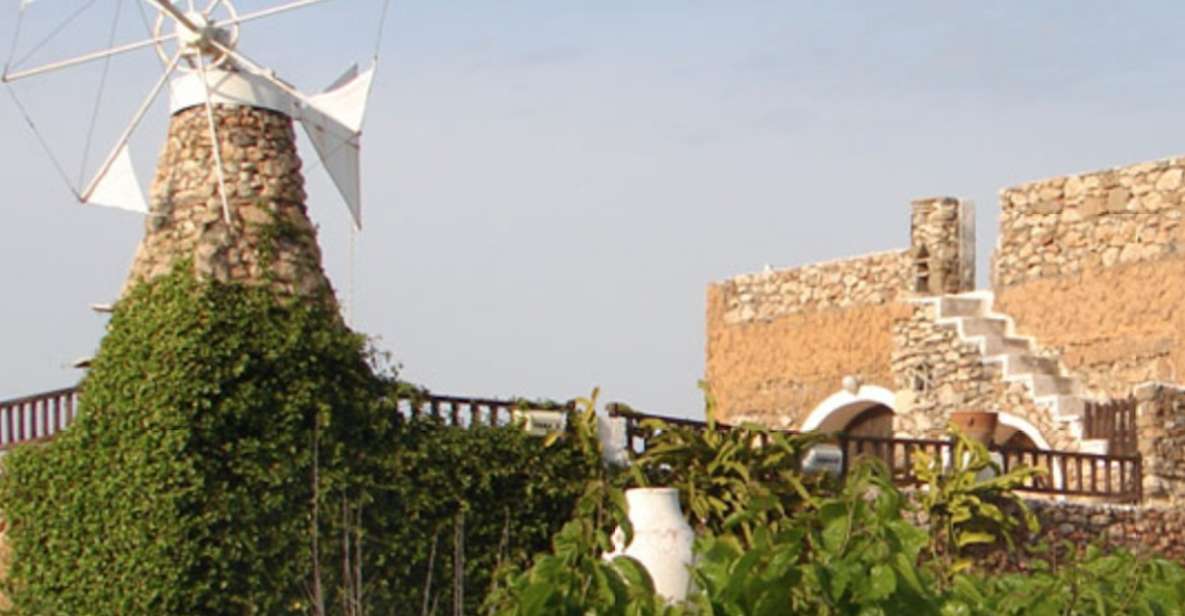
- A living village layout: traditional dwellings, chapel, olive oil press areas, and craft workshops you move through in sequence
- Tsikoudia (raki) distillery stop: go inside and see how this spirit fits into everyday Cretan tradition
- Nature + culture together: herbarium, gardens, and exhibitions on minerals and stones run alongside folk life
- Two show spaces: a 100-seat auditorium for audiovisual programs and a 250-seat open-air theater for events
- Optional add-ons: audiovisual film or a private guided group tour to make your visit easier
- Café + library + exhibits: you can pause in the library, browse temporary exhibitions, then refuel before you shop
Touring the Lychnostatis Open Air Museum in one practical day
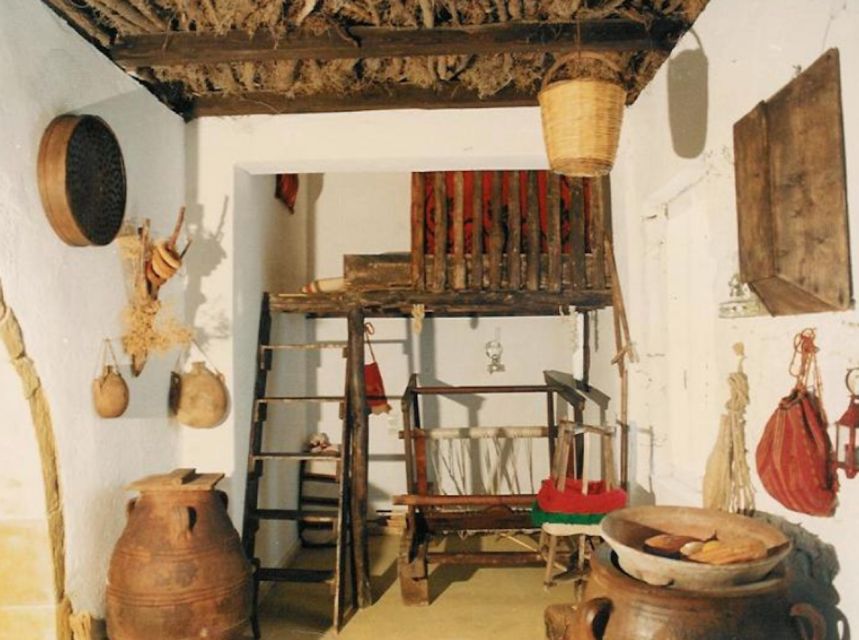
Lychnostatis is designed so you can understand Cretan folk culture as a whole system: home life, work crafts, food and drink, and the natural world that supported it. The museum’s strength is its mix of traditional village spaces and themed collections. You’re not forced to stay inside one building, and that matters—an open-air museum makes it easier to keep momentum without feeling trapped.
I’d plan this as a full-day outing rather than a quick stop. Even though the activity is listed as 1 day, the point is to move slowly enough to read the context for each area. Think: one house at a time, one workshop at a time, then a break at the café, followed by an exhibition stop or two before any show space.
Your starting point is simply the Lychnostatis Open Air Museum itself. You can reach it by car or taxi, and that freedom matters if you’re trying to fit it around a beach day or another site in Crete. Transportation isn’t included, so build that into your day plan.
You can also read our reviews of more tours and experiences in Crete
Tickets, add-ons, and how to pick the right version for you
You can book an entry ticket that includes free time to explore the museum. The real decision is whether you add the audiovisual film option or the private guided group tour option.
If you choose the audiovisual film: you’ll get a more structured “primer” that helps you connect what you’re seeing—especially useful when the museum language is Greek. It’s also the easiest option when you don’t want to hunt down context yourself.
If you choose the private guided group tour: you’ll have a live Greek-speaking guide. This is the best fit if you enjoy being led through the “why” behind the crafts and village life—how everything links together, not just what each building is. The included guided time is made to help you avoid wandering aimlessly through an enormous set of displays.
Skip-the-line entry is also a small but real win. When you’re doing open-air sites with many stops, saving time at the start helps you arrive with energy.
Worth saying clearly: since the tour language is Greek, choose based on how you handle that. If Greek is not your strength, the film add-on can make the visit easier to interpret.
Walking through a Cretan village scene by scene
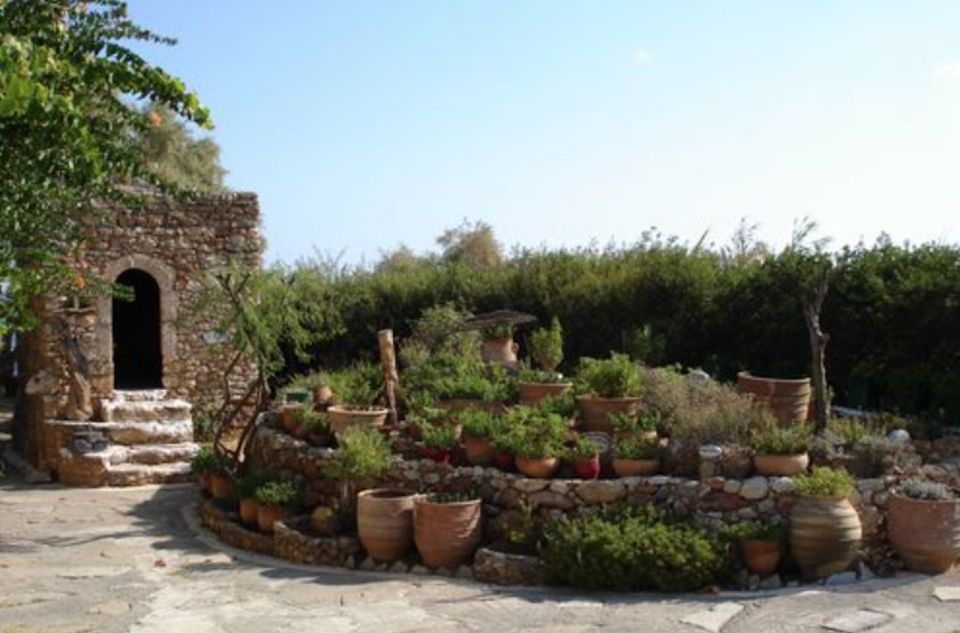
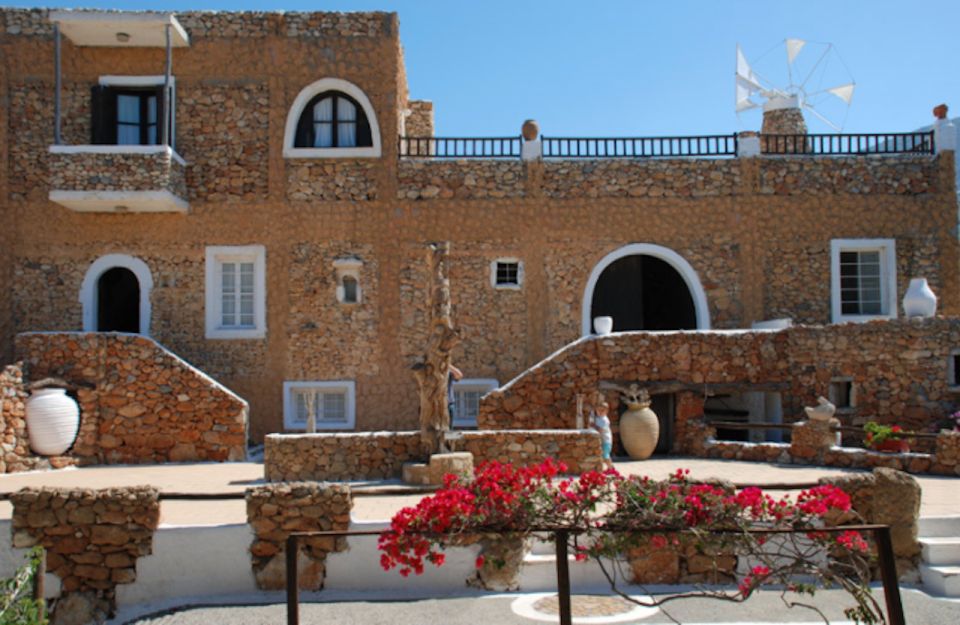
The museum is built around reconstructed traditional environments: you can see traditional village house interiors and then follow the logic outward into production spaces. That flow is the difference between “photo stops” and real understanding.
Here’s what you can expect to move through during a typical visit:
- Traditional dwellings, including the feel of how rooms were arranged and used
- A chapel area that signals the role of religion and community life
- Olive oil press areas that connect daily labor with food production
- A tsikoudia (raki) distillery stop that shows how drink-making ties into tradition
- Threshing floor and other everyday tool-focused setups
- A ceramic shop and other workshop spaces where crafts are central
- Weaving and plant-dying workshops, plus bees and wax spaces
- Shoe-making, carpentry, and more craft-oriented displays
- Nature and science-minded collections like an herbarium
- Gardens (including Cretan fruit garden and an herb garden)
- Mineral and stone exhibitions
- A Cretan folk artists’ gallery
- Temporary exhibitions, plus a library area and café space
That’s a lot on paper, but in practice the layout keeps it from feeling random. You’re guided through a theme: home, work, craft, nature, and community.
Traditional houses and workshops: what you learn by looking closely
I love how Lychnostatis frames everyday objects as stories. You can stand in a traditional village house environment and then look right next door into craft setups. That tells you something big: in Crete (and in much of rural life), work wasn’t separate from home life—it was part of it.
Inside those spaces, focus on the tools and the “process” angle. Even if you only understand a few Greek terms, you’ll still get the basic logic. Weaving and plant-dying areas, for example, explain that color and fabric weren’t magic—they were the result of plant knowledge and repeated craft work.
The bees and wax workshop also makes sense in a direct way. You see how nature ties into materials people relied on. And the shoe-making and carpentry areas drive the same message: these weren’t hobby skills. They were how communities maintained daily life.
If you like museums that feel tangible—places where you can picture the work with your own body—this is your kind of stop.
The tsikoudia (raki) distillery and the food-and-drink connection
One highlight here is the distillery interior focused on tsikoudia (raki). It’s not just a “look at the bottle” moment. The museum places drink-making inside a larger system of traditional life, alongside olive oil production and other food- and labor-based setups.
You’ll also notice the café plays along with this theme. During your visit, you can grab a typical beverage or sweet at the museum café. I like that there’s a break option that feels like part of the experience instead of an afterthought. It gives you a natural “reset” point—especially helpful if you’re walking between several workshop areas.
If you’re the kind of person who likes tasting culture as well as seeing it, this stop adds extra satisfaction.
You can also read our reviews of more museum experiences in Crete
Olive oil, presses, chapel, and the community rhythm
The museum doesn’t treat “culture” as only crafts or artifacts. It includes places tied to belief and community rhythm, like the chapel area, plus the agricultural and food production sides, like olive oil press spaces.
These sections are valuable because they help you understand why folk culture kept going generation after generation. When you see a press setup and then move into a house environment, you start connecting the dots: the work supported the home, the home supported the community, and the community supported the traditions.
Even the “quiet” stops matter. If you’re the type who usually skips reading, don’t. Take 2–3 minutes at each key station and let the connection build. It’s one of those experiences where the meaning is in the sequence.
Gardens, herbarium, and nature displays that aren’t an afterthought
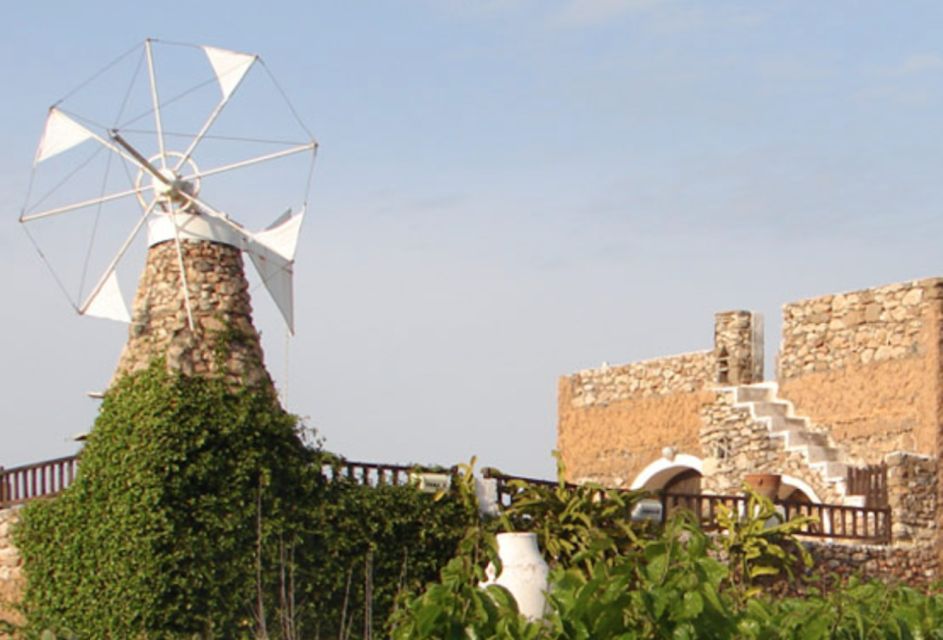
Lychnostatis also includes nature and environment themes alongside folk life. You’ll encounter an herbarium and gardens, including a Cretan fruit garden and an herb garden. The presence of mineral and stone exhibitions adds another layer: Crete’s land shapes what people grow, collect, and build.
I find it helps to treat these stops as part of the “why.” When you’re looking at workshops like weaving, plant-dye themes make more sense if you’ve also seen herb and plant displays. When you’re looking at craft stations, mineral and stone exhibitions remind you that local resources guided design choices.
If you need a break from workshop-to-workshop intensity, these garden and exhibition areas offer a calmer pace without losing the thematic thread.
The auditorium (100 seats) and open-air theater (250 seats)
Two different performance spaces are part of the museum experience: an auditorium with 100 seats and an open-air theater with 250 seats. These spaces are used for audio-visual shows, seminars, and cultural or artistic events.
Even if you don’t time your arrival to a specific event, it’s useful to know they exist. It means the museum isn’t only a static exhibition. The schedule can bring the content to life through presentations.
If you’re planning your day tightly, keep an eye out for any scheduled audiovisual show you can fit between workshop areas. The structure can help you pace the visit.
Library, café, souvenir shop, and how to pace your time
The museum offers more than just outdoor buildings. There’s a library stocked with Cretan books and periodicals. There’s also a temporary exhibitions hall, plus a café and a souvenir shop.
I recommend using these indoor spots strategically:
- If the sun is strong, the library or temporary exhibition hall can act as your shade break
- The café gives you a chance to slow down before you head back outside
- The souvenir shop is best for later, once you’ve seen enough to understand what you’re buying
One practical note from a real-world perspective: some visitors have flagged that paper information can get damp and become harder to manage. I’d plan to keep your reading materials dry and consider relying on your phone for quick notes or photos. Bring a small zip pouch or just keep hands dry so your pages don’t get ruined.
Price and value: is $10 worth it?
At about $10 per person, the value looks strong because you’re paying for a full day of experiences across many thematic buildings: village houses, craft workshops, agricultural production spaces, nature and environment displays, plus indoor options like the library and temporary exhibitions.
The best part is that you can upgrade your experience without feeling stuck. If you’re comfortable walking through and reading on your own, the entry ticket plus free time already gives you a lot. If you want more guidance, add the audiovisual film or the private guided group tour and you’ll likely get more meaning from the spaces you visit.
Food and drinks aren’t included, but the café is on-site and offers typical beverages and sweets. So you’re not left searching for something nearby during your day.
My takeaway: this is good value when you show up with an open mind and give yourself time. If you only want one quick photo stop, you may feel it’s more than you asked for.
Who should book Lychnostatis, and who might want a different plan
This museum is a great fit if you:
- Love craft and workshop-style museums where you can see tools and processes
- Want to understand Cretan culture through how people lived and worked
- Enjoy open-air layouts where you can move at your own pace
- Prefer a day that blends village life with nature and environment themes
You might choose a different plan if:
- You don’t want a lot of walking and prefer a purely indoor museum
- You strongly need a guide in a language other than Greek (the guide is Greek) and you’re not comfortable using the audiovisual add-on
Final thoughts: should you book it
Yes—if you want an authentic-feeling cultural day in Crete, Lychnostatis is worth booking. The museum’s layout makes it easy to connect village life, food production, crafts, and the natural world that supported it. If you choose either the audiovisual film or the private guided group tour, you’ll get even more out of each stop.
If you’re the type who likes to learn by walking through real spaces—houses, workshops, presses, and gardens—this is one of those places that can turn a simple ticket into a memorable day.
FAQ
What is included with the Lychnostatis entry ticket?
Your entry ticket includes free time to explore the museum. Depending on the add-on you select, it can also include an audiovisual film or a private guided group tour.
Can I add an audiovisual film or a private guided group tour?
Yes. You can book the entry ticket with add-ons, including an audiovisual film option or a private guided group tour option.
How long should I plan for this experience?
It’s listed as valid for 1 day, so plan to spend a full day exploring the museum at your own pace.
Is transportation or food included?
No. Transportation and food and drinks are not included.
What language is the live tour guide in?
The live tour guide is Greek.
Where do I start, and how do I get there?
You start at the Lychnostatis Open Air Museum. You can reach it by car or taxi.