Two hours, and you can dance Sousta.
In Arolithos Traditional Cretan Village, you’ll learn Cretan and Greek dance steps from a real professional dance teacher, plus get a look around the village and its Rural History and Folk Craft Museum. It’s not a performance you watch from the sidelines. It’s hands-on, and the setting feels intentionally old-world.
I especially like the mix of dance + context. You get the steps, then you see the houses, museum rooms, and the everyday village atmosphere that explains why these dances matter. The second big win for me is how they work with different comfort levels—so this doesn’t automatically turn into a test for your feet.
One caution: getting there is on you. There’s no hotel pickup, and the meeting point is on the old road between Heraklion and Rethymnon—so plan your timing and navigation like it’s part of the day.
In This Review
- Key highlights you’ll actually care about
- Entering Arolithos: where dance feels like culture, not entertainment
- Meet the instructors: Maria, Michalis, and Evi in one smooth flow
- The 2-hour dance lesson: what you’ll learn (and how it’s paced)
- Village walk and the Rural History & Folk Craft Museum
- The welcome drink, terrace views, and the after-class moment
- Price and value: is $106 per person worth it?
- Logistics that can make or break your day (no pickup, plan your arrival)
- Who should book this Cretan dance lesson (and who should skip it)
- Final call: should you book Arolithos Cretan and Greek Dance?
- FAQ
- How long is the dance lesson at Arolithos?
- Where do I meet the group?
- Is a museum visit included?
- What dances will I learn?
- Do they provide anything to take home?
- What languages are the guides/instructors?
- Is hotel pickup included?
- What should I bring and wear?
- Who should avoid booking?
Key highlights you’ll actually care about
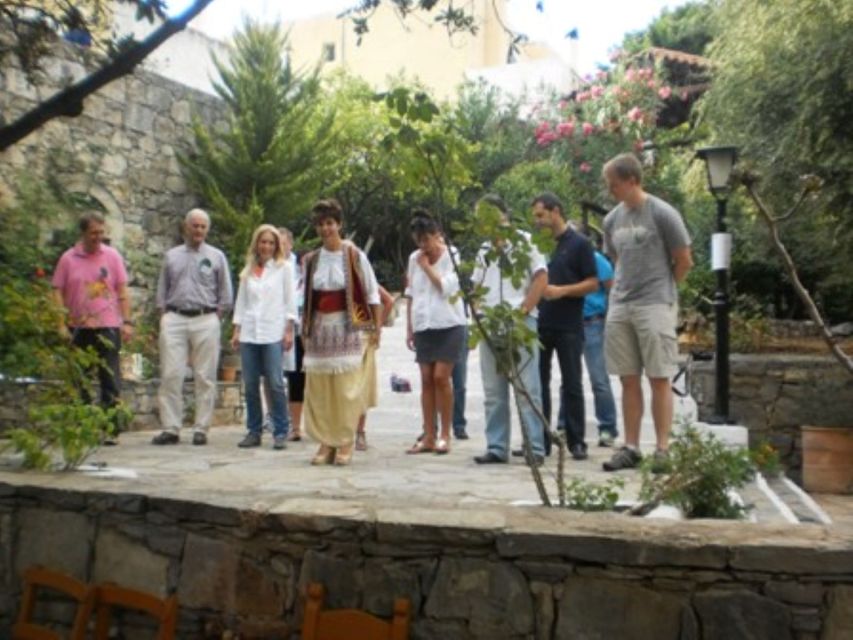
- Maria and Evi teach you the moves in clear, practical steps (kids and adults included).
- Sousta and Zorba-style dances are part of the lesson, with additional Cretan and Greek dances too.
- Rural History and Folk Craft Museum plus a village walk means you’re not just learning steps.
- Panoramic welcome drink on the terrace sets the tone before you start moving.
- A take-home CD of Greek and Cretan music (and a dancing certificate) makes it stick.
Entering Arolithos: where dance feels like culture, not entertainment
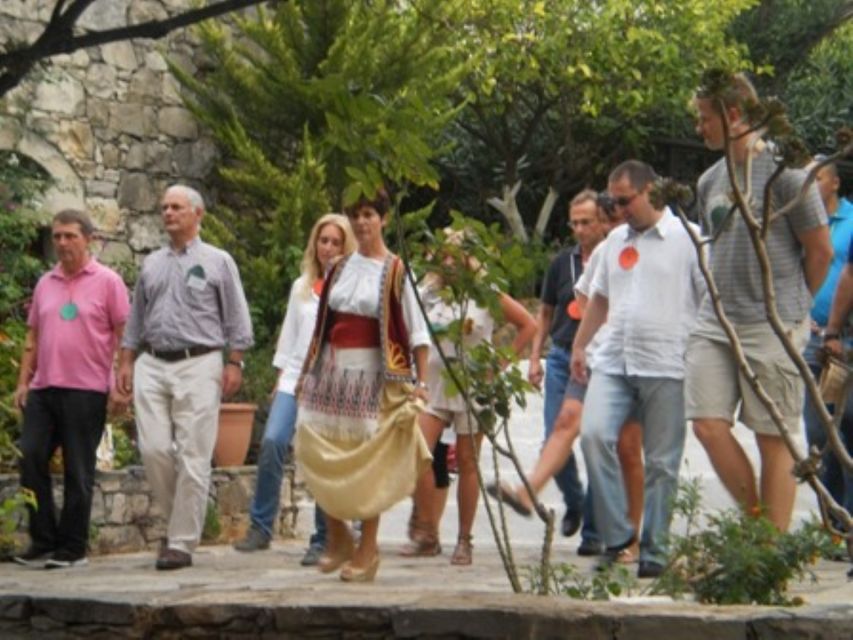
If you’re based around Heraklion and you want something real beyond museum walls, this is a strong choice. Arolithos Traditional Cretan Village is designed to slow the pace. Instead of hopping from one stop to another, you settle in, get taught, and then see the place that shaped the traditions.
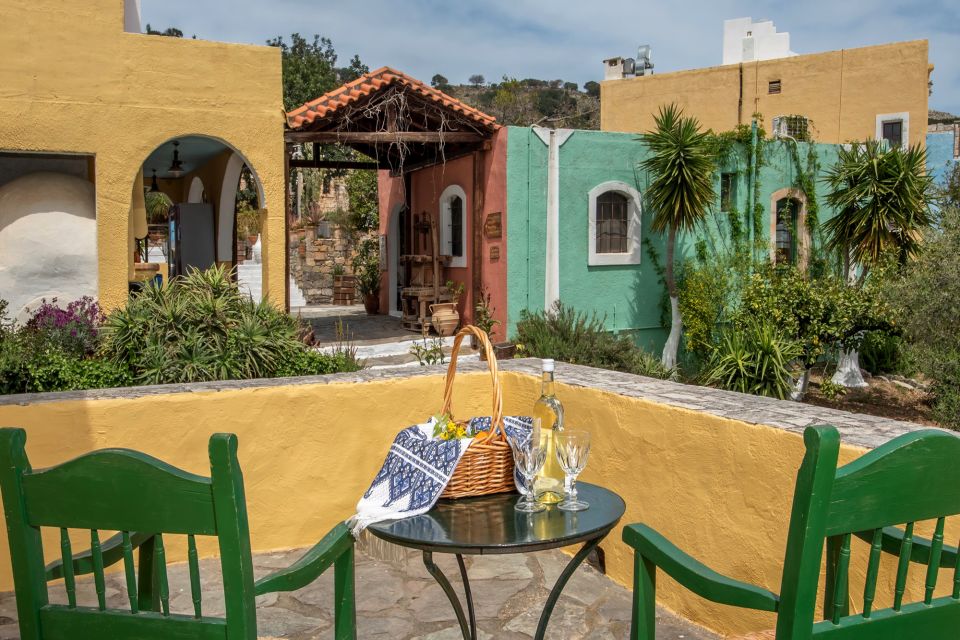
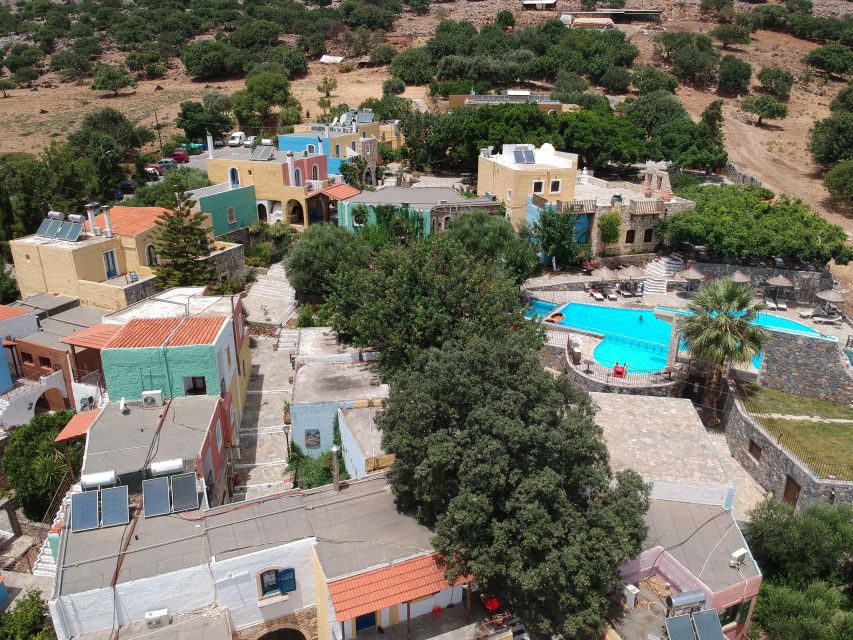
The setting matters. You start on a terrace with a welcome drink and a panoramic view. That sounds simple, but it changes the vibe. You’re not rushing into a lesson like it’s a class in a hotel conference room. You’re meeting the day where the village itself does the talking.
And because the teacher leads from the inside—this is tied to living Cretan dance—your lesson isn’t just footwork. You’re learning how the dances feel in the body: timing, posture, and the small styling choices that make a Cretan dance look like a Cretan dance rather than a generic group shuffle.
You can also read our reviews of more tours and experiences in Crete


Meet the instructors: Maria, Michalis, and Evi in one smooth flow
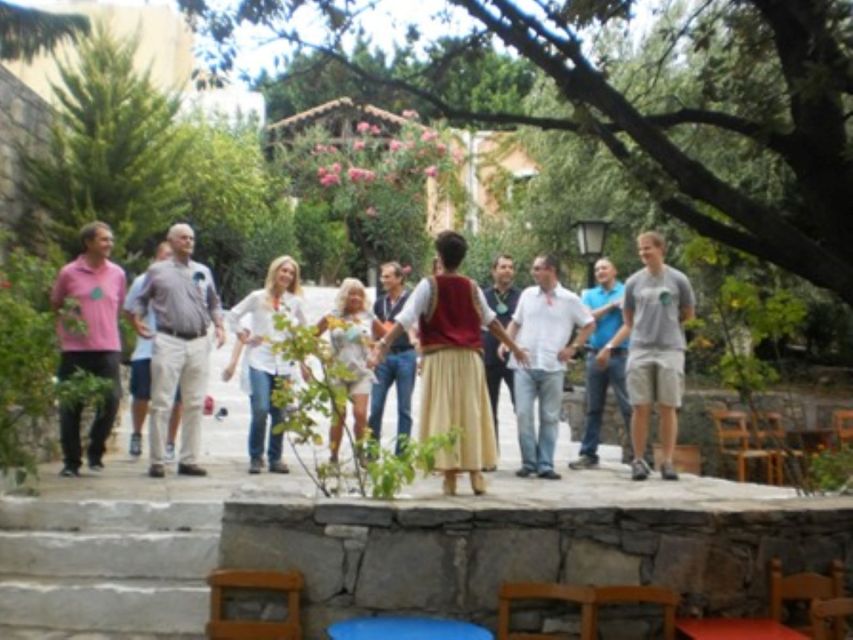
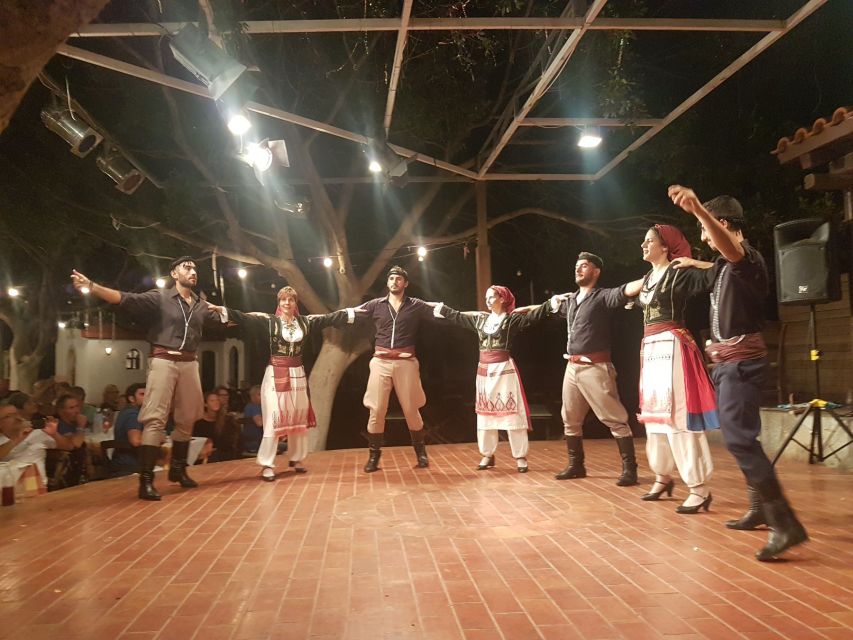
This experience is led by Maria, a professional dancer in Cretan and Greek dances and the dancing teacher for kids and adults connected with the local cultural association. She teaches wearing a traditional uniform, which helps you get into the right mindset fast: you’re not just learning choreography; you’re stepping into a tradition.
Maria is also described as the leader of the dancing group at Arolithos Village. That matters because it usually means she isn’t copying steps from a book—she’s teaching something she performs and shares regularly.
The host side is tied to Michalis, one of the owners of Arolithos Village. You’ll see that blend of hospitality and culture come through in how the day runs. Evi may also join in to support the dancing lesson, and this is one of those behind-the-scenes details you’ll appreciate if you like getting individualized help. The goal is comfort and progress, not just group timing.
If you’re someone who gets nervous in beginner-friendly classes, this setup helps. Multiple teachers and a calm village pace mean it’s easier to ask questions and adjust without feeling rushed.
The 2-hour dance lesson: what you’ll learn (and how it’s paced)
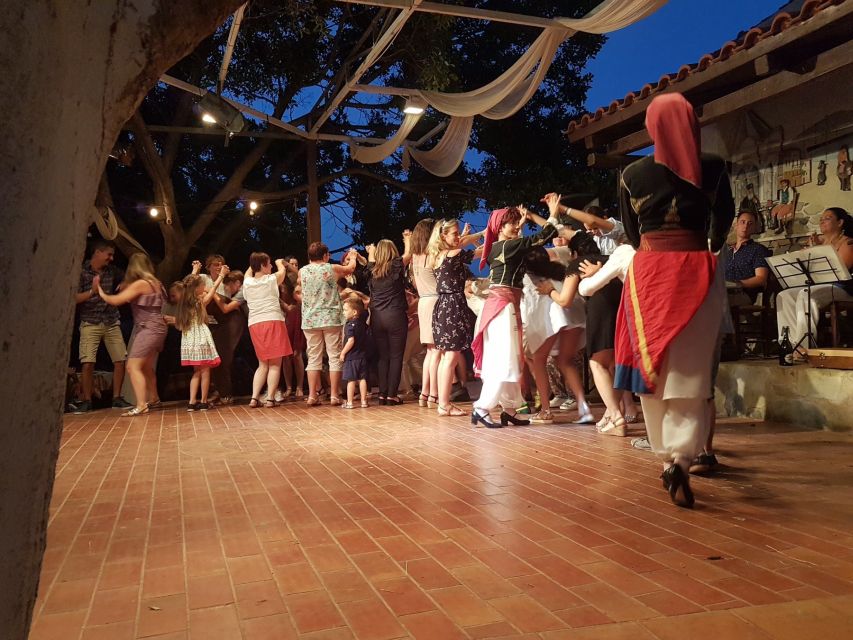
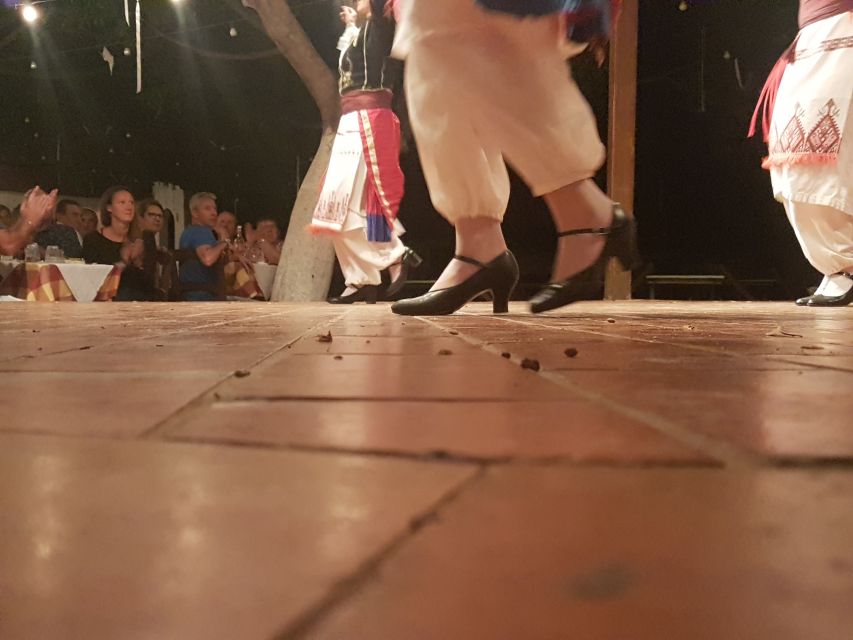
The lesson is about 2 hours, and it’s built to teach you recognizable popular Cretan and Greek dances. Based on the information you’ll get and the dances referenced, you can expect Sousta and Zorba the Greek style steps, plus more familiar Greek/Cretan dance variations.
Here’s what that means for you in practical terms:
- You’ll start with the first steps of popular dances—so you’re not thrown into the hardest part immediately.
- The teacher shows you the moves first, then you repeat them as a group, adjusting as you go.
- You’ll likely learn several dances within the session (some groups end up learning around four, with levels ranging from easier to more challenging).
The pace is ideal if you’re there for the experience, not for a competition. Even if you’re a confident dancer, you may still enjoy slowing down enough to learn the “why” behind the look—hand positions, foot patterns, and group timing.
A helpful extra: at the end, Maria offers a dancing certificate, and you’ll also receive a CD with Greek and Cretan music. That’s not a gimmick. It’s your way to replay the rhythms later, which is exactly how dance sticks.
Village walk and the Rural History & Folk Craft Museum
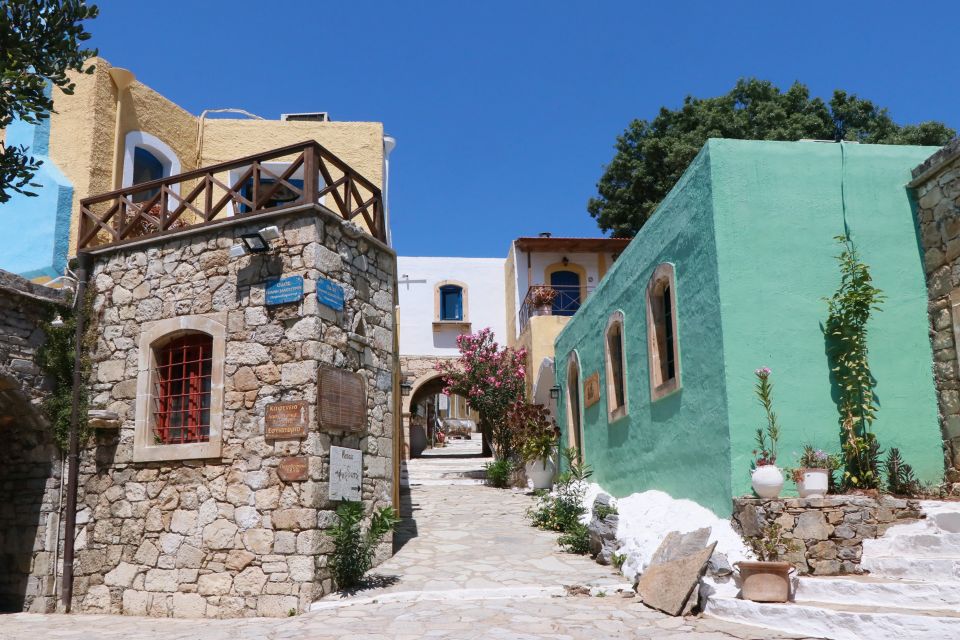
Before (and sometimes after) the lesson, you’ll get a walk through Arolithos Village. This is where the day stops being only about movement. You’re shown old houses and the village layout, and you’ll get a short museum visit focused on rural history and folk craft.
A museum visit like this is valuable because dance traditions don’t live in a vacuum. When you see how people lived—different house styles, and the contrast between richer and poorer original residences—it becomes easier to understand why certain dances were communal, social, and tied to local life rather than purely theatrical entertainment.
The museum itself is described as the Rural History and Folk Craft Museum, so the tone is practical and cultural. It’s less about famous artifacts behind glass and more about everyday life and craft traditions connected to rural Crete. If you like “why this tradition looks the way it does,” this stop adds context.
One drawback to keep in mind: it’s a small, quiet village setting. That’s a plus if you want calm and attention. If you’re addicted to city noise and constant activity, you might find the pace slower than you expect.
The welcome drink, terrace views, and the after-class moment
You’re welcomed on the terrace with a panoramic view before the lesson starts. That’s a simple detail, but it’s part of the rhythm of the experience: you arrive, settle, and then begin.
After the dancing, you should expect light refreshments as part of the experience flow. The exact drinks can vary, but the day is described as including items like raki and juice in the food-and-refreshment part of the setting. You may also receive a small traditional after-drink with nuts.
This matters because it gives you a clean landing after you’ve used energy. Dancing builds heat fast, so having something to sip makes the difference between feeling rushed out and feeling like you finished something satisfying.
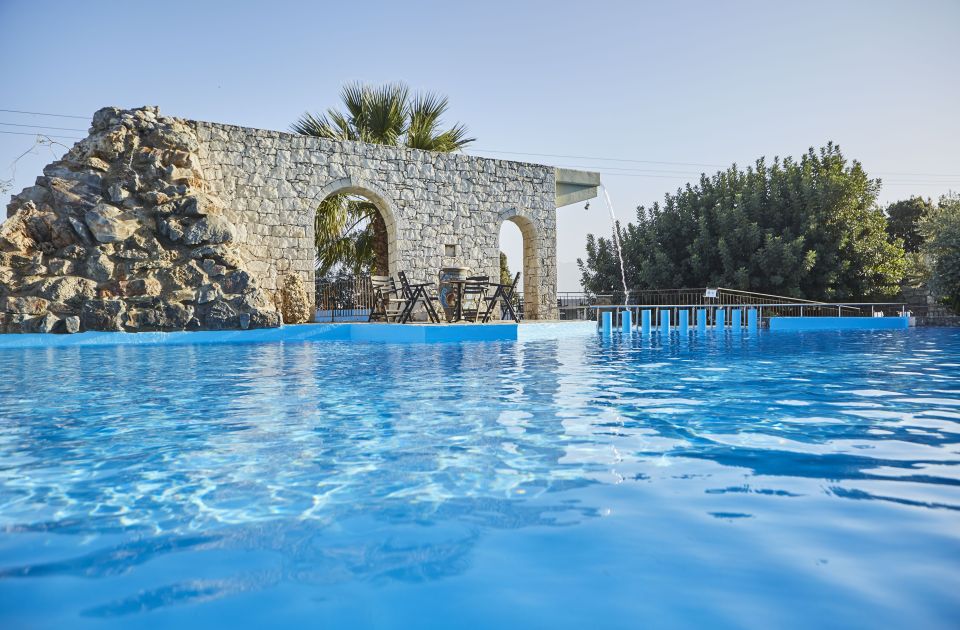
And if you want to stretch the day a bit, Arolithos gives you the chance to use the tavern and the swimming pool in your free time afterward. That can turn a short cultural stop into a half-day mood—especially if you’re traveling with family.





Price and value: is $106 per person worth it?
At $106 per person for a 2-hour experience, the big question is value. For dance lessons, price often feels high because you’re paying for instruction, a place, and access. Here’s why it can still be a smart spend:
- Instruction is hands-on, led by Maria (and potentially supported by Evi), not a passive intro.
- Entrance fees are included, so you’re not piecing together costs for the museum portion.
- You get a CD with Greek and Cretan music, plus a dancing certificate. Those two items make it feel like you left with something tangible.
Still, it’s fair to compare. If you only want the museum and don’t care about dancing, you may question the cost. If you want a serious full-day cultural immersion, two hours may feel short.
My practical take: if you’re visiting Crete and you want one clear activity that combines movement + local context, this is likely worth it. If you’re budget-tight and only hunting for a low-effort cultural checkmark, it might not be the best fit.
Logistics that can make or break your day (no pickup, plan your arrival)
This is a do-it-yourself meeting point. There’s no hotel pickup and drop-off, so you’ll need your own car, taxi, or the transport you can arrange to reach the village.
The meeting point is: Arolithos Traditional Cretan Village, 11th km old road Heraklion to Rethymnon. That’s specific enough to find it if you’re comfortable with driving in Crete, but it also suggests the village sits along a route rather than in the center of Heraklion or Rethymnon.
Two real-world considerations to plan for:
- Expect the approach to be a bit tricky if your GPS likes shortcuts. The village sits up on a mountain road area, so take your time.
- Wear shoes you can move in. Comfortable shoes are recommended, and the dress code is smart casual.
If you’re traveling with kids, bring patience. A dance lesson goes fastest when everyone can follow the steps comfortably.
Who should book this Cretan dance lesson (and who should skip it)
This experience is a great match if you want:
- A fun, culturally grounded Greek dance lesson in Crete
- A calmer setting than the loud, packed tourist circuit
- Something family-friendly that still feels authentic (instruction is designed for kids and adults)
It’s less suitable if you:
- Have back problems (not recommended)
- Are wheelchair users (not wheelchair accessible)
- Are pregnant (not suitable)
It’s also not ideal if your goal is a high-energy, nightlife-style outing. Arolithos is described as quiet and more laid-back, which can feel like a win—or a mismatch—depending on your travel style.
If you’re a beginner, this class still makes sense because the teacher shows the first steps and adapts. If you’re intermediate or stronger, you may enjoy that the lesson includes moves ranging from easier to more challenging dances within the same session.
Final call: should you book Arolithos Cretan and Greek Dance?
If you want one day in Heraklion-area Crete that feels hands-on, cultural, and memorable without being exhausting, I think this is a strong booking. The standout elements for me are the professional teaching by Maria, the chance to learn recognizable dances like Sousta and Zorba the Greek, and the added value of the Rural History and Folk Craft Museum plus village walk.
But if you’re relying on pickup from your hotel, or you need wheelchair access, or you have back-related limits, you should look for a different experience.
Otherwise: bring comfortable shoes, give yourself time to reach the village, and go in ready to laugh at your own first attempts. That’s usually when it becomes fun.
FAQ
How long is the dance lesson at Arolithos?
The experience lasts 2 hours.
Where do I meet the group?
The meeting point is Arolithos Traditional Cretan Village, 11th km old road from Heraklion to Rethymnon.
Is a museum visit included?
Yes. You’ll have a short visit to the Rural History and Folk Craft Museum and you’ll also see parts of the village.
What dances will I learn?
The lesson includes popular Cretan and Greek dances such as Sousta and Zorba the Greek, plus more dance moves from the region.
Do they provide anything to take home?
Yes. You get a copy of a CD with Greek and Cretan music, and you’ll receive a dancing certificate at the end.
What languages are the guides/instructors?
The live guide/instructor is available in English and Greek.
Is hotel pickup included?
No. Hotel pickup and drop-off are not included.
What should I bring and wear?
Bring passport or ID card and wear smart casual clothes. Comfortable shoes are recommended.
Who should avoid booking?
It’s not suitable for wheelchair users, and it’s not recommended for participants with back problems. It’s also not suitable for pregnant women.