Knossos makes myth feel physical. The Palace of Knossos turns the labyrinth legend into walkable stone paths, courtyards, and restored rooms—plus you get an easy self-paced way to see it in about 1 to 3 hours. This Heraklion-area ticket is a solid choice if you want archaeology that doesn’t require finding a group or matching anyone’s pace.
I like that the site is loaded with explanation. You’ll be surrounded by signage and interpretive information that helps you connect the big ideas—Minoan power, ceremonial life, and the palace’s scale—to what you’re physically looking at. I also like the credibility angle: the excavations led by the English archaeologist Arthur Evans are part of how the site is presented, including the partially restored palace from the last and largest Minoan phase.
One possible drawback is the audio guide on your phone. It can be hard to follow, and navigation can feel confusing if you don’t have a clear top view or map. If your phone reception is weak or the audio app doesn’t load, you’ll still have the info boards, but the experience can lose some momentum.
In This Review
- Quick takes before you go
- Entering the Palace of Knossos: where the Minoan story starts
- What you’ll see at Knossos (and what to look for)
- The self-guided audio: useful when it’s working, tricky when it isn’t
- Timing and heat: how long you really need
- Getting there from Heraklion: taxi, car, or bus
- Price and value: what $33.12 buys you in practice
- Who this Knossos ticket is best for
- Should you book this Knossos ticket?
- FAQ
- Is entry to the Knossos archaeological site included?
- How long should I plan to spend at Knossos?
- Is the audio tour available in English?
- Does the ticket include a Heraklion city audio tour too?
- What is not included with this ticket?
- Are reduced-price tickets available online?
- Can I get a refund if I cancel?
Quick takes before you go
- Massive site, partial restoration: you’re touring a palace complex, not just a few ruins.
- Myth meets archaeology: the labyrinth story is tied directly to Knossos’ role in Minoan culture.
- English self-guided audio (optional): helpful, but it depends on your phone and location.
- Info boards do real work: signage helps when audio is confusing.
- Plan for at least 90 minutes: it’s easy to take your time here.
- Sun is part of the game: afternoon can feel better if you’re heat-sensitive.
Entering the Palace of Knossos: where the Minoan story starts
Knossos is the kind of place that makes you slow down. Even if you only know the basics—Minos, the labyrinth, and the idea of an older civilization than Rome or Greece proper—walking through the palace grounds makes it feel concrete.
This ticket is built for self-guided exploring. You get regular site entry, and if you select the option, you also get the Knossos archaeological site self-guided audio tour in English. The palace is described as the largest Bronze Age archaeological site on Crete and likely the ceremonial and political center of the Minoan civilization. That framing matters because it changes what you pay attention to: you’re not just admiring stonework, you’re trying to understand how a whole society organized life around a palace center.
The site also leans into the “last and largest” Minoan palace that’s been partially restored. Think of it as archaeology with an informed reconstruction—enough to help you visualize, not so much that you forget you’re looking at ancient remains. That balance is why Knossos works well for independent travelers: you can follow your interests without being locked into one tight narrative.
You can also read our reviews of more tours and experiences in Heraklion


What you’ll see at Knossos (and what to look for)
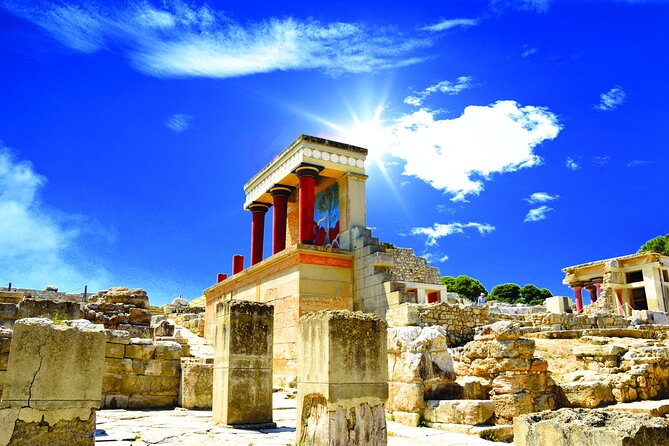
Knossos is often described as the birthplace of Minoan civilization, tied to the myth of the labyrinth. In practical terms, you’re looking at a complex palace layout associated with rituals, administration, and daily movement between spaces.
Here are the highlights the site description emphasizes, and what they mean as you walk:
- Scale and age: the palace complex is associated with a major construction phase dating to around 2000 B.C., with the palace described as built about 3700 years ago. You’re seeing a huge amount of material over many parts of the complex.
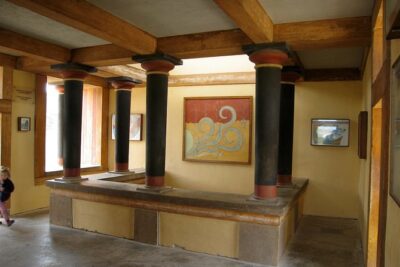
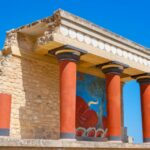
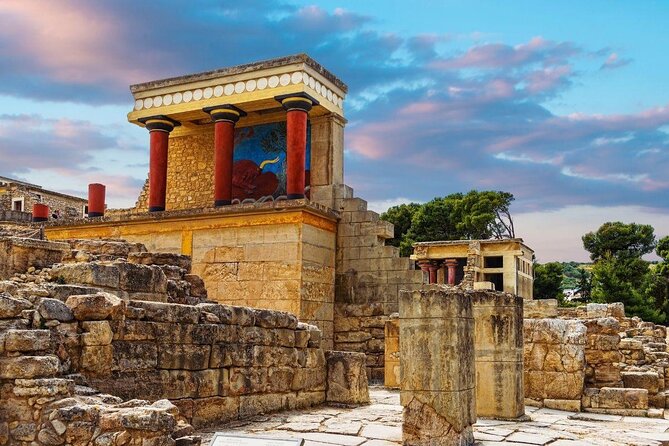
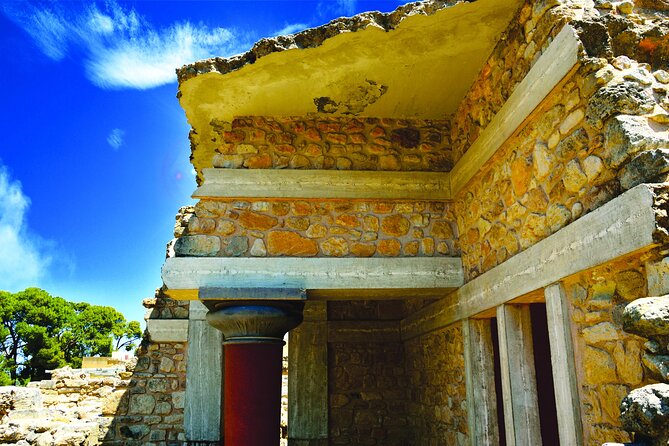
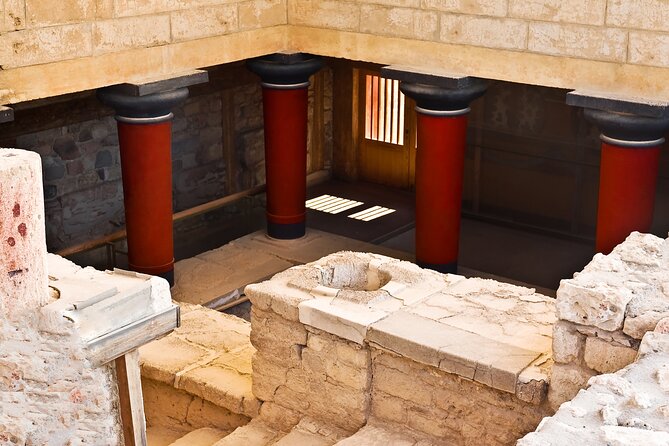
- Partial restoration and a big footprint: there are rebuilt sections alongside original ruins. That means your eye has to switch between “this is ancient” and “this is restored to help you understand the original plan.”
- Over 1000 pieces: the way the palace is described suggests you’ll spend time noticing repeated architectural bits—passages, room groupings, and the way areas connect.
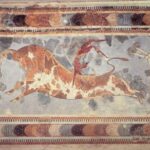
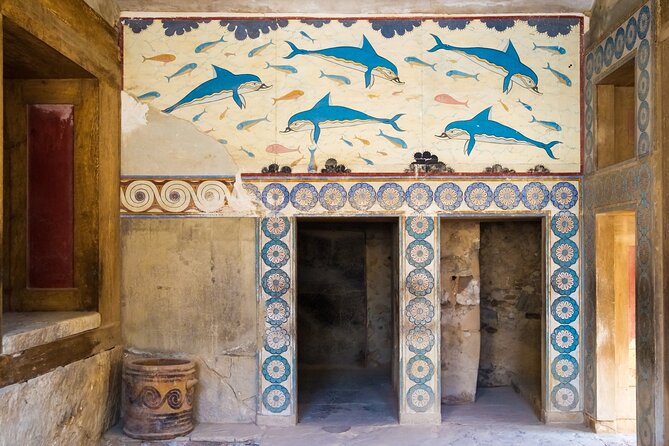
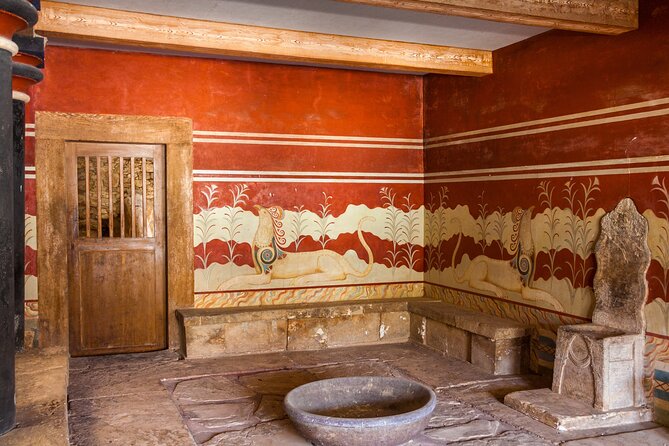
- Murals and the sense of decoration: the palace is noted for impressive murals, which is a big cue to slow down at places where you see reconstructed decorative themes or interpretive references.
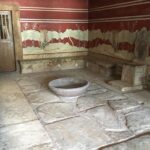
- A throne said to be intact: the site description notes the throne of King Minos is still intact. Even if you’re not a hardcore art historian, this is an easy focal point to ground your visit in a recognizable legend-plus-history moment.
A smart way to tour is to use the signage actively. The info boards help you understand which parts of the palace were excavated and how British archaeologists approached the site in the early 20th century. Without that, Knossos can blur into “lots of rooms.” With it, you start to map the palace in your head as you go.
The self-guided audio: useful when it’s working, tricky when it isn’t
If you choose the audio option, you’ll use a self-guided tour delivered through your phone. The audio is designed to be geo-located, meaning it should give commentary based on where you are.
That can be great—until it isn’t.
Here’s what to expect based on common friction points:
- It can be hard to follow without a clear map. Some sections rely on you matching what the narration says to what you see on the ground.
- You may encounter many stations. The experience is described as having more than 20 stations, which is a lot. When the directions aren’t perfectly obvious, it’s easy to get a little behind.
- Navigation can feel confusing. The lack of a simple top view can make it harder to confirm you’re at the correct numbered spot.
- Phone dependence is real. The audio is run off your phone, and you may want a plan for reception or app loading. In some cases, visitors were told to scan a QR code and download the app, and that can be frustrating if your phone doesn’t cooperate.
My practical advice: treat audio as helpful context, not as the only way to understand the site. If audio starts to lag or feel confusing, you can pause it and switch your attention to the information boards. They’re doing a lot of the heavy lifting at Knossos, especially for connecting reconstructed areas to what excavators found.
Also, if audio isn’t running at all, you can still have a satisfying visit. The ruins and signage provide plenty to read and connect—just plan to go slower, because you’ll be doing more of the interpretation yourself.
Timing and heat: how long you really need
The ticket suggests a window of about 1 to 3 hours. In real life, I’d plan around 90 minutes minimum if you want to actually absorb the layout and not just rush to the most famous spots.
A couple practical timing notes:
- The site can feel hot, and you’ll be outside moving between areas. If you’re heat-sensitive, an afternoon slot can feel easier than a morning one. That’s partly about temperature and partly about how relaxed your pace feels.
- If you move fast and only hit the biggest highlights, you can shorten the visit. But Knossos rewards a slower rhythm, especially because signage and audio stations encourage you to stop and read.
One more tip: keep some buffer time. Even without a formal guided group, Knossos is extensive. Building in 15 minutes of breathing room helps you avoid that end-of-visit scramble where you feel like you’re rushing through your own learning.
Getting there from Heraklion: taxi, car, or bus
Knossos is considered the nearest major palace site to Heraklion, and you can reach it by taxi, car, or bus. The bus can take a long time, so if you value time and comfort, a taxi or car can be the smoothest approach.
You’ll want to think about round-trip logistics, not just the one-way ride. Since you’re self-guided, you’ll likely want the freedom to return when you’re done rather than when a driver or bus schedule tells you.
Here’s how to make the day feel easier:
- If you’re short on time, don’t gamble on a long bus ride both ways.
- If you’re traveling as a group, weigh the total cost of taxis against the time cost of buses.
- If you’re going in the hottest part of the day, prioritize a transport plan that doesn’t add extra waiting and sitting.




Price and value: what $33.12 buys you in practice
At $33.12 per person, this is priced like a straightforward museum/site ticket with optional audio add-ons. The main value isn’t a guided lecture—it’s access plus the tools to explore on your schedule.
What you get that supports value:
- Regular entry ticket to the Knossos site.
- If selected, a self-guided Knossos audio tour in English.
- Also, there’s mention of a Heraklion city self-guided audio tour option (depending on what you selected).
Where the value can drop:
- If you need an expert guide to connect every visual clue, a self-guided ticket may feel like less than you hoped. Some people do better with a live guide when they want deeper interpretation of what’s uncertain versus what’s reconstructed.
- Audio can be inconvenient if it’s hard to follow or depends heavily on your phone behaving well. If audio fails, you’re still in the right place for a good visit, but you’ll lean more on signage and your own reading.
My recommendation for value: book it if you want independence and you’re comfortable using a mix of signage plus audio. If you prefer someone to “walk you through” the story step by step, consider pairing your self-guided visit with a guide elsewhere—or plan to spend extra time reading on-site.
Who this Knossos ticket is best for
This is a strong fit if you:
- want an independent, flexible visit with English audio available
- like history but don’t want to coordinate with a group schedule
- enjoy reading interpretive signage and pausing often
- value a good self-paced route through a complex archaeological site
It might be a weaker fit if you:
- feel lost easily without maps and top views
- rely on audio as your main learning tool
- expect a live explanation that answers questions on the spot
If you’re traveling with kids or people who tire quickly, build in longer breaks and plan for heat. The site is big, and even with audio, your pace might need to be calmer than you expect.
Should you book this Knossos ticket?
Yes, if you want a low-stress way into one of Crete’s most important archaeological sites. This ticket gives you the fundamentals—entry plus the option for English audio—so you can build your visit around what interests you most.
Skip it or reconsider if you know you’ll be frustrated by phone-based audio and you don’t like navigating many stations without a simple map view. In that case, you might prefer a guided approach so someone else handles the “where do we go next?” problem.
FAQ
Is entry to the Knossos archaeological site included?
Yes. The ticket includes a regular entry ticket for the Knossos archaeological site.
How long should I plan to spend at Knossos?
Plan for about 1 to 3 hours.
Is the audio tour available in English?
Yes. The offered audio tour options are in English.
Does the ticket include a Heraklion city audio tour too?
It includes a Heraklion city self-guided audio tour in the provided inclusions list, along with a Knossos archaeological site self-guided audio tour if that option is selected.
What is not included with this ticket?
Hotel pickup and drop-off are not included, along with personal expenses.
Are reduced-price tickets available online?
Reduced-price tickets are not available online.
Can I get a refund if I cancel?
No. The experience is non-refundable and cannot be changed for any reason.