Olive oil becomes real when you walk the grove. This Chania-area day tour takes you from working olive oil plants to small villages, with tastings of organic extra virgin olive oil along the way. You’ll also get big valley views of the Chania mainland plus one visit that feels almost mythic: a possible 2,500-year-old olive tree.
What I like most is how the day follows olive oil production phases across different eras, not just a stop-and-sip approach. I also like that you taste and learn from the people doing the work, including a traditional mill and a private farm where you can pick fresh fruit right off the trees.
One thing to consider: it’s a 6 to 7 hour outing with multiple stops, and lunch or drinks aren’t included, so you’ll want to plan your timing and energy.
In This Review
- Key Highlights That Make This Tour Worth It
- Olive Oil, Up Close: The Tour’s Best Idea
- Vamos: Modern Olive Oil Factory and the Tasting That Starts the Day
- Vryses Old Olive Mill: Watching Extraction the Way It Used to Work
- Kalyves Private Fruit and Olive Tree Farm: Pick Fruit, Meet a Farmer
- Tsivaras and the Possible Oldest Olive Tree: Touching a 2,500-Year Story
- Apokoronas Monastery: How Olive Oil Links Faith and Local Life
- Riverside Break in Vryses and the Malaxa View Stops
- Guide Quality: Why the Right People Change the Day
- Price and Value: What $179.43 Buys You in Real Terms
- Getting There Smoothly: Pickup, Timing, and What to Expect
- What to Bring (So You Enjoy the Whole Day)
- Who This Tour Suits Best
- Should You Book This Olive Oil Day in Chania?
- FAQ
- What time does the tour start?
- How long does the experience last?
- Is pickup offered?
- Is lunch or drinks included?
- Do I get to taste olive oil?
- Do we visit an old olive tree?
- Is this tour private?
Key Highlights That Make This Tour Worth It
- Vamos olive oil factory tour with fresh organic extra virgin olive oil tasting
- Ancient-to-modern production learning across three phases, plus real machinery viewing
- Vryses traditional old olive mill showing how extraction worked centuries ago
- Kalyves private farm visit where you collect fresh fruit and meet a working farmer
- Tsivaras “undisclosed” olive tree stop to touch a tree estimated at 2,500 years old
Olive Oil, Up Close: The Tour’s Best Idea
Most olive oil tours do one thing well: sample a few oils. This one does more than that. You’re learning how olives become oil, in the places where that process still happens.
You’ll move between modern processing, older extraction methods, and local agriculture. And because the day is structured around real sites (factories, mills, farms, and a monastery), the story stays concrete. You won’t just hear facts. You’ll see the equipment and the landscape the work depends on.
You can also read our reviews of more tours and experiences in Chania.
Vamos: Modern Olive Oil Factory and the Tasting That Starts the Day
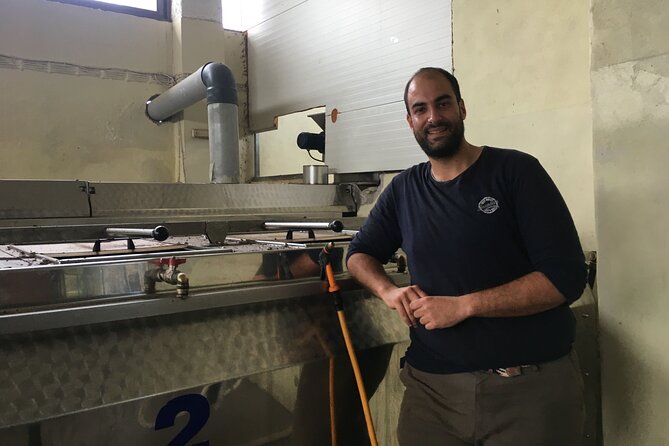
You kick off in Vamos with a modern olive oil factory. This is where you get the clearest look at how olives are processed today for extra virgin olive oil.
The factory stop also includes a full guided tour. You’ll learn about the qualities of olive oil and the idea of byproducts, which helps you understand the business behind the beauty. Then you taste some fresh organic extra virgin olive oil—useful because it gives you a baseline for what you learn later in the older sites.
Practical note: factory-style tours are usually more structured and sometimes run on a tighter rhythm than outdoor stops. If you want photos, keep your camera ready—but also listen during the explanation so you know what you’re looking at.
Vryses Old Olive Mill: Watching Extraction the Way It Used to Work
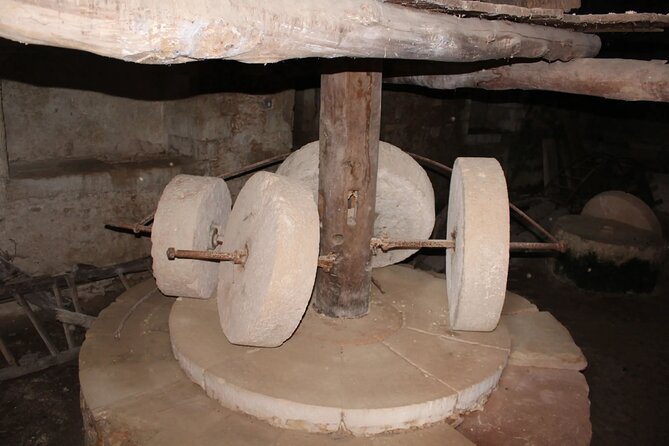
Next comes Vryses, where you visit a traditional old olive oil mill. This is the “hands-on with history” stop: you see how extraction and production worked in earlier centuries.
What makes this part valuable is the emphasis on the tedious procedure. The guide explains the steps while you stand near the machinery. That matters because olive oil production isn’t magic. It’s a lot of careful work, repeated season after season.
This stop is shorter than others, but it’s the one that helps you compare systems. After Vamos, you can start noticing what changed over time—tools, workflow, and how efficiency entered the picture.
Kalyves Private Fruit and Olive Tree Farm: Pick Fruit, Meet a Farmer
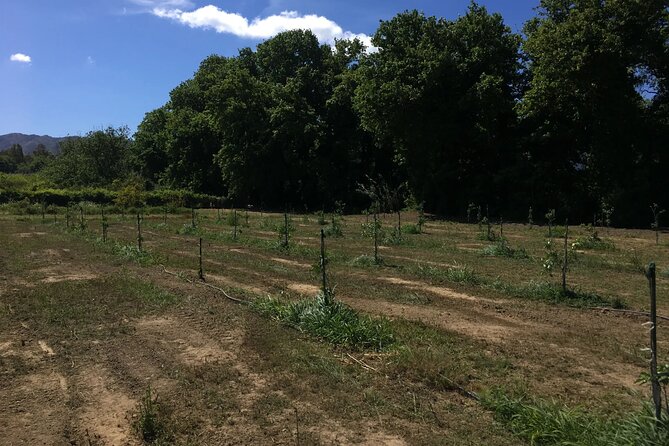
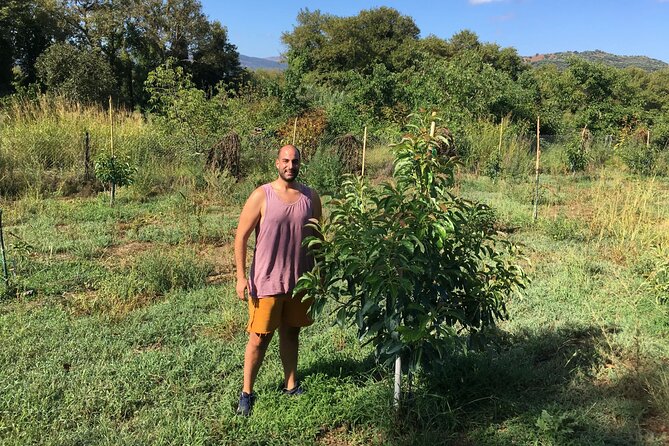
In Kalyves, the focus shifts from production rooms to daily life in the grove. You’ll visit a private fruit and olive tree farm where you learn about different olive oil varieties.
One of the most memorable parts here is the chance to collect fresh fruits right off the tree. It sounds simple, but it changes how you think about the season. You’re not just tasting oil. You’re connecting it to what’s growing, what ripens when, and what the farmer has to manage every day.
You’ll also hear from a professional farmer about routine and work methods. That personal, lived-in angle is what makes the day feel authentic rather than staged. If you enjoy food culture that’s grounded in labor—this is your stop.
Tsivaras and the Possible Oldest Olive Tree: Touching a 2,500-Year Story
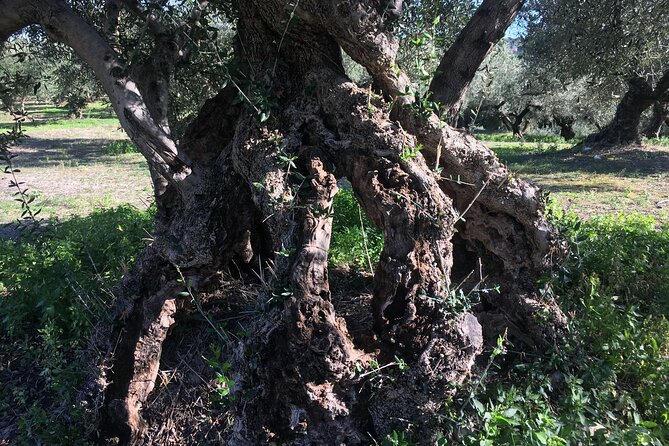
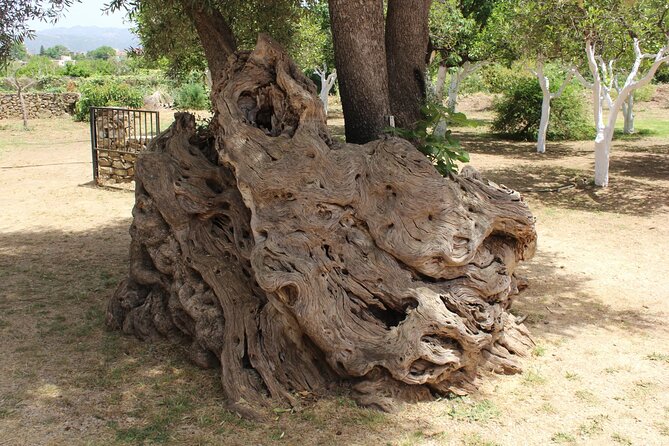
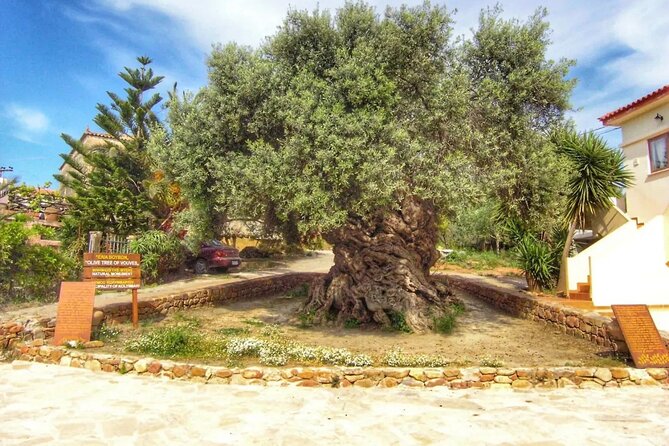
Then you go to Tsivaras, where the tour claims a possible oldest olive tree in the world. The location is described as undisclosed, which keeps it from turning into a generic “tourist photo spot.”
When you arrive, you’ll stand in awe of the tree’s dimensions and you get to touch it. The tree is presented as being more than 2,500 years old. Even if you take the wording as “possibly” rather than a scientific verdict, the feeling is still the same: you’re meeting something that has survived wars, weather, and changing empires.
This stop is one hour, which is important. Enough time to really look, take photos, and absorb the scale without rushing you out the gate.
Tip: wear shoes you’re comfortable standing in. You may spend time outdoors around the tree and along the paths connecting stops.
Apokoronas Monastery: How Olive Oil Links Faith and Local Life
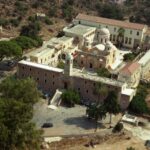
In Apokoronas, you visit a monastery with a strong connection to olive oil production. You’ll see the monastery’s olive oil factory and learn why olive oil matters to locals across the years.
This part adds a different angle. Olive oil isn’t only an agricultural product. It’s also part of how communities mark time and sustain traditions. The monastery connection helps explain the longer view of olive oil in Cretan life.
Expect a calm, reflective stop compared with the busier factory moments. It’s still educational, but the tone tends to feel more rooted. If you care about how food traditions connect to culture—not just flavor—this is a key hour.
Riverside Break in Vryses and the Malaxa View Stops
After Apokoronas, you get a smaller break in a riverside village in Vryses. It’s a romantic pause in the schedule, with about 50 minutes to reset.
Then you finish with sightseeing time in Malaxa. You’ll take photos of valleys and the regions of the Chania prefecture. Even if you’re not a big “lookout point” person, this matters. It gives the day a sense of place—so you can imagine where the olives grow and where the villages you visited fit into the bigger map.
A small reality check: because the day includes multiple brief drives and several short stops, the sightseeing moments help keep you energized rather than drained. Think of them as the visual reward after the learning stops.
Guide Quality: Why the Right People Change the Day
This tour is led by a team described as experienced olive oil producers and a licensed historian tour guide, plus a driver. The historian guide is listed as licensed by the Greek Ministry of Tourism and Culture.
That licensing detail matters more than it sounds. When you’re learning about production stages from ancient through medieval to contemporary times, you want accurate explanations and a guide who can connect details to the bigger story. Here, the day is built on learning, so guide quality is not an add-on. It’s the backbone.
The fact that you also meet a professional farmer and an olive oil producer also helps. You’re hearing from people with different roles in the olive oil world—factory processing, traditional milling, and farm labor. That gives you a fuller picture.
Price and Value: What $179.43 Buys You in Real Terms
The price is $179.43 per person for roughly 6 to 7 hours. That’s not “cheap,” but you’re not paying for a single tasting.
You’re paying for:
- multiple site visits (modern factory, old mill, private farm, monastery factory)
- olive oil and organic fruit experiences
- a visit to a tree described as more than 2,500 years old
- guided interpretation from a licensed historian tour guide
- free pickup and drop-off from central Chania areas
Also, this is a private tour, meaning only your group participates. That can make a real difference if you prefer asking questions without competing with a big crowd. If you’re traveling with family or friends and you value a day that stays flexible in conversation, the private format is part of the value, not just a luxury.
You might still feel the time and cost if you only want a light snack-and-photo experience. But if you want to actually understand olive oil—from olive to oil to tradition—this is priced like an active learning day.
Getting There Smoothly: Pickup, Timing, and What to Expect
Start time is 8:30 am. You’ll have hotel pickup and drop-off from central Chania areas. That saves you from navigating between rural stops on your own.
You should expect a day that’s mostly guided, with several transitions between stops. The good news is that each stop is designed with a purpose. The day isn’t filled with random walking. It’s structured around places where the olive story changes.
Mobile tickets are mentioned, and there’s a note that it’s near public transportation. If you’re not using the pickup, you’ll likely have options nearby, but the tour’s simplest setup is pickup-first.
What to Bring (So You Enjoy the Whole Day)
This tour is outdoor-and-indoor mix, plus a big nature moment at Tsivaras. To stay comfortable:
- bring water, especially since lunch/drinks are not included
- wear comfortable walking shoes for village paths and the tree stop
- consider sun protection, because olive groves and viewpoints can be exposed
- bring a light layer if you’re sensitive to morning-to-midday temperature swings
Also, go in with curiosity. Olive oil gets technical fast. When the guide talks processing, qualities, and byproducts, your best move is to ask what you should compare between stops.
Who This Tour Suits Best
This is a great fit if you:
- want a hands-on olive oil learning day (factories, mills, farms, and monastery production)
- care about organic fruit and olive oil beyond the usual gift-shop tasting
- enjoy culture that connects food to local life
- want a private format where the guide can answer your questions
It may be less ideal if you want a relaxed, minimalist itinerary. The day has lots of stop changes, and it assumes you’re okay learning as you go.
If you’re a cruise passenger, the tour is also offered as a shore excursion covering Chania & Souda Cruise Port, which can be a lifesaver when port time is short.
Should You Book This Olive Oil Day in Chania?
I’d book it if you want your olive oil experience to feel like a real education, not a quick sampler. The combination of modern factory processing, a traditional old mill, a private farm with fresh fruit collection, and a monastery connection gives you multiple angles on the same product.
The biggest reason to say yes is the structure: you get both production knowledge and the places that make that knowledge believable. The tour also earns its reputation for going beyond simple tastings, because you’re dealing with people and real work.
Book it especially if you’re willing to invest in a full day and bring your own snacks or plan ahead for meals. If you’re only looking for a short tasting without much driving or learning, you might prefer a shorter option.
FAQ
What time does the tour start?
The tour starts at 8:30 am.
How long does the experience last?
It runs about 6 to 7 hours.
Is pickup offered?
Yes. Free hotel pickup and drop-off is offered from all Chania central areas.
Is lunch or drinks included?
No. Lunch and drinks are not included at the private tour stops.
Do I get to taste olive oil?
Yes. You’ll taste original Cretan organic extra virgin olive oil.
Do we visit an old olive tree?
Yes. The tour includes a visit to a tree described as possibly the oldest olive tree in the world, located in an undisclosed location, and you can touch the tree (more than 2,500 years old).
Is this tour private?
Yes. This is a private tour/activity, and only your group participates.