Knossos hits you fast: one moment you’re in Heraklion, the next you’re staring at a maze built millennia ago. This half-day tour gives you the big picture of the Minoan Palace—what it was, how it worked, and why legends cling to it. I like that the visit is guided, not just a walk past stones.
I also like the way the experience ties archaeology to storytelling. You’ll get dates (when Knossos was built), practical site details (rooms, storerooms, corridors), and myth hooks (King Minos) with an English-speaking or other-language guide depending on what you choose. One possible drawback: the scheduled length can feel inconsistent depending on your exact confirmation and how your guide times the route, so it’s smart to verify your voucher details before you go.
In This Review
- Key things I’d put on your radar
- Starting Point in Heraklion: Hari’s Creperie and the Van to Knossos
- Knossos in Plain Terms: Dates, Scale, and What the Palace Actually Was
- The Rooms, the Corridors, and the “How It Functioned” Angle
- King Minos and the Legends That Stick to the Stone
- The Ruins Walk: What the 2-Hour Guided Portion Feels Like
- What You Pay: $70 Value, Plus Entrance Fees to Plan For
- Logistics That Matter: Meeting Time, Return, and Getting Your Bearings
- Who This Knossos Tour Is Best For (and Who Should Skip It)
- My Practical Take: How to Get the Most From Your 2 Hours
- Should You Book This Half-Day Knossos Guided Tour?
- FAQ
- Where is the meeting point for the tour?
- What time does the tour start?
- How long is the tour?
- How long is the guided visit inside Knossos?
- Is transportation included?
- Are entrance fees included?
- What languages are offered for the live guide?
- What should I bring?
- Are unaccompanied minors allowed?
- Is the tour refundable if I cancel?
Key things I’d put on your radar
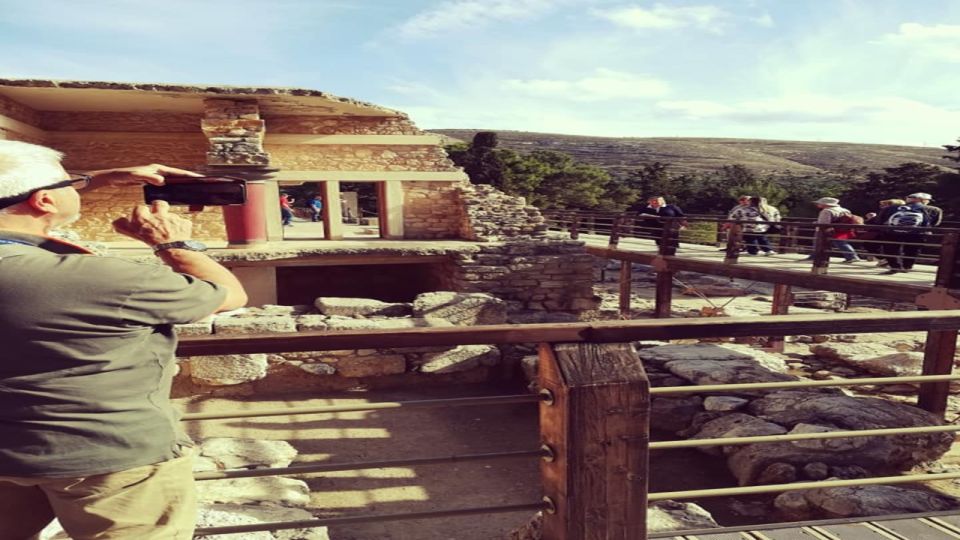
- A true guided visit with a professional guide and set time on the ground
- Knossos’ scale: up to 5 stories high in places and about 1300 rooms tied together by corridors
- Minoan everyday life in the ruins, including storerooms and the kinds of goods stored (oil, grain, dried fish, beans, olives)
- Myth + archaeology timeline, from King Minos legends to the discovery in 1878 and excavations starting in 1900
- Comfort-focused logistics: air-conditioned motorcoach and a meeting point you can find easily
- Bring comfortable shoes, because you’ll be walking the site ruins for the guided portion
Starting Point in Heraklion: Hari’s Creperie and the Van to Knossos
You meet in Heraklion across from the Heraklion Archaeological Museum, in front of Hari’s Creperie, which makes the pickup straightforward. The meet time is 08:30, and then you head out by air-conditioned motorcoach.
The drive is short—about 30 minutes—taking you roughly 5 km southeast off the city to reach the palace area. That matters because it keeps the day from feeling like you spent your limited half-day stuck in traffic.
After the visit, the schedule brings you back to the same area at around 11:30, again by van. The round-trip timing is compact, so it’s a good “add-on” tour if you’re also planning museum time or a late lunch in town.
You can also read our reviews of more guided tours in Heraklion

Knossos in Plain Terms: Dates, Scale, and What the Palace Actually Was
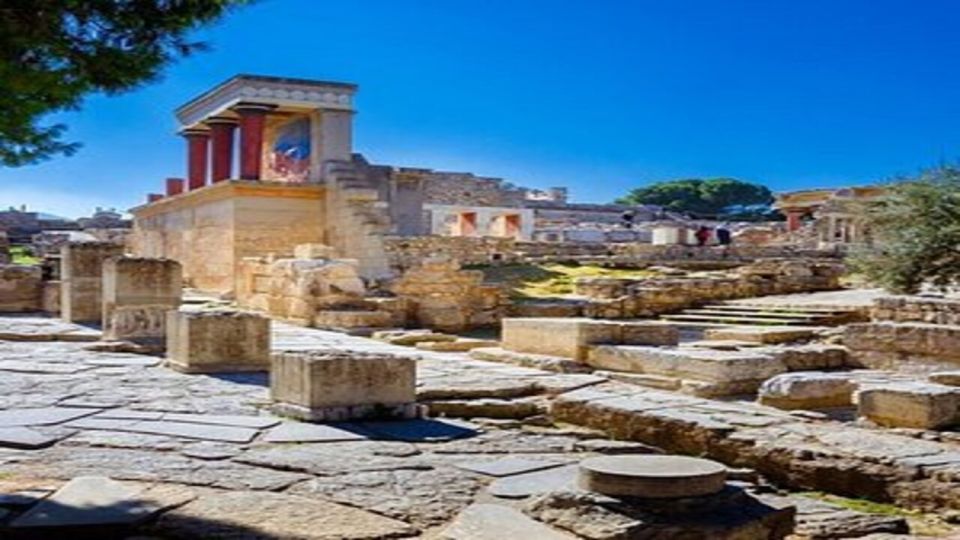
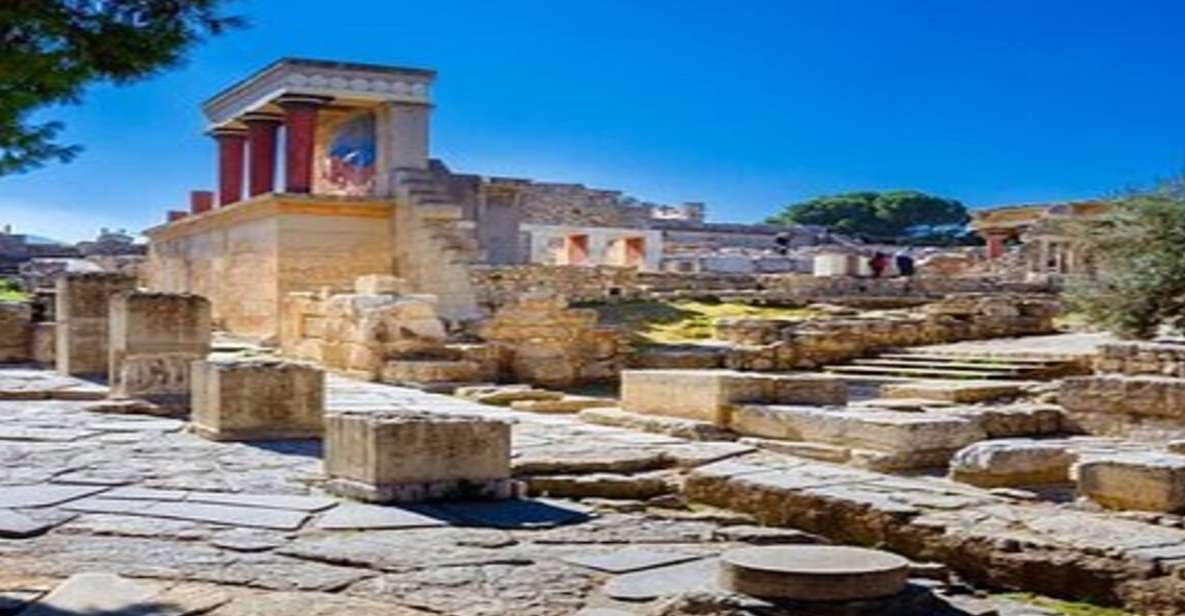
Knossos is the most important and best-known palace site of the Minoan world. The main palace complex dates to the period built from 1700 to 1400 BC, and the construction used advanced techniques for its time.
What I find most useful for planning is the sheer scale. You’re dealing with a palace that, in parts, stood up to 5 stories high, and it’s described as having around 1300 rooms connected by corridors. So when you walk through, you’re not seeing one building—you’re tracing a whole functioning complex.
Knossos also connects to older settlement layers. Settlements in the area date back to the Neolithic period, with Neolithic remains found around 7000 BC across Crete. A guide helps you keep that layered timeline straight, because it’s easy to get stuck thinking you’re only seeing one “time period.”
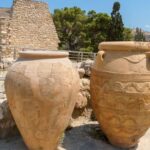
The tour’s focus stays on what the palace likely did day-to-day. You’ll hear about a theater and extensive storerooms, plus the big clay storage containers used for goods like oil, grains, dried fish, beans, and olives. The details about storage are a big part of why a guided tour is worth it here: they help you interpret what you’re seeing instead of guessing.
The Rooms, the Corridors, and the “How It Functioned” Angle
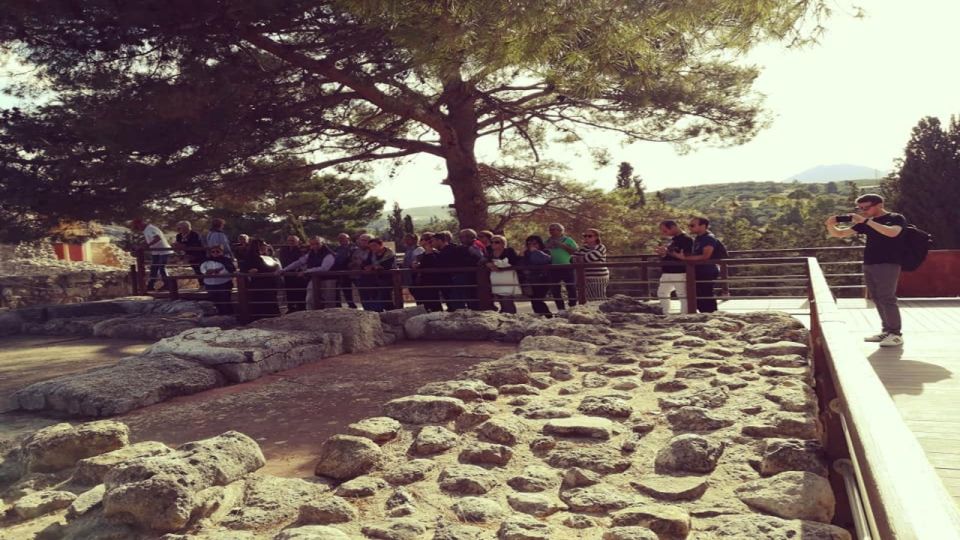
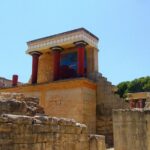
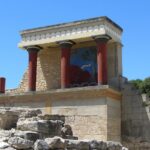
The palace is often shown in photos as ruins scattered across a site, but the guided experience tries to turn that into a mental map. The big numbers—like the 1300 rooms and their connections via corridors—aren’t just trivia. They explain why Knossos feels like a maze and why planning your route with a guide helps.
You’ll also learn what kinds of spaces were part of daily operations. The mention of a theater gives you a clue that not everything was strictly storage or administration. And the description of extensive storerooms helps you understand the palace as a hub that gathered, stored, and managed supplies.
One of the more intriguing details is the idea that gold was hidden beneath. You’re hearing this as part legend, part site history, but it’s still a strong example of how Knossos became famous not just for its architecture, but for what people imagined—or hoped—was inside.
If you like archaeology that connects to daily life, this is a good match. The goal isn’t only to name features. It’s to show you how a palace could organize production and distribution using spaces designed to hold goods for long periods.
King Minos and the Legends That Stick to the Stone
Knossos is strongly tied to the legendary king Minos, and the tour doesn’t treat myth as an afterthought. Legends are part of the reason this site became so famous beyond archaeology circles.
You’ll hear how the palace is connected with thrilling legends, and the guide’s job is to keep that storytelling from feeling random. What helps most is when you can connect story elements back to physical features—rooms, corridors, storage areas—so the myths feel like they’re growing out of the site rather than floating separately.
To keep that accessible, the guide may use a reconstruction resource. In at least one Spanish-language experience, Sacarías used a book showing reconstructions, which helped make the layout easier to picture. That kind of visual support matters because ruins can be hard to translate into a functioning complex on your own.
The Ruins Walk: What the 2-Hour Guided Portion Feels Like
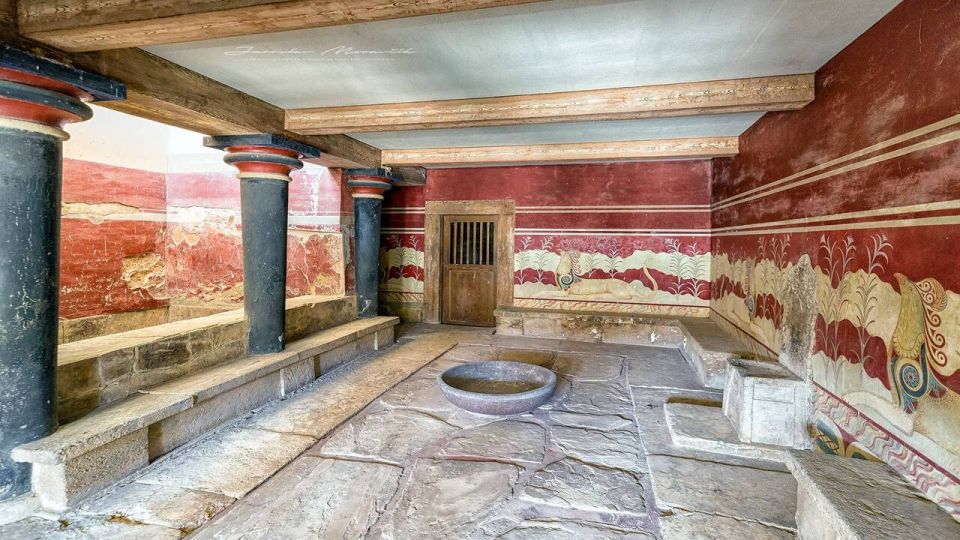
The guided time at Knossos is listed as 2 hours. That’s enough time to cover the highlights at a pace that doesn’t feel rushed, but it’s still a walk, so you’ll want comfortable shoes to stay happy.
Because Knossos is described as having sections standing up to 5 stories high, it’s easy to assume you’ll get dramatic views everywhere. In reality, you’re mostly managing uneven ground and scattered remains while a guide connects the dots. For me, the value is in hearing the structure explained clearly—how rooms connect, why certain areas mattered, and how the palace developed over time.
You’ll also get context for why excavation history is so central to modern understanding. The site was discovered in 1878 by Minos Kalokairinos. Then excavations began in 1900 by English archaeologist Sir Arthur Evans and his team, continuing for 35 years. Those details help you understand that what you see today is shaped by how—and when—people uncovered it.
One practical note: the experience should be straightforward, but timing can vary. In one case, the voucher language suggested 3 hours while the guide communicated a shorter visit length. Before you go, double-check the duration shown on your own confirmation so your expectations match the schedule you’ll get on the day.





What You Pay: $70 Value, Plus Entrance Fees to Plan For
This tour is listed at $70 per person for a half-day experience of 3 hours total. What you’re paying for is the guided interpretation plus the transport by air-conditioned motorcoach.
Included items are clear: air-conditioned motorcoach, a professional guide, and VAT and all legal taxes. What’s not included is entrance fees to the archaeological site and any pick-up/drop-off transfer beyond what’s specified.
That means the “true” cost can be a bit more than the $70 once entrance fees are added. Still, it can be good value if you want a guide to translate the site quickly—especially at a place where you’ll otherwise spend time figuring out what you’re looking at.
If you’re deciding whether it’s worth it, think about this: Knossos is famous, but it’s also complicated. A guide helps you compress a lot of context into a 2-hour visit, which is hard to do if you go self-guided and try to research on the spot.
Also worth noting: the guide languages include English, Spanish, Italian, and French. If language matters for your comfort, choosing a tour in your strongest language can improve the whole experience, especially when you’re hearing both history and legends.
Logistics That Matter: Meeting Time, Return, and Getting Your Bearings
The meeting point is consistent and easy: across from the Heraklion Archaeological Museum, in front of Hari’s Creperie. You meet at 08:30 and, after the palace visit, you return to the same area by about 11:30.
The schedule is built around minimizing downtime. You get a short van ride out and back, then the bulk of your time is spent with the guide at the palace. For a half-day format, that’s the right structure if you want to spend your time where it counts.
There are also a few practical constraints. Unaccompanied minors aren’t allowed, and the tour isn’t suitable for people with mobility impairments. If you or someone in your group falls into either category, it’s better to look for a different format that matches your needs.
Finally, the tour is described as having professional guides and clear timing, with a free cancellation option and a reserve-now/pay-later approach. Those aren’t the “experience” part of the day, but they reduce stress when plans shift.
Who This Knossos Tour Is Best For (and Who Should Skip It)
This is best for you if you want a guided introduction to Minoan Knossos in a short time window. If you like architecture, legends tied to real places, and a timeline that connects discoveries to what’s visible now, you’ll get a lot out of the structured explanation.
It’s also a smart choice if you don’t want to spend your morning sorting out what’s what on your own. With 2 hours on-site and a guide handling the interpretation, you can walk away feeling like you understood the palace rather than just photographed ruins.
On the other hand, you should think twice if mobility is an issue. The tour is explicitly not suitable for mobility impairments, so it’s not a gamble worth taking.
And if your main goal is total freedom to wander without any structure, this guided format may feel too time-bound. The upside is clarity; the tradeoff is less spontaneity.
My Practical Take: How to Get the Most From Your 2 Hours
You’ll enjoy this tour more if you treat the guide’s explanation like a map. Knossos is famous, but the layout is complex; the point of the visit is to help you connect the dots quickly.
Use the time to understand what the palace did. Pay attention to the role of storerooms and the goods they held, because that’s how the ruins start to feel like a functioning system. Learning that there were extensive storage areas with clay containers for oil, grains, dried fish, beans, and olives makes the site more meaningful.
Also, listen for how excavation history shaped what we know. Discovery in 1878 by Minos Kalokairinos and excavations beginning in 1900 under Sir Arthur Evans are part of the story behind the ruins you’re looking at.
If your language is English, Spanish, Italian, or French, choose the matching option so the legends and details land clearly. In one Spanish outing, Sacarías stood out for sharing details and using reconstructions to make the palace easier to picture, and that’s exactly the kind of support you should look for in a guide.
Finally, wear the shoes you’d trust for a guided walking tour. Comfortable shoes are the only “must” listed, and they’re the one that will matter most.
Should You Book This Half-Day Knossos Guided Tour?
I’d book it if you want a guided, efficient introduction to Knossos with context—dates, scale, how spaces worked, plus the Minos legends that keep the site in the public imagination. The included motorcoach and professional guide make it a low-effort way to understand a complex place fast.
Before you commit, do two quick checks:
- Confirm the duration shown on your own confirmation so you don’t end up surprised by timing on the day.
- Plan a budget for entrance fees since they’re not included in the listed price.
Skip it if mobility is a concern or if you need an accessibility-friendly alternative. For everyone else who wants an intelligent, story-driven walk through a Minoan palace site, this half-day format is a strong use of time in Heraklion.
FAQ
Where is the meeting point for the tour?
You meet across from the entrance of the Heraklion Archaeological Museum, in front of Hari’s Creperie, in Heraklion.
What time does the tour start?
The meeting time is 08:30.
How long is the tour?
The total duration is listed as 3 hours.
How long is the guided visit inside Knossos?
The guided tour at Knossos is listed as 2 hours.
Is transportation included?
Yes. The tour includes an air-conditioned motorcoach for the van ride to and from the palace.
Are entrance fees included?
No. Entrance fees to the archaeological site are not included.
What languages are offered for the live guide?
The live tour guide is available in English, Spanish, Italian, and French.
What should I bring?
Wear comfortable shoes.
Are unaccompanied minors allowed?
No. Unaccompanied minors are not allowed.
Is the tour refundable if I cancel?
Yes. It’s free cancellation up to 24 hours in advance for a full refund.