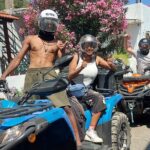
Heraklion moves fast on electric wheels. This Ecobike sightseeing tour turns a few hours into a smart circuit of old walls, central squares, and church stops, with a guide who connects what you see to the stories of Crete (from Alex to George, you’ll hear the city explained in a way that sticks). I like that the ride is low-effort and photo-friendly, and I especially like the way the tour ends with Greek meze that feels local, not touristy.
One thing to plan for: the bikes are smaller than standard bicycles, and they use a hand accelerator, so the first few minutes can feel a bit awkward until you get your balance. Heavier riders may also notice less punch on steeper uphill stretches, so it’s worth practicing a short bit before you roll out.
In This Review
- Key Highlights You’ll Feel Immediately
- Electric Bikes That Make Heraklion Feel Manageable
- Where the Tour Starts (and Why WhatsApp Matters)
- Getting Comfortable on Small E-Bikes (No-Pedal Means a Learning Curve)
- Karavolas: The Quick Warm-Up That Sets the Route
- Venetian Walls of Heraklion: Landmark Views Without the Heavy Walking
- Georgiadis Park Break: A Breather in the Middle of the Circuit
- Central Market, Heraklion: Food and Everyday City Life
- Platia Kornarou: One of the City’s Meeting-Point Squares
- Agios Minas Cathedral and the Story Behind the Facade
- Morosini Lions Fountain and Lion’s Square: Easy Photos, Good Context
- Agios Titos Church: A Calm Finish Before the Food Part
- Greek Meze Ending: Wine, Snack, and Why It’s Great Value
- Price and Value: Is $78 Worth It?
- Who Should Book This Tour (and Who Might Skip It)
- Planning Your Day After the Tour
- Should You Book It?
- FAQ
- How long is the Heraklion Ecobike sightseeing tour with Greek meze?
- Do I need to pedal on the electric bikes?
- What landmarks and areas do you visit in Heraklion?
- Is helmet use included?
- Is Greek meze or food included in the price?
- What language is the guide, and is the tour WiFi-enabled?
Key Highlights You’ll Feel Immediately
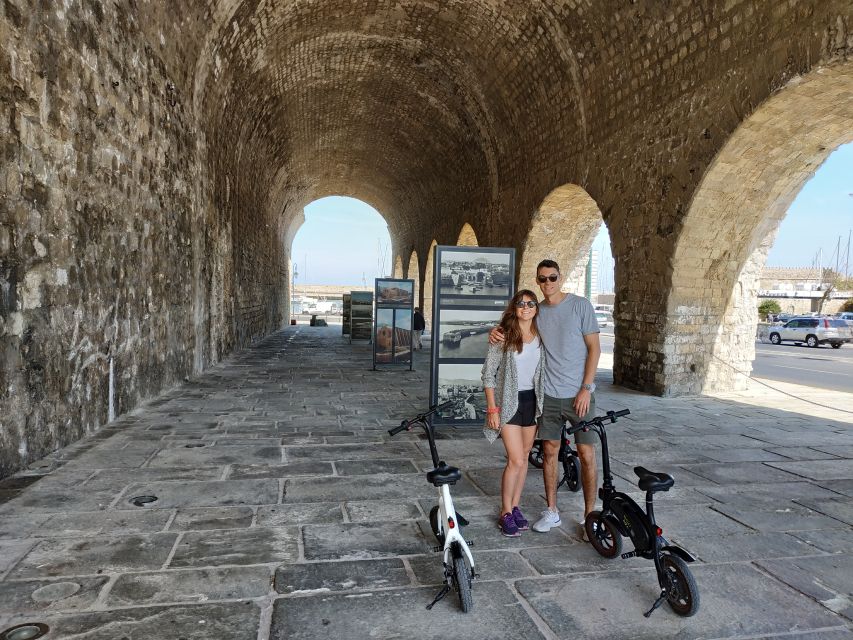
- No-pedal electric bikes: hand control makes the city easier to move through.
- Venetian Walls and harbor-area energy: you get landmark views without the full walking marathon.
- Stops built for photos and leg stretches: short breaks keep the pace pleasant.
- Central Market time: you see what real food shopping looks like in the middle of town.
- Greek meze ending: you leave with fuller taste buds, not just better photos.
Electric Bikes That Make Heraklion Feel Manageable
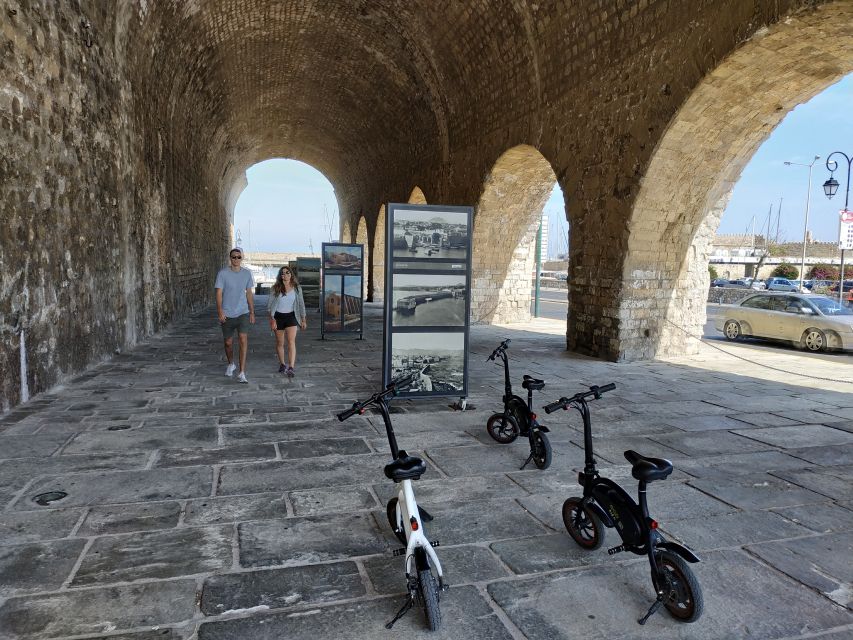
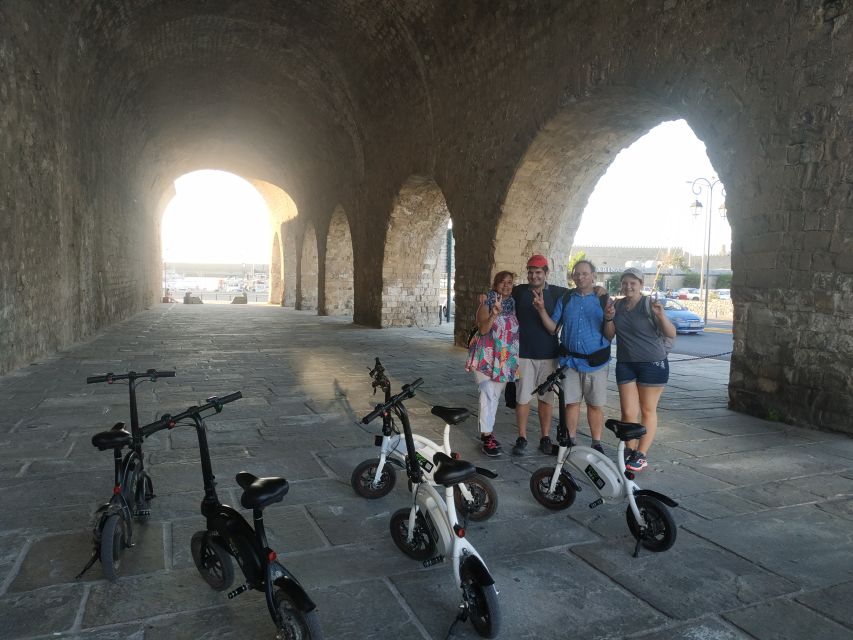
Heraklion is a city where it’s easy to waste time crossing streets, hunting parking, and doing the same “wait, where are we?” loop. The big win here is the electric bike setup: you don’t need to pedal in the way you would on a regular bicycle. Instead, the bike is controlled with a hand accelerator, which helps you keep moving even when the streets get tight or stop-and-go.
The feeling is different from walking. You still get the street-level details—shop fronts, facades, the way people flow between squares—but you cover more ground without turning the day into a cardio test. That matters because a 3–5 hour tour can’t fully replace a whole day of wandering. This one gives you a structure that lets you see the essentials and still keep energy for whatever comes next in your schedule.
You can also read our reviews of more tours and experiences in Heraklion.


Where the Tour Starts (and Why WhatsApp Matters)
You meet at ecobikegreece.gr, and you get contact details the day before. The provider notes that someone from the team will message you through WhatsApp for the plan. If you don’t use WhatsApp, you should tell the local partner after reserving so they can still get you the key information.
One practical tip comes straight from experience shared by riders: arrive 15–20 minutes early. That isn’t just “show up early for fun.” It’s time to get comfortable with the bike size and the hand control. A few minutes of practice can make the first streets feel smooth instead of wobbly.
Getting Comfortable on Small E-Bikes (No-Pedal Means a Learning Curve)
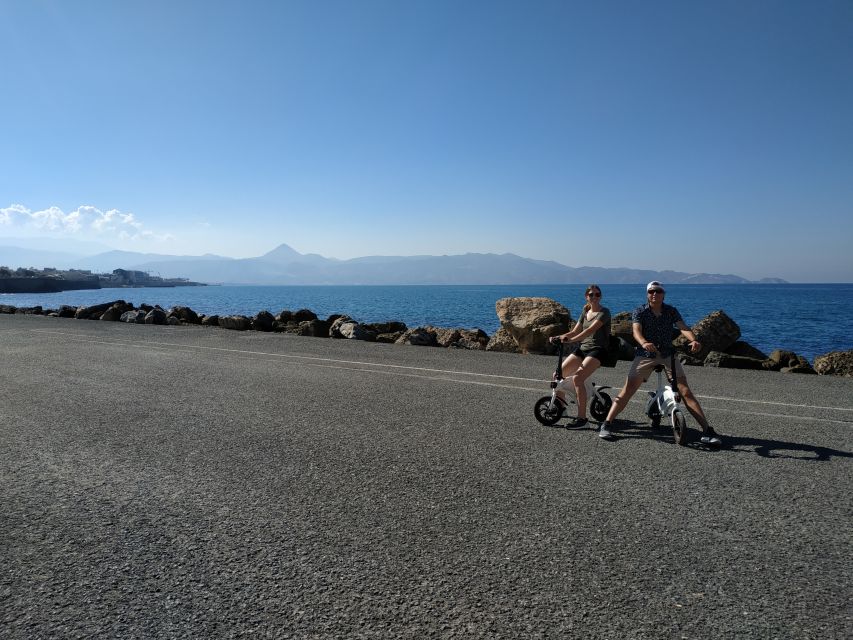
The bikes are electric and without pedals, and they’re also described as smaller than regular bikes. That combo can surprise you if you’re used to a standard bicycle frame and a natural pedaling rhythm. Expect that first adjustment period to be a little slower: you might feel like you’re searching for the right stance and steering angle.
If you’re traveling with kids or you’re bringing a teen, this matters. One review mentioned taking a 15-year-old along, and the overall verdict was positive—once the rider adjusts. The easiest approach is simple: practice at the start, then settle into the pace the guide sets. The tours also include safety briefings, and you get support during the ride, which helps you relax faster.
Weight and hills can be a factor. One rider noted the bikes struggled a bit more on steeper uphill stretches with a higher weight. That doesn’t mean you can’t do the tour. It just means you’ll get the best experience by managing expectations on climbs and using the assist on transitions.
Karavolas: The Quick Warm-Up That Sets the Route
The first stop is Karavolas, listed as a short guided introduction and sightseeing segment. This part is brief (around 10 minutes), but it’s a helpful start. You’re not thrown immediately into the “main landmarks only” routine. Instead, you ease into the tour format: the guide talks, you roll, you pause, and you learn how the group will handle traffic and intersections.
Think of this as the calibration phase. Once you’ve got your steering comfort and your understanding of how the guide signals the group, you’re ready for the bigger visual moments that follow.
Venetian Walls of Heraklion: Landmark Views Without the Heavy Walking
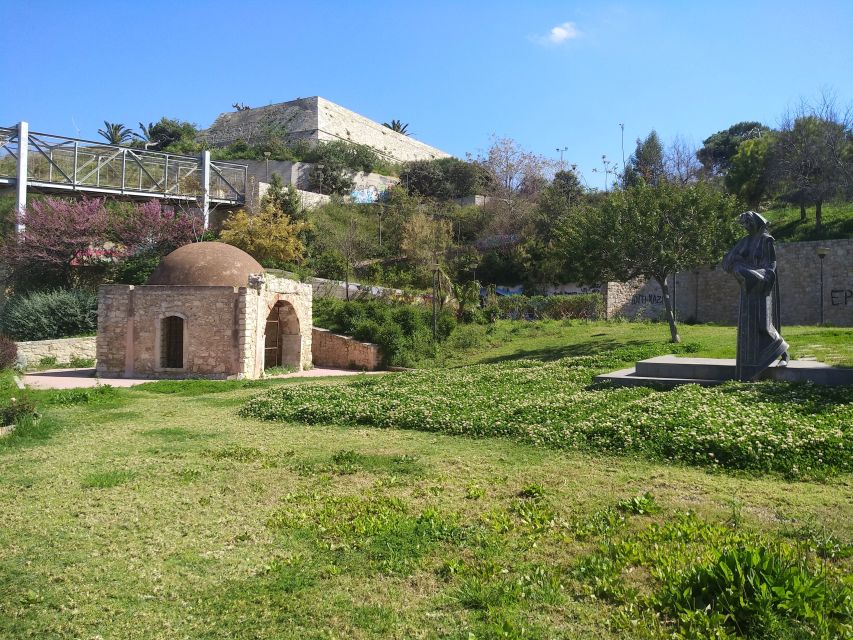
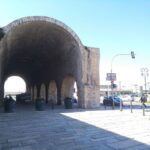
Then you roll toward one of Heraklion’s signature views: the Venetian Walls of Heraklion. This stop includes a photo moment, a guided visit, some free time, and a bit of walking before continuing by bike.
Why this stop works for most visitors: the walls help you read the city. They’re not just a backdrop; they show how Heraklion was defended and shaped. Standing near the walls gives your brain a frame for later stops—squares feel different when you understand how the city evolved around fortifications.
Another plus is how the tour balances structure and choice. You get guidance and context, but you also get enough time to take photos without feeling rushed. In a short tour, that freedom is gold.

Georgiadis Park Break: A Breather in the Middle of the Circuit
Next comes Georgiadis Park with a scheduled break: photo stop, guided tour elements, and both free time and safety-oriented attention before you head out again. This is the kind of stop that can make or break a bike tour. Without a mid-route reset, you end up getting stiff, distracted, or tense.
Here, the park break helps you transition. You can stretch your legs, check your gear, and refocus for the central-city stops ahead. It also gives you a moment to absorb what you just learned from the earlier landmark segment, instead of trying to process everything while riding continuously.
Central Market, Heraklion: Food and Everyday City Life
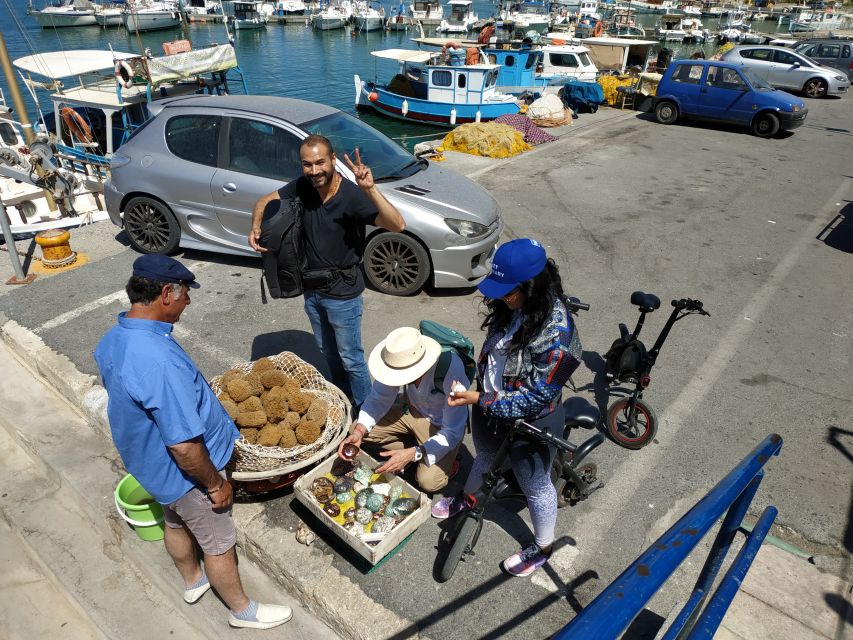
A bike tour becomes real when it reaches where people actually live and buy. The Central Market, Heraklion stop is built for that kind of experience: photo stop, guided tour, and free time while you move through the area.
For many visitors, this is where the trip stops feeling like a highlights reel and starts feeling like a day in the city. One review mentioned a Monday visit where a weekly food market was in action. Even if your day doesn’t line up with a specific market schedule, the stop is still valuable because you’re seeing what’s for sale and how the market area functions.
This is also a strong point to ask the guide for ideas. Since you’re already in the right neighborhood, a local recommendation afterward can save you time and avoid the usual tourist detours.
Platia Kornarou: One of the City’s Meeting-Point Squares
After the market, you’re at Platia Kornarou for a shorter guided visit. This is one of those central squares where Heraklion’s everyday movement becomes visible fast: people cross, pause, chat, and move on.
A short square stop is smart in a bike tour because it lets you check the vibe without losing too much time. You get enough context to understand what you’re looking at, then you keep moving. If you’re the type who likes to spot details—signs, architectural edges, street rhythms—this is a good checkpoint.
Agios Minas Cathedral and the Story Behind the Facade
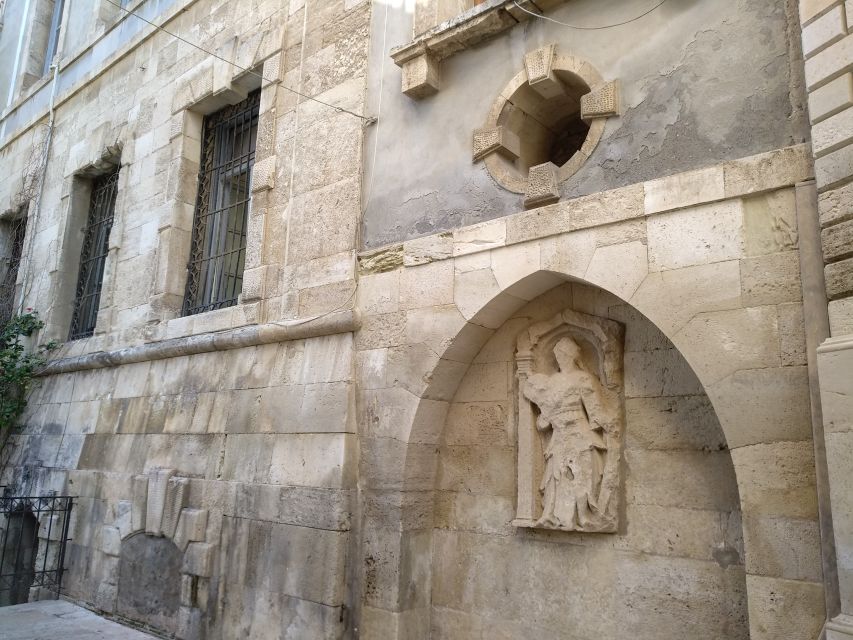
The tour then includes Agios Minas Cathedral with a photo stop and visits that involve walking and sightseeing on foot for a short stretch. A cathedral stop is more than a photo op here. It’s an opportunity to see how religious architecture anchors the city’s identity.
Even if you don’t go deep into church history, this kind of stop gives you a “center of gravity” for the route. You can connect earlier defensive history (Venetian Walls) with later cultural identity in a way that makes the day feel cohesive.
Morosini Lions Fountain and Lion’s Square: Easy Photos, Good Context
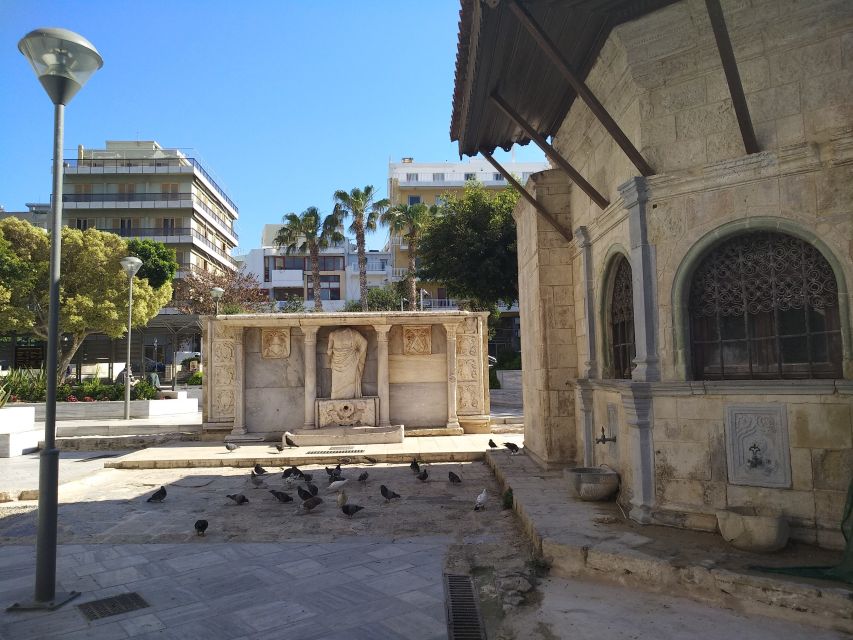
You’ll reach the Morosini Lions Fountain, then move to Lion’s Square, with photo stops and guided time at both. These are classic places for memorable photos, but the value is how the guide helps you interpret what you’re seeing.
Fountains and squares often function like social centers. They’re places where landmarks act like magnets. When you see them after a block of riding and walking, the contrast is clear: you’re not just moving through streets; you’re moving through nodes that structure the city.
One practical note: keep an eye on where the group stops for the next turn. In dense areas, it’s easy to drift while you’re photographing. If you stay with the guide’s cue and don’t overstay your photo window, the rest of the route feels smooth.
Agios Titos Church: A Calm Finish Before the Food Part
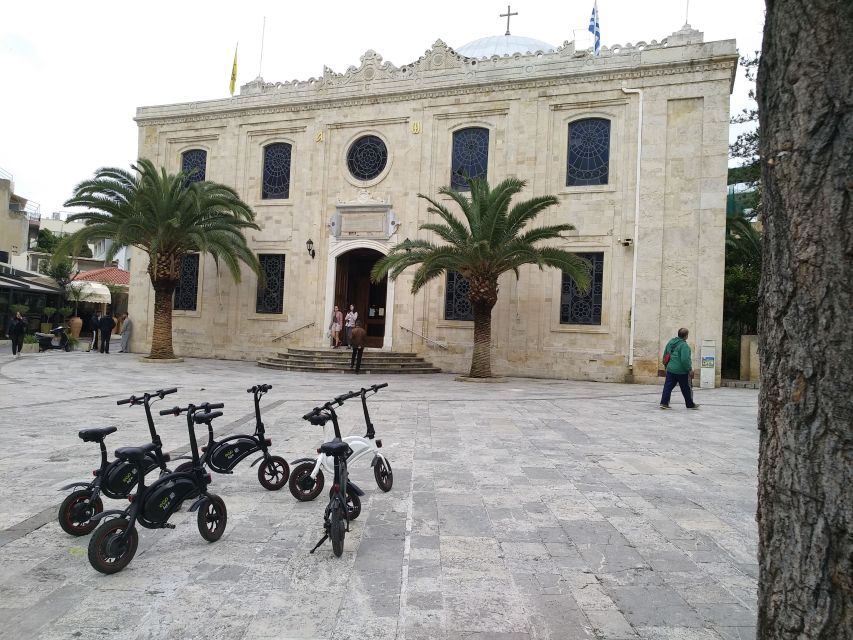
The next named stop is Agios Titos Church. You get photo and visit time, plus some walk and sightseeing before arriving back to the final segment. This stop tends to feel different from the more public square moments earlier in the route. A church stop can slow you down in a good way because it shifts focus from moving views to specific details.
In a 3–5 hour tour, that rhythm matters. You’re already covered plenty of ground, so having a calmer moment near the end helps you avoid the feeling of “I’m done, let’s just get this over with.” It also primes you for the meal ending, because you finish the sightseeing segment with less mental noise.
Greek Meze Ending: Wine, Snack, and Why It’s Great Value
This tour isn’t just sightseeing. It ends with Greek meze, and multiple reviews highlight the food break as a standout. Some riders mention wine and raki alongside the meal. Others note a tasty snack at the end, and at least one person specifically described a local tavern experience with generous portions and a dessert of fresh fruit.
So what’s the real benefit of tacking on meze? You’re solving a common travel problem. When you finish a morning of walking or riding, you’re hungry and your options are narrowed. This ending gives you a built-in place to land, where you can sit, recharge, and keep learning from a local perspective through food.
It also improves the value of the $78 price. Bike tours can sometimes feel like you pay for transportation plus a few stops. Here, you’re paying for guided structure, electric wheels, and a food component that makes the experience feel complete instead of rushed.
Price and Value: Is $78 Worth It?
$78 per person can look steep if you only think of it as “a bike rental.” But that’s not what you’re buying. You’re buying:
- Guided sightseeing with multiple landmark stops across the center of Heraklion
- Electric bikes without pedaling, with helmets included
- Stops that reduce backtracking, since you’re covering a route in a set window
- A meze-based food ending, with reports of wine or raki and plentiful local plates
- On-tour WiFi, plus safety briefings and support
The practical question isn’t whether you could replicate it on your own bike. It’s whether you’ll get the same pace with less stress, fewer wrong turns, and more context. If you want a smart orientation to Heraklion in half a day, this is a strong match.
Who Should Book This Tour (and Who Might Skip It)
This is a great fit if you:
- Want to see multiple parts of Heraklion without exhausting yourself
- Like guided context but don’t want museum-level commitment
- Prefer a paced route with built-in breaks
- Enjoy food experiences that end a sightseeing morning
You might want to think twice if you’re uncomfortable with riding a smaller bike or if you’re worried about hills. The route includes downhill and flatter moments (one review mentioned how fun it felt on flat and downhill), but steep uphill effort can vary with rider weight and bike power.
If you’re traveling as a family or with teens, it’s also a plus that the tour format is structured and the guide can adapt the flow. One review described tailoring the second day route away from a winery and toward villages, with a strong lunch experience. While that’s not guaranteed for every departure, it shows the overall style of guidance you’re likely to experience.
Planning Your Day After the Tour
You finish back at ecobikegreece.gr, which is useful because you’re not stranded across town. The guide can also point you toward what to do next, so you’re not left guessing.
This is a smart move if you plan to spend the rest of your day doing smaller, self-guided exploring. After a structured route, you’ll recognize names like Venetian Walls and Lion’s Square when you pass them later. That makes your own walking time more efficient and more fun.
Should You Book It?
If your goal is a half-day overview of Heraklion that combines key landmarks with a genuinely local food ending, I’d book it. The biggest advantages are the no-pedal electric bikes, the route design with frequent stop-and-breathe moments, and the way the day doesn’t end at the last photo—it ends with Greek meze.
I would not overthink it. Just show up early to practice, go in expecting a short learning curve on the bike, and plan to enjoy both the sightseeing stories and the meal.
FAQ
How long is the Heraklion Ecobike sightseeing tour with Greek meze?
The tour lasts 3 to 5 hours.
Do I need to pedal on the electric bikes?
The bikes are listed as electric bikes without pedals, and reviews describe them as easy to ride using hand control.
What landmarks and areas do you visit in Heraklion?
Stops include the Karavolas area, the Venetian Walls of Heraklion, Georgiadis Park, the Central Market, Platia Kornarou, Agios Minas Cathedral, Morosini Lions Fountain, Lion’s Square, and Agios Titos Church.
Is helmet use included?
Yes. Helmets are included.
Is Greek meze or food included in the price?
Yes. The experience includes Greek meze as part of the tour.
What language is the guide, and is the tour WiFi-enabled?
The tour has a live English guide, and WiFi is included on the tour.