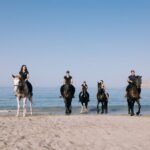
Plakias by horse is freedom you can feel. This 2-hour early-morning ride takes you from a well-kept center through olive groves to a long sandy stretch on the Libyan Sea, where you’ll pick up speed along the waterline. It’s built for simple fun—less “tour bus,” more moving at horse pace with wind in your face.
What I like most is the setup for real safety and comfort: you get a helmet and the horses are described as well trained and equipped with the gear needed for rider safety. I also like the route logic—slow warm-up on land, then a shoreline canter once you reach the coast—so the best part isn’t saved for last. The facility itself also gets praise for being modern, clean, and laid out generously.
One thing to weigh: this is an early start activity, and time on the beach can feel brief depending on your group and comfort level. If you’re a true beginner, you’ll want extra patience at the start—some riders found instructions and pace adjustments weren’t always smooth, and the path to the beach can include rockier footing.
In This Review
- Key points to know before you go
- Why Plakias Beach by horse feels like a real escape
- From the Plakias Horse Riding Center to the coast in olive groves
- The 1.4 km sandy shoreline canter: what it’s like in practice
- Photos on the beach: your best strategy
- Safety and horse comfort: what’s actually provided
- What to wear (and what to leave behind) for a smooth ride
- Price and value: is $153 for 2 hours fair?
- Who should book this Plakias Beach ride
- Should you book the Crete Horse Riding: Plakias Beach Ride?
- FAQ
- Where is the meeting point?
- How long is the horse riding experience?
- What time of day does it run?
- How many people are in the group?
- Do I need prior riding experience?
- What safety gear is included?
- Can I wear sandals, flip flops, or shorts?
- What’s not included in the price?
- What’s the cancellation policy?
- Is it suitable for kids and pregnant women?
Key points to know before you go
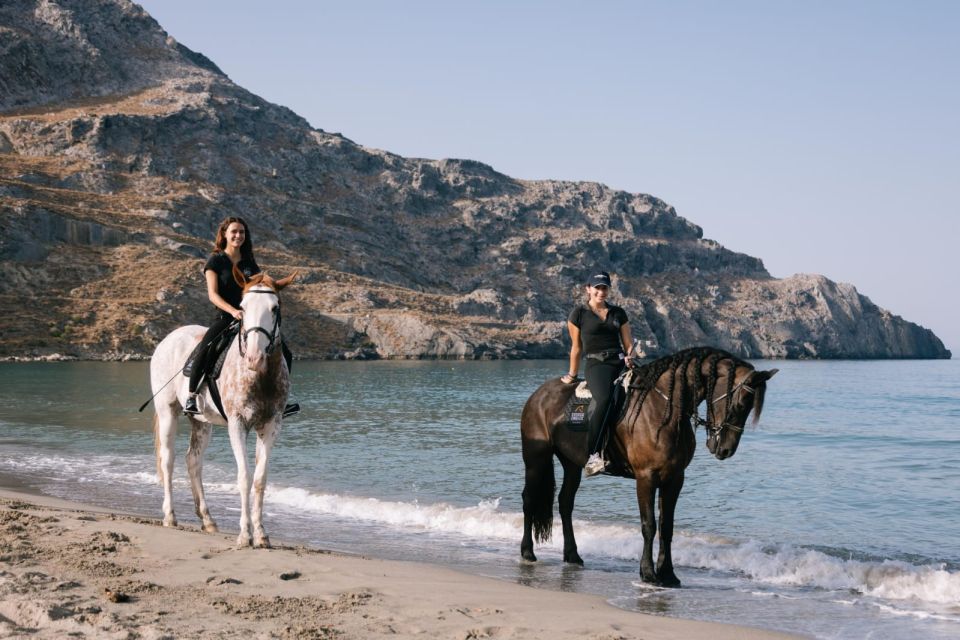
- 1.4 km shoreline canter along Plakias Beach, timed for cooler morning temperatures
- Small group (max 6) with pace adjusted to skill and preference
- Helmet and safety gear are provided, plus optional chaps and child safety vests
- Olive-grove ride first, then coast—expect some uneven ground on the way
- Photo expectations vary: sometimes the guide takes photos, sometimes you’ll need to handle it yourself
Why Plakias Beach by horse feels like a real escape
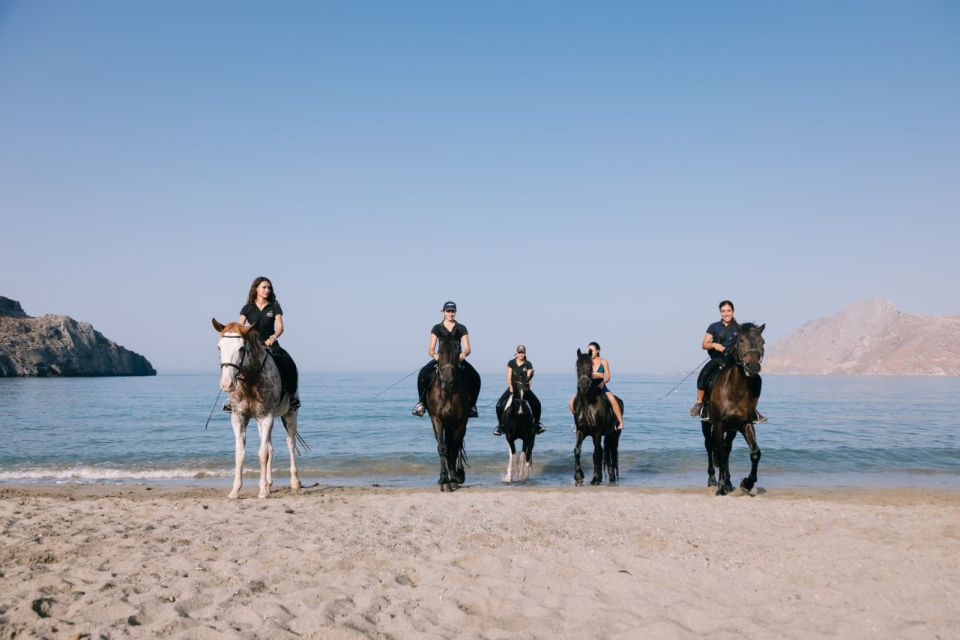
Plakias sits in South Crete with a coastline that begs for a “one more try” moment—one more photo angle, one more slow walk, one more breath of sea air. Put a horse under you and that same coast turns into something more physical. You’re not just looking at the water; you’re riding beside it, with the salt wind doing half the work on your mood.
This ride is also timed for the right kind of joy. It runs only in the early morning, and that’s not just for your schedule. It helps keep conditions comfortable, and it matters because horses don’t want heat-stressed days. You’ll feel that logic when you arrive: the pace is calmer, the air is cooler, and the whole thing feels more like a morning ritual than an overbooked excursion.
Finally, the South Crete flavor is real. You start through olive groves, not a parking-lot strip. Then you transition to the long sandy coast where you can finally shift gears. That movement—from trees to sea—makes the ride feel like a mini journey, not a quick in-and-out.
You can also read our reviews of more tours and experiences in Plakias
From the Plakias Horse Riding Center to the coast in olive groves
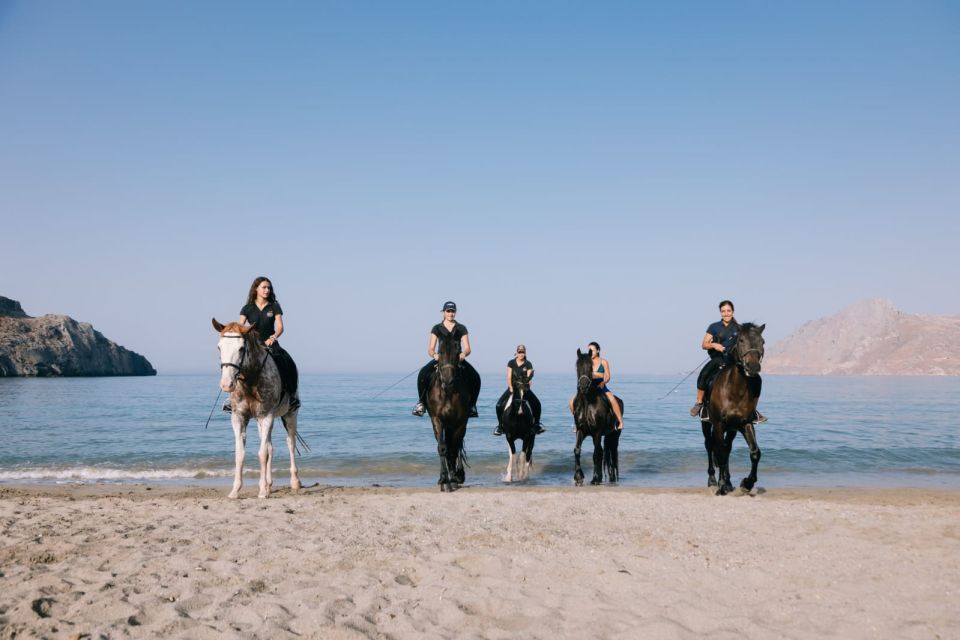
Your meeting point is the Plakias Horse Riding Center, in Damnoni, Plakias (740 60). From there, you head west through olive country toward Plakias Beach. This land portion matters more than you might expect, because it sets up how you’ll feel once the shoreline starts.
Here’s what to plan for: getting to the beach isn’t an instant hop. One rider noted the ride to the coast took about 20–30 minutes, and some of that route included rocky footing. That doesn’t mean it’s dangerous. It does mean you should go in with the right attitude—think “steady and careful,” not “smooth boulevard.”
Also, there’s often a quick check of riding ability before the canter phase. Some riders experienced a brief skills review on the way to the beach, and then the group was split based on comfort level. Translation: don’t assume everyone will ride at the same tempo the whole time. If you’re nervous, that’s not a deal-breaker; it can actually be helpful because pacing gets managed.
You’ll know you’re getting close when the ground shifts from countryside paths to the sandy coastline environment. At that point, the ride becomes about rhythm—horse steps, rider balance, and the sea breeze coming in.
The 1.4 km sandy shoreline canter: what it’s like in practice
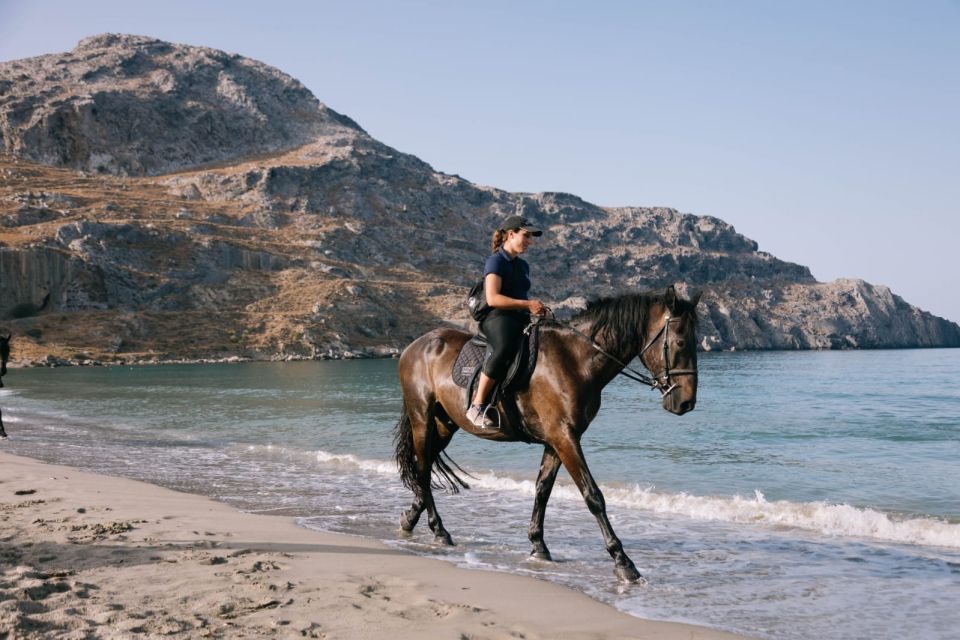
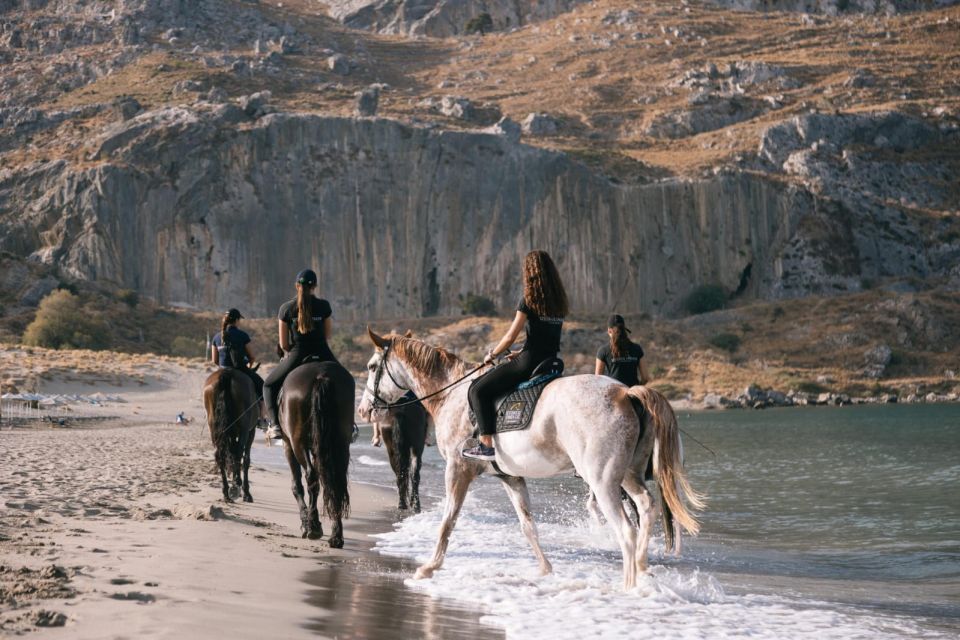
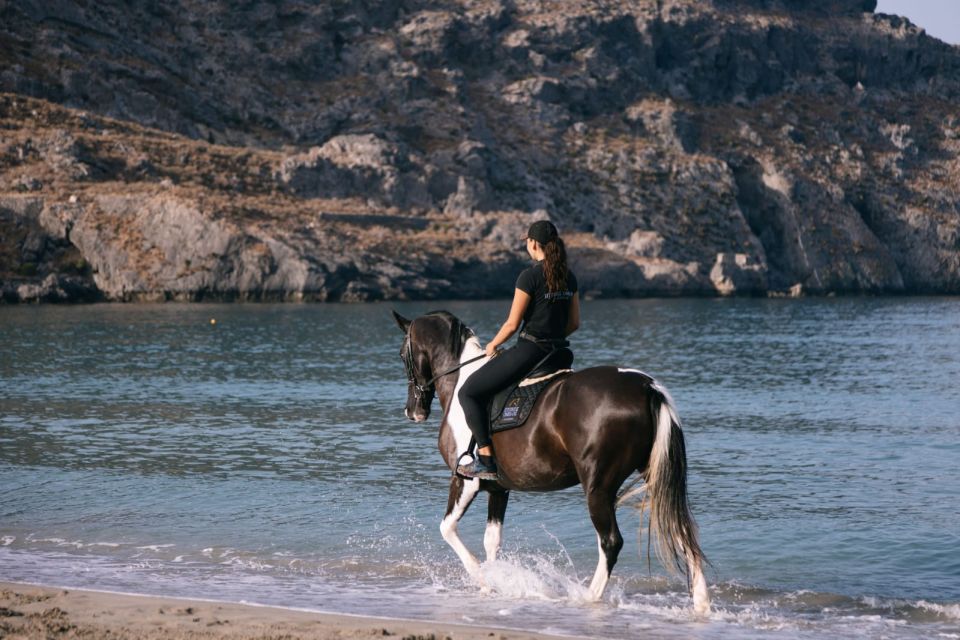
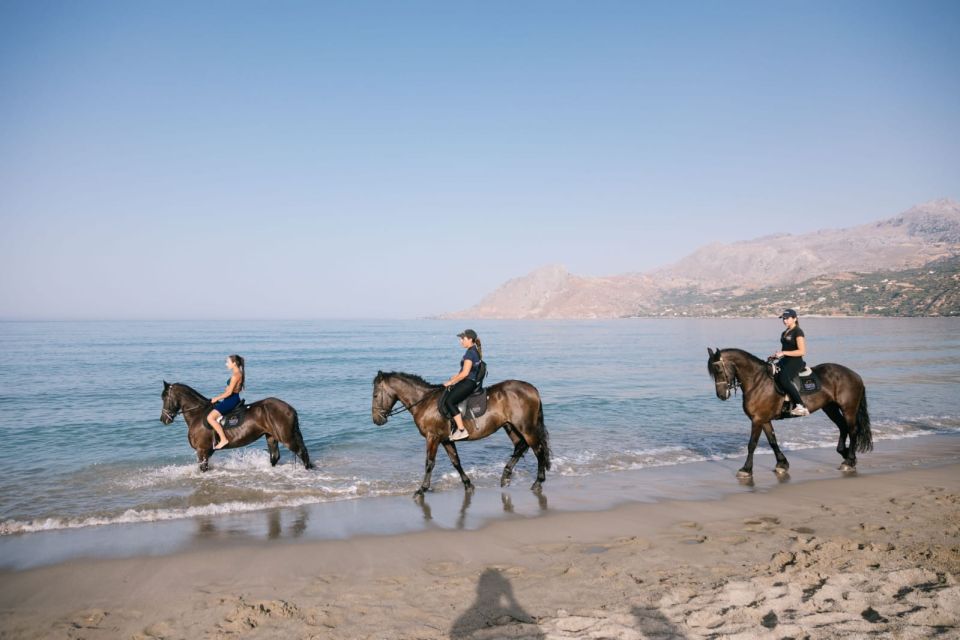
Once you reach the coast, the star moment is simple: you’ll canter along the shoreline for about 1.4 km along Plakias Beach. This is the part that sells the experience because it hits that sweet spot—fast enough to feel alive, but still close to the water so it doesn’t feel chaotic.
A big detail here is the wind. The sea breeze is part of the sensation described for the ride, so expect that “face-cooling” effect while your horse moves forward. That’s not small. It’s exactly why morning rides feel so different: the air helps, and the whole experience feels lighter.
Now the balancing act: how long you spend right at peak speed can vary. Some reviews described the beach portion as short—around 15 minutes—and others mentioned brief galop moments. There’s a good reason for that: guides adjust the pace based on rider skill and group dynamics. It can also depend on horse comfort and timing.
My practical advice: treat the shoreline canter as the highlight, not as an extended beach parade. If you’re hoping for long, uninterrupted galloping like a movie scene, you might be disappointed. If you want a true “I’m riding next to the sea” moment that still feels controlled and safe, you’ll likely love it.
Photos on the beach: your best strategy
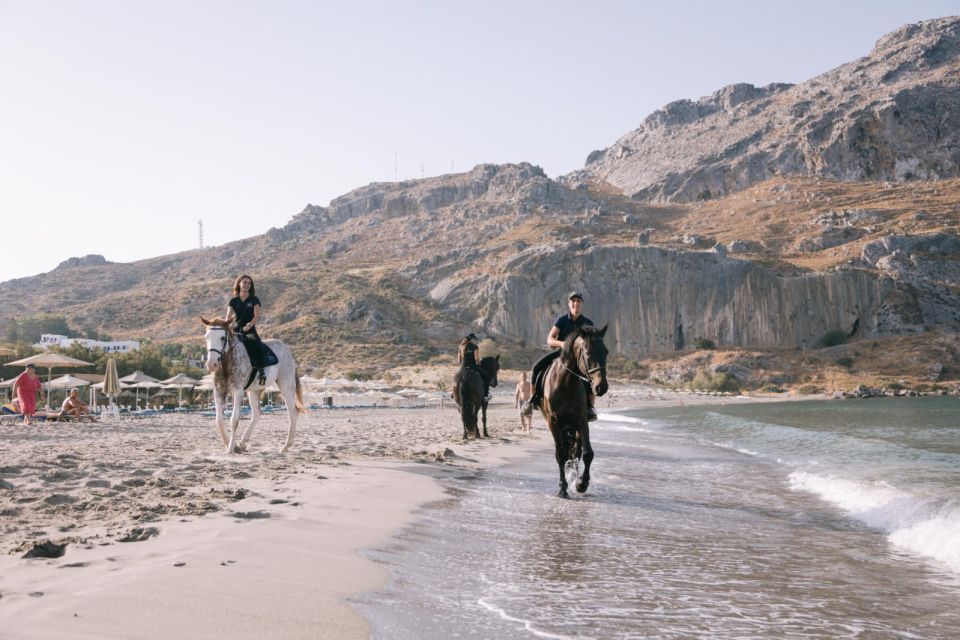
This is a beach ride. You’ll want photos. Here’s the reality from the experience reports: sometimes the guide takes photos of you, and sometimes there’s no clear photo help. One rider specifically praised the instructor for taking pictures, while another said they had to manage on their own and felt rushed with not enough time to stop and shoot.
So I’d plan smarter before you get there:
- Use your phone like a pro: camera ready before you’re at the waterline.
- Take a few shots early on the shoreline while the light and angle are easiest.
- If your guide is taking photos, don’t block them—just align and keep your hands steady while the camera gets the moment.
Also, bring your expectations back to the ride itself. Even when photos happen, the priority is safety and pacing. The shoreline canter is the main event; the photo time is a bonus that may come in between segments.
Safety and horse comfort: what’s actually provided
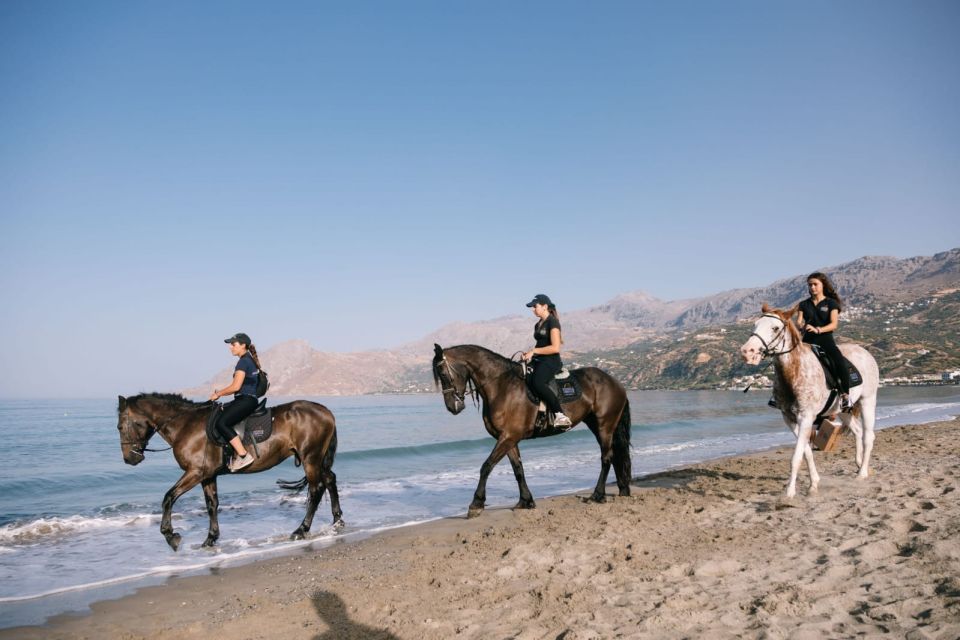
This activity isn’t “wild west.” Safety is built in from the start.
You’ll get mandatory safety equipment, including a helmet. The horses are described as well trained & behaved, and they come with necessary gear for horse and rider safety. That matters because you’ll be riding near sand and water conditions, where many people naturally tense up.
Guides and escorts are a core part of the experience. The ride is accompanied by highly experienced staff, and the pace is adjusted depending on riding skill and preference. That’s important for two reasons:
- It keeps beginners from feeling pushed into movements they can’t handle yet.
- It lets experienced riders have the fun part without needing to ask for changes mid-ride.
One more detail I like: the instruction includes language coverage. The instructor can work in Greek and English, which reduces the “communication panic” that can ruin a first-time ride.
If you’re worried about getting thrown into the deep end, you’re right to think about it. But the experience is designed to meet riders at their level, and the equipment plus trained horses are a big part of that.
What to wear (and what to leave behind) for a smooth ride
You can make this ride much more comfortable just by packing the right clothing. The rules are strict because sand and tack don’t mix well with the wrong footwear.
Bring:
- Long, comfortable trousers
- Closed-toe shoes
- Weather-appropriate clothing
- Comfortable long pants (plan for sun or morning chill)
- Optional chaps (listed as optional equipment)
Don’t bring:
- Sandals or flip flops
- High-heeled shoes
- Shorts
- Backpacks, bags, skirts
- Bare feet, slippers, or open-toed shoes
This list isn’t just picky. It’s about stability and safety while mounting, riding, and dismounting—plus keeping your gear from getting tangled. I always recommend wearing pants you don’t mind getting a little dusty, because you’re in olive country and on a sandy beach.
Also note: this ride is listed as not suitable for children under 5, pregnant women, people over 264 lbs (120 kg), and people under 3 ft 6 in (110 cm).
Price and value: is $153 for 2 hours fair?
At $153 per person for a 2-hour experience, this isn’t a budget add-on. You’re paying for the full package: trained horses, staff guidance, and the specific “wow” factor of a shoreline canter.
So is it good value? Here’s how I’d judge it:
You get value if:
- You want a short, memorable horse experience without complicated planning.
- You care about safety gear, helmet use, and structured guidance.
- You like the early-morning timing and want a beach moment that feels special in South Crete.
You might feel it’s overpriced if:
- You’re expecting a long, extended beach session with lots of stop-and-go photo time.
- You want more control over the pace without any adjustments for other riders.
- You’re comparing it to longer rides elsewhere and assuming this is all “on-the-sand gallop.”
A fair way to think about it: you’re buying access to a very specific environment—1.4 km of Plakias shoreline—and the staff effort it takes to do that safely. The ride is short, but it’s intense in feeling. If you go in expecting a steady, scenic training ride with long beach hang time, you may walk away thinking it was rushed. If you go in ready for a highlight-focused morning, the price can feel more reasonable.
Transfers and food aren’t included, so you’ll want to handle your own ride to the Plakias Horse Riding Center and grab snacks or water before or after. The activity itself is the transportation of your time and energy: it’s not set up as a day-long outing.
Who should book this Plakias Beach ride
This is a strong match if you:
- Want a small-group experience (max 6) rather than a big crowd.
- Prefer early mornings and like the idea of riding before heat ramps up.
- Are okay with pace adjustments based on comfort level.
- Want a classic South Crete feel: olive groves, then beach, then sea breeze.
It’s also for first-timers in the sense that the listed riding level is all. But if you’re a nervous rider, don’t treat that as a guarantee of a perfectly smooth start. One account described beginners feeling uneasy because instructions didn’t feel detailed enough at the beginning. That doesn’t mean the guides won’t help; it means you should ask questions early and keep your expectations grounded: you’re learning while you go.
Should you book the Crete Horse Riding: Plakias Beach Ride?
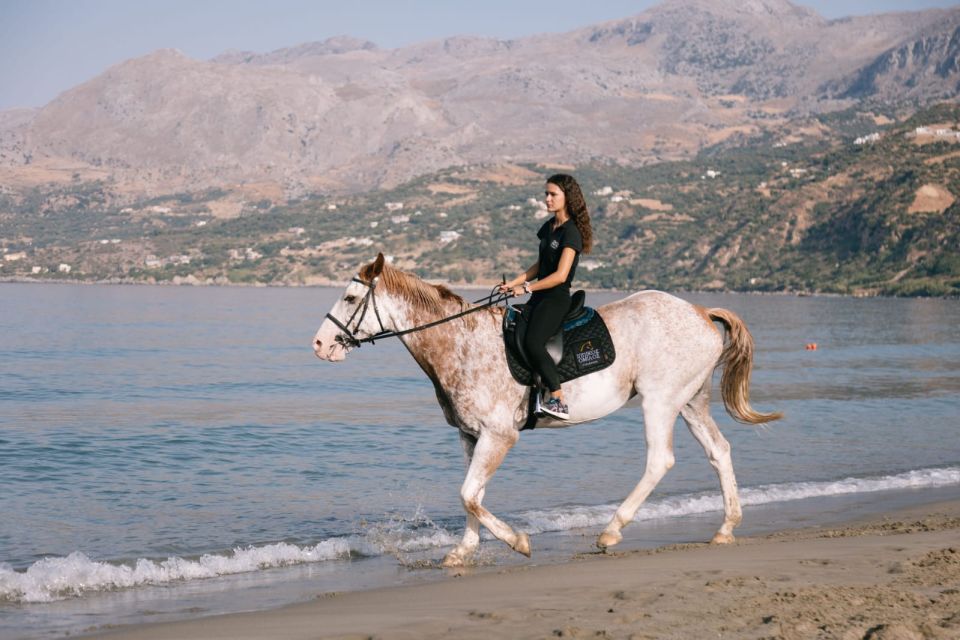
Book it if you want a controlled, safety-minded horse ride where the highlight is a shoreline canter along Plakias Beach, with a morning atmosphere that makes the whole thing feel lighter.
Consider skipping or going in carefully if you:
- Need lots of time for photos and long stops on the sand.
- Get stressed when instructions or pacing feel different than expected.
- Are sensitive to rocky stretches on the route to the beach.
My final take: this is a “make the morning count” kind of activity. If you show up ready for a short, focused experience—helmet on, long pants ready, and phone charged—you’ll likely leave with that rare travel memory that isn’t just a view. It’s movement.
FAQ
Where is the meeting point?
You meet at the Plakias Horse Riding Center in Damnoni, Plakias 740 60, Greece.
How long is the horse riding experience?
The ride lasts 2 hours.
What time of day does it run?
This trip is only available in the early morning hours.
How many people are in the group?
It’s a small group limited to 6 participants.
Do I need prior riding experience?
The riding level is listed as all, and the riding pace depends on your skills or preference. Guides or escorts accompany all trips.
What safety gear is included?
Safety helmets are mandatory and provided, along with necessary safety equipment for horses and riders. A safety vest is provided for children.
Can I wear sandals, flip flops, or shorts?
No. Sandals/flip flops and shorts are not allowed. You must wear closed-toe shoes and long pants.
What’s not included in the price?
Transfers to and from the riding center are not included, and food and drinks are not included.
What’s the cancellation policy?
You can cancel up to 24 hours in advance for a full refund.
Is it suitable for kids and pregnant women?
It’s not suitable for children under 5 and pregnant women. Also note the listed size and weight limits: over 264 lbs (120 kg) or under 3 ft 6 in (110 cm) aren’t suitable.